
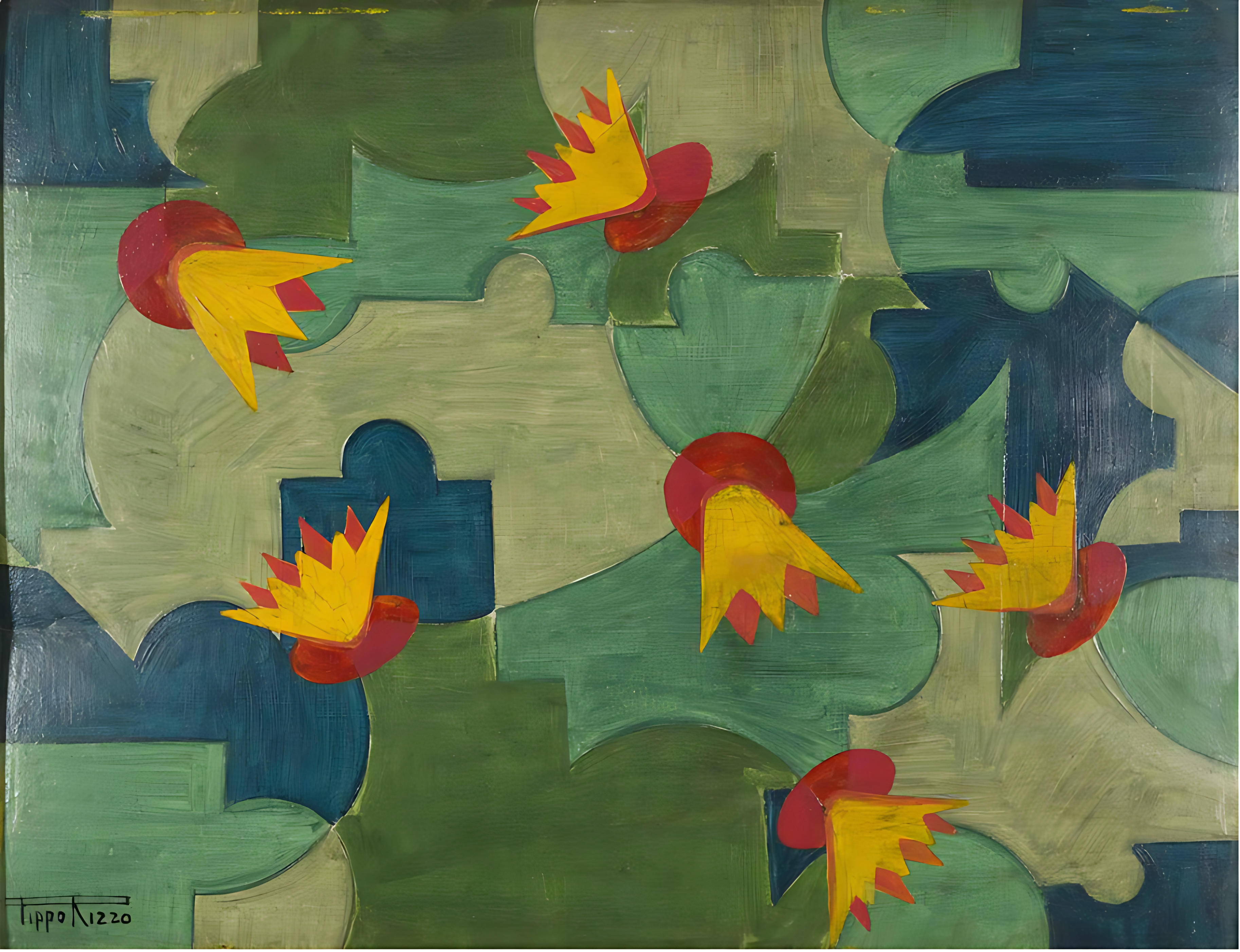
Ninfee is a painting by Pippo Rizzo, created in 1925. Pippo Rizzo (1897–1964) was an Italian painter and sculptor born in Corleone, Sicily, who became a leading figure of Sicilian Futurism.
Rizzo studied at the Accademia in Palermo under Ettore De Maria Bergler. During a trip to Rome, he encountered Futurism and became deeply engaged with the movement, founding a futurist circle in his native town. He collaborated closely with Marinetti and organized the National Futurist Exhibition in Palermo in 1927. His works were first shown at the Venice Biennale in 1926 and again in 1928. The period around 1925, when Ninfee was painted, represents the height of Rizzo’s commitment to Futurism, before he shifted toward Novecento Italiano themes from 1930 onward, following the example of Carlo Carrà.
About Pippo Rizzo
Giuseppe Rizzo, known as Pippo, was born in Corleone in 1897 and moved to Palermo to pursue his artistic training. He became a pivotal force in early twentieth-century Sicilian art, championing Futurism at a regional level and later participating in major exhibitions including the Rome Quadriennale of 1931. He died in Palermo in 1964.
Details
- Creator: Pippo Rizzo
- Year: 1925
- Medium: Painting
- Movement: Futurism
- Artist nationality: Italian (Sicilian)
Frequently asked questions
Who was Pippo Rizzo?
Pippo Rizzo (1897–1964) was a Sicilian painter and sculptor who led the Futurist movement in Sicily. He studied in Palermo, encountered Futurism in Rome, and became a close associate of Marinetti, organizing major futurist exhibitions in his region.
What artistic movement does Ninfee belong to?
Ninfee was created during Rizzo’s Futurist period. He remained committed to Futurism in the mid-1920s before transitioning toward Novecento Italiano aesthetics from 1930 onward.
Where was Rizzo’s work first exhibited internationally?
Rizzo’s works were first shown at the Venice Biennale in 1926, the year after Ninfee was painted, and he exhibited there again in 1928.