
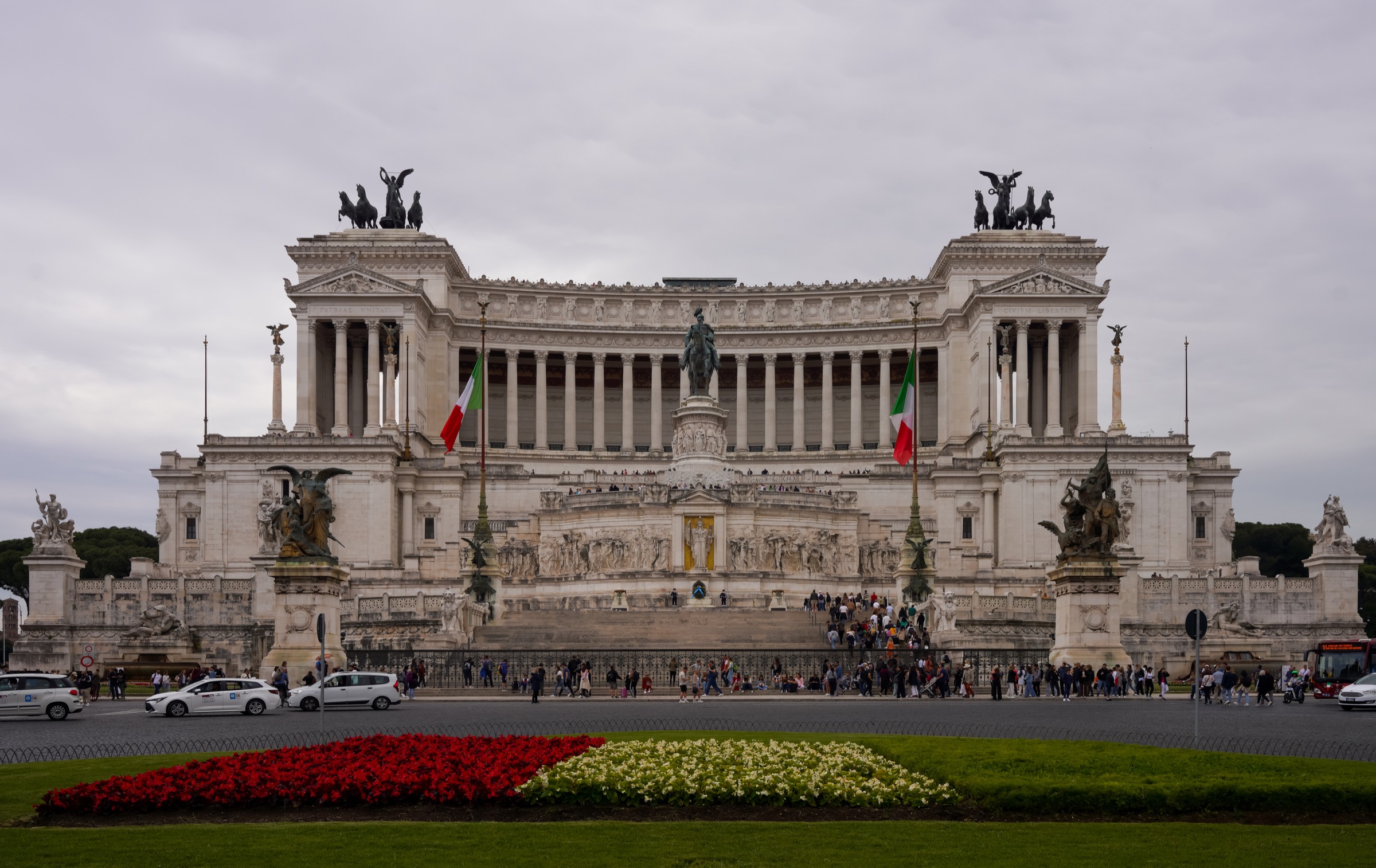
The Vittoriano, formally the National Monument to Victor Emmanuel II, was designed by the Marche-born architect Giuseppe Sacconi after winning the second national competition in 1882, and was solemnly inaugurated on 4 June 1911 to mark the fiftieth anniversary of Italian unification. Since 4 November 1921 it has housed the Tomb of the Italian Unknown Soldier beneath the bronze-gilded statue of the goddess Roma. Two panoramic lifts added in 2007 carry visitors to a terrace at the foot of the Quadrighe, offering one of the widest views over the historic centre of Rome.
- Address
- Piazza Venezia, 00186 Roma RM
- Period
- 1885–1935 (Sacconi project; inaugurated 4 June 1911; final works completed 1935)
- Architect
- Giuseppe Sacconi (1854–1905, original project); Gaetano Koch, Manfredo Manfredi, Pio Piacentini (completion)
- Patron
- Italian State, in honour of King Victor Emmanuel II, first king of unified Italy (died 1878)
- Function
- National monument to the unification of Italy
- Current use
- Houses the Tomb of the Italian Unknown Soldier (since 4 November 1921), the Central Museum of the Risorgimento, the Sacrario delle Bandiere; managed by VIVE — Vittoriano e Palazzo Venezia of the Ministero della Cultura
- Coordinates
- 41.8946° N, 12.4831° E
- Notes
- 81 m high, 135 m wide; Botticino marble; gilded bronze Quadrighe of Liberty (Bartolini) and Unity (Fontana); equestrian statue of Victor Emmanuel II by Enrico Chiaradia (12 m, cast in bronze); Altar of the Fatherland with statue of Rome by Angelo Zanelli (1911); two panoramic lifts added in 2007
Gallery
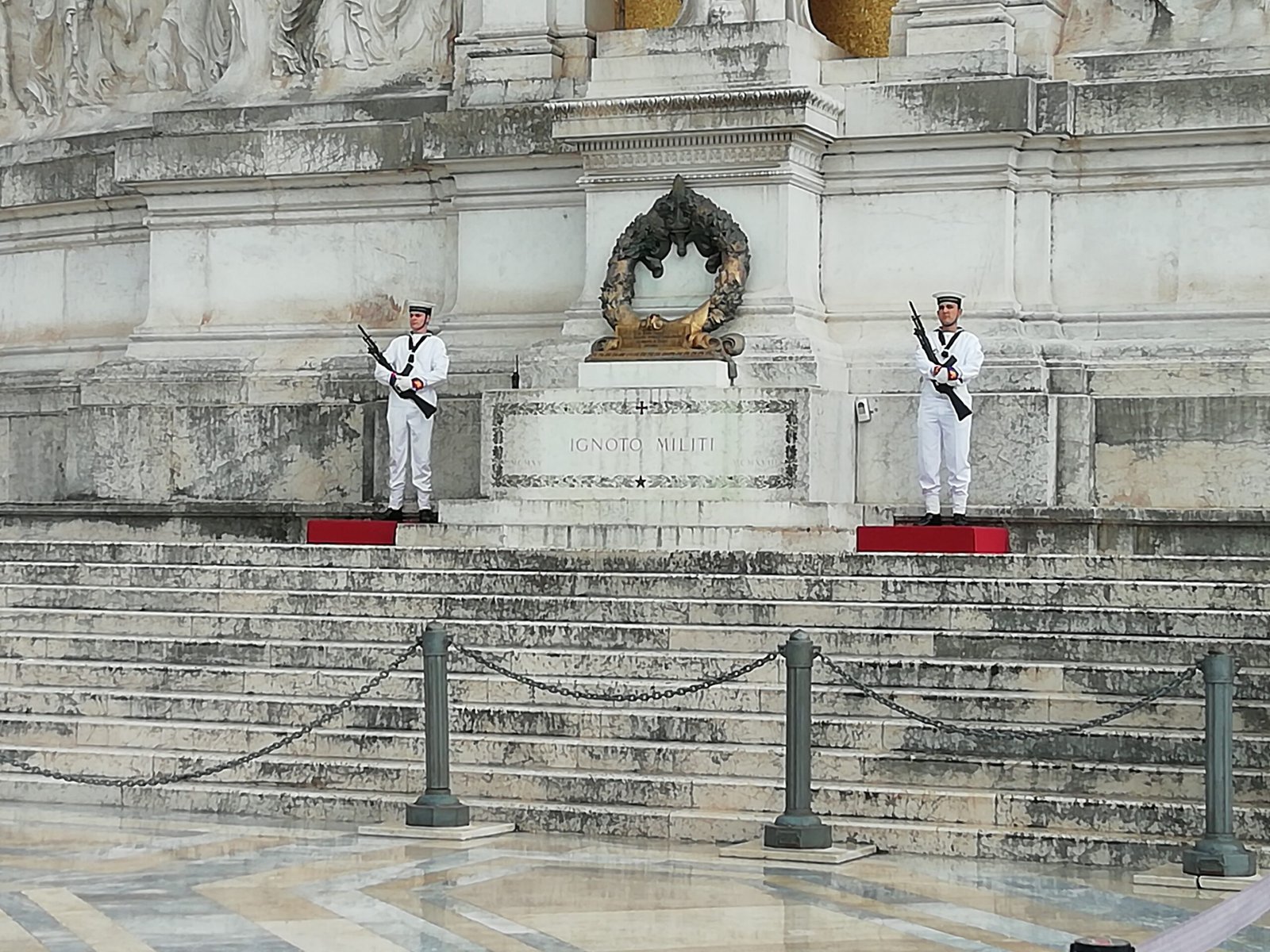
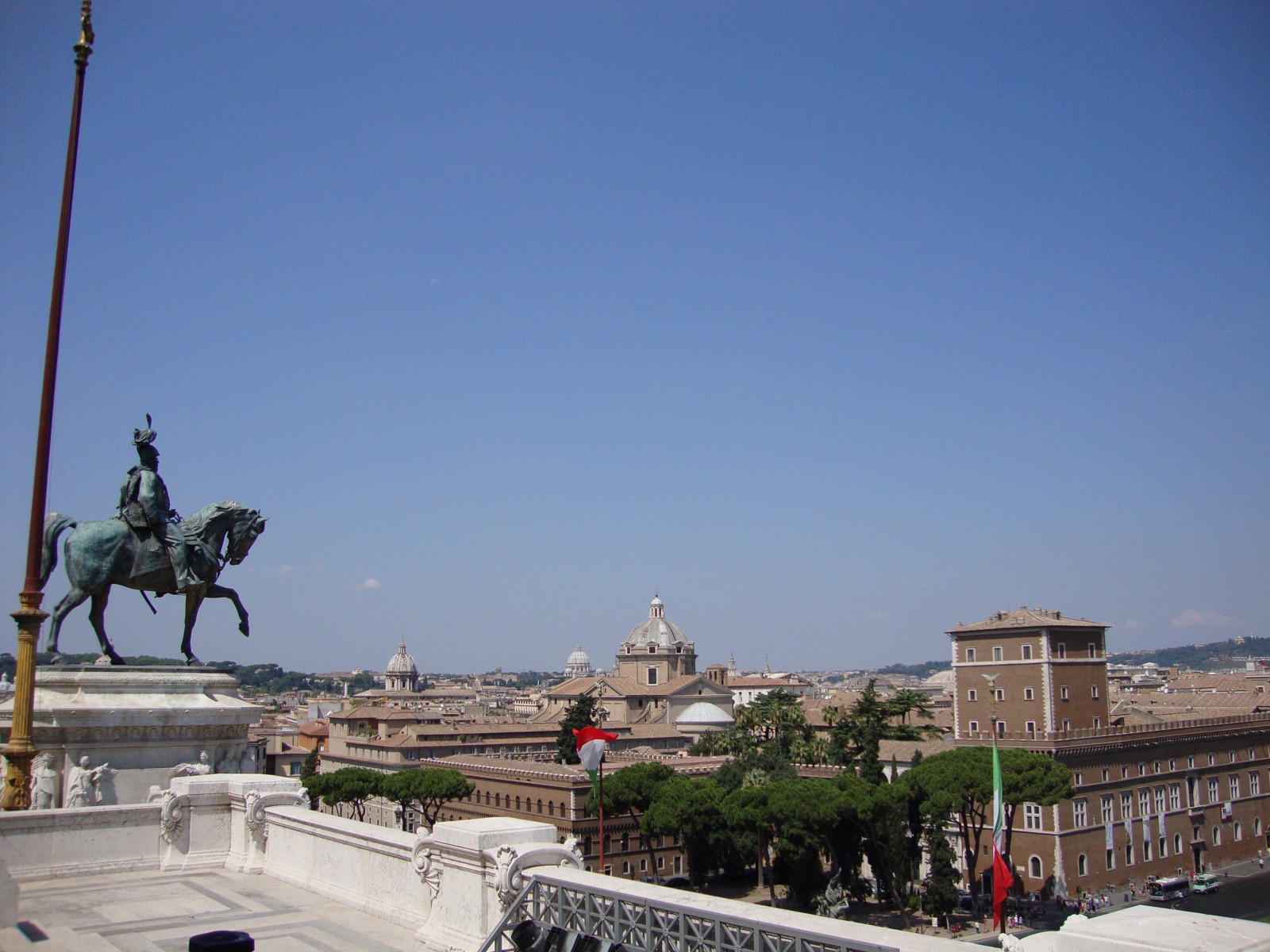
Two further views: the Altar of the Fatherland with the Tomb of the Unknown Soldier, and the central equestrian bronze of the first king of united Italy.
Visit on the map
Piazza Venezia · 41.8946° N, 12.4831° E
Download for your navigator
A single waypoint, ready for GPS apps, navigators, and contacts.
The death of Victor Emmanuel II on 9 January 1878, only seventeen years after the proclamation of the Kingdom of Italy, prompted parliament to commission a national monument in his honour. A first international competition was launched in 1880 and a second one in 1882, won by the young Marche-born architect Giuseppe Sacconi with a project inspired by the great sanctuaries of the ancient world. Construction opened in 1885 on the northern slope of the Capitoline Hill and required the demolition of a dense medieval and Renaissance quarter to make room for the new civic stage facing Piazza Venezia. The monument was inaugurated by King Victor Emmanuel III on 4 June 1911, in coincidence with the fiftieth anniversary of Italian unification, although it was still far from finished. Work continued in successive campaigns until 1935.
The Vittoriano rises 81 metres high and stretches 135 metres wide, faced entirely in white Botticino marble from Brescia. Its terraced composition arranges sculpture, fountains and porticoes around a central axis dominated by the colossal equestrian statue of Victor Emmanuel II by Enrico Chiaradia, twelve metres high and cast in bronze. Above the lateral propylaea stand the two gilded bronze Quadrighe, the Quadriga of Liberty by Paolo Bartolini and the Quadriga of Unity by Carlo Fontana, while sixteen allegorical statues of the Italian regions crown the upper portico. At the heart of the monument is the Altar of the Fatherland, presided over by the gilded statue of the goddess Roma sculpted by Angelo Zanelli, whose project won the dedicated competition of 1906 and was installed in 1911. After Sacconi died in 1905 the works were carried forward by Gaetano Koch, Manfredo Manfredi and Pio Piacentini, who reshaped several details of the upper levels.
On 4 November 1921 the body of the Italian Unknown Soldier was transferred from Aquileia and interred beneath the statue of Roma, flanked by two perpetually burning votive flames and an honour guard, transforming the monument into the principal civic shrine of the Republic. The Vittoriano has long divided critics: praised as a grandiose synthesis of neoclassical and Risorgimento iconography, it has also been mocked for its scale and whiteness, most famously by Adolf Hitler who in 1938 reportedly compared it to a wedding cake. In 2007 two panoramic lifts were inaugurated on the rear facade, carrying visitors to a terrace at the foot of the Quadrighe with a 360-degree view over the historic centre. Today the complex is managed by VIVE — Vittoriano e Palazzo Venezia, an institute of the Ministero della Cultura, and houses the Central Museum of the Risorgimento and the Sacrario delle Bandiere of the Italian Armed Forces. Access to the lower levels and to the Altar is free of charge; a ticket is required for the panoramic lifts.
Resources & References
Editorial picks across Wikipedia, photo archives, and the official portal.
All photographs Wikimedia Commons (CC-BY / CC-BY-SA / Public Domain) unless otherwise stated. Editorial text Cultural Heritage Online, OASIS Tech LLC USA.
Find it on the map
See this place and what’s around it →Historical events at this place (1)
📷 Become a Cultural Heritage Online photographer
Share your photos of places: they stay published under your name as the author. The more they're seen, the more you get noticed — and soon a contest will reward the most appreciated photos.
Log in or sign up free to add a photoIs this page about you?
This page is read by travellers and heritage enthusiasts who find it on Google. Tell us how you are connected to this place and we will take it from there.