
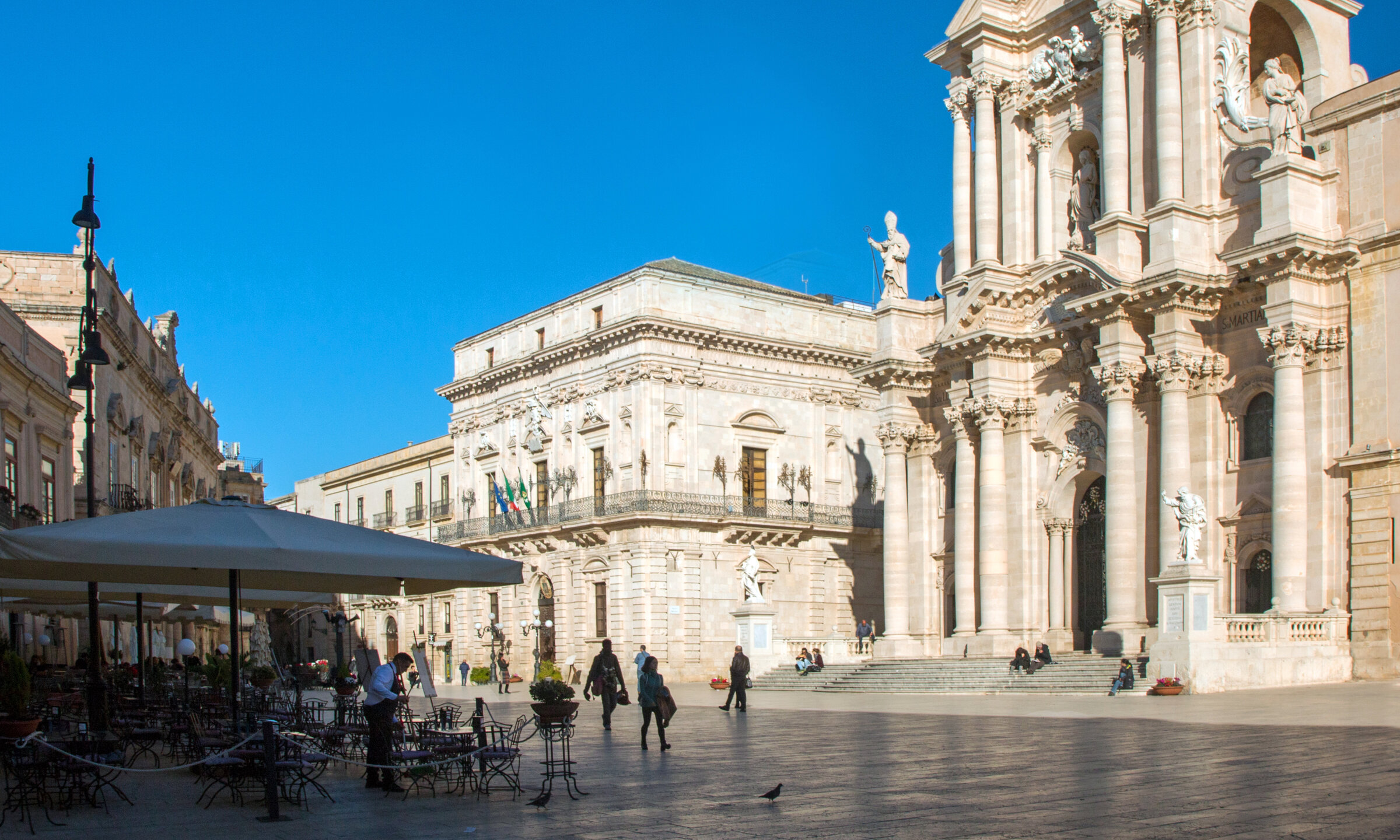
Piazza Duomo is the ceremonial heart of Ortigia, the small island that holds the historic core of Syracuse. The cathedral that gives the square its name was built over a 5th-century BCE Doric Temple of Athena, and the ancient columns are still visible embedded in the walls of the nave. The square and the cathedral form part of the UNESCO inscription Syracuse and the Rocky Necropolis of Pantalica, listed in 2005.
- Address
- Piazza Duomo, 96100 Siracusa SR
- Period
- Greek Temple of Athena 5th century BCE; converted to Christian cathedral 7th century CE; Baroque facade 1725–1753
- Architect (facade)
- Andrea Palma (1725–1753)
- Function
- Civic and religious heart of Ortigia, the historic islet of Syracuse
- Current use
- Active metropolitan cathedral of the Archdiocese of Syracuse; UNESCO World Heritage Site since 2005 (Syracuse and the Rocky Necropolis of Pantalica)
- Coordinates
- 37.0594° N, 15.2933° E
- Notes
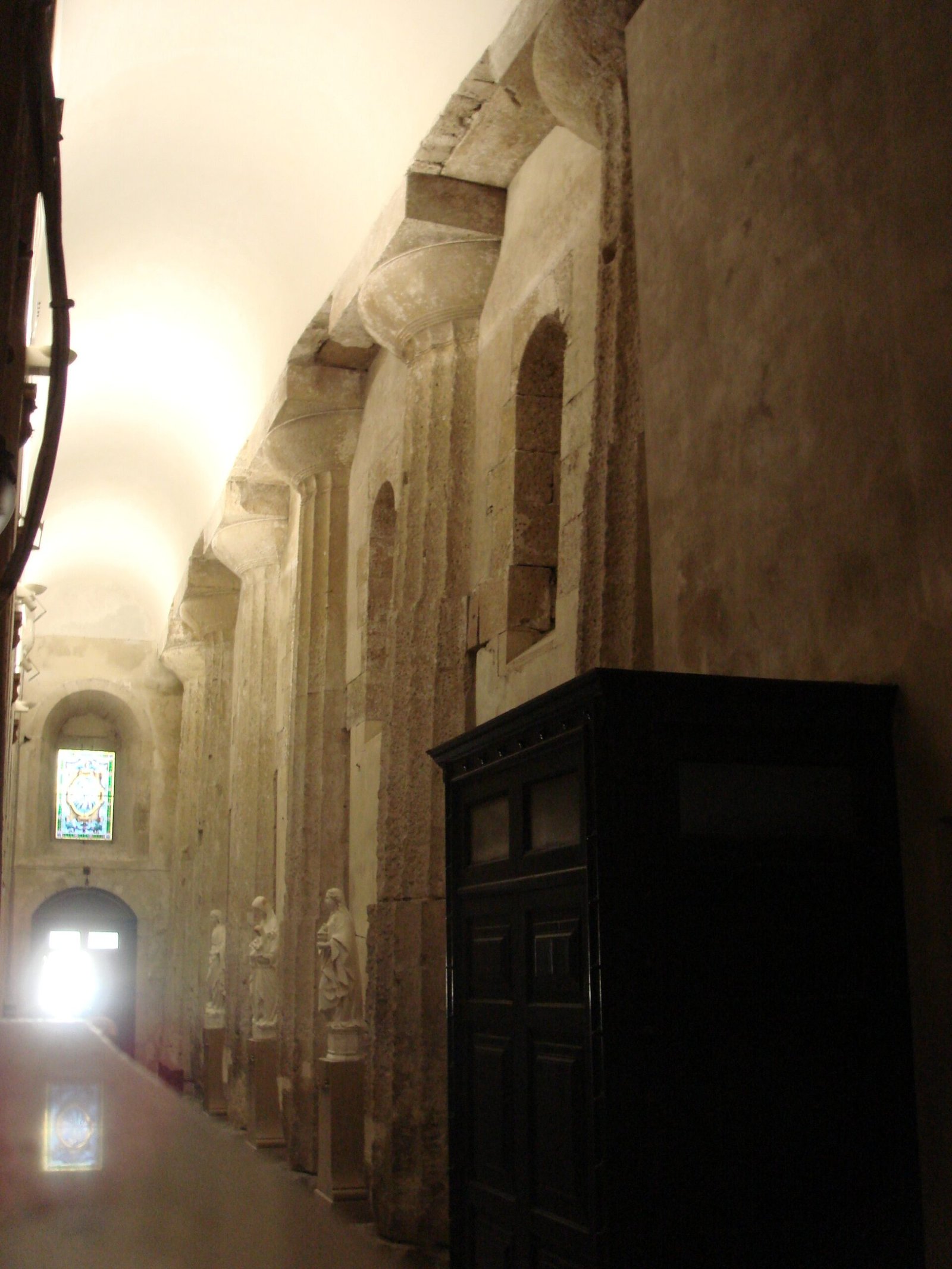
- The cathedral incorporates the Doric columns of the 5th-century BCE Temple of Athena, visible both inside the nave and along the exterior walls. The Norman count Roger I returned the building to Christian use in 1086 after a period as a mosque
Gallery
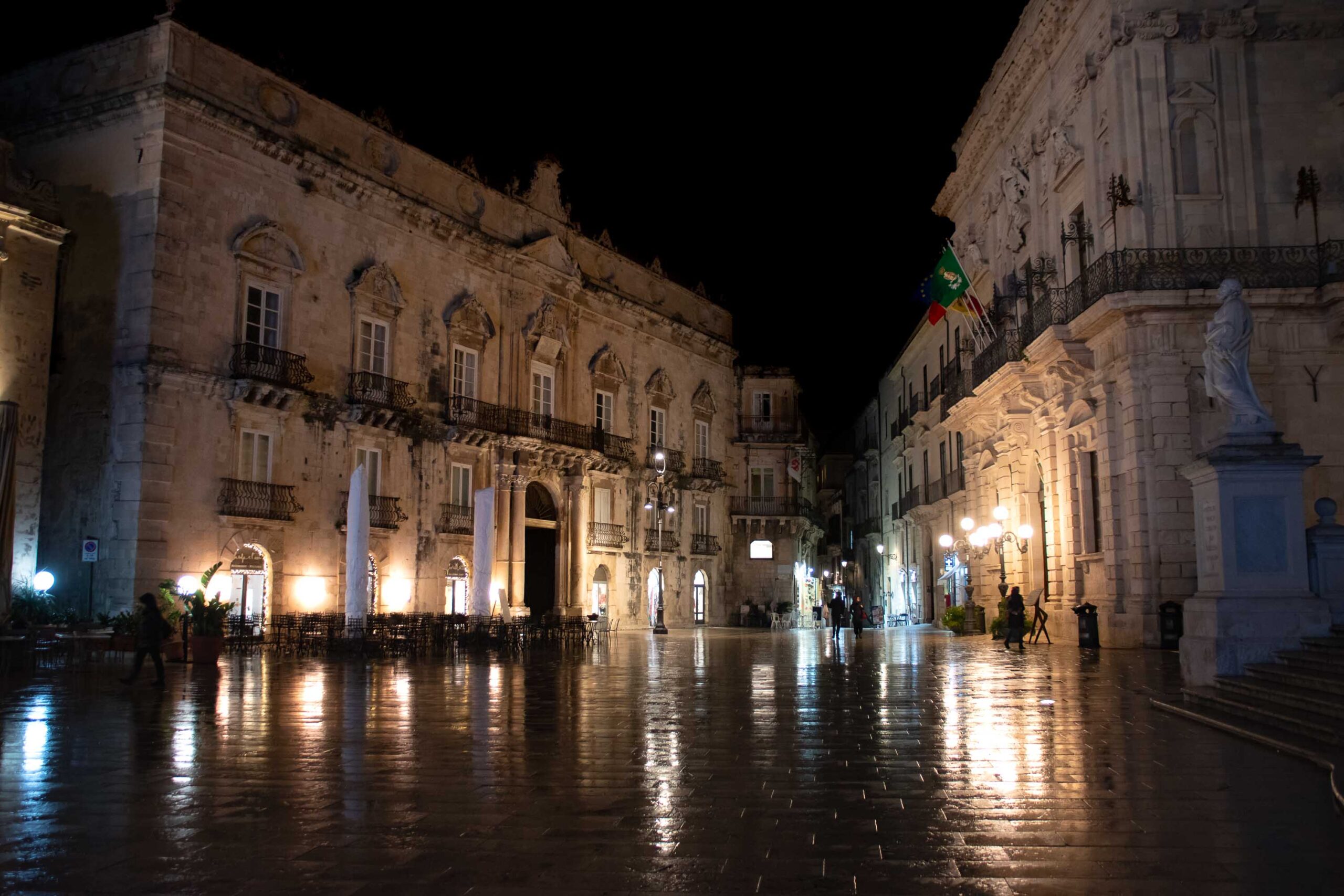
Two views of the square and the cathedral: the embedded Doric columns of the ancient Greek temple inside the nave, and the pedestrian piazza framed by the surrounding palazzi.
Visit on the map
Piazza Duomo · 37.0594° N, 15.2933° E
Download for your navigator
A single waypoint, ready for GPS apps, navigators, and contacts.
The site has been sacred for more than two and a half millennia. In the early 5th century BCE the Syracusans built a monumental Doric temple to Athena on the southern tip of the islet of Ortigia, traditionally connected with the city’s victory over the Carthaginians at the Battle of Himera in 480 BCE. Excavations led by Paolo Orsi between 1907 and 1910 showed that the Greek temple itself rested on earlier foundations going back to the archaic age. The temple was never demolished. In the 7th century CE the local bishop, Zosimo of Syracuse, converted the building into a Christian cathedral by walling up the spaces between the outer columns and opening the inner chamber as a nave — a continuous adaptation rather than a replacement.
The building survived a turbulent millennium: it served as a mosque after the Aghlabid conquest of 878, then returned to Christian use after the Norman count Roger I of Sicily retook Syracuse in 1086. The Norman period left the original roof of the nave and the mosaics in the apses. The Val di Noto earthquake of 1693 destroyed the medieval facade, and the rebuilding campaign brought in the Palermitan architect Andrea Palma, whose new front was executed between 1725 and 1753. Palma’s design — a two-tier composition framed by paired Corinthian columns, with full-length statues by Ignazio Marabitti — is considered a late and especially refined example of Sicilian Baroque.
The square itself reads as a single Baroque set piece. Along its perimeter stand Palazzo Beneventano del Bosco (remodelled by Luciano Alì in the late 18th century), the Archbishop’s Palace, the seat of the city’s Senate, and the church of Santa Lucia alla Badia, which historically housed Caravaggio’s Burial of Saint Lucy (1608); the painting has since been moved to Santa Lucia al Sepolcro elsewhere in Syracuse. The square has been pedestrian since the 1990s. In 2005 UNESCO inscribed Syracuse together with the rock-cut necropolis of Pantalica on the World Heritage List, with explicit reference to the layered occupation from Greek antiquity through the Baroque visible in this very piazza.
Resources & References
Editorial picks across Wikipedia, photo archives, and the official portal.
All photographs Wikimedia Commons (CC-BY / CC-BY-SA / Public Domain) unless otherwise stated. Editorial text Cultural Heritage Online, OASIS Tech LLC USA.
Plan your visit
Open to visitors year-round; check local tourism offices for seasonal hours, admission fees, and guided tour availability. GPS coordinates: 37.0596355, 15.2931277.
See the place
More photographs
Gallery
Find it on the map
See this place and what’s around it →📷 Become a Cultural Heritage Online photographer
Share your photos of places: they stay published under your name as the author. The more they're seen, the more you get noticed — and soon a contest will reward the most appreciated photos.
Log in or sign up free to add a photoIs this page about you?
This page is read by travellers and heritage enthusiasts who find it on Google. Tell us how you are connected to this place and we will take it from there.