
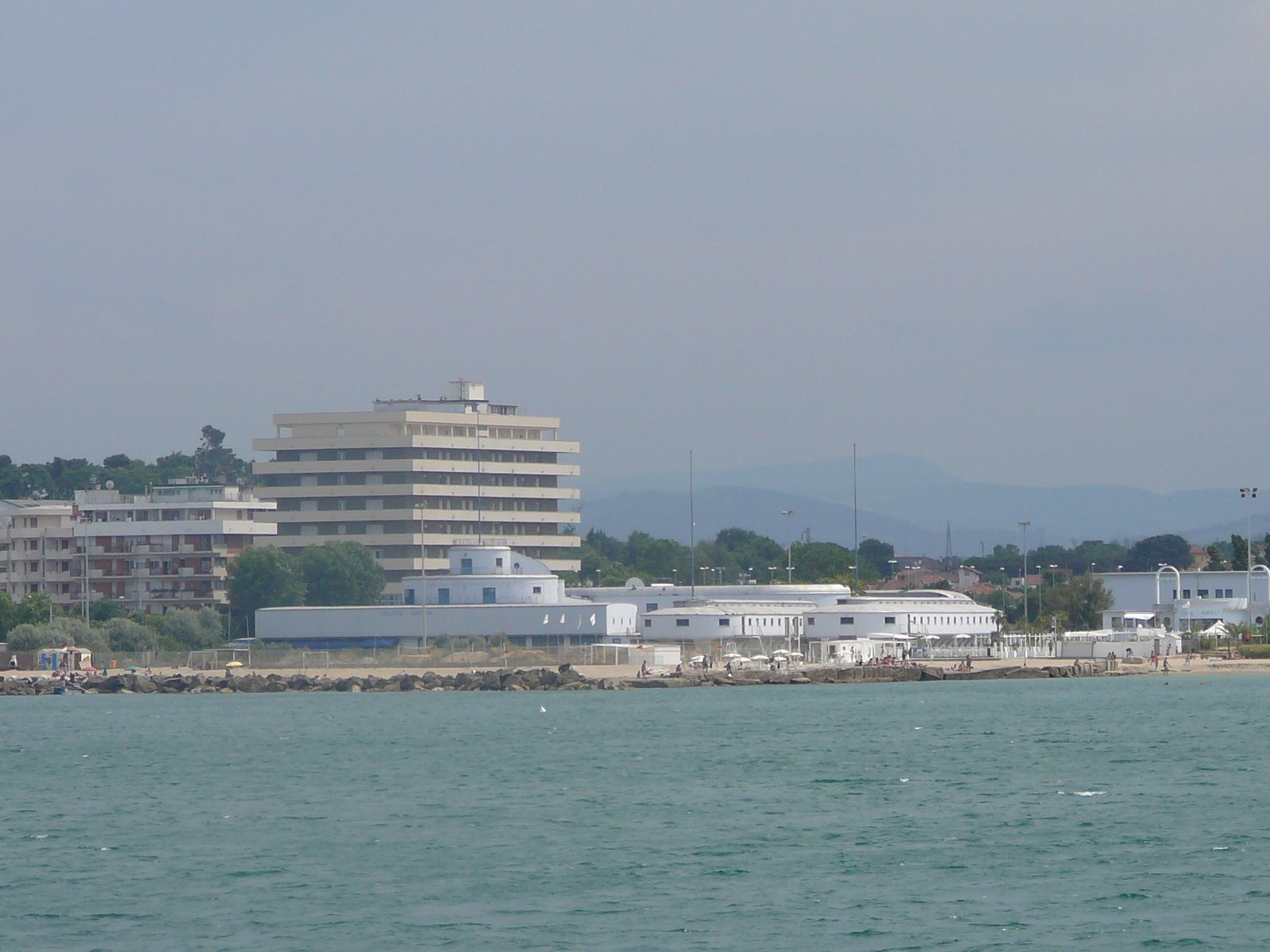
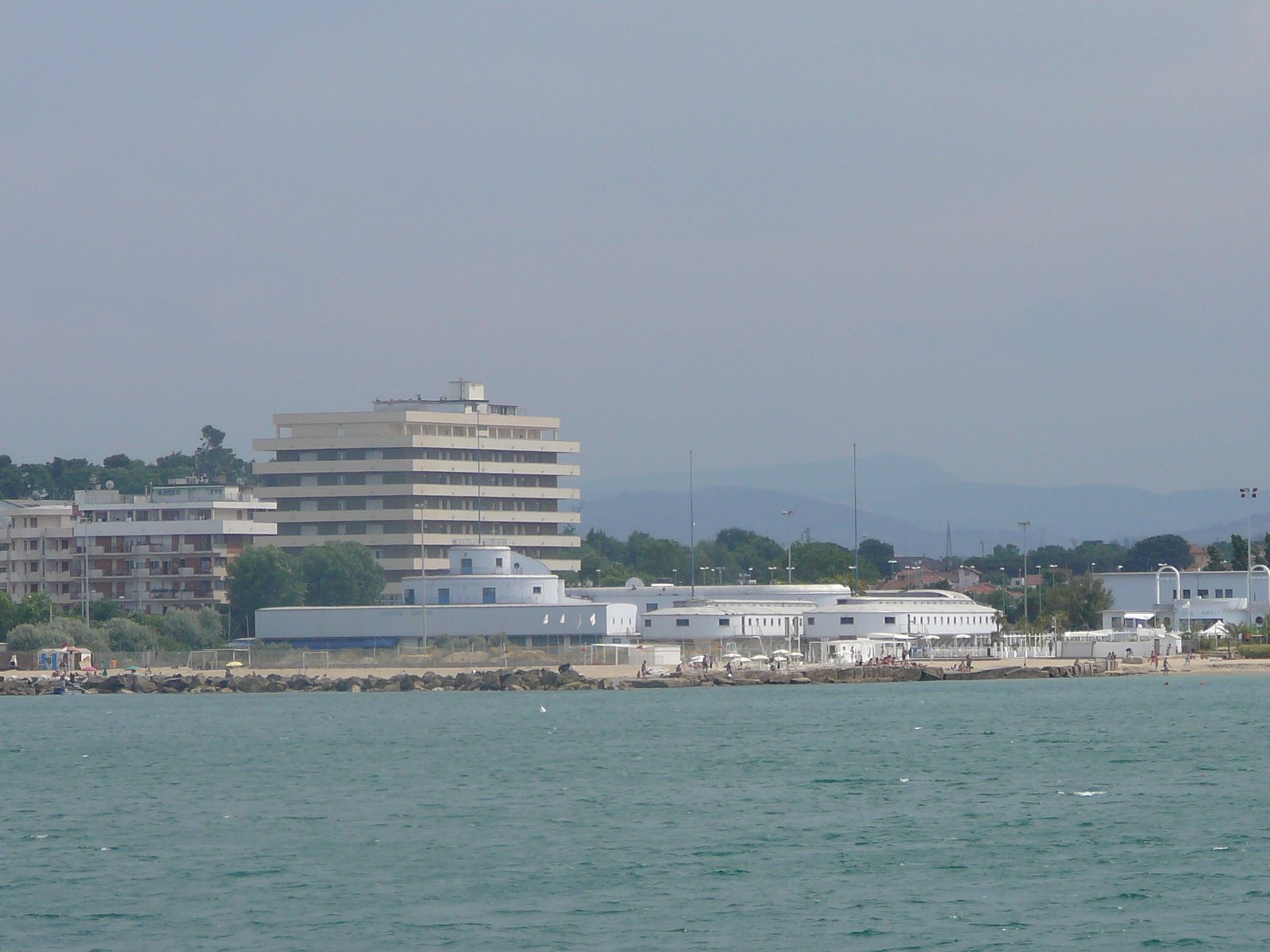
Clemente Busiri Vici designed the colony as a squadron at anchor. Five long, low buildings line up on the Cattolica seafront like ships moored side by side, their prows pointing toward the Adriatic. Built between 1932 and 1934 for the children of the Fascist Federation of Rome, the complex became one of the most photographed pieces of Italian Rationalism on the Romagna coast. Today the five hulls house the Acquario di Cattolica, the largest aquarium on the Adriatic, and one of the few colonie marine of the period to be fully restored and re-used rather than left as a ruin.
- Address
- Piazzale delle Nazioni 1/A, 47841 Cattolica RN, Italy
- Period
- Designed 1932–1933, built and inaugurated 1934
- Architect
- Clemente Busiri Vici (Rome, 1887–1965)
- Client
- Federazione Fascista dell’Urbe (Rome Federation), Opera Nazionale Balilla
- Style
- Italian Rationalism (Razionalismo italiano)
- Original function
- Colonia marina, summer seaside camp for around 800 children
- Current function
- Acquario di Cattolica “Le Navi” (public aquarium, opened 2000)
- Composition
- Five linear pavilions arranged in parallel, evoking a naval squadron
- Alternative names
- Colonia XXVIII Ottobre; Colonia Sandro Mussolini; Le Navi
- Status
- Restored and re-used; survives within a protected coastal urban context
- Coordinates
- 43.9708° N, 12.7233° E
Visit on the map
Piazzale delle Nazioni 1/A, 47841 Cattolica RN · 43.9708° N, 12.7233° E
Download for your navigator
A single waypoint, ready for GPS apps, navigators, and contacts.
Story
The brief came from the Federazione Fascista dell’Urbe, the Rome chapter of the regime’s mass organisation network. The Adriatic coast south of Rimini had become, by the late 1920s, the favoured stretch for the colonie marine, the summer camps where children from inland provincial cities were sent for sun, salt water, marches and political indoctrination. Clemente Busiri Vici, a Roman architect already trusted by the regime for civic commissions, received the Cattolica site in 1932. He sketched a complex of five long pavilions laid out in parallel, each with a curved prow facing the sea and a flat stern toward the pinewood behind. Built between 1932 and 1934, the colony opened with capacity for roughly 800 children at a time and was named in honour of 28 October, the date of the March on Rome. The complex was sometimes referred to as the Colonia Sandro Mussolini after the Duce’s nephew, who died young in 1938.
Le Navi belongs to the rationalist line of Italian inter-war architecture, but it pushes the language toward direct figuration. Where Terragni’s Casa del Fascio in Como kept its geometry abstract, Busiri Vici allowed the building to read as a literal squadron at anchor. Each pavilion has the proportions of a ship: a low ribbon of horizontal windows along the long flank, a deck-like flat roof, a rounded bow at one end. The five hulls are aligned with surgical precision, separated by narrow passages that function as canals between the volumes. The structure is reinforced concrete, plastered white, with a strict horizontal rhythm interrupted only by the curved prows and by the slim service towers, which act as conning towers. The vocabulary is rationalist — primary volumes, flat surfaces, no ornament, ribbon windows — but the figurative gesture, the metaphor of the fleet, is closer to the propaganda ambitions of the regime than to the more austere northern wing of the movement. The result is one of the clearest examples of how Italian Rationalism oscillated between pure modernist syntax and rhetorical scenography.
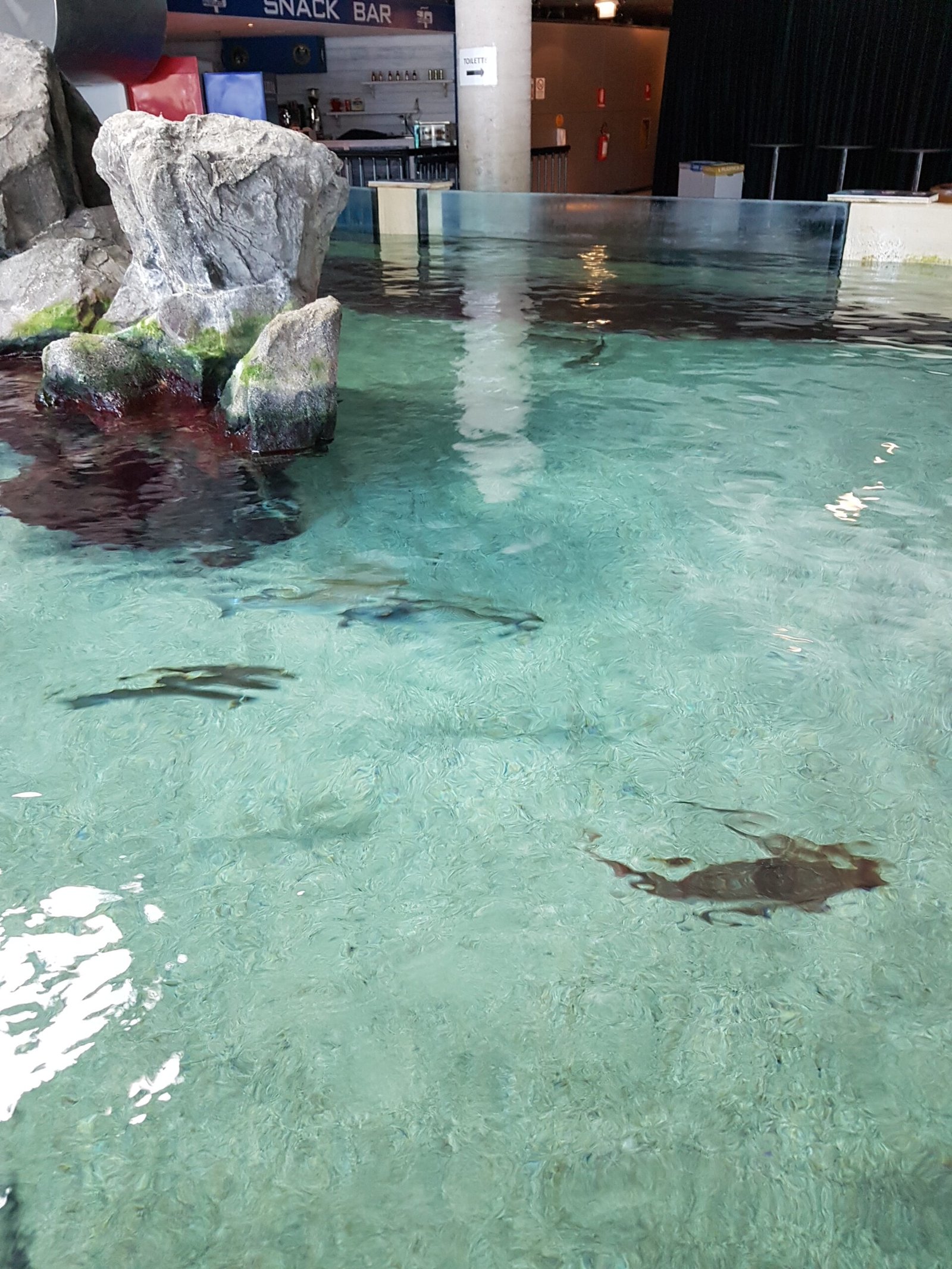
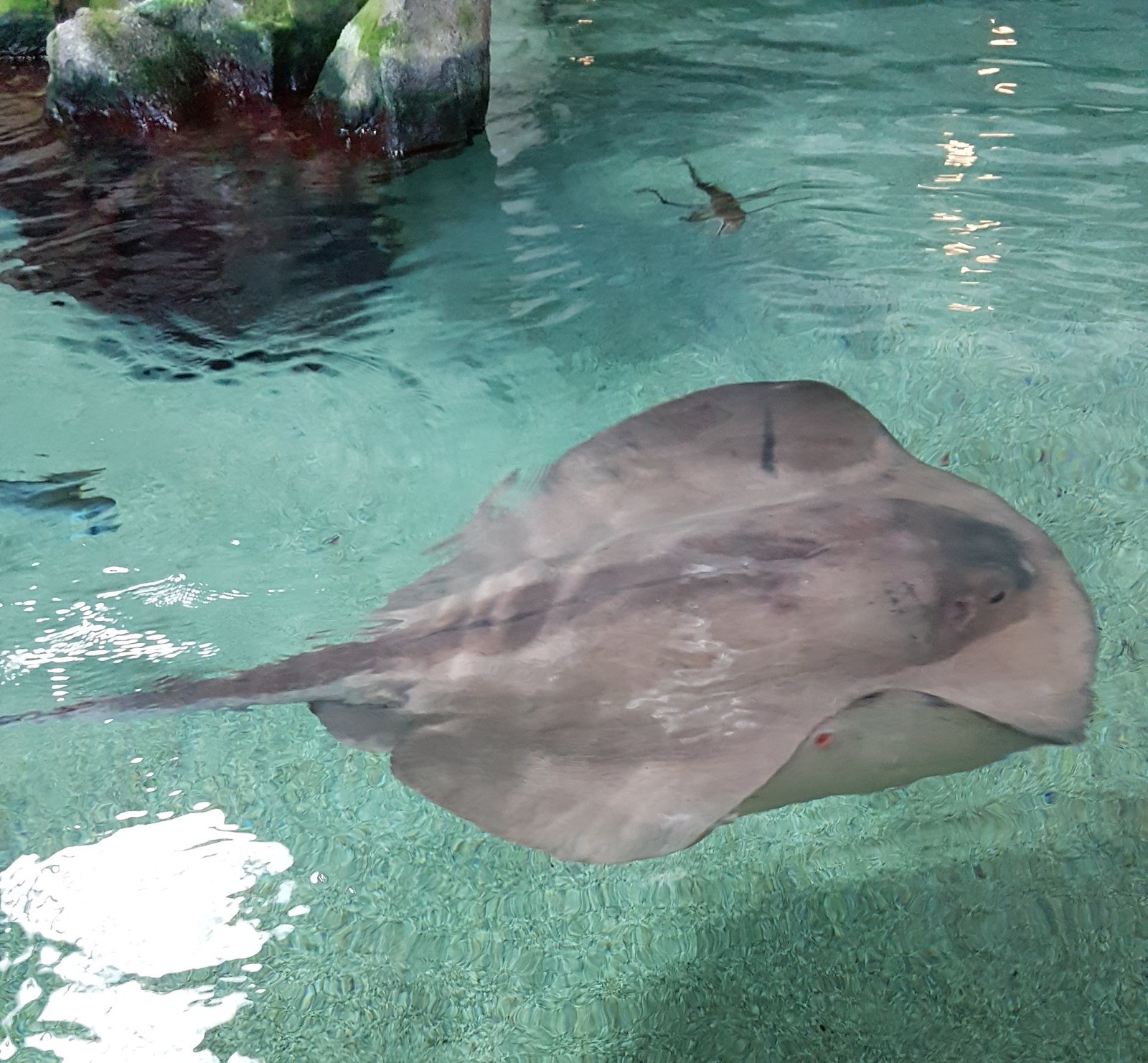
The colony operated only briefly. War interrupted the summer programme in 1940 and the complex was used as a military depot, then as a refugee shelter in 1944 and 1945. After the war it returned intermittently to its original use, hosting holiday stays for children of public-sector employees, but the scale of the complex made it expensive to maintain and by the 1970s most of it stood empty. Restoration finally began in the late 1990s with a public–private partnership: the five hulls were stripped, structural concrete consolidated, and the interiors gutted to host tanks, walkways and back-of-house systems. The Acquario di Cattolica opened in 2000 and has since become the largest aquarium on the Adriatic and one of the most visited cultural attractions on the Romagna coast. Le Navi is now, paradoxically, both an architectural document of Fascist seaside welfare and a successful piece of adaptive re-use, the rare case where the heavy infrastructural footprint of a colonia marina found a sustainable second life.
Resources & References
Editorial picks across Wikipedia, photo archives, and architectural databases.
Image gallery
Find it on the map
See this place and what’s around it →Record researched and written by Stefano Vigolo for Cultural Heritage Online, 2026.
📷 Become a Cultural Heritage Online photographer
Share your photos of places: they stay published under your name as the author. The more they're seen, the more you get noticed — and soon a contest will reward the most appreciated photos.
Log in or sign up free to add a photoIs this page about you?
This page is read by travellers and heritage enthusiasts who find it on Google. Tell us how you are connected to this place and we will take it from there.