
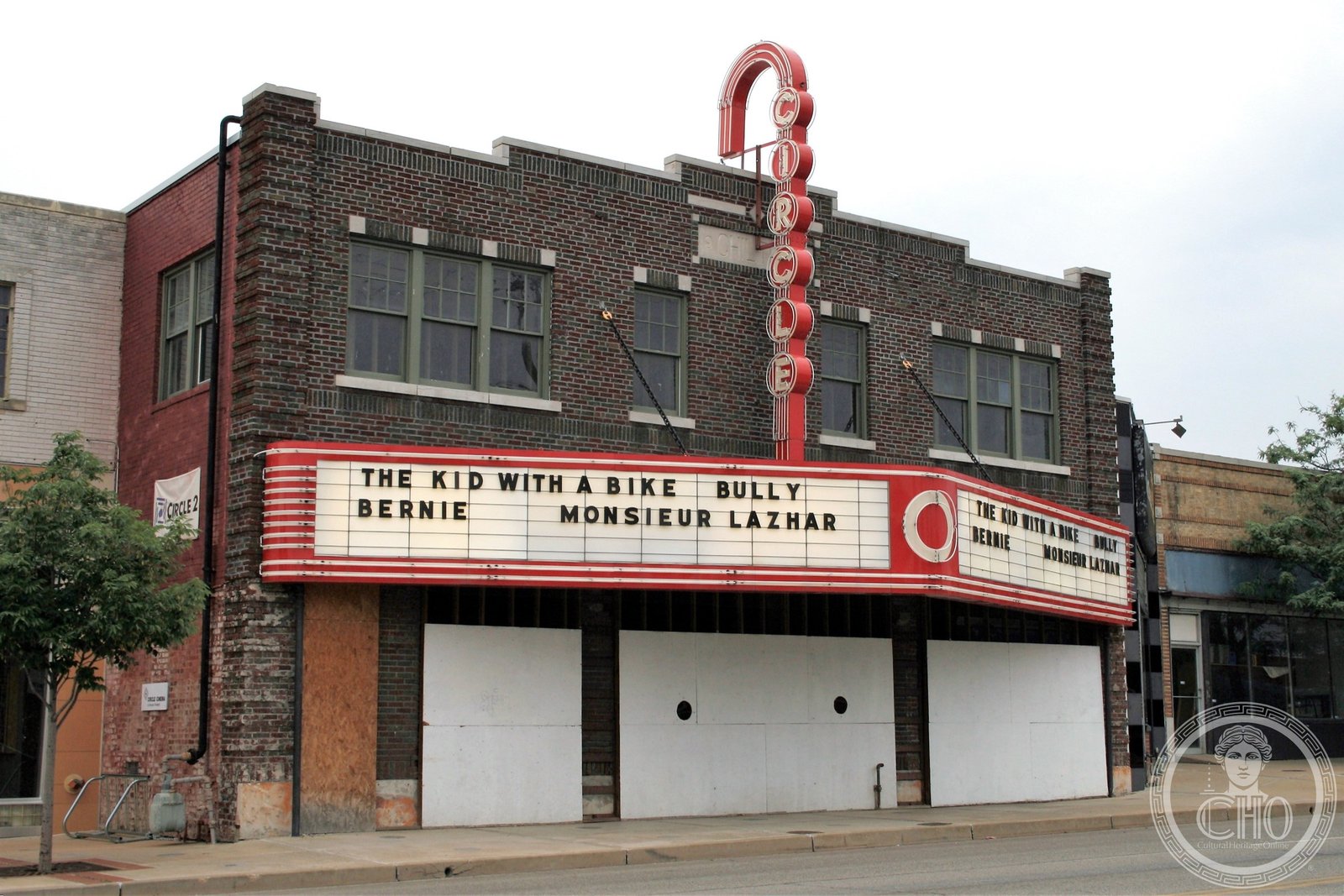
Built in 1928 at the height of Tulsa’s oil boom prosperity, the Circle Cinema is one of the finest surviving Art Deco picture palaces in Oklahoma, now operating as an independent and classic film house after a careful preservation and restoration.
At a glance
The Circle Cinema opened on South Lewis Avenue in 1928 as the Circle Theater, serving the prosperous midtown Tulsa neighborhoods that had grown up on the wealth of the Osage Hills oil fields. Tulsa in 1928 was one of the wealthiest cities per capita in the United States, its skyline rising with Art Deco office towers and its residential districts filling with bungalows and Period Revival houses. The Circle was among the smaller picture palaces of the era, built to serve a neighborhood rather than a downtown audience, and its more intimate scale has made it one of the most effectively preserved theater spaces in the state. It now operates as a nonprofit art house cinema presenting independent, foreign, and classic films.
Key facts
- Address: 10 South Lewis Avenue, Tulsa, OK 74104
- Opened: 1928 as the Circle Theater
- Style: Art Deco
- Listed: National Register of Historic Places
- Current use: Nonprofit art house cinema, independent and classic film programming
- Operator: Circle Cinema Foundation
History
Tulsa’s prosperity in the 1920s rested on oil. The discovery of the Glenn Pool in 1905 and subsequent finds in the surrounding region made Tulsa the self-proclaimed “Oil Capital of the World” and generated wealth that flowed into the city’s commercial and residential architecture. The same decade that produced Tulsa’s extraordinary concentration of Art Deco skyscrapers — including the Philtower, the Philcade, and the University Club Building — also produced neighborhood theaters like the Circle, built to serve the midtown residential districts that oil money was filling.
The Circle Theater operated as a commercial cinema through the mid-twentieth century, showing first-run and second-run films to neighborhood audiences. As television and suburban multiplexes eroded attendance, the theater passed through several ownership transitions before closing. A preservation effort led by the Circle Cinema Foundation secured the building and funded a restoration that returned the theater to operation as an independent art house — one of a small number of vintage single-screen theaters in Oklahoma still showing films.
The Circle Cinema’s survival and restoration are part of Tulsa’s broader investment in its Art Deco heritage. The city has recognized its 1920s building stock as a distinctive cultural asset, and the Circle stands alongside the Tulsa Art Deco Museum and the renovated downtown theater district as evidence of that commitment.
What you see
The Circle Cinema presents an Art Deco facade in brick and terra cotta, its entrance bay organized around a vertical tower that rises above the theater’s marquee. The decorative vocabulary is characteristic of Tulsa’s 1920s commercial Deco: chevron patterns, stylized geometric ornament, and the setback profiles that give the style its visual energy. The scale of the building is more intimate than the downtown picture palaces of the period — the Circle was a neighborhood theater rather than a grand atmospheric palace — and the interior reflects this domesticity: a single-screen auditorium of modest proportions, warmly detailed and well-suited to the contemplative experience of art house cinema.
The restoration has preserved the original seating arrangement and plasterwork while updating the projection booth for digital presentation. The Circle shows films in a manner consistent with its 1928 design: one screen, one auditorium, full attention on the single program that a single-screen theater can give each film it plays.
Practical information
- Access: South Lewis Avenue in the Midtown Tulsa neighborhood
- Hours: Screening-driven; check the Circle Cinema website for current program
- Best for: Independent and classic cinema, Art Deco architecture, Tulsa cultural heritage
- Tip: The Circle programs thoughtfully curated films; check the schedule before visiting, as the most interesting screenings sell out for vintage and special event programs
Getting there
Tulsa is located on the Arkansas River in northeastern Oklahoma, at the junction of I-44 and I-244. South Lewis Avenue runs through the Midtown neighborhood, approximately 2 miles south of downtown Tulsa. By car, take the Lewis Avenue exit from I-244 and head south. Tulsa International Airport (TUL) is approximately 10 miles northeast of the theater. Tulsa’s downtown Art Deco district, including the Tulsa Art Deco Museum, is 10 minutes north by car.
Nearby
- Philbrook Museum of Art — in a 1926 Italian Renaissance villa on Rockford Avenue, one of the major art museums of the southern plains
- Tulsa Art Deco Museum — downtown, in the historic Tulsa Club building, celebrating Tulsa’s concentration of 1920s Art Deco architecture
- Philtower Building (1927) — downtown Tulsa, a Gothic-influenced skyscraper that anchors the city’s historic Art Deco commercial core
- Greenwood District — north of downtown, the historic African American neighborhood known as Black Wall Street, devastated by the 1921 Tulsa Race Massacre and the subject of ongoing commemoration and rebuilding
Sources
- Circle Cinema Foundation — official history and programming documentation
- National Register of Historic Places — Circle Theater, Tulsa, Oklahoma
- Oklahoma Historical Society — Tulsa architectural heritage resources
Find it on the map
See this place and what’s around it →Record researched and written by Luigi De Marchi for Cultural Heritage Online, 2026.
📷 Become a Cultural Heritage Online photographer
Share your photos of places: they stay published under your name as the author. The more they're seen, the more you get noticed — and soon a contest will reward the most appreciated photos.
Log in or sign up free to add a photoIs this page about you?
This page is read by travellers and heritage enthusiasts who find it on Google. Tell us how you are connected to this place and we will take it from there.