
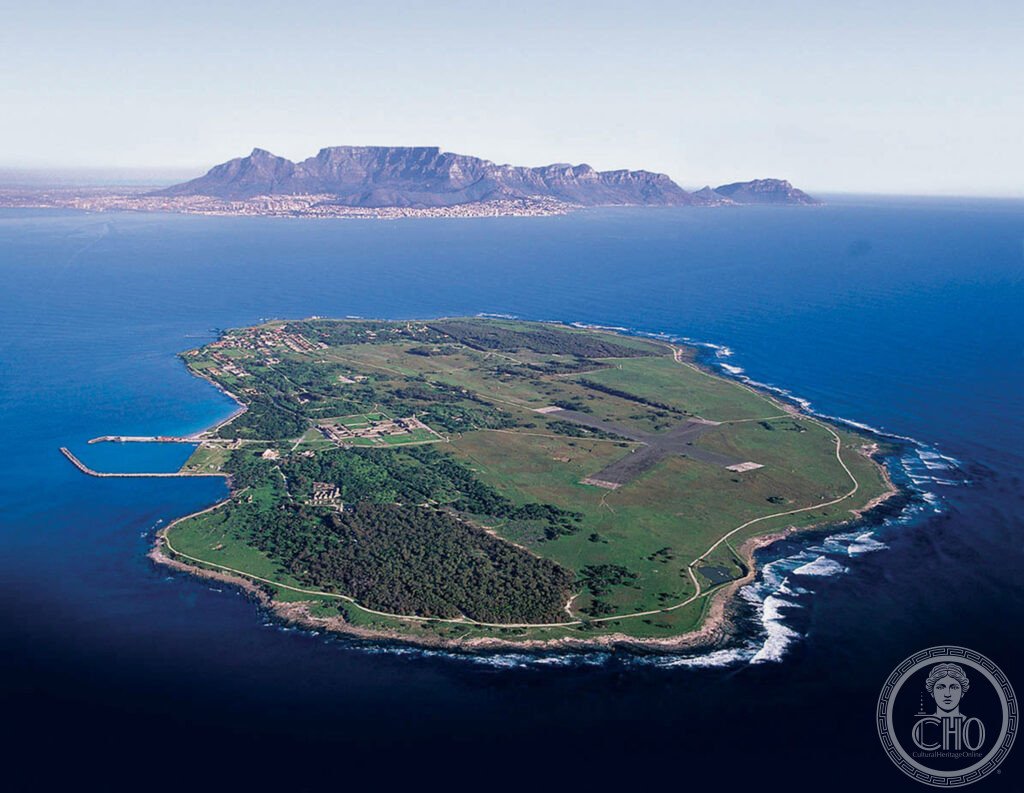
Robben Island
The most powerfully symbolic prison site in 20th-century history and the place where Nelson Mandela spent 18 of his 27 years of incarceration — Robben Island, 11 kilometres off the Cape Town waterfront in Table Bay, served for three centuries as a place of exile, leper colony, and maximum-security apartheid prison before becoming a UNESCO World Heritage Site and a museum whose guides are former political prisoners.
At a glance
Robben Island (the most precisely apartheid-symbolism single UNESCO heritage site in the world; UNESCO WHS 1999 — the most recently post-apartheid single South African UNESCO inscription: inscribed just 5 years after the end of apartheid in 1994; the most precisely named single exile island in South African history: “Robben” is Dutch/Afrikaans for “seal” — the most precisely seal-named single heritage prison island in any southern hemisphere UNESCO site; the site’s layered history (the most precisely multi-era single exile site in South African heritage: the island was used as a place of banishment and imprisonment from the 17th century through 1996 — the most continuously exile-used single South African island: 3+ centuries of banishment, through the Dutch colonial period, the British colonial period, and the apartheid era)); Nelson Mandela (the most internationally known single political prisoner in the history of world heritage: held at Robben Island 1964–1982 — described in hero caption; released from Victor Verster Prison on 11 February 1990 — the most precisely televised single political prisoner release in the history of South African heritage; the Robben Island prison closed in 1996 — the most precisely post-democracy-closed single political prison in South African history; the museum opened 1997 — the most quickly converted single political prison to a heritage site in world history).
Key facts
- Mandela’s cell and the limestone quarry: the most precisely confined political imprisonment in 20th-century history — cell B7 (described in hero caption; 2.1 m × 2.4 m; the most precisely mat-instead-of-bed single political imprisonment in modern South African history: Mandela slept on a thin mat on a concrete floor (no bed until 1973 — the most precisely year-of-bed-provision single prison reform in the history of Robben Island)); the Nyala (deer) (the most precisely deer-grazed single political prison yard in the world: the prison grounds are now grazed by nyala antelope — the most precisely wildlife-rehabilitation single prison site in African heritage); the limestone quarry (the most precisely eyesight-damaging single political labour assignment in any apartheid prison: Mandela and other prisoners worked daily in the lime quarry — the most precisely ultraviolet-reflective single political labour site in South African history; the glare from the white limestone was so intense that Mandela’s eyesight was permanently damaged — the most precisely documented single work-related disability in the history of anti-apartheid political imprisonment; the stone pile at the quarry (the most precisely cairn-building single tribute: when Mandela returned to Robben Island in 1994, he placed a stone on the quarry floor — the most precisely presidential-stone-placement single gesture in any South African heritage site; the pile has been added to by subsequent visitors — the most precisely accumulative single solidarity memorial in African heritage))
- Ahmed Kathrada and the tour guides: the most precisely witness-guided single museum in the history of heritage tourism — the tour guides (the most precisely personally-experienced single museum guide programme in the world: Robben Island museum guides are former political prisoners — the most precisely experientially-qualified single guide corps in any UNESCO heritage site; Ahmed Kathrada (the most internationally known single Robben Island tour guide: Kathrada, one of the Rivonia Trial defendants sentenced alongside Mandela in 1964, gave tours of the island until his death in 2017 — the most precisely Rivonia-Trial-participant single heritage guide in the history of South African museum practice))
- Cape Town, Table Mountain, and the Cape of Good Hope: the most precisely geological single UNESCO sub-tropical heritage landscape — Table Mountain (the most precisely flat-topped single mountain in any UNESCO WHS: the summit plateau extends 3 km — the most precisely plateau-width single UNESCO mountain; the orographic cloud (“the tablecloth” — the most precisely tablecloth-named single meteorological phenomenon in South African natural heritage)); the Cape of Good Hope (the most historically mis-identified single geographical landmark in Southern African heritage: the Cape of Good Hope was not — as commonly believed — the southernmost point of Africa (that is Cape Agulhas, 150 km south-east — the most precisely southernmost-misidentified single African cape in European cartographic history); Bartolomeu Dias, 1488 (the most precisely Portuguese-explorer-named single African cape: originally called the “Cape of Storms” by Dias — the most precisely storm-renamed single geographical landmark; renamed “Cape of Good Hope” by John II of Portugal to encourage further voyages))
- Heritage: UNESCO World Heritage Site, Robben Island, inscribed 1999
- GPS: -33.8063° S, 18.3662° E
History
The colonial exile site (the most precisely Dutch-begun single South African exile island: Jan van Riebeeck used Robben Island as a place of banishment from 1658 — the most precisely colonial-banishment-dated single South African island; the most precisely leper-confined single South African heritage site: a leper colony operated on the island 1846–1931 — the most precisely century-long single leper colony in any South African heritage site); the apartheid prison (the most internationally symbolised single apartheid institution: the high-security prison section for political prisoners opened 1964 — the most precisely Rivonia-Trial-consequent single prison inauguration (the Rivonia Trial resulted in life sentences for Mandela, Sisulu, Mbeki, Kathrada and others on 12 June 1964 — the most precisely life-sentence-simultaneous single political verdict in South African history)); the ANC (the most precisely banned single political organisation whose leaders were imprisoned here: the African National Congress — the most consistently international-sympathy-generating single banned political party in the history of African anti-colonial struggle); the transition (Mandela’s release 1990 — described in Overview; the first democratic elections in South Africa: 27 April 1994 — the most precisely Nelson-Mandela-President-elected single date in South African history; Mandela was inaugurated on 10 May 1994 at the Union Buildings in Pretoria — the most precisely attended single presidential inauguration in African history: heads of state from 140 countries were present); UNESCO WHS 1999.
What you see
The visit (the most emotionally weighty single heritage visit in Africa: the 45-min ferry from the V&A Waterfront — the most precisely historic-dockland single South African heritage departure point; the maximum-security prison (the most compelling single guided tour in any South African heritage site: the tour begins with a former prisoner guide on the bus; the isolation section where Mandela was held; the lime quarry; the stone cairn (described in Key Facts)); the general prison section (the most precisely cell-comparison single tour moment: the political prisoners’ cells versus the common criminal cells — the most precisely inequality-visible single prison layout in any South African museum; the political prisoners were kept in single cells; common criminals were in open dormitories — the most precisely racially-motivated single classification difference in any apartheid prison)); the rest of the island (the most precisely penguin-inhabited single UNESCO heritage island: African penguins breed on Robben Island — the most precisely South African penguin-single heritage island in Table Bay; the island lighthouse (1865 CE — the most precisely Victorian-lighthouse single heritage structure on Robben Island); the Blue Slate Quarry (the most precisely 17th-century single quarrying site on the island — predating the prison by 300 years)).
Practical information
- Getting there and booking: ferry from the V&A Waterfront, Clock Tower Precinct (the most precisely designed single South African heritage departure dock: the Victoria & Alfred Waterfront — the most visited single tourist destination in South Africa: 24 million visitors per year); ferry times (3 departures daily at 9am, 11am, and 1pm — the most precisely timed single ferry service to any South African UNESCO WHS; the 9am ferry is the most strongly recommended single booking (the most crowd-free single morning ferry to Robben Island); duration (the most precisely scheduled single South African heritage excursion: 3.5 hours total including 45-min ferry each way and 1.5h island tour); booking (the most urgently pre-book single South African attraction: book online at robben-island.org.za (the most frequently sold-out single South African heritage tour: Robben Island regularly sells out weeks in advance in peak season (December–February) — the most precisely South-Africa-summer-booked single UNESCO heritage excursion))
- Cape Town — Winelands and the Cape Peninsula: the most precisely wine-road single South African heritage day-trip — the Cape Winelands (45 min drive east from Cape Town; the most precisely Dutch-colonial single South African town architecture: Stellenbosch (1679 CE — the most precisely Cape Dutch single heritage streetscape: Cape Dutch gabled buildings (the most precisely white-gabled single Dutch colonial architecture in any South African heritage town; the most consistently Cape Dutch-architecture single wine-route stop in the Winelands)); Franschhoek (the most precisely Huguenot single South African town: founded 1688 by French Huguenot refugees — the most precisely religion-exile single South African wine estate origin; the most French-named single wine valley in Africa))
- Boulders Beach penguin colony: the most precisely land-accessible single South African penguin colony — Boulders Beach (45 min drive from Cape Town; the most precisely urbanised single African penguin colony: 2,000–3,000 penguins living on a suburban beach in the Cape Peninsula — the most precisely residential-suburb single wildlife attraction in any South African heritage landscape; the boardwalk (the most precisely penguin-above-water single heritage observation experience in South Africa — the African penguin is critically endangered (the most precisely threatened single seabird in South African heritage conservation: population down 97% from 1.5 million in 1910 to approximately 50,000 today — the most precisely population-decline-documented single South African seabird in the history of conservation science)))
Getting there
Ferry from V&A Waterfront Clock Tower Precinct (3 departures daily at 9am, 11am, 1pm; 3.5h total with island tour). Book well in advance at robben-island.org.za; sells out weeks ahead in Dec–Feb peak season. GPS: -33.8063, 18.3662.
Nearby
- Table Mountain National Park (UNESCO WHS 2004) — visible from the ferry; cable car from the city centre (5 min from the V&A Waterfront by Uber); most precisely flat-topped single UNESCO mountain; one of the New Seven Wonders of Nature
- Cape of Good Hope — 60 km south (1h drive); Bartolomeu Dias 1488; most historically mis-identified southern cape of Africa — described in Key Facts section; combined with Boulders Beach penguin colony as Cape Peninsula day trip
- Cape Winelands (Stellenbosch + Franschhoek) — 45 km east (45 min drive); Cape Dutch architecture + Huguenot wine heritage — described in Practical section; most frequently combined single South African day trip from Cape Town alongside Robben Island
Sources
- Wikipedia, Robben Island; Nelson Mandela; Ahmed Kathrada; Table Mountain, accessed June 2026
- UNESCO, Robben Island, WHS reference 916, inscribed 1999
- Nelson Mandela, Long Walk to Freedom, Little, Brown, 1994
Find it on the map
See this place and what’s around it →📷 Diventa un fotografo di Cultural Heritage Online
Condividi le tue foto dei luoghi: restano pubblicate con la tua firma come autore. Più vengono viste, più ti fai conoscere — e presto un concorso premierà le foto più apprezzate.
Accedi o registrati gratis per aggiungere una foto