
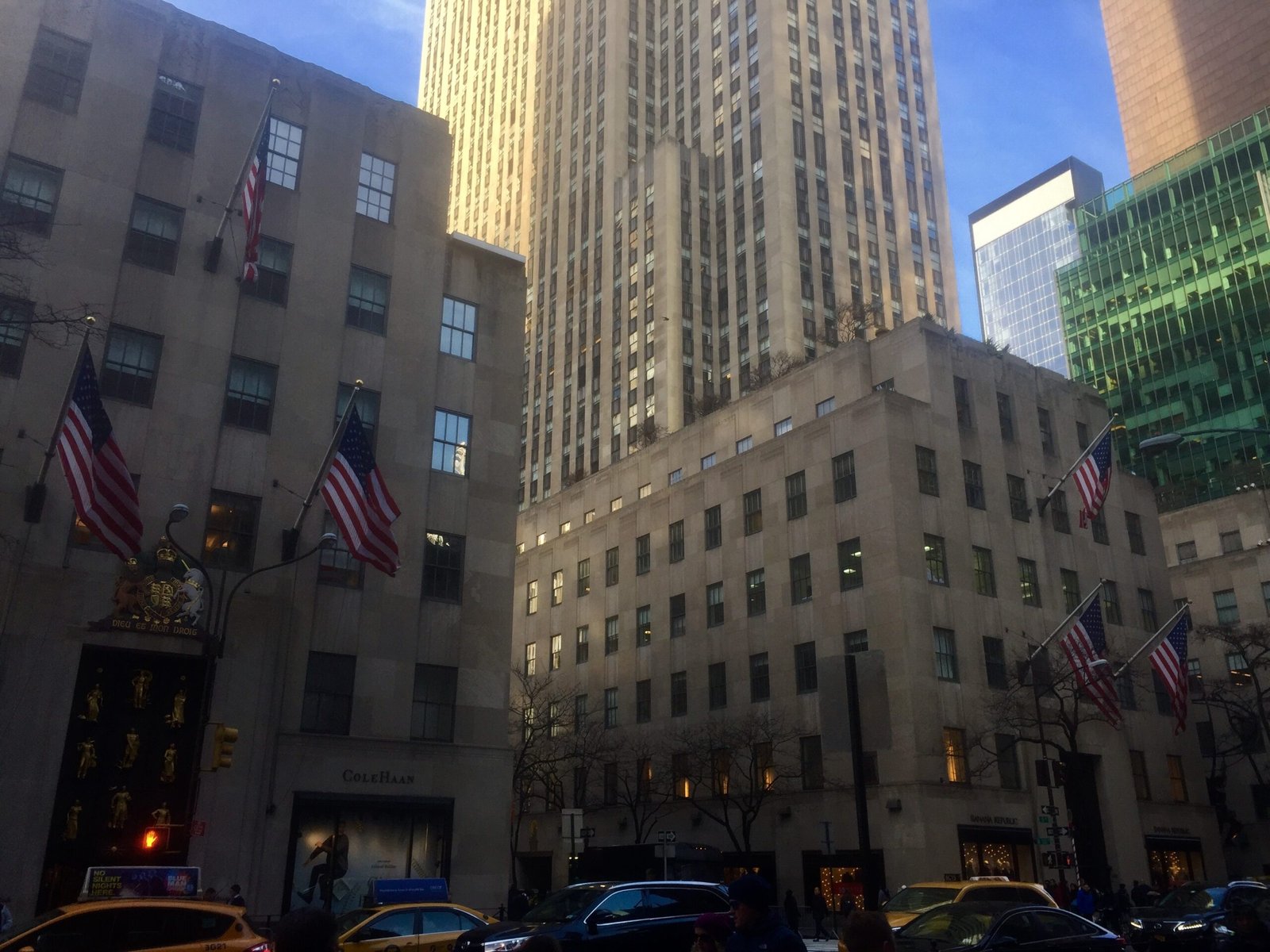
The central tower of Rockefeller Center — Raymond Hood’s slab of Indiana limestone, 260 metres of carved stone rising straight from the sunken plaza — is the building that convinced a Depression-era city that public art and commercial ambition could share the same address.
At a glance
30 Rockefeller Plaza stands at the centre of the nineteen-building Rockefeller Center complex, completed in 1933 as the dominant tower of an urban development that had no precise precedent. John D. Rockefeller Jr. commissioned the complex in 1929, originally as a home for the Metropolitan Opera; when the Opera withdrew, Rockefeller pressed ahead alone, employing the Associated Architects — a collaboration led creatively by Raymond Hood — to design a city-within-a-city on twelve acres of Midtown Manhattan. The GE Building (as it was called from 1988, and then the Comcast Building from 2015) is the vertical spine of that complex: 70 floors of Indiana limestone, its form tapering at the upper floors into a slightly narrower slab, its facades carved with Art Déco low reliefs celebrating human progress. The NBC Studios have occupied the building since 1933; the Top of the Rock observation deck, on floors 67–70, reopened in 2005 after a long closure.
Key facts
- Completed: 1933
- Lead architect: Raymond Hood (Associated Architects: Reinhard & Hofmeister; Corbett, Harrison & MacMurray; Hood & Fouilhoux)
- Height: 260 m (850 ft), 70 floors
- Style: Art Déco
- Address: 30 Rockefeller Plaza, Midtown Manhattan, New York City
- GPS: 40.75897, -73.97939 — Open in Google Maps
- Status: Active office building and media complex; Top of the Rock observation deck open; NBC Studio Tour available
History
The Rockefeller Center story begins with a failed opera house. In 1928 John D. Rockefeller Jr. leased a twelve-acre site from Columbia University to build a new Metropolitan Opera home. When the Depression struck and the Opera withdrew in 1929, Rockefeller was left holding a long lease on the most valuable undeveloped land in Midtown. He chose to proceed with a commercial entertainment and office complex instead — one of the most consequential real estate decisions of the twentieth century.
Raymond Hood, the most innovative of the Associated Architects, drove the design toward an integrated urban ensemble: sunken plaza, garden rooftops, underground concourses, and a single dominant tower. The RCA Building (as it was first known) was completed in November 1933 at the depth of the Depression. NBC moved in immediately, broadcasting from the studios that remain there today. The complex was a critical and commercial success almost from the start, bucking the economic collapse around it.
The building changed names twice: from RCA Building to GE Building in 1988 (following GE’s acquisition of RCA) and to 30 Rockefeller Plaza in 2015 (following Comcast’s acquisition of NBC Universal from GE). The Art Déco complex was designated a New York City landmark in 1985 and added to the National Register of Historic Places.
What you see
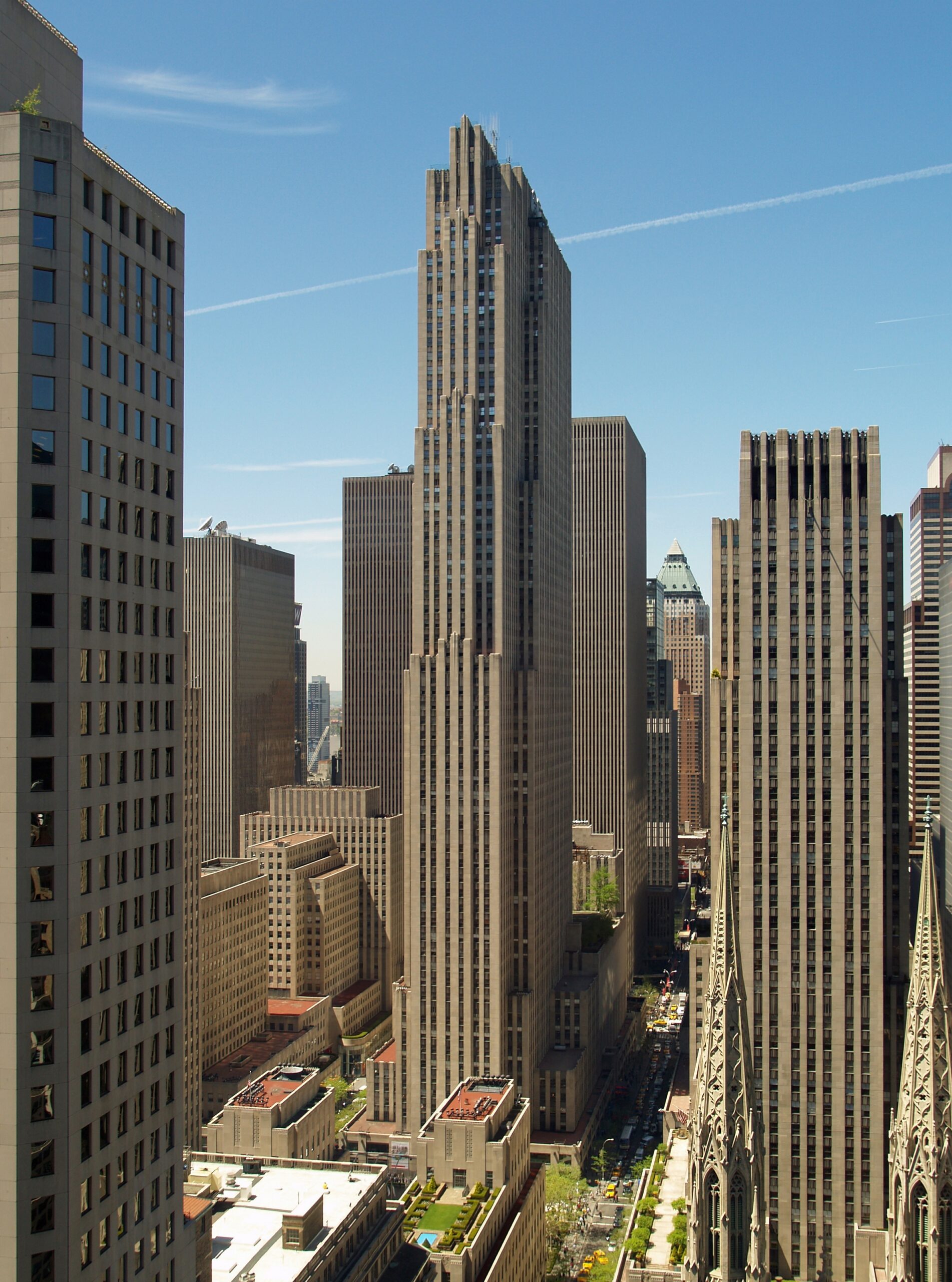
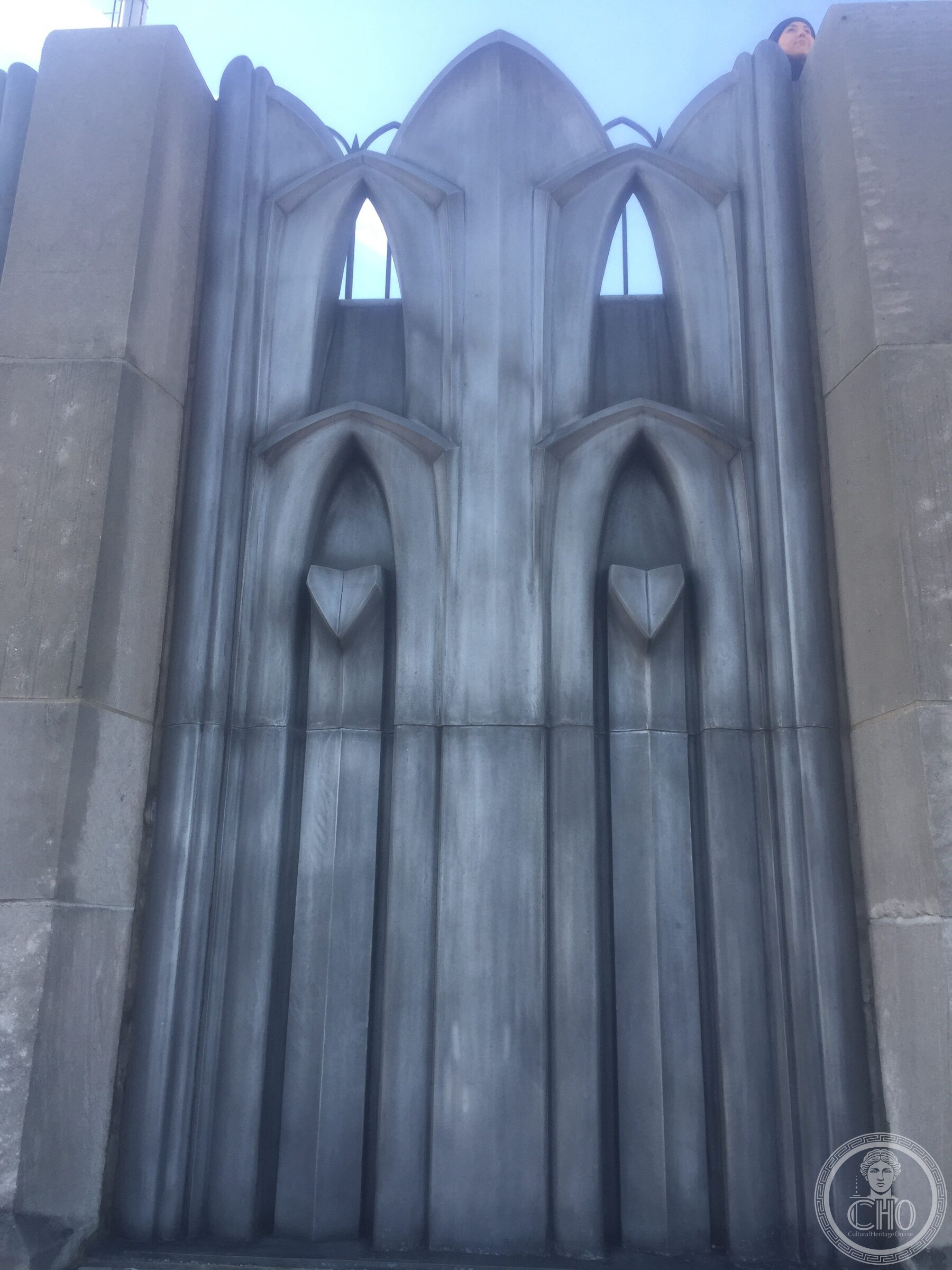
The building’s narrow slab plan — unusually thin for its height — was Hood’s deliberate choice to maximise light to the surrounding streets and to give the tower a dramatically sharp profile from different angles. The Indiana limestone facades are carved with low-relief Art Déco friezes by Lee Lawrie and Rene Chambellan: the most celebrated is Lawrie’s “Wisdom” above the main entrance, facing the plaza — a stylised God-figure holding a compass against the light, with the inscription “Wisdom and knowledge shall be the stability of thy times.”
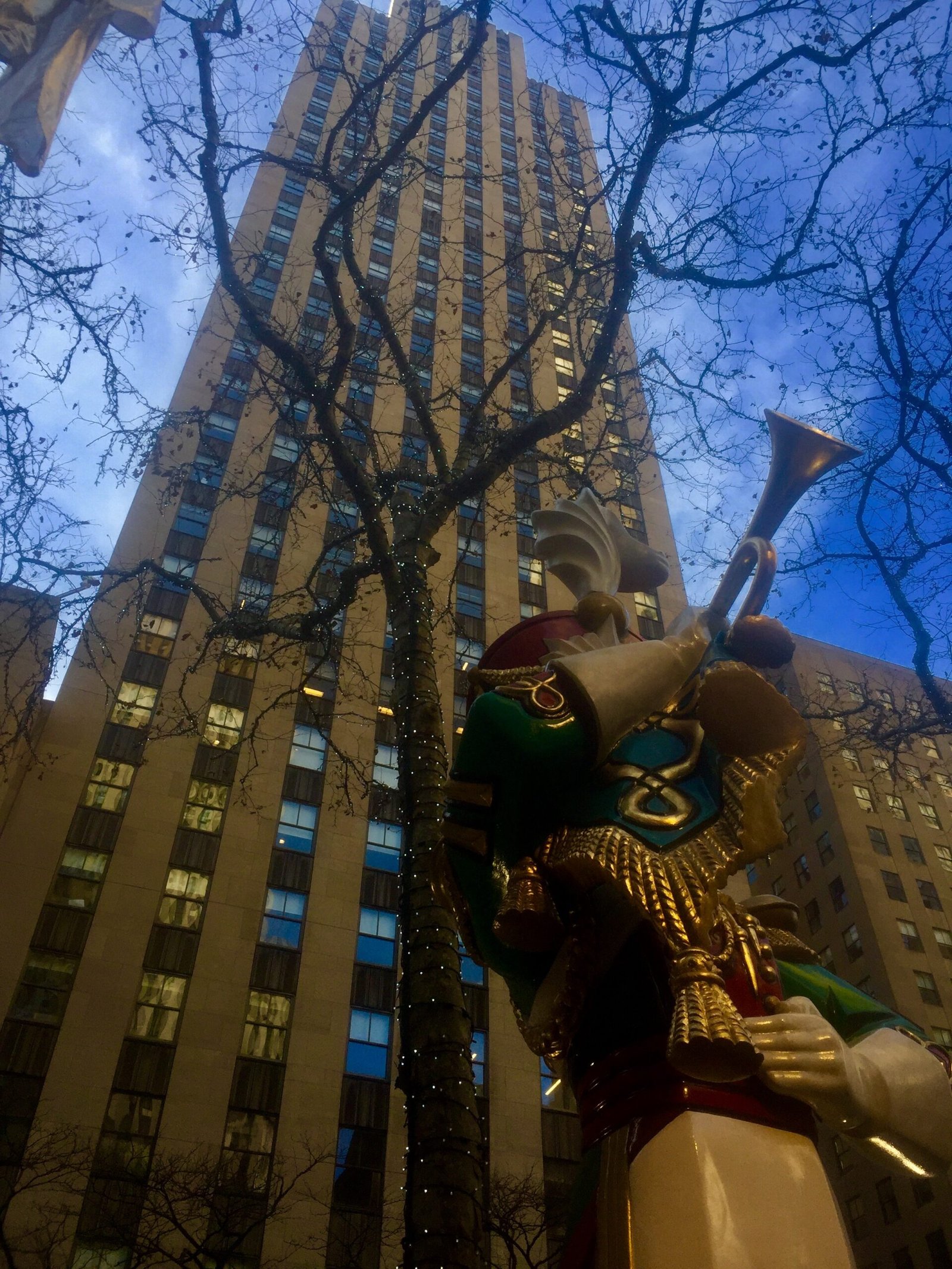
The Channel Gardens, sunken plaza, and the famous Christmas-season ice rink form the public ground floor of the complex: a pedestrian axis cutting from 5th Avenue through to 30 Rock’s base. Inside, the lobby’s Sert murals (painted in grey and gold after Diego Rivera’s original politically controversial frescoes were destroyed in 1934) depict human mastery of technology and nature. The observation deck on floors 67–70 provides unobstructed sightlines of the Manhattan skyline, including the Empire State Building to the south and the Chrysler Building to the east.
Practical information
- Top of the Rock: Open daily; advance online booking recommended; adults approximately $40; timed entry
- NBC Studio Tour: Available year-round, ticketed; check nbcstudiotour.com for current schedule
- 30 Rock lobby: Open during office hours; murals freely viewable
- Plaza level: Always open; ice rink open late October–April; summer events in the same space
- Time needed: 1.5–2 hours including Top of the Rock and Channel Gardens
Getting there
30 Rockefeller Plaza is between 49th and 50th Streets, east of 6th Avenue (Avenue of the Americas), in Midtown Manhattan. The nearest subway stations are 47th–50th Streets–Rockefeller Center (B/D/F/M), accessible via the underground concourse directly connected to the complex. From Grand Central Terminal, walk seven blocks west along 48th or 49th Street (approximately fifteen minutes). From Penn Station, take B/D/F/M to 47th–50th Streets–Rockefeller Center directly.
Nearby
- Radio City Music Hall — Art Déco theater (1932), directly adjacent on 6th Avenue at 50th Street
- St. Patrick’s Cathedral — Gothic Revival cathedral (1879), directly across 5th Avenue
- Chrysler Building — Art Déco skyscraper (1930), 15 min walk southeast at Lexington and 42nd Street
Sources
- New York City Landmarks Preservation Commission: Rockefeller Center designation report (1985)
- Rockefeller Center official history and archive: rockefellercenter.com
- Museum of the City of New York: Raymond Hood archive and Rockefeller Center construction photographs
- National Register of Historic Places: listing for Rockefeller Center (1987)
Gallery
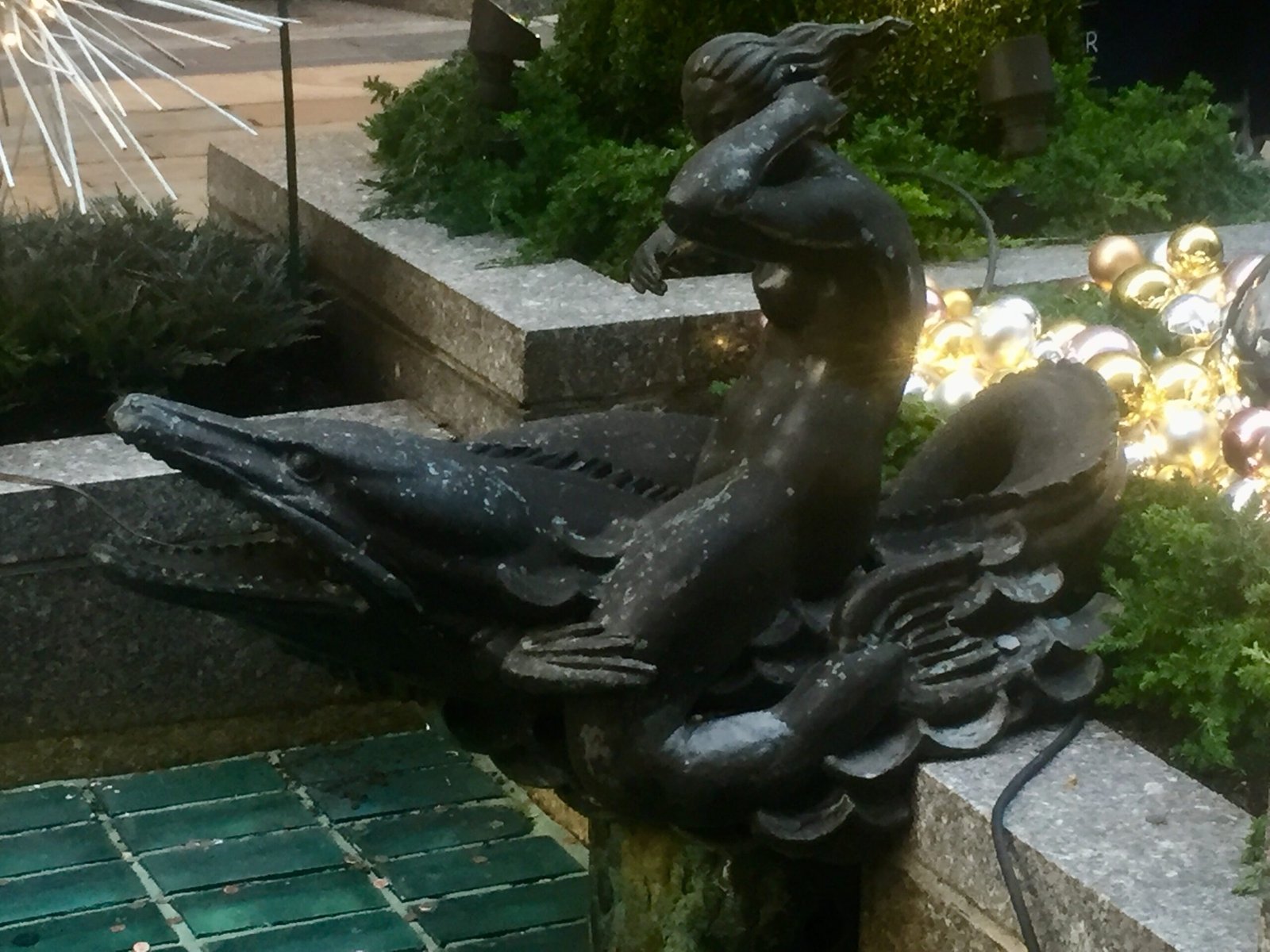
Rockefeller Center, photographed by Luigi De Marchi.
Gallery
Find it on the map
See this place and what’s around it →Record researched and written by Luigi De Marchi for Cultural Heritage Online, 2026.
📷 Become a Cultural Heritage Online photographer
Share your photos of places: they stay published under your name as the author. The more they're seen, the more you get noticed — and soon a contest will reward the most appreciated photos.
Log in or sign up free to add a photoIs this page about you?
This page is read by travellers and heritage enthusiasts who find it on Google. Tell us how you are connected to this place and we will take it from there.