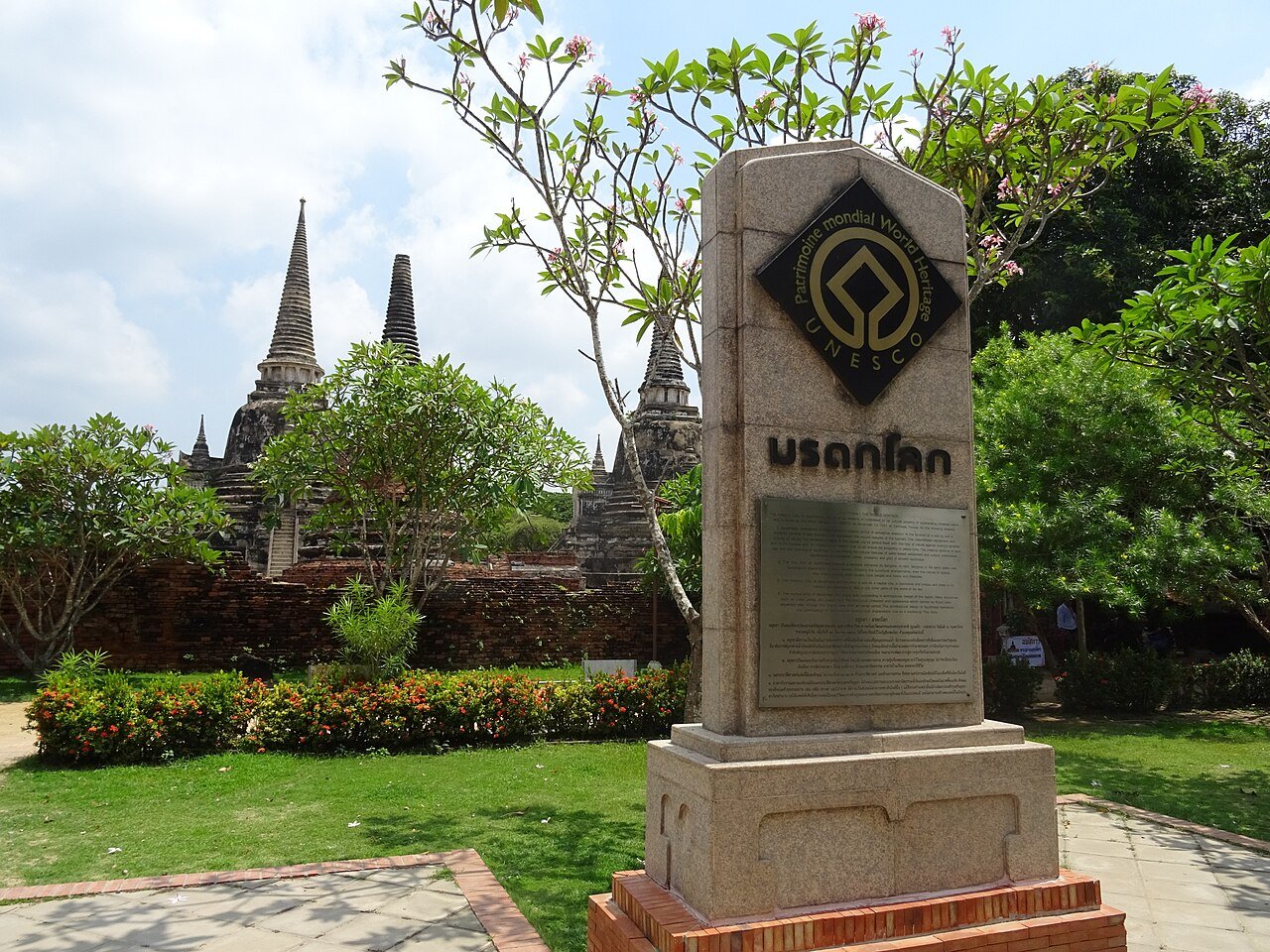
Thailand has 8 UNESCO World Heritage Sites, spanning ancient kingdoms swallowed by jungle, prehistoric villages that rewrote the timeline of Bronze Age Southeast Asia, and some of the most biodiverse forest corridors on earth. From Cultural Heritage Online.
Why Thailand’s list looks the way it does
Thailand’s World Heritage roster reflects a country whose recorded history runs deep and whose natural landscapes have survived against considerable pressure. Three of the eight sites are natural, protecting a chain of western forest ecosystems that shelter elephants, tigers, and gaur. The five cultural inscriptions concentrate heavily on the Sukhothai and Ayutthaya periods — the two great kingdoms that dominated the mainland between the thirteenth and eighteenth centuries — while also reaching back to prehistory and forward to the Dvaravati civilisation that preceded Khmer influence.
What the list does not contain is equally revealing. Thailand has submitted no transnational inscriptions and shares no serial properties with neighbouring countries, making its eight sites entirely self-contained national nominations. The relative youth of the most recent inscriptions (2023 and 2024) signals that Thailand’s engagement with the World Heritage process is still active, not concluded.
The first inscriptions
Three sites were inscribed together in 1991, giving Thailand an unusually strong opening round. They were:
- Historic Town of Sukhothai and Associated Historic Towns
- Historic City of Ayutthaya
- Thungyai–Huai Kha Khaeng Wildlife Sanctuaries
The pairing of two major city-state ensembles with a vast wildlife complex set the pattern that would define Thailand’s list: a balance of built heritage and wild landscape rather than a narrower focus on monuments alone. Sukhothai, founded in the thirteenth century, is broadly regarded as the birthplace of Thai statehood; Ayutthaya was its magnificent successor, a cosmopolitan trading capital that rivalled Amsterdam and London before its destruction by Burmese forces in 1767.
The most visited — and the alternatives
Ayutthaya draws by far the largest heritage tourism crowds, easily reached by train from Bangkok and dense with temple ruins, headless Buddhas, and the eerie fig-tree roots that have encased carved stone heads over centuries. Sukhothai, further north, sees fewer visitors but rewards them with a more tranquil landscape of lotus ponds and laterite towers. Both sites are well documented and well sign-posted.
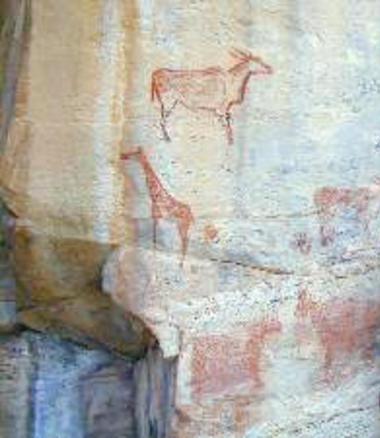
The less-frequented inscriptions repay attention. Ban Chiang, a small village in the northeast near Udon Thani, holds one of the most significant prehistoric sites in Southeast Asia: occupation there stretches back at least three thousand years, and the painted pottery recovered from its graves forced a reassessment of when complex cultures developed in the region. Si Thep, inscribed in 2023, was a Dvaravati commercial and religious hub that later absorbed Khmer influences — its double-ringed moat and monumental sculpture make it unusual in the region. Phu Phrabat, the most recent addition (2024), combines extraordinary sandstone formations with prehistoric rock paintings and Dvaravati-era sima boundary stones used to consecrate Buddhist ordination halls.
Natural and shared sites
Thailand’s three natural World Heritage Sites form a connected arc of protected forest in the west and centre of the country. Thungyai–Huai Kha Khaeng Wildlife Sanctuaries, inscribed in 1991, covers more than six thousand square kilometres along the Myanmar border and is considered one of the largest intact forest areas in mainland Southeast Asia. Dong Phayayen–Khao Yai Forest Complex, inscribed in 2005, links five protected areas running from the Cambodian border northwestward and provides critical habitat for leopards, Asian elephants, and gibbons. Kaeng Krachan Forest Complex, inscribed in 2021 after a decade-long nomination process, sits in the southwest and connects cross-border forest ecosystems with Myanmar’s Tanintharyi region.
Thailand holds no transnational serial inscriptions at present. All eight of its properties are standalone national nominations, which means the country has not yet participated in the kind of cross-border collaborative nominations seen elsewhere in Southeast Asia. Whether future inscriptions may involve shared submissions with Laos, Cambodia, or Myanmar — countries that share overlapping cultural and ecological histories — remains an open question.
How to find them
Thailand’s World Heritage sites sit alongside thousands of other places on CHO’s interactive map, with GPS and sourced editorial history for each. See also our guides to Italy’s and France’s UNESCO sites, and our piece on cultural travel beyond mass tourism.
Frequently Asked Questions
How many UNESCO World Heritage Sites does Thailand have?
As of 2024, Thailand has 8 UNESCO World Heritage Sites: 5 cultural and 3 natural. The most recent inscription, Phu Phrabat, was added to the list in 2024, making Thailand’s tally one of the most recently updated in Southeast Asia.
What was Thailand’s first UNESCO World Heritage Site?
Thailand received its first three inscriptions simultaneously in 1991: the Historic Town of Sukhothai and Associated Historic Towns, the Historic City of Ayutthaya, and the Thungyai–Huai Kha Khaeng Wildlife Sanctuaries. No single site can be called “the” first, as all three were inscribed in the same session.
What are Thailand’s natural UNESCO World Heritage Sites?
Thailand has three natural World Heritage Sites: Thungyai–Huai Kha Khaeng Wildlife Sanctuaries (1991), Dong Phayayen–Khao Yai Forest Complex (2005), and Kaeng Krachan Forest Complex (2021). Together they protect a significant portion of mainland Southeast Asia’s remaining intact forest habitat.
Which of Thailand’s UNESCO sites is the least visited?
Ban Chiang, a prehistoric site in the northeastern province of Udon Thani inscribed in 1992, receives a small fraction of the visitors that Ayutthaya and Sukhothai attract. Its painted burial ceramics and evidence of early Bronze Age settlement make it one of the most archaeologically consequential sites on the entire list.
Sources used in this article
- UNESCO — State Party Thailand — World Heritage list.
- UNESCO — Thailand: World Heritage Sites.
- CHO magazine — What is a World Heritage Site?
- CHO — Interactive map of heritage sites.
Sources
- S1 — Wyatt, David K. Thailand: A Short History. Yale University Press, 2003. ISBN 978-0-300-08475-7.
- S2 — Higham, Charles. Early Cultures of Mainland Southeast Asia. River Books, 2002. ISBN 978-974-8225-70-8.
Spotted an error? Write to editorial@culturalheritageonline.com and we correct it the same day.