Nicaragua has 2 UNESCO World Heritage Sites, both anchored in the colonial city of León and its surroundings — a compact but historically dense list that captures half a millennium of Spanish settlement in Central America. One site preserves the archaeological skeleton of an abandoned colonial town; the other crowns a city block with one of the largest cathedrals ever built in Latin America. Together they tell a story of foundation, catastrophe, and architectural ambition that resonates far beyond the country’s borders. From Cultural Heritage Online.
Why Nicaragua’s list looks the way it does
With only two inscribed properties, Nicaragua has one of the shorter UNESCO rosters in the Americas — yet that brevity reflects the particular rhythm of the country’s engagement with the World Heritage programme rather than any shortage of significant places. Both inscriptions came from the Department of León, which contains an unusual concentration of colonial-era built heritage, and both are classified as cultural sites. Nicaragua has no natural World Heritage Sites as of 2024, though several properties — including the Miskito Cays Natural Reserve and Bosawás Biosphere Reserve — appear on the country’s tentative list and could eventually change that balance.
The gap between the two inscriptions (2000 and 2011) also reflects how the nomination process works in practice: assembling the documentation, management plans, and international support required for a successful dossier is a multi-year undertaking, and smaller heritage administrations often concentrate their resources on one strong file at a time. What Nicaragua’s list lacks in quantity it compensates with specificity — both sites are genuinely singular within the Central American context.
The first inscriptions
Nicaragua’s World Heritage journey opened in 2000 with a single, dramatic inscription:
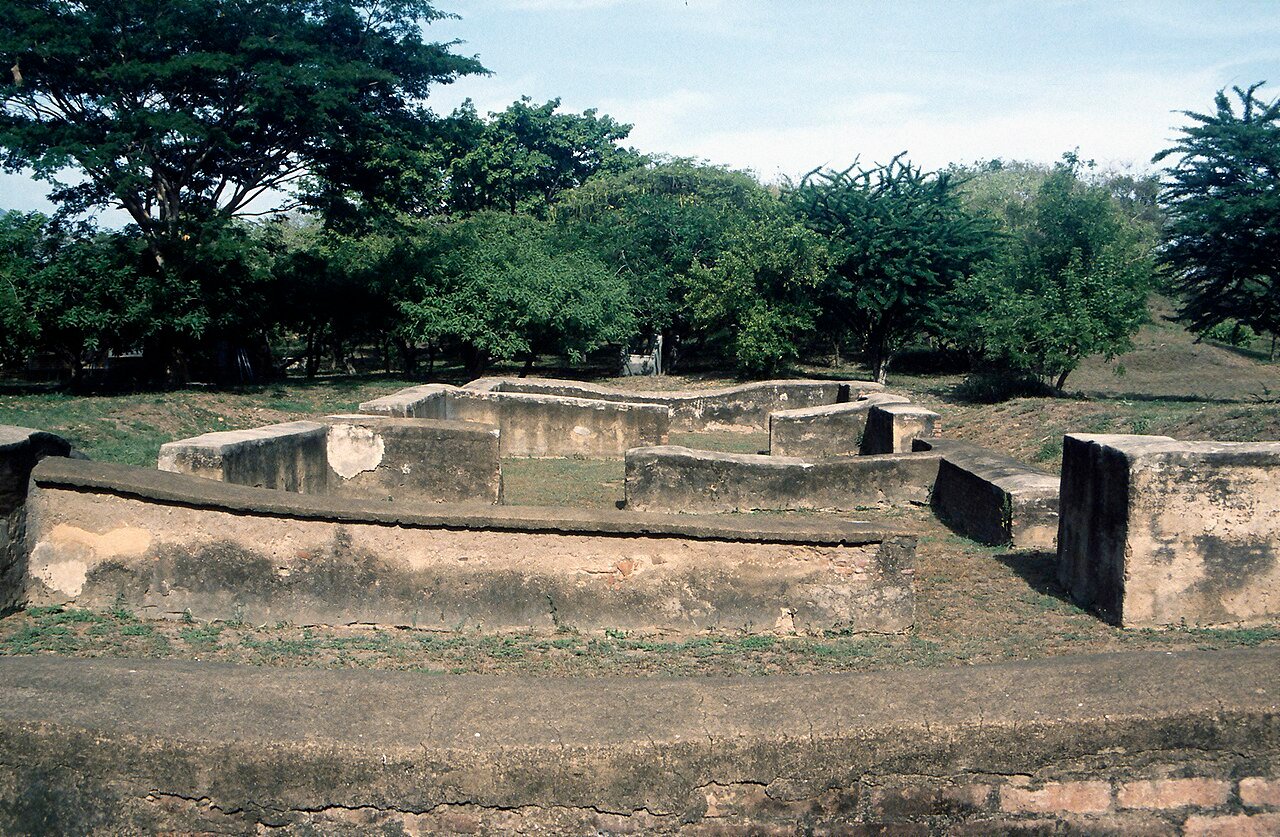
- Ruins of León Viejo (2000) — the archaeological remains of one of the earliest Spanish colonial settlements in the Americas, founded in 1524 and abandoned after a series of earthquakes and volcanic eruptions in 1610.
More than a decade later, a second site joined the list:
- León Cathedral (2011) — formally the Cathedral of the Assumption of León, constructed between 1747 and the early nineteenth century and celebrated for its Baroque-to-Neoclassical architectural arc and its collection of Flemish and Latin American religious art.
Both nominations were shaped by León’s role as the colonial capital of Nicaragua — a status the city held for nearly three centuries before Granada contested it and the capital eventually shifted to Managua in 1852.
The most visited — and the alternatives
León Cathedral draws the larger share of international visitors, partly because it sits at the centre of a living city with an active tourism infrastructure and partly because its scale is simply arresting: the structure stretches across an entire city block and is widely cited as the largest cathedral in Central America. Visitors can climb to the roof for panoramic views across the terracotta rooflines of León toward the chain of volcanoes that defines the Pacific lowlands. Inside, the tomb of the poet Rubén Darío — Nicaragua’s most celebrated literary figure — adds a cultural pilgrimage dimension to what is already an architectural destination.
León Viejo, by contrast, rewards a different kind of traveller. The site lies roughly 32 kilometres from modern León on the shores of Lake Xolotlán (Lake Managua), and what visitors encounter is not a restored monument but an exposed archaeological grid: foundations, plazas, and the outlines of a cathedral-in-progress, all preserved under volcanic ash for nearly four centuries before excavations began in the 1960s. The site provides unusually direct evidence of how early Spanish colonists organized their social and economic hierarchies — the spatial relationships between the church, the governor’s house, and the residential quarters are legible in a way that later, more heavily rebuilt colonial towns rarely allow.
Natural and shared sites
As of 2024, Nicaragua has no inscribed natural World Heritage Sites and is not part of any transnational or serial World Heritage inscription. The tentative list, however, points toward potential future nominations in the natural category. The Miskito Cays Natural Reserve on the Caribbean coast represents one of the most biologically significant marine ecosystems in Central America, with extensive coral systems and mangrove habitat. The Bosawás Biosphere Reserve in the north of the country is among the largest tropical rainforest blocks remaining in the Western Hemisphere outside the Amazon basin. Neither has yet advanced to formal nomination stage.
The Volcán Masaya National Park, which encompasses an active open-vent volcano that was among the first protected areas established in Nicaragua, also appears on the tentative list. These pending natural nominations suggest that Nicaragua’s World Heritage footprint may look quite different a generation from now — but the timeline and outcome of any nomination process remain uncertain.
How to find them
Both inscribed sites are accessible from León, which has direct bus connections to Managua (roughly 90 minutes). León Cathedral is in the city centre, a short walk from the central park. León Viejo requires a separate excursion — local transport runs to the nearby town of Puerto Momotombo, from which the site is reachable by road or boat. Entry fees and opening hours at archaeological sites in Nicaragua can change seasonally, so checking directly with the Instituto Nicaragüense de Cultura before visiting is advisable.
Nicaragua’s World Heritage sites sit alongside thousands of other places on CHO’s interactive map, with GPS and sourced editorial history for each. See also our guides to Italy’s and France’s UNESCO sites, and our piece on cultural travel beyond mass tourism.
Frequently Asked Questions
How many UNESCO World Heritage Sites does Nicaragua have?
Nicaragua has 2 UNESCO World Heritage Sites as of 2024, both classified as cultural properties. They are the Ruins of León Viejo and the Cathedral of León, located in the Department of León in the west of the country.
What was Nicaragua’s first UNESCO World Heritage Site?
The Ruins of León Viejo, inscribed in 2000, was Nicaragua’s first UNESCO World Heritage Site. Founded in 1524, the settlement was abandoned after volcanic eruptions and earthquakes in 1610 and remained buried until archaeological excavations began in the twentieth century.
Does Nicaragua have any natural UNESCO World Heritage Sites?
No. Both of Nicaragua’s inscribed World Heritage Sites are cultural properties. Several natural sites — including the Miskito Cays Natural Reserve and Bosawás Biosphere Reserve — appear on the country’s UNESCO tentative list but have not yet been formally nominated.
When was León Cathedral added to the UNESCO World Heritage list?
León Cathedral was inscribed as a UNESCO World Heritage Site in 2011, making it Nicaragua’s second and most recent designation. The cathedral was constructed between 1747 and the early nineteenth century and is recognised for its Baroque-to-Neoclassical architecture and its holdings of Flemish and Latin American religious art.
Sources used in this article
- UNESCO — State Party Nicaragua — World Heritage list.
- UNESCO — Nicaragua: World Heritage Sites.
- CHO magazine — What is a World Heritage Site?
- CHO — Interactive map of heritage sites.