Namibia has 2 UNESCO World Heritage Sites, one cultural and one natural, inscribed between 2007 and 2013. That compact figure belies a country of extraordinary heritage density: ancient rock engravings etched by hunter-gatherers, a coastal desert so old it predates modern rainfall patterns, and a tentative list reaching from one of Earth’s great canyons to a plant species found nowhere else on the planet. From Cultural Heritage Online.
Why Namibia’s list looks the way it does
Namibia gained independence in 1990, which means its engagement with UNESCO’s World Heritage Convention came later than that of many African nations. The country ratified the Convention in 2000, and its first inscription followed seven years later. With a population of roughly 3 million spread across one of Africa’s largest territories, Namibia’s conservation infrastructure is real but resource-constrained, and the nomination process is demanding.
The result is a short list of two sites, both of which cleared UNESCO’s strict criteria with room to spare. Neither inscription was a courtesy: Twyfelfontein passed on cultural grounds related to the concentration and quality of its rock art, while the Namib Sand Sea met four natural criteria simultaneously, a threshold only a handful of sites worldwide achieve. Brevity here reflects the rigour of inscription, not any shortage of significant places.
The first inscriptions
Namibia’s World Heritage story begins in 2007 with a single cultural inscription:
- Twyfelfontein or /Ui-//aes (2007) — Cultural
Six years later, in 2013, the country added its natural entry:
- Namib Sand Sea (2013) — Natural
Both remain the only inscribed sites as of 2023. The gap between them reflects the time needed to assemble management plans, boundary documentation, and the scientific or scholarly case that UNESCO requires before a nomination file reaches the World Heritage Committee.
The most visited — and the alternatives
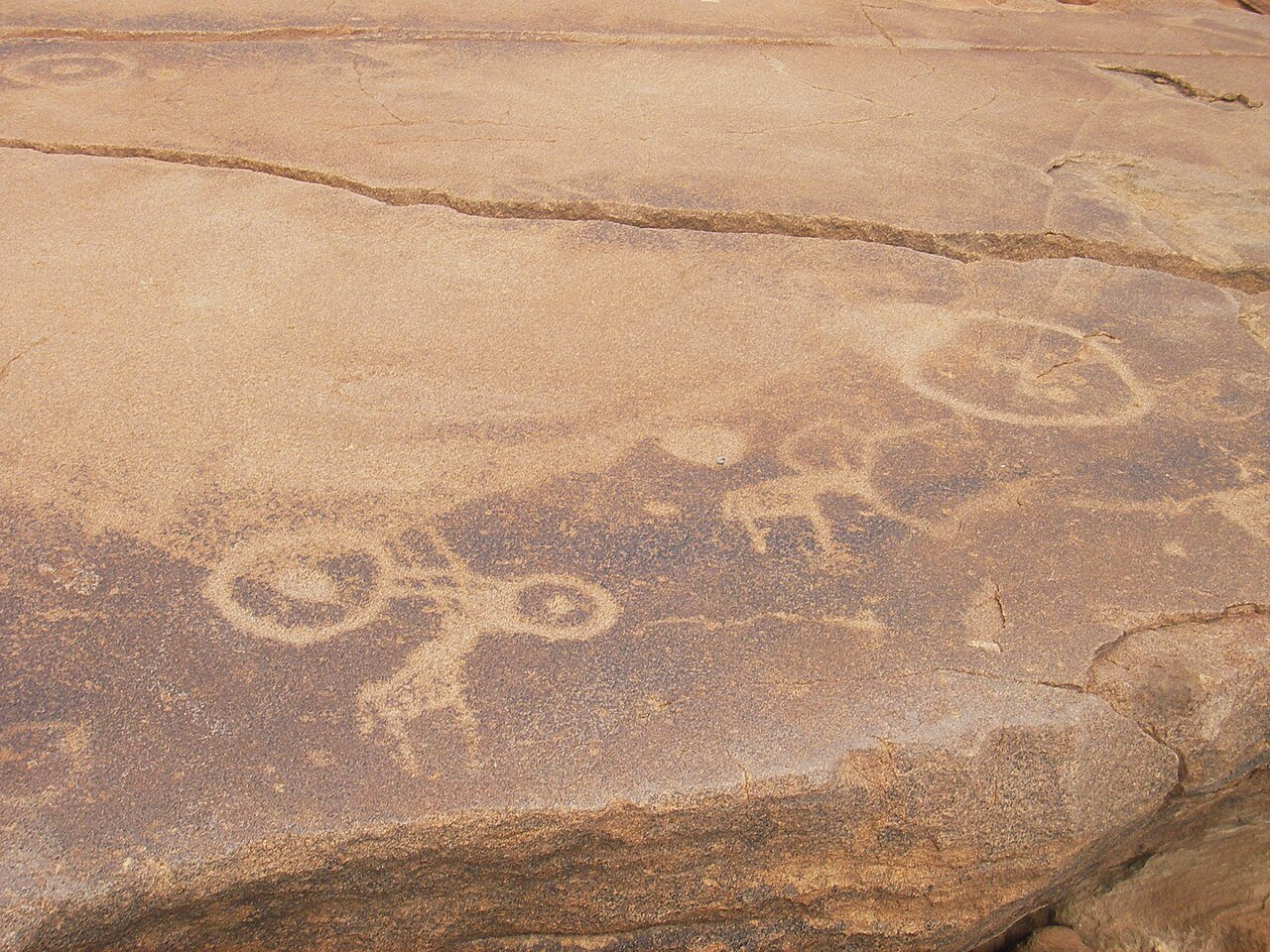
Twyfelfontein, in the Kunene Region of northwestern Namibia, draws visitors for one of Africa’s largest concentrations of rock engravings, estimated at more than 2,500 individual petroglyphs. Carved over several thousand years by San hunter-gatherers, the images document animals, human figures, and abstract symbols on sandstone outcrops above a seasonal spring. The site is accessible by road and has an on-site interpretive centre, making it one of the more visitor-ready heritage destinations in the country.
For travellers willing to look beyond the inscribed list, Namibia’s tentative sites offer compelling reasons to venture further. The Brandberg National Monument Area in the Erongo Region holds the famous “White Lady” rock painting, a polychrome figure whose identity and cultural meaning have been debated by archaeologists for decades. Fish River Canyon in the far south is one of the largest canyon systems on the African continent, with a gorge that drops nearly 550 metres and stretches for around 160 kilometres. The Welwitschia Plains, meanwhile, protect the habitat of Welwitschia mirabilis, a plant species that can live for more than a thousand years and grows nowhere else on Earth.
Natural and shared sites
The Namib Sand Sea covers roughly 3.1 million hectares along Namibia’s Atlantic coast and extends into a buffer zone of similar size. It is widely regarded as the world’s only coastal desert shaped by the interaction of fog and sand dunes — moisture carried inland from the cold Benguela Current sustains a biological community that has adapted to one of the planet’s most extreme environments over tens of millions of years. UNESCO inscribed it under four natural criteria, recognising outstanding geological processes, exceptional biodiversity, and the ongoing evolution of desert-adapted species.
Namibia’s tentative list also includes transnational ambitions: the Okavango Delta nomination, shared with Botswana and Angola, points toward a future in which the Kavango-Zambezi conservation area could anchor a cross-border World Heritage cluster. No transnational site involving Namibia is currently inscribed, but the cooperative frameworks that would support such a nomination are already in place through regional conservation agreements.
How to find them
Both inscribed sites are located in different corners of a very large country. Twyfelfontein sits roughly 500 kilometres north of Windhoek in the Kunene Region and is typically reached via Khorixas on a mix of tarred and gravel road. The Namib Sand Sea is most often entered through Sossusvlei, inside Namib-Naukluft National Park, which lies about 350 kilometres southwest of the capital. Neither site requires technical expedition planning, but distances in Namibia are significant and self-drive travellers should allow full days for each visit.
Namibia’s World Heritage sites sit alongside thousands of other places on CHO’s interactive map, with GPS and sourced editorial history for each. See also our guides to Italy’s and France’s UNESCO sites, and our piece on cultural travel beyond mass tourism.
Frequently Asked Questions
How many UNESCO World Heritage Sites does Namibia have?
Namibia has 2 UNESCO World Heritage Sites as of 2023: Twyfelfontein or /Ui-//aes, inscribed in 2007, and the Namib Sand Sea, inscribed in 2013. The country ratified the World Heritage Convention in 2000, and both nominations met UNESCO’s criteria with considerable distinction.
What was Namibia’s first UNESCO World Heritage Site?
Namibia’s first inscription was Twyfelfontein or /Ui-//aes in 2007, recognised as a cultural site for its exceptional concentration of San rock engravings. The site holds more than 2,500 petroglyphs carved into sandstone over several thousand years, making it one of Africa’s most significant rock art landscapes.
What makes the Namib Sand Sea unique among World Heritage Sites?
The Namib Sand Sea is considered the world’s only coastal desert where fog — drawn inland from the cold Benguela Current — plays a primary role in sustaining life among the dunes. UNESCO inscribed it in 2013 under four natural criteria, recognising its geological processes, biodiversity, and the long evolutionary history of its desert-adapted species.
Does Namibia have any mixed UNESCO World Heritage Sites?
No. Both of Namibia’s inscribed sites are single-category: Twyfelfontein is cultural and the Namib Sand Sea is natural. Namibia’s tentative list includes sites with potential transnational scope, but no mixed cultural-natural inscription has been submitted or approved as of 2023.
Sources used in this article
- UNESCO — State Party Namibia — World Heritage list.
- UNESCO — Namibia: World Heritage Sites.
- CHO magazine — What is a World Heritage Site?
- CHO — Interactive map of heritage sites.
Sources
- S1 — Kinahan, John. Pastoral Nomads of the Central Namib Desert: The People History Forgot. New Namibia Books, 1991. ISBN 978-0-85255-211-7.
- S2 — Goudie, Andrew, and Heather Viles. Landscapes and Landforms of Namibia. Springer, 2015. ISBN 978-94-017-8019-3.
Spotted an error? Write to editorial@culturalheritageonline.com and we correct it the same day.