Luxembourg has one UNESCO World Heritage Site, and it is, by any measure, a formidable one: a capital city whose entire old quarters and fortifications were recognised in 1994 as a place of outstanding universal value. Compact in area but staggering in layered history, the inscription covers a city that major European powers contested and rebuilt for nine centuries — Spanish tunnellers, French engineers, Austrian generals, and Prussian garrisons all leaving their mark on the same rocky plateau above the Alzette. For travellers and heritage institutions working across the continent, Luxembourg’s single entry on the World Heritage List is a reminder that count matters less than depth. From Cultural Heritage Online.
Why Luxembourg’s list looks the way it does
Luxembourg is a small country, and its World Heritage footprint reflects that scale — but not in the way visitors might expect. The Grand Duchy has no natural inscriptions, no mixed sites, and no transnational serial properties. What it holds instead is one tightly defined cultural designation that encompasses a remarkable density of military and civic heritage within the boundaries of the capital.
The World Heritage Committee cited criterion iv when inscribing the site in 1994, recognising the city as an outstanding example of a type of building or architectural ensemble that illustrates a significant stage in human history. In this case, that stage is nearly a millennium of European military architecture, from early medieval fortifications to the sophisticated works of Vauban and the Austrian school of fortification. The inscription covers a core area of roughly 30 hectares, with a buffer zone of around 109 hectares.
The first inscription
Luxembourg’s sole World Heritage designation arrived at the 18th session of the UNESCO World Heritage Committee in 1994. The inscribed property carries the formal title:
- City of Luxembourg: its Old Quarters and Fortifications (1994) — cultural site, criterion iv
The inscription was not simply a recognition of a picturesque old town. It acknowledged the extraordinary completeness of what survived after the 1867 Treaty of London ordered the dismantling of the fortress — one of the most powerful in Europe at the time. What remained, above and below ground, was deemed sufficient to represent a chapter of European military history that no other site preserves in quite the same concentrated form.
The most visited — and the alternatives
The Bock promontory is the point most visitors reach first. Count Siegfried built the original castle on this rocky outcrop in 963, and the site effectively gave Luxembourg its name. The casemates tunnelled beneath it — some 23 kilometres of underground passages — were begun by Spanish engineers in 1644, extended by Marshal Vauban under French control, and further enlarged under Austrian rule in the 1730s and 1740s. During wartime the main passage could shelter 1,200 soldiers; today it shelters a significant share of Luxembourg City’s annual visitors.
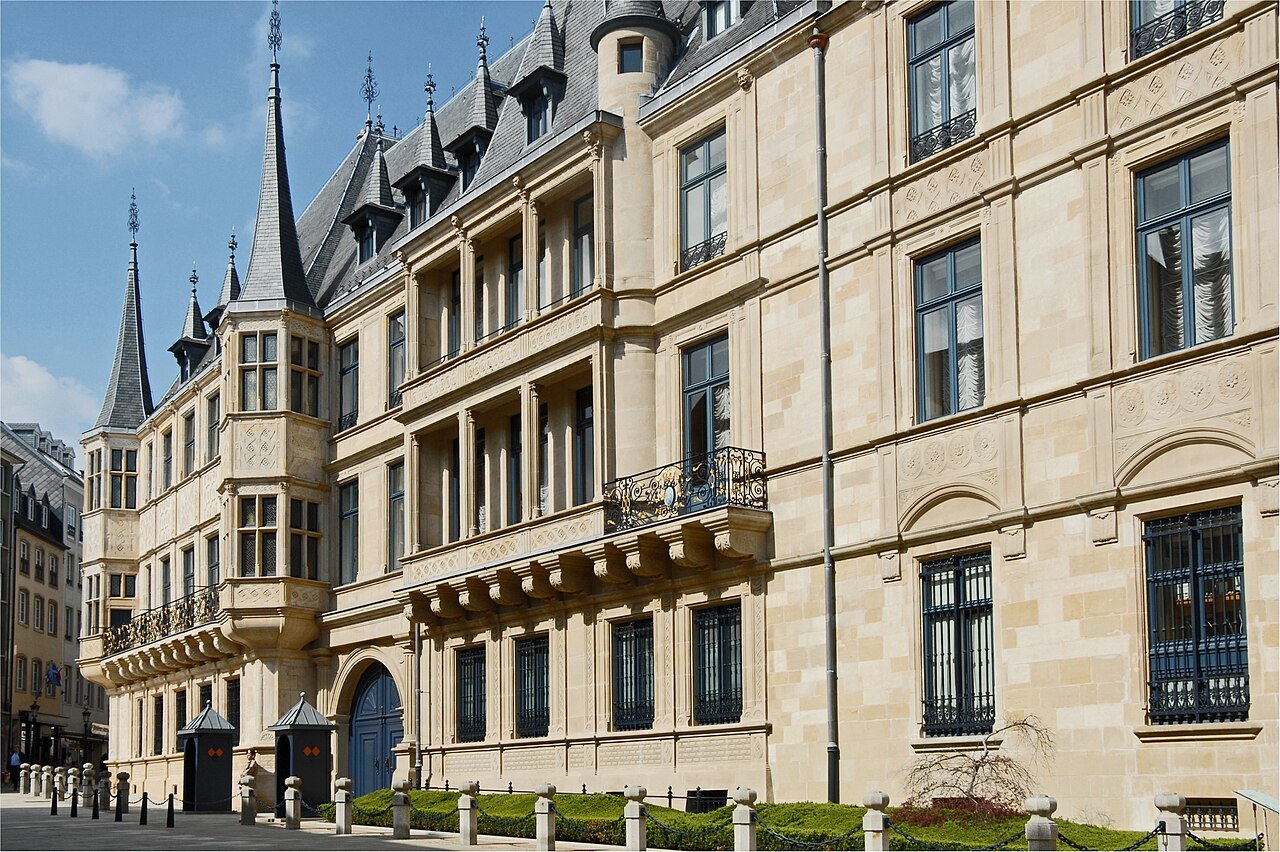
Beyond the casemates, the inscribed area contains elements that receive considerably less attention. The Grund, the valley neighbourhood that spreads along the floor of the Alzette gorge beneath the old city’s cliffs, represents the city’s earliest settlement pattern and retains a domestic scale largely untouched by modern development. The Pétrusse valley fortifications use the natural topography of a second river gorge as a defensive element — an integration of landscape and military engineering that the city’s upper-level panoramas do not fully convey. The Grand Ducal Palace, located in the Ville Haute, was originally built as the town hall in the late sixteenth century and carries Spanish Renaissance detail unusual this far north. And the Cathedral of Notre-Dame, consecrated in 1621, contains Flemish Renaissance elements and a devotional tradition that predates Luxembourg’s emergence as an independent state.
Natural and shared sites
Luxembourg has no UNESCO-inscribed natural sites and no properties listed under the mixed cultural-natural category. The country’s landscapes — the Ardennes in the north, the Moselle valley in the east, the sandstone formations of the Mullerthal region — are protected under national and European frameworks but do not appear on the World Heritage List.
Luxembourg is also absent from the major transnational serial inscriptions that appear on neighbouring countries’ lists. Significant regional designations such as the Prehistoric Pile Dwellings around the Alps or the Great Spa Towns of Europe do not include Luxembourg properties. The country’s heritage position on the World Heritage map is therefore singular in the most literal sense: one site, clearly defined, standing alone.
How to find them
Luxembourg City is straightforward to reach from Brussels, Paris, or Frankfurt by rail, and the inscribed area is compact enough to cover on foot in a day. The Bock casemates are open to visitors seasonally; the upper city, Grund, and cathedral are accessible year-round. The buffer zone around the core inscribed area rewards careful walking — the views across the Alzette gorge from the Corniche promenade are the most immediate way to understand why military engineers spent centuries trying to hold this position.
Luxembourg’s World Heritage sites sit alongside thousands of other places on CHO’s interactive map, with GPS and sourced editorial history for each. See also our guides to Italy’s and France’s UNESCO sites, and our piece on cultural travel beyond mass tourism.
Frequently Asked Questions
How many UNESCO World Heritage Sites does Luxembourg have?
Luxembourg has one UNESCO World Heritage Site, inscribed in 1994. The designation covers the City of Luxembourg: its Old Quarters and Fortifications, a cultural property recognised for its outstanding concentration of medieval and early modern military architecture.
What was Luxembourg’s first UNESCO World Heritage Site?
The City of Luxembourg: its Old Quarters and Fortifications was inscribed in 1994 and remains the country’s only World Heritage Site to date. It was added at the 18th session of the UNESCO World Heritage Committee and recognised under criterion iv for its exceptional representation of European fortification history.
What are the casemates of Luxembourg City?
The casemates are an underground network of tunnels and chambers stretching approximately 23 kilometres beneath Luxembourg City’s old quarters. Begun by Spanish engineers in 1644 and extended by French and Austrian military architects over the following century, they could shelter up to 1,200 soldiers and are now one of the most visited parts of the World Heritage site.
Does Luxembourg have any natural UNESCO World Heritage Sites?
No. Luxembourg has no natural or mixed UNESCO inscriptions. Its single World Heritage property is classified as a cultural site, and the country does not participate in any of the major transnational natural heritage designations that appear on the lists of neighbouring countries.
Sources used in this article
- UNESCO — State Party Luxembourg — World Heritage list.
- UNESCO — Luxembourg: World Heritage Sites.
- CHO magazine — What is a World Heritage Site?
- CHO — Interactive map of heritage sites.
Sources
- S1 — Péporté, Pit, et al. Inventing Luxembourg: Representations of the Past, Space and Language. Brill, 2010. ISBN 978-90-04-18176-2.
- S2 — Arblaster, Paul. A History of the Low Countries. Palgrave Macmillan, 2006. ISBN 978-1-4039-4828-1.
Spotted an error? Write to editorial@culturalheritageonline.com and we correct it the same day.