Angola has one UNESCO World Heritage Site — a single inscription that carries the weight of an entire civilisation. Mbanza Kongo, the ancient capital of the Kingdom of Kongo, represents centuries of political authority, spiritual transformation, and cross-continental encounter preserved on a plateau in the country’s northwest. From Cultural Heritage Online.
Why Angola’s list looks the way it does
Angola ratified the UNESCO World Heritage Convention on 7 November 1991, but its inscription record remained blank for more than two decades. The country’s long civil war, which ended only in 2002, severely limited the capacity for heritage documentation, conservation planning, and the sustained international cooperation that a World Heritage nomination requires. Infrastructure damage, restricted access to archaeological sites, and institutional disruption all slowed the nomination process.
Since 2002, Angola has gradually rebuilt its heritage administration. As of 2026, it holds one inscribed site — a cultural property — and maintains a tentative list of four additional candidates, including the Kwanza Corridor Cultural Landscape, the Archaeological Site of Tchitundu-Hulu in Namibe Province, and a transnational extension related to the Okavango Delta system. The tentative list signals a heritage sector in active development, not one that has exhausted its ambitions.
The first inscription
Angola’s entry onto the World Heritage List came in 2017, at the 41st session of the World Heritage Committee. A single site received inscription that year:
- Mbanza Kongo, Vestiges of the Capital of the former Kingdom of Kongo (2017) — inscribed under criteria iii and iv for its outstanding testimony to the living traditions and architectural achievements of the Kongolese civilisation.
The inscription marked a significant moment both for Angola and for the broader recognition of sub-Saharan African heritage on the World Heritage List. Mbanza Kongo had been a functioning capital for over five centuries before formal nomination; its inclusion acknowledged a historical record that predates European colonial structures on the continent by generations.
The most visited — and the alternatives
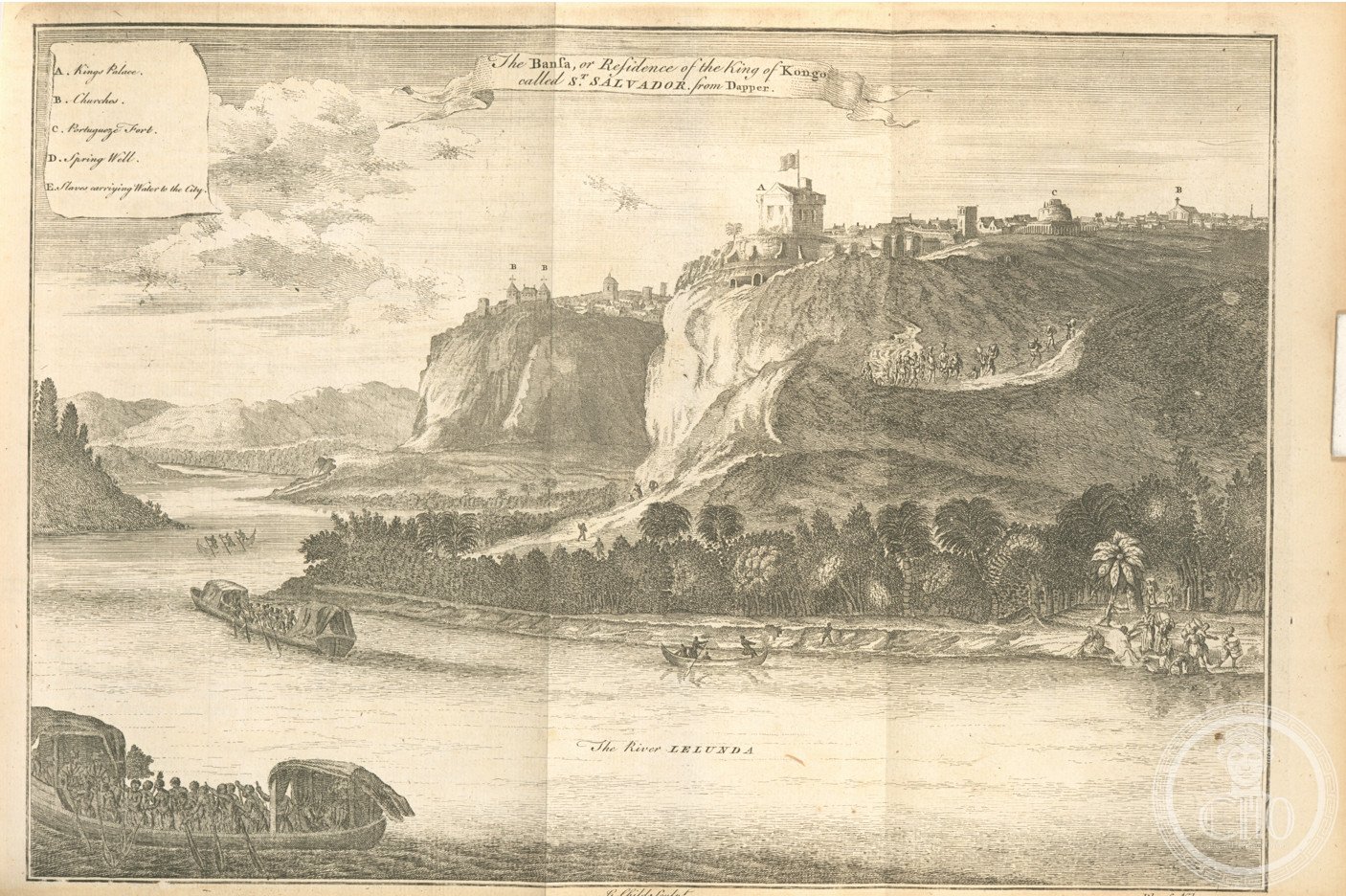
With only one inscribed site, Mbanza Kongo is Angola’s entire World Heritage portfolio — and it merits the focus. The city sits atop a flat-topped mountain in Zaire Province and was founded around 1390 by Lukeni lua Enim as the political and spiritual capital of the Kingdom of Kongo. At its height in the sixteenth and early seventeenth centuries, the region surrounding it held a population estimated at around 130,000. The Portuguese arrived in 1491, and the encounter that followed reshaped the city’s built fabric: the Cathedral of the Holy Saviour of Congo, originally constructed that same year, still stands as one of the oldest Christian structures in sub-Saharan Africa.
Beyond the cathedral, the site preserves a remarkable range of physical remains. The Jalankuwo — the royal judgment tree under which the king administered justice — survives as a living element of the urban heritage. The Sunguilu, a structure used to prepare royal burials, and the remains of stone palaces from the era of King Afonso I give the site a layered texture that spans indigenous Kongolese tradition and the period of cross-cultural encounter. For visitors interested in African political history before colonialism, Mbanza Kongo offers depth that few sites on the continent can match.
Natural and shared sites
Angola’s single inscribed World Heritage Site is cultural; the country currently holds no inscribed natural or mixed properties. However, the tentative list points toward future natural recognition. The Okavango Delta, already inscribed as a World Heritage Site on the Botswana side since 2014, appears on Angola’s tentative list as a potential transnational extension — Angola contains the headwaters of the Okavango River in its southeastern highlands, and the ecological connection between source and delta is scientifically significant.
The Kwanza Corridor Cultural Landscape, submitted to the tentative list in 2017, is classified as a mixed-criteria candidate, meaning it would be considered for both natural and cultural values along the Cuanza River basin spanning three provinces. These tentative submissions suggest Angola is working toward a more balanced heritage portfolio, one that reflects both its extraordinary cultural depth and the ecological diversity of its landscapes.
How to find them
Mbanza Kongo is located in Zaire Province in northwestern Angola, approximately 480 kilometres north of the capital Luanda. The site is accessible by road and by charter flight; the city’s own airport serves domestic connections. The Royal Museum in Mbanza Kongo holds artefacts from the Kingdom of Kongo period, and local guides affiliated with the provincial cultural directorate can provide access to the major heritage structures within the urban area.
Angola’s World Heritage sites sit alongside thousands of other places on CHO’s interactive map, with GPS and sourced editorial history for each. See also our guides to Italy’s and France’s UNESCO sites, and our piece on cultural travel beyond mass tourism.
Frequently Asked Questions
How many UNESCO World Heritage Sites does Angola have?
Angola has one inscribed UNESCO World Heritage Site as of 2026: Mbanza Kongo, Vestiges of the Capital of the former Kingdom of Kongo, inscribed in 2017. The country also maintains a tentative list of four additional candidate sites, including natural and mixed-criteria properties.
What was Angola’s first UNESCO World Heritage Site?
Mbanza Kongo was Angola’s first — and to date only — UNESCO World Heritage inscription, recognised in 2017 at the 41st session of the World Heritage Committee. It was inscribed under criteria iii and iv for its exceptional testimony to the civilisation and architectural legacy of the Kingdom of Kongo.
What is the significance of Mbanza Kongo?
Mbanza Kongo served as the political and spiritual capital of the Kingdom of Kongo from approximately 1390 until the early twentieth century. It preserves the remains of stone palaces, the Cathedral of the Holy Saviour of Congo — among the oldest Christian structures in sub-Saharan Africa — and living heritage elements such as the Jalankuwo royal judgment tree.
Does Angola have any natural UNESCO World Heritage Sites?
Angola currently has no inscribed natural World Heritage Sites, though the Okavango Delta appears on its tentative list as a potential transnational extension of the existing Botswana inscription. The Kwanza Corridor Cultural Landscape is also a tentative candidate with mixed natural and cultural values.
Sources used in this article
- UNESCO — State Party Angola — World Heritage list.
- UNESCO — Angola: World Heritage Sites.
- CHO magazine — What is a World Heritage Site?
- CHO — Interactive map of heritage sites.
Sources
- S1 — Birmingham, David. A Concise History of Modern Angola. Oxford University Press, 2015. ISBN 978-0-19-026880-0.
- S2 — Thornton, John K. The Kingdom of Kongo: Civil War and Transition, 1641-1718. University of Wisconsin Press, 1983. ISBN 978-0-299-09290-0.
Spotted an error? Write to editorial@culturalheritageonline.com and we correct it the same day.