Aurangabad puts two of the Indian subcontinent’s most consequential UNESCO World Heritage Sites within a single day’s travel: the painted Buddhist caves at Ajanta, 100 km to the north-east, and the rock-cut temple complex at Ellora, just 30 km away — each site demanding at least half a day to visit properly, and both accessible without a private vehicle. From Cultural Heritage Online.
Ajanta Caves 1 hr 45 min
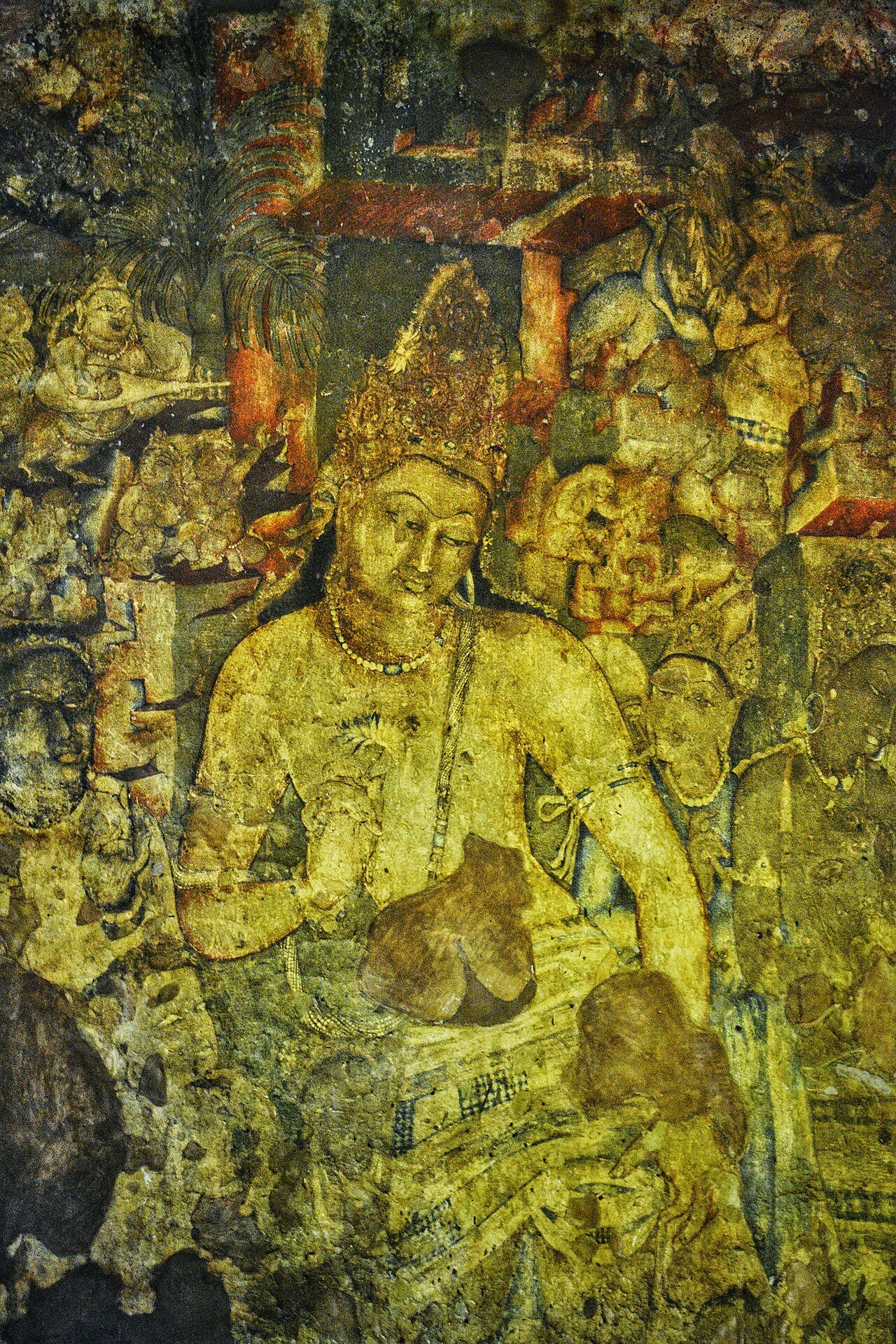
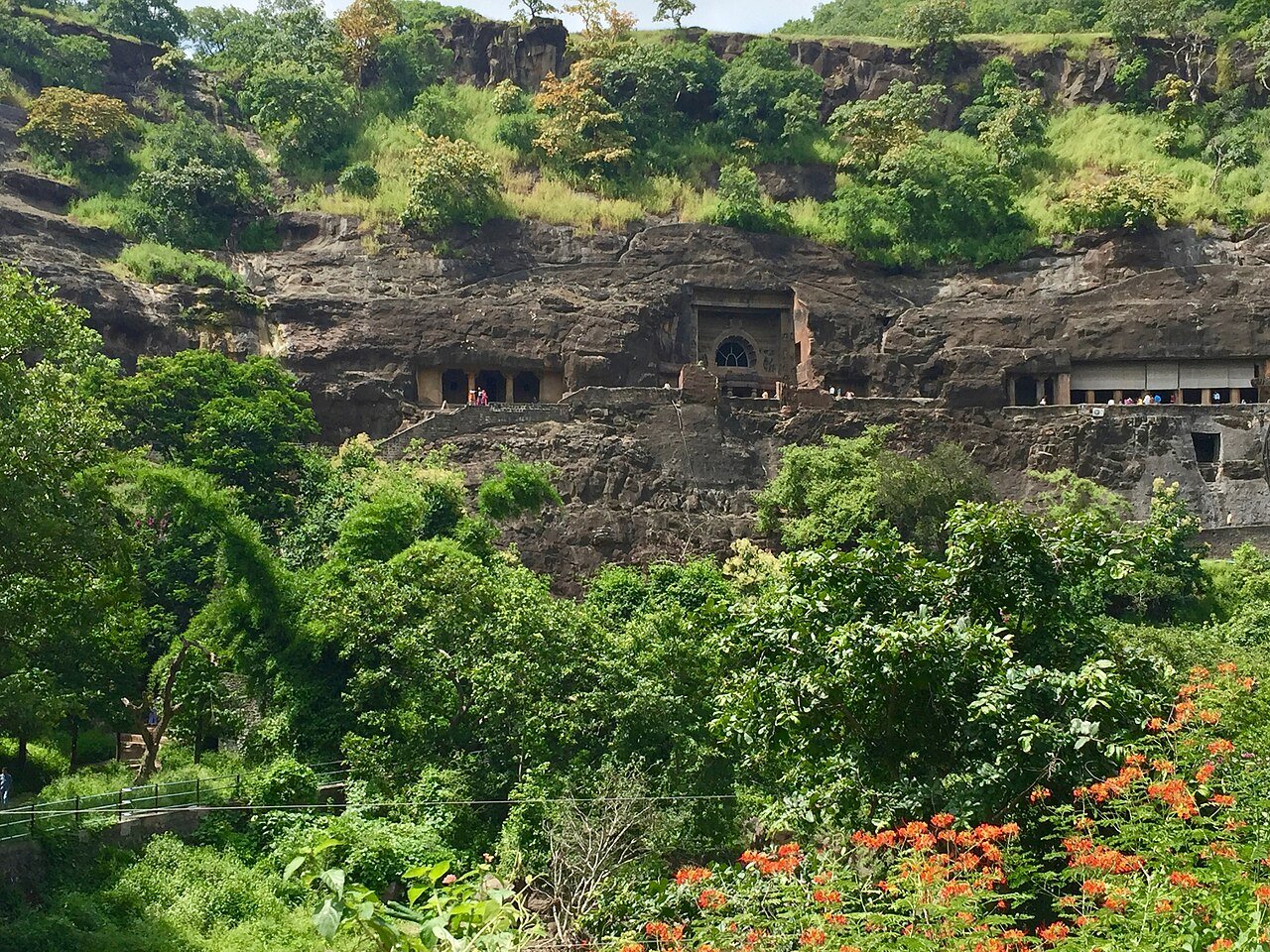
Inscribed as a UNESCO World Heritage Site in 1983, the Ajanta Caves comprise 30 rock-cut Buddhist monuments carved into a horseshoe-shaped basalt cliff above the Waghur river, with construction spanning from the second century BCE to approximately 480 CE. The later phase of work — concentrated by contemporary scholarship into the remarkably brief window of 460–480 CE under Vakataka Emperor Harishena — produced the site’s most celebrated murals, a body of wall painting that represents the largest surviving corpus of ancient Indian pictorial art. Caves 1, 2, 16 and 17 contain elaborate narrative cycles drawn from the Jataka tales of the Buddha’s previous lives, rendered in warm ochres and mineral blues that retain startling legibility after fifteen centuries. The scale of the carved interiors repays slow attention: pillared halls designed as congregational spaces still carry the proportional logic of architecture conceived for candlelight and ceremony. Allow four to five hours to move through all accessible caves, including the chaitya halls at Caves 19 and 26 with their elaborate facade screens.
Getting there: MSRTC buses run from Aurangabad bus stand to Fardapur junction (approximately 1 hr 45 min), with connecting shuttle buses to the cave entrance; private taxis cover the 100 km in around 1 hr 30 min. Last entry is at 17:30; the site is closed on Mondays. Archaeological Survey of India tickets are purchased at the site entrance. Allow: 4–5 hours on site. Best for: Travellers with a specific interest in ancient painting and Buddhist monastic architecture who can allocate a full morning or afternoon to the journey and visit.
Ellora Caves 45 min
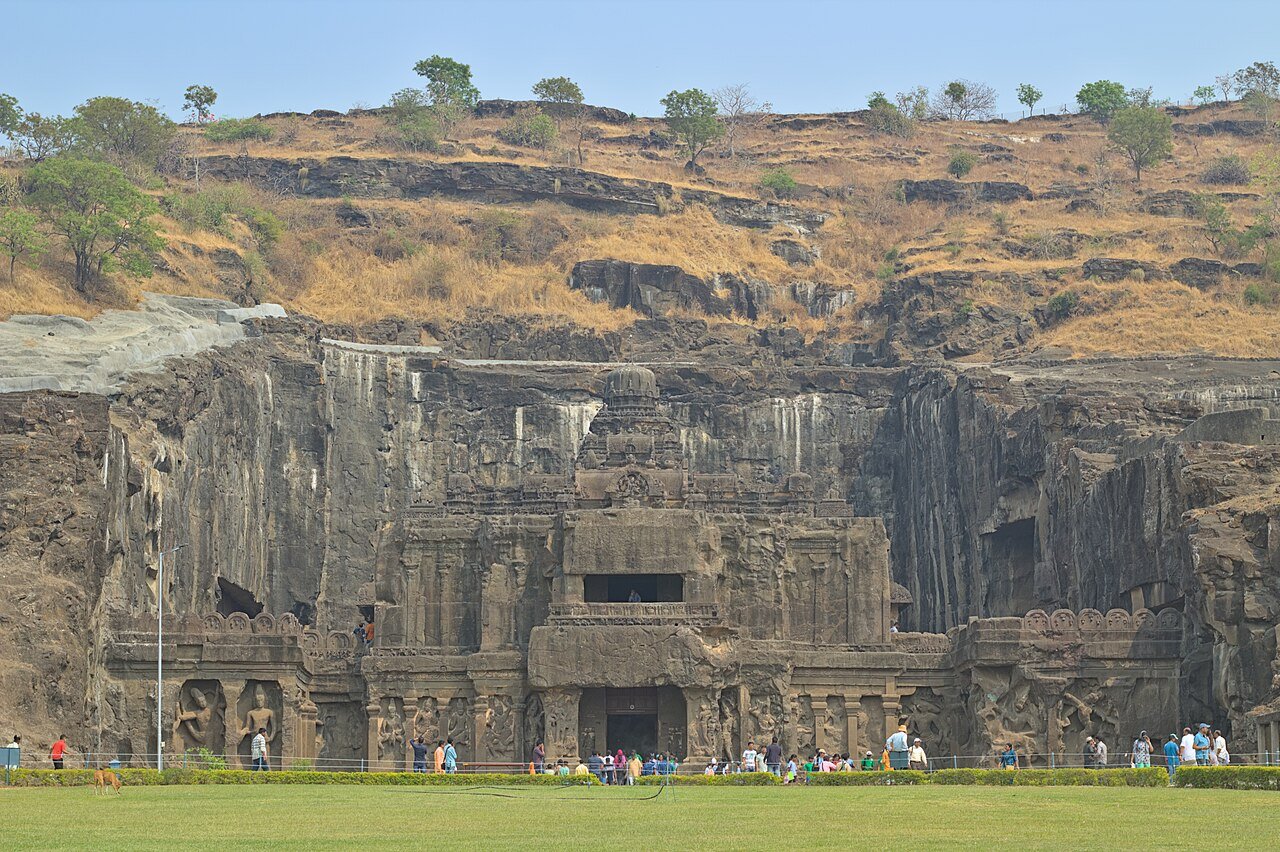
Also inscribed in 1983, the Ellora complex contains 34 publicly accessible caves from more than 100 excavated into the Charanandri hills between approximately 600 and 1000 CE, representing Buddhist, Hindu, and Jain traditions in a sequence that makes Ellora one of the few sites in South Asia where three major religious traditions can be read side by side in stone. The defining monument is Cave 16, the Kailasa Temple, commissioned by Rashtrakuta king Krishna I (reigned 756–773 CE) and executed by removing an estimated 200,000 tonnes of basalt from a single hillside — the largest monolithic rock excavation in the world, built to a footprint twice the size of the Parthenon. From the rim of the excavation pit, the temple’s shikhara tower rises 30 metres against open sky, the surrounding courtyard walls carved with panels from the Mahabharata and Ramayana that run at eye level for tens of metres. The Buddhist caves at the northern end of the complex are quieter and dimly lit, giving a sense of the meditative atmosphere these excavated monasteries were designed to sustain. Three to four hours allows a thorough visit if the circuit is planned cave-group by cave-group.
Getting there: MSRTC buses depart from Aurangabad bus stand to Ellora village (approximately 45 min); local autorickshaws cover the final stretch to the entrance. Last entry is at 17:30; the site is closed on Tuesdays. Archaeological Survey of India tickets are sold at the main gate; the Kailasa Temple has a separate inner-site access point. Allow: 3–4 hours on site. Best for: Visitors who want to understand the full range of classical Indian religious architecture — Buddhist, Hindu, and Jain — in a single half-day visit from Aurangabad.
Frequently Asked Questions
How many UNESCO World Heritage Sites are near Aurangabad?
Two UNESCO World Heritage Sites lie within comfortable day-trip distance of Aurangabad: the Ajanta Caves (100 km north-east) and the Ellora Caves (30 km north-west). Both were inscribed in the same year, 1983, and are among India’s earliest UNESCO designations. Aurangabad is the only city in India from which two such major sites are accessible as separate half-day excursions on consecutive days.
What is the closest UNESCO World Heritage Site to Aurangabad?
The Ellora Caves are the closest UNESCO World Heritage Site to Aurangabad at approximately 30 km, reachable by MSRTC bus in around 45 minutes. The Ajanta Caves are the further of the two at 100 km, requiring roughly 1 hour 45 minutes by public bus. Both sites share the same last-entry time of 17:30, but they close on different days — Ellora on Tuesdays, Ajanta on Mondays — which makes back-to-back visits straightforward.
When is the best time of year to visit Ajanta and Ellora?
October to March is the most comfortable period, when temperatures in the Deccan Plateau region stay between 15°C and 30°C. Monsoon season (June to September) brings heavy rainfall that can make the cliff paths at Ajanta slippery and reduces visibility inside caves with light-dependent paintings. Summer months (April and May) see temperatures above 40°C inside the excavated basalt, which absorbs heat rapidly and can make extended visits physically demanding.
Are there dress codes or visitor rules to know before visiting?
There is no formal religious dress code at either Ajanta or Ellora, as both are archaeological sites managed by the Archaeological Survey of India rather than active places of worship — though modest dress is generally appropriate. Photography is permitted in most areas without flash; tripods require a separate permit. Foreign nationals pay a higher ASI ticket rate than Indian nationals, and the ticket for the main site at Ellora does not automatically include access to all sub-complexes, so visitors should check the current fee structure at the gate.
Sources
- S1 — Spink, Walter M. Ajanta: History and Development: Volume 1. Brill, 2005. ISBN 978-90-04-14832-1.
- S2 — Malandra, Geri H. Unfolding a Mandala: The Buddhist Cave Temples at Ellora. State University of New York Press, 1993. ISBN 978-0-7914-1355-5.
Spotted an error? Write to editorial@culturalheritageonline.com and we correct it the same day.