Europe’s westernmost steppe lake is barely waist-deep, fringed by a reed belt wider than many lakes, and shared — water, birds and wine — between Austria and Hungary. UNESCO listed the Fertő / Neusiedlersee cultural landscape in 2001, one name in two languages for a single amphibious world.
This is a listing about coexistence: eight millennia of lakeside settlement, vineyards on the slopes, reed harvest on the water, and a ring of villages and palaces that treat the lake as their shared courtyard. Our route circles it in six stops, three Austrian and three Hungarian — a circuit made for bicycles, since a flat, signed cycleway runs the whole way round.
A lake unlike the others
Lake Neusiedl — Fertő to Hungarians — behaves like no Alpine lake: fed mostly by rain, drained by none of the usual rivers, it has dried out completely within recorded history and returned. Average depths near one metre mean the wind moves the whole lake about, and the reed belt that circles it is among the largest in Europe, a bird habitat of continental rank. The national parks on both shores manage it jointly, and storks nest on chimneys in every village of the ring.
The Austrian shore
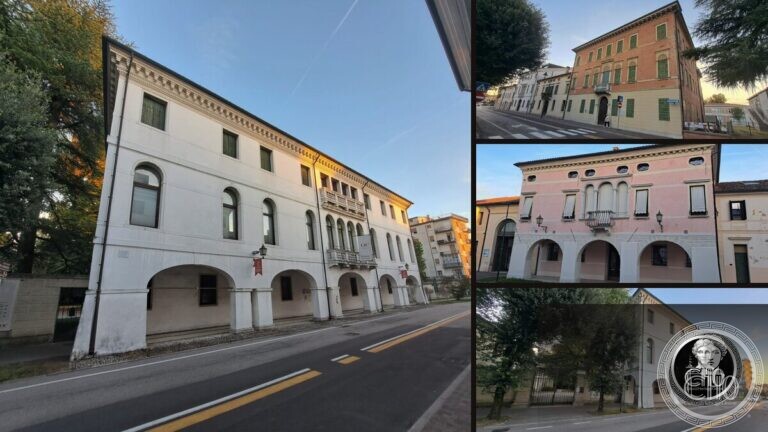
On the western shore, Rust is the circuit’s most photogenic town: a miniature free city that bought its royal privileges in 1681 partly with wine, and whose stork nests and pastel façades around the Rathausplatz are Burgenland’s postcard. Its wine matters historically too — Ruster Ausbruch, the town’s sweet wine, was once traded across Europe. Purbach, a few kilometres north, keeps its Turkish-era walls and cellar lanes; the whole shore between them is vineyard, and the Heurigen taverns sell the landscape by the glass.
The Hungarian shore
South of the border the lake turns Hungarian and the accent turns aristocratic. Fertőrákos keeps the quarry whose Leitha limestone built half of Vienna — its vast cut chambers now host concerts underground. Nearby stands the route’s set-piece: Eszterháza at Fertőd, the palace Miklós Esterházy raised in the 1760s to out-Versailles central Europe, where Joseph Haydn served as court composer for decades and premiered symphony after symphony in its music room. The circuit closes at Nagycenk, the Széchenyi family seat, whose linden avenue and mausoleum belong to the memory of István Széchenyi, the “greatest Hungarian” of the reform age.
Border as landscape
The Iron Curtain ran through this lake for forty years, and the Pan-European Picnic of 1989 — the border breach that helped bring the Curtain down — happened just beyond its southern reeds. The 2001 joint listing was therefore more than administrative: it re-declared the lake a single landscape after a century that had twice cut it in half. Today the border is a line the cycleway crosses without slowing.
Planning the journey
The full lake circuit is roughly 120 flat kilometres, a comfortable two-day ride with a border crossing in each direction; e-bikes and rental stations abound, and a lake ferry can shorten the loop. Drivers can touch all six stops in a single day from Vienna, an hour away, or Sopron. Spring and early autumn bring the bird migrations and the grape harvest respectively; summer brings shallow, warm swimming off the lidos. Eszterháza deserves a half day by itself — check concert schedules, because Haydn’s music room still performs its original function.
Wine, reed and feathers: the working landscape
The listing calls this a cultural landscape, and the culture is agricultural. The lake’s mild, humid autumns raise the noble rot that makes the shore one of Europe’s historic sweet-wine districts — Ruster Ausbruch on the Austrian side has cousins across the water, and the ordinary dry whites and reds of the vineyard villages fund the pretty façades. Reed is the other harvest: cut on the ice in winter, bundled and shipped for thatch across Europe, a trade that keeps the vast reed belt managed rather than merely admired. The two crops explain the villages’ shape — wine cellars into the hillside, reed stacks by the shore — better than any architectural guide.
The feathers are the third economy. The national parks’ hides and observation towers serve one of Central Europe’s great birding scenes: herons and spoonbills in the reeds, geese in tens of thousands on migration, and the steppe fauna of the salt pans east of the lake. Serious birders come in April and October; everyone else discovers the spectacle by accident from the cycleway, which is the landscape’s best trick — its working parts and its wild parts share the same flat horizon, ten pedalling minutes apart.
Sources & further reading
- Fertő / Neusiedlersee Cultural Landscape — Wikipedia
- UNESCO World Heritage Centre — listing 772
- Lake Neusiedl — Wikipedia
- Eszterháza — Wikipedia
- Rust, Austria — Wikipedia
Sources
- S1 — Löffler, Heinz, ed. Neusiedlersee: The Limnology of a Shallow Lake in Central Europe. Dr W. Junk Publishers, 1979. ISBN 978-90-6193-595-7.
- S2 — Brook-Shepherd, Gordon. The Austrians: A Thousand-Year Odyssey. Carroll & Graf, 1997. ISBN 978-0-7867-0520-7.
Spotted an error? Write to editorial@culturalheritageonline.com and we correct it the same day.