

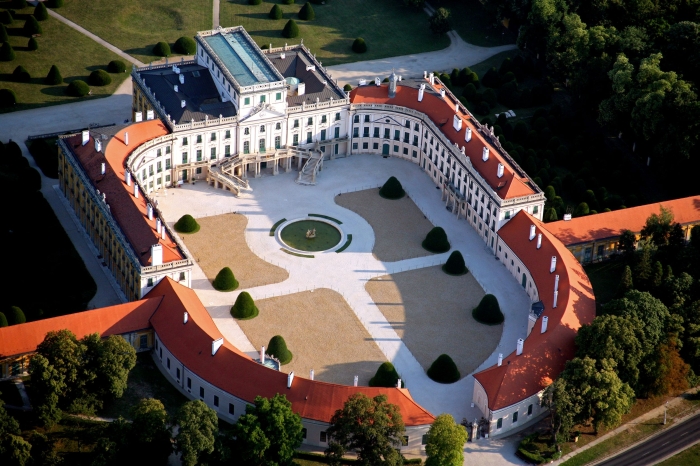
A Rococo masterpiece built by Prince Nikolaus Esterházy, this Hungarian palace earned comparison to Versailles and became the creative home of composer Joseph Haydn.
At a glance
Eszterháza ranks among Hungary’s most significant architectural achievements. Prince Nikolaus Esterházy’s vision produced a Rococo palace of unmatched grandeur in the region. For a quarter-century, it served as the residence and workplace of one of Europe’s greatest composers.
History
Prince Nikolaus Esterházy commissioned Eszterháza as an expression of aristocratic power and refined taste. The palace became the administrative and cultural center of his estates. Joseph Haydn arrived in 1766 as court musician, remaining until 1790. During those formative decades, Haydn composed much of his celebrated output while leading the Esterházy orchestra, cementing the palace’s place in music history.
What you see
The palace embodies the Rococo style at its most ambitious. Its scale and ornamentation reflect princely ambitions to rival the great courts of Western Europe. The design combines theatrical grandeur with the decorative refinement characteristic of the period.
Cultural significance
Eszterháza represents the apex of Hungarian Rococo architecture. Its association with Haydn elevates it to international importance—the palace witnessed the composition of symphonies, operas, and chamber works that shaped classical music. The site symbolizes the golden age of Central European aristocratic patronage.
Key facts
- Country: Hungary
- City: Fertőd
- Coordinates: 47.6206, 16.8717
- Resident composer: Joseph Haydn (1766–1790)
- Architectural style: Rococo
Practical information & getting there
Eszterháza is located in Fertőd, in northwestern Hungary near the Austrian border. The palace is open to visitors; consult local tourism resources for current opening hours and admission details before your visit.
Sources & resources
Find it on the map
See this place and what’s around it →
📷 Become a Cultural Heritage Online photographer
Share your photos of places: they stay published under your name as the author. The more they're seen, the more you get noticed — and soon a contest will reward the most appreciated photos.
Log in or sign up free to add a photoIs this page about you?
This page is read by travellers and heritage enthusiasts who find it on Google. Tell us how you are connected to this place and we will take it from there.