

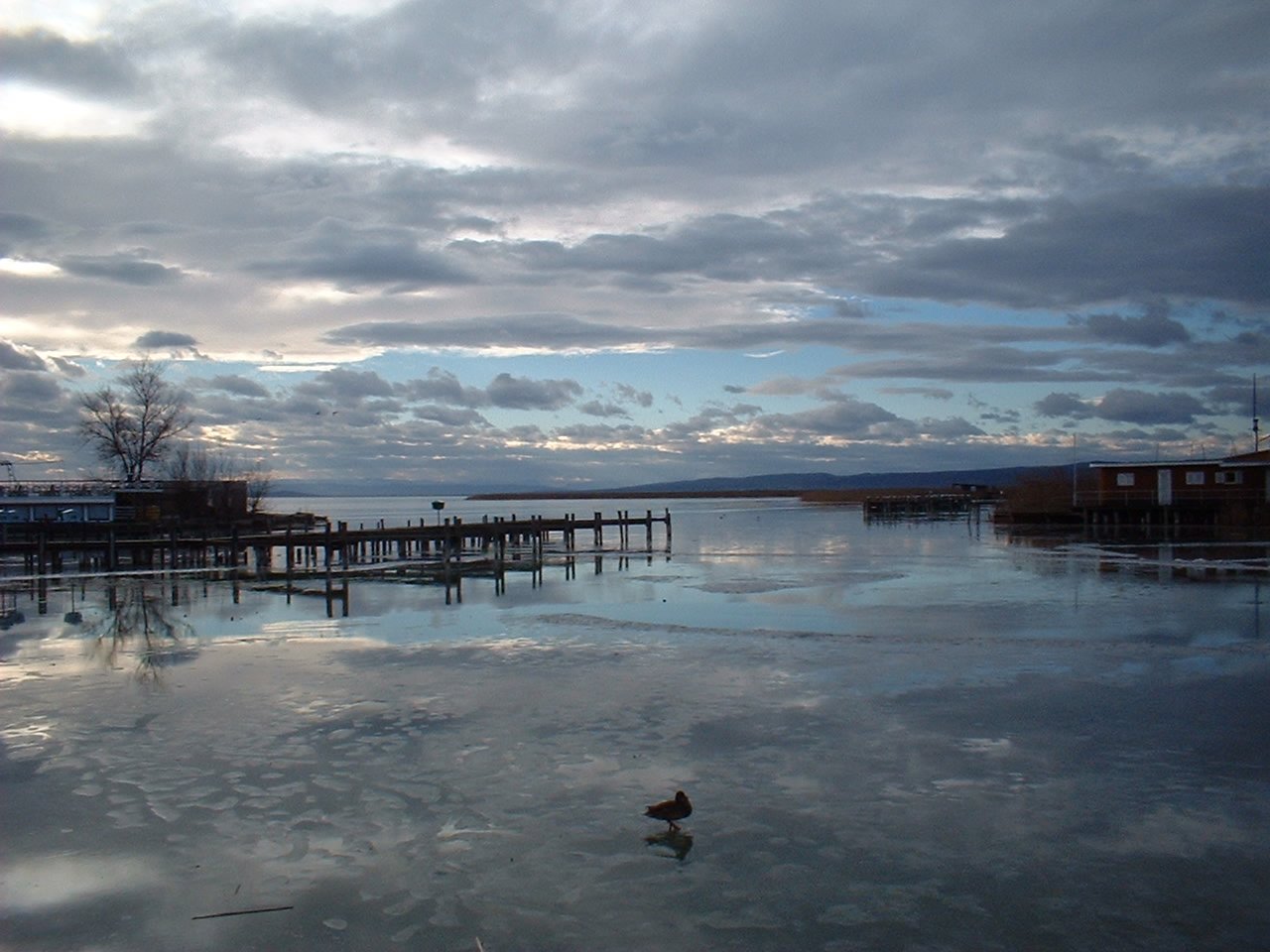
A steppe lake on the edge of two worlds
On the flat plain where the Alps end and the Pannonian steppe begins, a body of water 36 kilometres long and up to 15 kilometres wide spreads beneath an enormous sky: the Neusiedler See (Fertő-tó in Hungarian, Fertő Lake). It is the largest steppe lake in Central Europe and one of the most unusual bodies of water in the world: extraordinarily shallow (averaging 1.5 metres, maximum depth 1.8 m), almost entirely fringed by a dense belt of common reeds up to 20 kilometres wide, and of uncertain salinity that fluctuates with rainfall. It has dried out three times in recorded history and refilled from rain.
UNESCO inscription: a transboundary cultural landscape
Inscribed in 2001 as a joint Austrian-Hungarian World Heritage Site, the Fertő/Neusiedler See Cultural Landscape was recognised for its exceptional natural values — as a breeding ground for over 300 bird species and a critical stopover for millions of migratory birds on the Central European flyway — and for the cultural landscape of vineyards, villages, and wetlands that humans have developed around it over 8,000 years. It was one of the first UNESCO sites explicitly inscribed as a transboundary “cultural landscape.”
The reed sea: an ecosystem of extraordinary productivity
The reed belt (Phragmites australis) that surrounds most of the lake is one of the largest continuous reedbeds in Europe, covering over 165 km². It is an ecosystem of extraordinary biological productivity: habitat for great white herons, purple herons, white storks, spoonbills, night herons, bitterns, and dozens of species of ducks; breeding ground for the Eurasian penduline tit; refuge for otters; and nursery for the fish that support the lake’s modest commercial fishing. The reeds themselves are harvested (sustainably) for thatching, a craft that maintains traditional villages around the lake.
Birds: a critical stopover on the Central European flyway
During spring and autumn migration, the lake becomes a spectacle of extraordinary concentration. Hundreds of thousands of waterfowl — ducks, geese, waders, terns — rest and feed in the shallows and reed beds during their journeys between Central European breeding grounds and African wintering areas. The lake is one of the most important inland wetland stopover sites in Europe, with regular counts exceeding 100,000 birds during peak migration periods. White storks nest in the villages surrounding the lake; red kites and white-tailed eagles hunt the shores.
Wine and culture: the villages of the Pannonian shore
The eastern (Hungarian) and western (Austrian) shores of the lake are flanked by wine-producing villages of great historical character. On the Austrian side, Rust (famous for its stork nests and its “Ruster Ausbruch” dessert wine), Mörbisch, Purbach, and Donnerskirchen preserve 17th and 18th-century village architecture. On the Hungarian side, Fertőd houses the Esterházy Palace — the “Hungarian Versailles” where Haydn composed most of his symphonies as court musician to the Esterházy princes. The lake’s flat, cycling-friendly terrain makes it one of Europe’s most popular cycle touring destinations.
A lake without a fixed outflow
The Neusiedler See is a endorheic lake — it has no natural outflow and receives more water from rain and tributaries than it loses to evaporation only in wet periods. In dry periods, evaporation exceeds input and the lake shrinks; in extreme cases (1868, 1933, 1965), it has dried almost entirely. The salt content varies accordingly; in dry periods, the remaining water becomes brackish enough to support species more typical of coastal salt marshes. This dynamic hydrology makes the lake an ecosystem in continuous flux — ecologically complex and scientifically fascinating.