
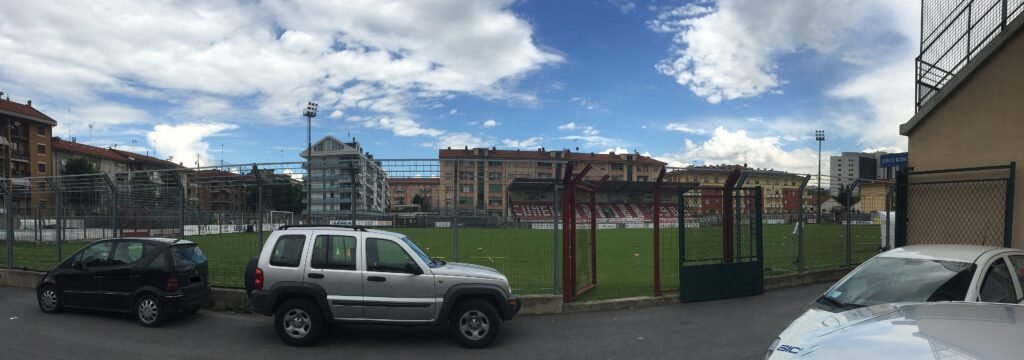
Corner Portal of Stadio Littorio, Cuneo, 1935
A detail of one of the corner entrances to Stadio Littorio in Cuneo, designed and built in 1935. The stadium is now known as Stadio Fratelli Paschiero.

Stefano Vigolo photographs and documents Italian architecture of the interwar decades — the years known in Italy as the Ventennio — from Rationalism and Art Déco to the buildings that fall between the guidebooks. He is a researcher of the period.
Contributions: 516 articles · 106 heritage places · 7 events · 12 itineraries · 89 photographs
Published on beniculturalionline.it, the Italian archive of this publication, online since 1998. They are being brought into Cultural Heritage Online.
A detail of one of the corner entrances to Stadio Littorio in Cuneo, designed and built in 1935. The stadium is now known as Stadio Fratelli Paschiero.

A sculptural monument by Ercole Drei in the Certosa di Bologna’s Sixth Cloister, featuring allegorical figures including Gloria and Forza.
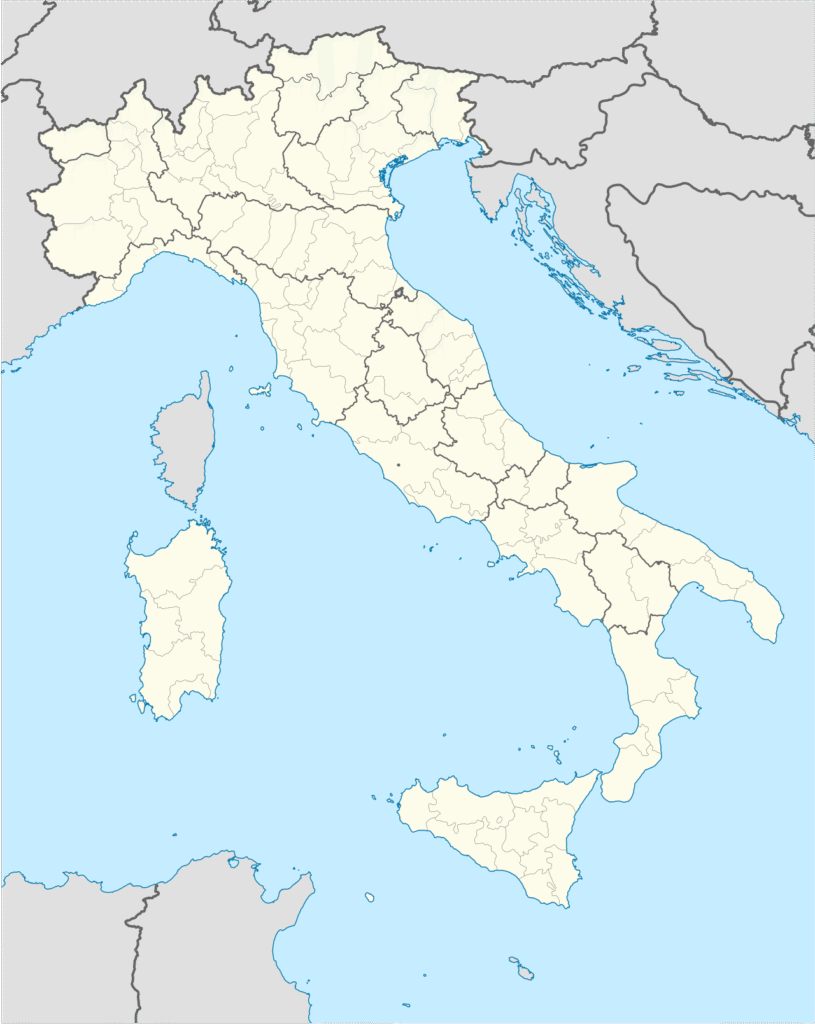
A rural church designed by architect Domenico Sandri and engineer Giovanbattista Canevari for the newly founded settlement of Borgo Mezzanone near Foggia in 1934–35.
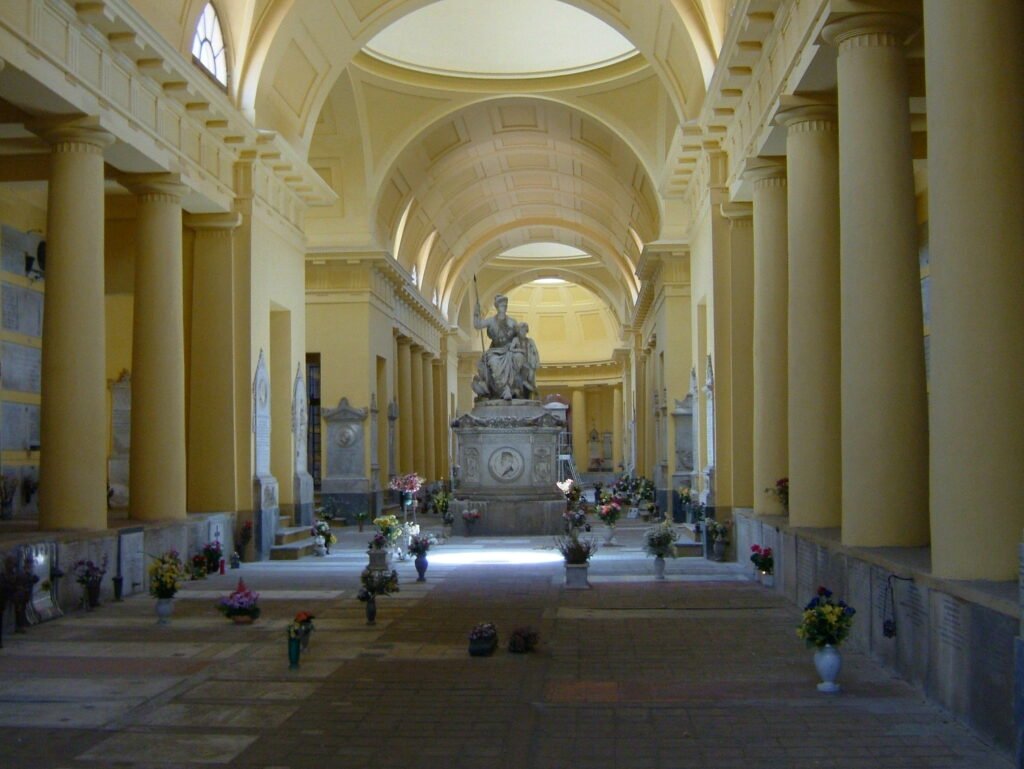
A monument designed by architect Giulio Ulisse Arata in 1931–32 within the Sixth Cloister of Bologna’s Certosa, a former Carthusian monastery turned monumental cemetery.
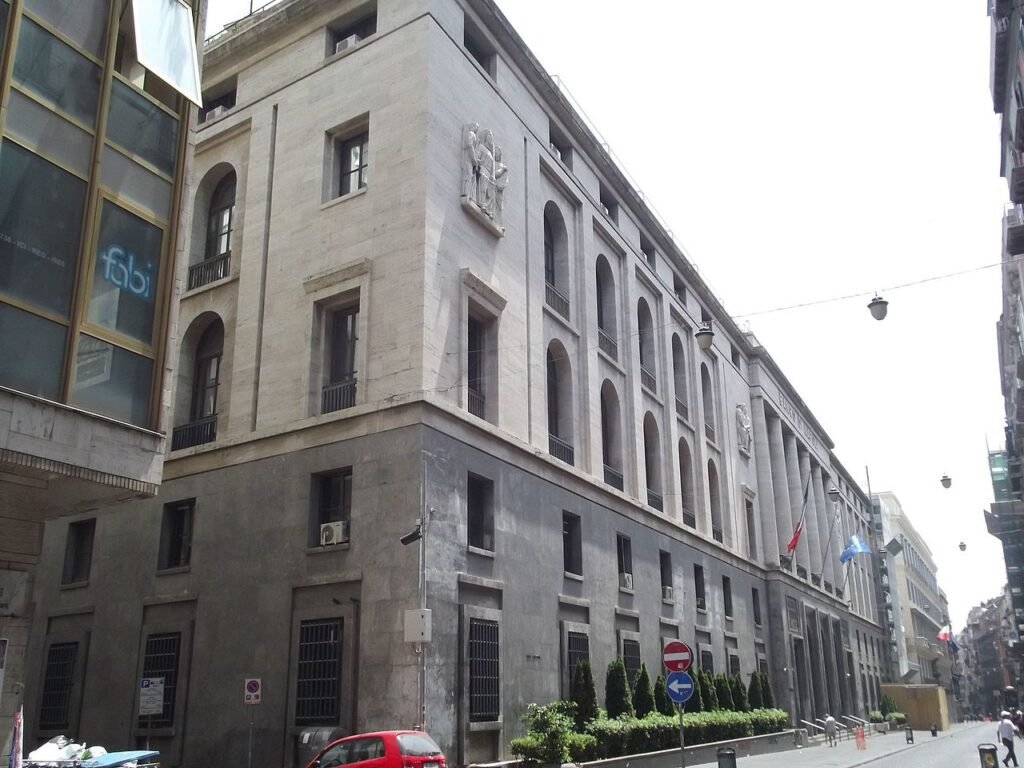
A Rationalist palazzo in central Naples, designed by Marcello Piacentini in 1939–40 for the Bank of Naples. Since 2022 it has housed the Naples branch of the Intesa Sanpaolo Galleries d’Italia.
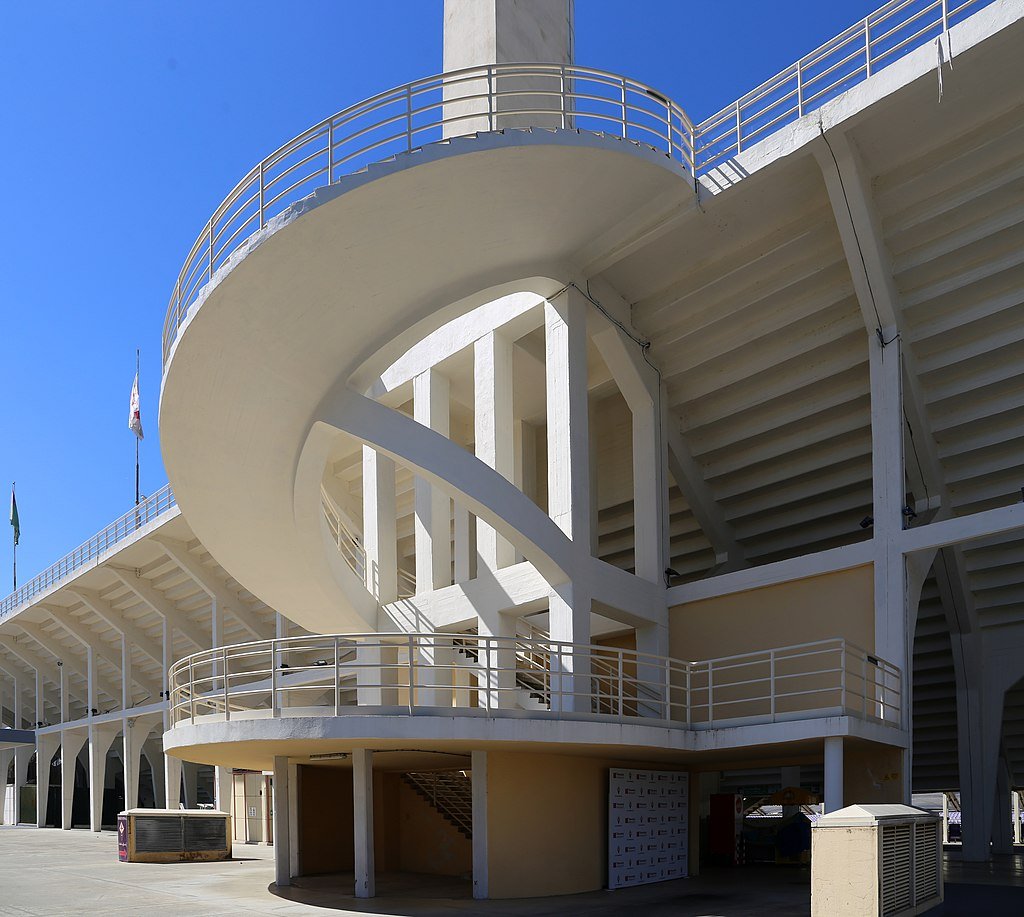
A spiralling staircase detail from Florence’s Stadio Artemio Franchi, designed by engineer Pier Luigi Nervi and completed in the early 1930s. The structure exemplifies Nervi’s pioneering approach to reinforced concrete construction.
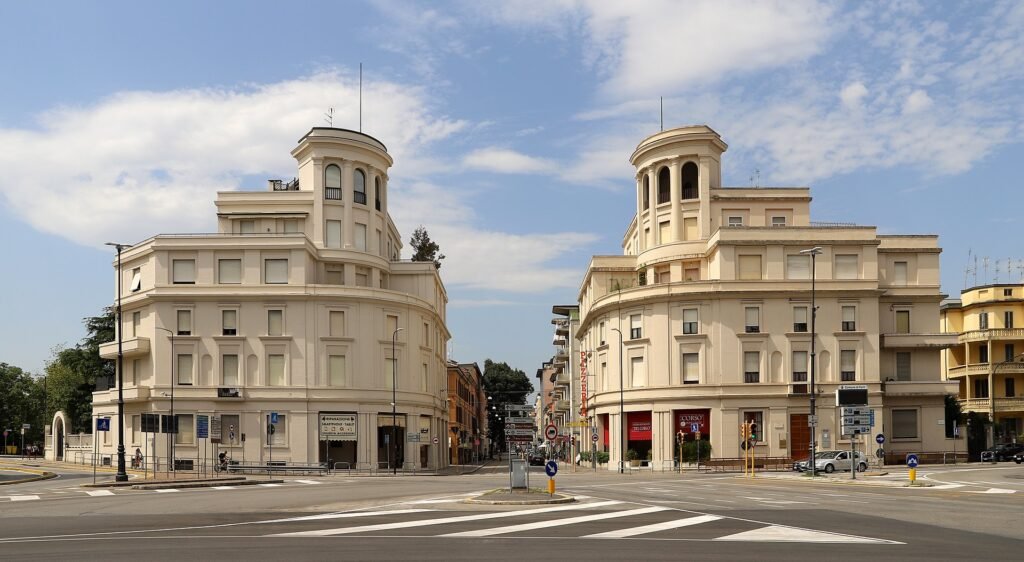
Two symmetrical residential buildings designed by architect Cesare Bazzani in Forlì in 1933, exemplifying early twentieth-century Italian architectural practice.
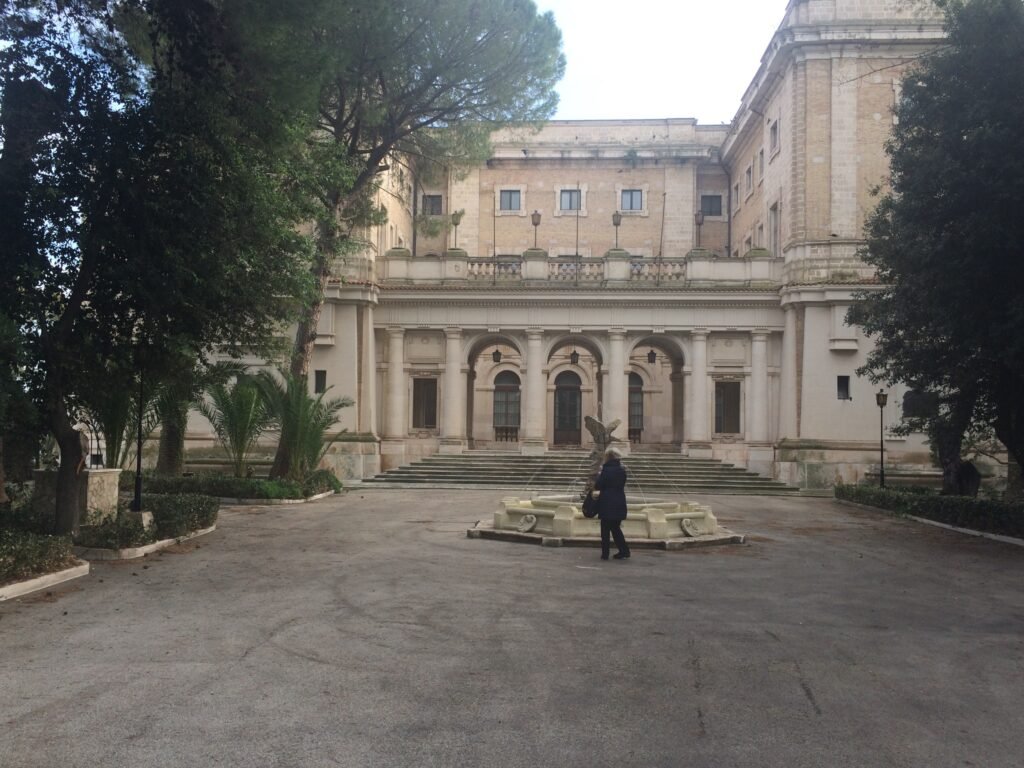
Armando Brasini’s Palazzo Brasini, built in 1925 at the Idroscalo in Taranto, now houses the Scuola Volontari Aeronautica Militare.
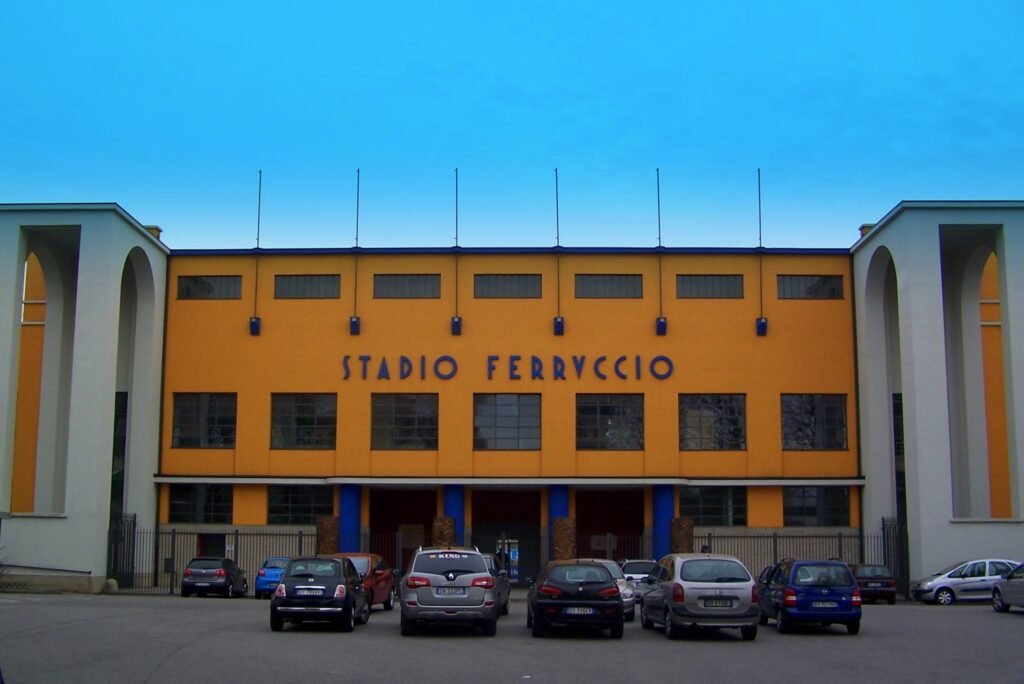
A multipurpose sports facility built in 1934 in the Lombardy town of Seregno, designed in the Italian Rationalist style of the interwar period.

Between the 1920s and 1940s, Italy developed several artistic, architectural and design movements—Futurism, Razionalism and Novecento—that defined the aesthetic character of the era.