
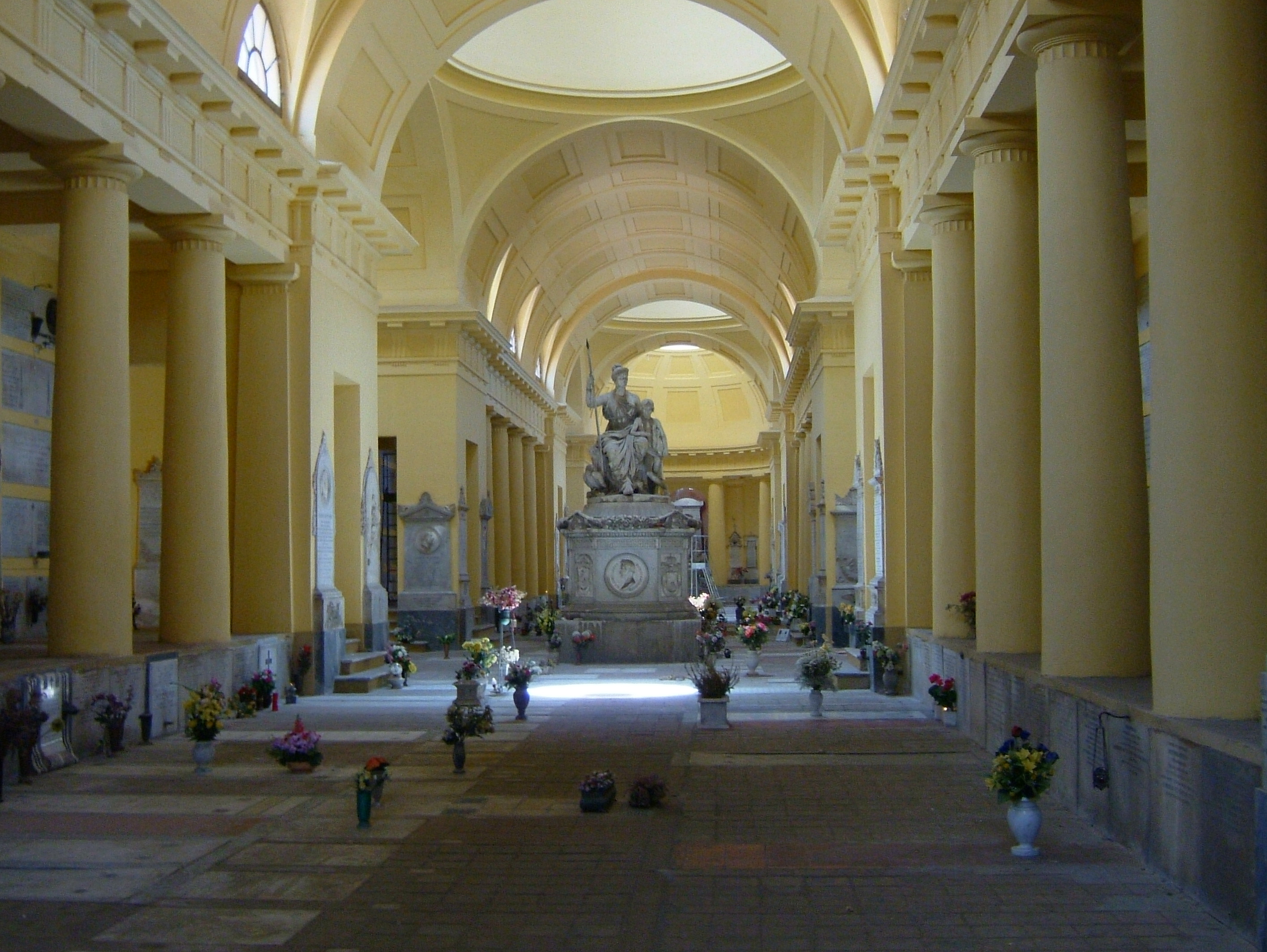
A monument to the fallen designed by architect Giulio Ulisse Arata stands in the Sixth Cloister of the Certosa di Bologna, completed in 1931–32.
The Certosa itself, founded in 1334 as a Carthusian monastery, was suppressed in 1797 and transformed into Bologna’s monumental cemetery in 1801. Arata’s monument occupies a significant space within this historic complex, which had become a notable burial ground celebrated by contemporary observers. The architect integrated the memorial into the cemetery’s established architectural fabric, responding to the site’s medieval cloister structure.
About Giulio Ulisse Arata
Arata (1881–1962) was a prominent Italian architect whose practice spanned the early twentieth century. Among his notable works are the Bologna Football Stadium (1927) and the Galleria d’arte moderna Ricci Oddi in Piacenza. His work was recognized internationally, including participation in the architecture event of the 1936 Summer Olympics.
Details
- Designer: Giulio Ulisse Arata
- Year: 1931–32
- Location: Sixth Cloister, Certosa di Bologna, Bologna
- Site: Former Carthusian monastery, now monumental cemetery (established 1801)
On video
Frequently asked questions
Who designed this monument?
Architect Giulio Ulisse Arata designed the monument, completing it in 1931–32. Arata was known for significant works including the Bologna Football Stadium and galleries in Piacenza.
What is the Certosa di Bologna?
The Certosa is a former Carthusian monastery founded in 1334 that became Bologna’s monumental cemetery in 1801. The monument occupies the Sixth Cloister within this historic complex.
What does the monument commemorate?
The monument commemorates the fallen and martyrs of the fascist revolution, as indicated by its original Italian title.


