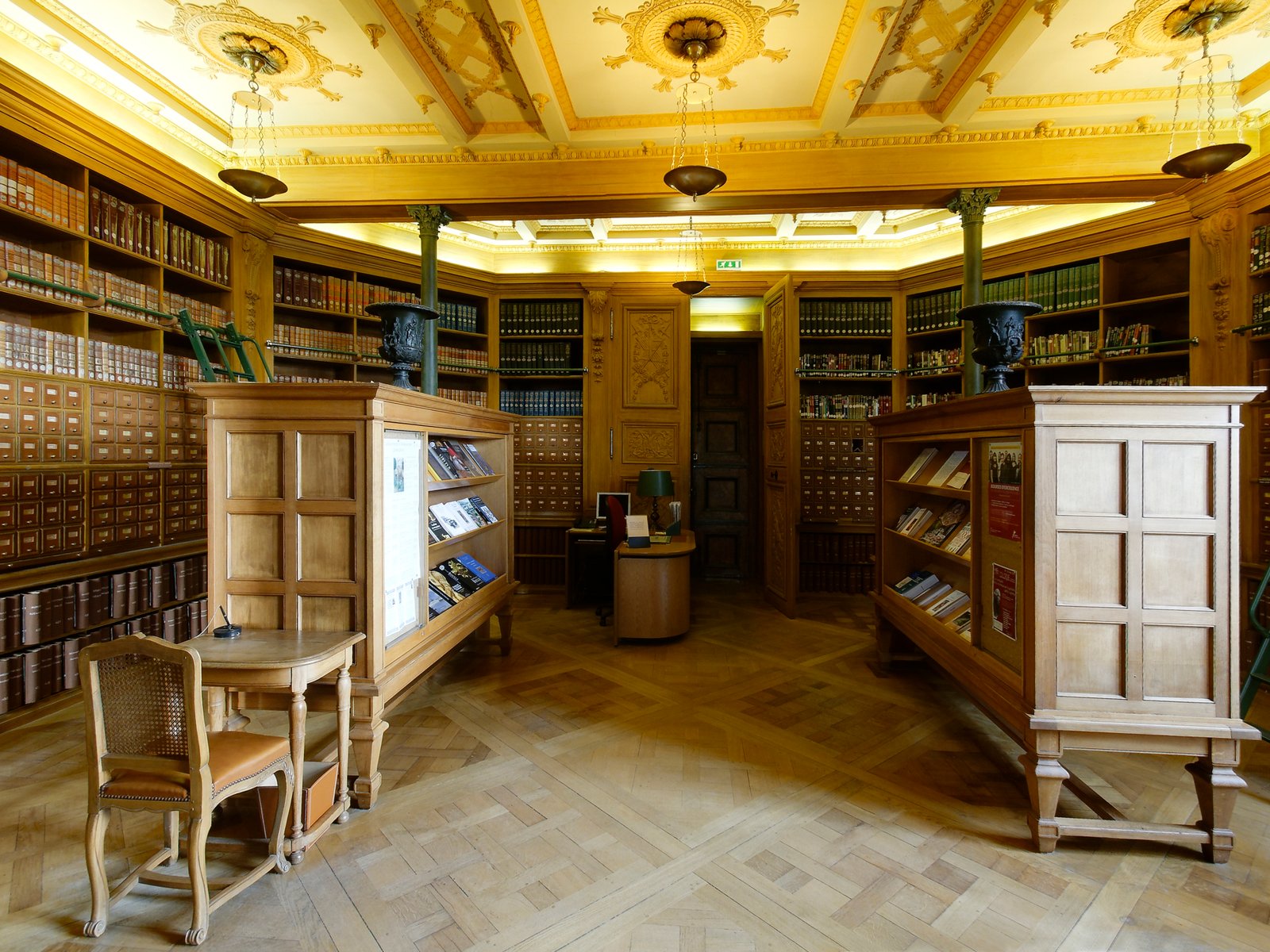
The room pictured above holds thousands of drawers of index cards, each one a single book’s entire chance of being found. A wonderful book with a blank or badly filled card might as well not be on the shelf, because the librarian searching the catalogue can only recommend what the card actually says. This magazine has used that comparison several times across this series, because it turns out to explain almost everything worth knowing about SEO, GEO and AEO — three terms most owners have heard, in that order or none at all, without ever being told plainly what they mean.
Why this glossary works by comparison, not definition
Most explanations of these terms are written for people who already work in marketing, which is exactly the audience that does not need them explained. This one assumes the opposite: that you have never needed to know any of this until now, because until recently, you didn’t. Nothing here is a sign of falling behind. These are recent enough that plenty of experienced, successful owners are only now hearing the second and third terms for the first time.
The quick reference
| What you already know | What it actually is | Why it matters now |
|---|---|---|
| The leaflet rack at the tourist office | A listing on Google (SEO) | Same job — being found by someone who doesn’t know you yet — without printing costs, visible everywhere at once |
| The hotel concierge a guest asks for advice | An AI assistant (ChatGPT, Gemini, Perplexity) that travellers increasingly ask before they arrive (GEO/AEO) | It can only recommend what it has actually read about you |
| A museum placard printed in only one language | A website with no facts stated plainly for search engines and AI to read | The information is true and honest, and still invisible to the visitor reading it in the wrong “language” |
| A chamber of commerce letter recommending a business | An independent website linking to or citing yours | Search engines and AI trust what others say about you more than what you say about yourself |
| A hidden counter behind the leaflet rack | The search and click data a digital listing produces automatically | Paper never reports back. This does, every day |
| A library card filled in properly — title, author, subject | The plain facts behind a listing (address, hours, what makes a place unique) | Two equally good places: only the one with a properly filled card gets found when someone searches |
Frequently Asked Questions
What does SEO mean?
SEO stands for Search Engine Optimisation — making sure a place’s information is complete and clear enough that Google can find it and show it to someone searching. It is the digital equivalent of making sure your leaflet is actually in the rack, not buried underneath the others.
What does GEO mean?
GEO stands for Generative Engine Optimisation — the same idea as SEO, but aimed at AI assistants like ChatGPT, Gemini and Perplexity rather than a traditional search results page. It is about being part of what the new “concierge” has actually read.
What does AEO mean?
AEO stands for Answer Engine Optimisation, and in practice overlaps heavily with GEO — both describe making information clear and well-structured enough that an AI system can extract a direct answer from it, rather than having to guess at what a page is trying to say.
Do I need to understand the difference between GEO and AEO?
No. For an owner, the practical takeaway is the same for both: state the plain facts about your place clearly, and let an independent, editorially verified source say the rest. The distinction between the two terms matters more to specialists than to the places being found through them.
Is it too late to start if I’ve never done any of this?
No. These practices are recent enough across the whole industry that almost every owner is starting from close to the same point. A single, properly filled-out free listing does more than years of an empty or badly filled one.
Where to start
Cultural Heritage Online lists heritage places, tours and cultural associations across Europe free of charge, built exactly the way this glossary describes — plain facts, verified by an editor, findable by both people and AI assistants. If you organise tours, walks or events, the organiser page explains what is included, or you can simply write to the editorial team and ask.
Sources
- Cultural Heritage Online, About — growth and readership figures
- Cultural Heritage Online, Press page
- Photo: Marie-Lan Nguyen, Salle des catalogues de la Bibliothèque Mazarine, Paris, via Wikimedia Commons, CC BY 2.0