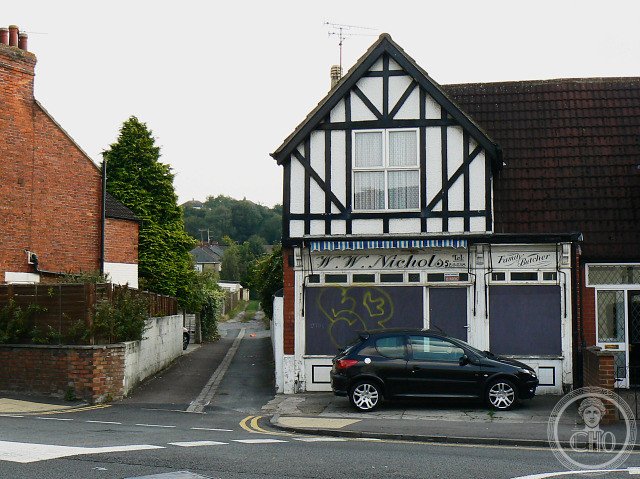
A door-to-door salesman and a shopkeeper are both trying to sell you something, and most owners can tell them apart within a minute of talking. The salesman wants a decision today, cannot quite explain what happens if you change your mind, and gets uncomfortable if you ask to see it working somewhere else first. The shopkeeper lets you walk in, look around, pick things up, and leave without buying anything at all. “Digital marketing” has earned its bad reputation among small heritage businesses because too much of it, historically, has behaved like the salesman. That reputation is deserved. It does not mean every offer deserves it.
The salesman who won’t leave without a signature
The pattern is familiar to almost anyone who runs a small cultural site, because most owners have lived through some version of it. Someone contacts you offering “guaranteed visibility” or a “premium listing package”. The price is vague until you ask twice. There is a sense of urgency that does not match the size of the decision — a deadline today, a discount that expires tonight, a slot that will go to someone else if you hesitate. And when you ask what, specifically, you are paying for, the answer stays general: exposure, reach, presence, results. Nothing you could point to and check.
This is not paranoia. It is pattern recognition, and it is correct far more often than it is wrong. A genuine offer can survive being questioned. A racket cannot, because the pressure and the vagueness are the entire method — remove them and there is nothing left to sell.
The shopkeeper who lets you look before you buy
A trustworthy offer behaves the opposite way on every count. It shows you examples of the actual work before asking for anything. It tells you plainly what is free and what is not, with the free part standing on its own rather than functioning as bait. It has a named person attached to it, not a form or a call centre, someone you could write to directly and expect an answer from. And it survives you walking away: nothing is taken back, nothing expires in a way designed to punish hesitation.
None of this requires you to understand any technology. It requires the same judgement any shopkeeper would recognise from the other side of the counter: does this person want me to look carefully, or do they want me to decide before I have had the chance to?
Four questions that sort one from the other
Before agreeing to anything described as digital marketing, SEO, online visibility or similar, four short questions do most of the sorting work:
- Can I see real examples first? Not a mock-up — an actual published page you can visit right now, made by the same people, for a business like yours.
- Is there a free version, and does it stand on its own? If the free option is deliberately weak or broken so that the paid one looks better by comparison, that is a signal, not a coincidence.
- Can I stop whenever I want, without penalty? A fair offer survives you leaving. One that locks you in with cancellation fees or vanishing content is designed around the fear of you leaving, not around doing good work.
- Is there a real name attached, one you could write to directly? Accountability is hard to fake. A person who signs their own name to an offer has more reason to keep it honest than an anonymous account or a shared inbox.
Cultural Heritage Online holds itself to the same four questions, because there is no reason a reader should trust a checklist from an outlet that would fail its own test. The catalogue is browsable before anyone asks you for anything. The free listing is complete on its own, not a deliberately hobbled preview. Nothing is taken away if you decide it is not for you. And the people producing this magazine sign their names to what they write.
Frequently Asked Questions
Is all paid digital marketing a scam?
No. Plenty of paid services are honest and effective. The four questions above are not a way to avoid paying for anything — they are a way to tell a fair offer from a dishonest one, whether it costs money or not.
What should worry me most in a cold approach?
Urgency that does not match the size of the decision. A genuine opportunity to be listed or featured somewhere does not usually expire in twenty-four hours.
Is it rude to ask for examples before agreeing to anything?
No. Any legitimate offer expects to be asked this, and answers it happily. Discomfort at the question is itself useful information.
Does a free option always mean the paid one is a trap?
No — a free tier that stands on its own and a paid tier with genuinely extra features can coexist honestly. The warning sign is a free option built to be unusable, not a free option that is simply smaller.
Where to start
Cultural Heritage Online lists heritage places, tours and cultural associations across Europe free of charge, with no obligation attached — you can look at what a listing actually is before deciding anything else. If you organise tours, walks or events, the organiser page explains what is included, or you can simply write to the editorial team and ask.
Sources
- S1 — Enge, Eric, et al. The Art of SEO: Mastering Search Engine Optimization. O'Reilly Media, 2015. ISBN 978-1-4919-4804-0.
- S2 — Buhalis, Dimitrios. eTourism: Information Technology for Strategic Tourism Management. Pearson, 2003. ISBN 978-0-582-35740-2.
Spotted an error? Write to editorial@culturalheritageonline.com and we correct it the same day.