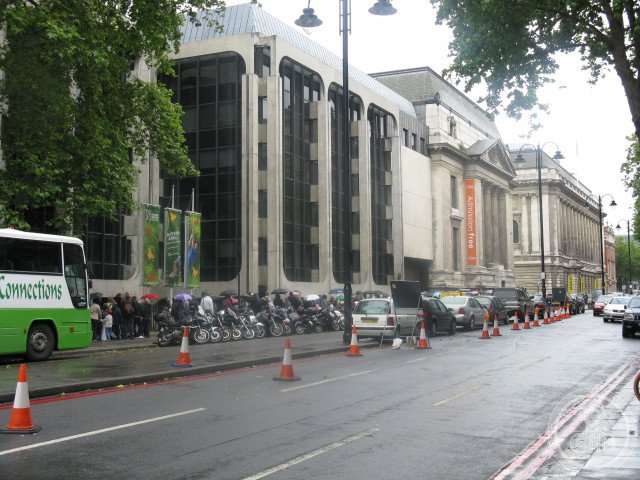
The Natural History Museum in London lets anyone walk in without paying, and has done for decades. Nobody who queues outside on a wet school holiday assumes there is a hidden catch waiting inside — no surprise bill at the exit, no pressure to buy something before they are allowed to leave. Free, in a museum, is understood to mean free. It is worth asking why “free” in digital marketing has come to mean something else entirely, and why that does not have to be true here.
Why “free” makes people suspicious in digital marketing, and shouldn’t here
The suspicion is earned. A great deal of what gets called a free trial is built to expire, to nag, or to quietly convert into a paid subscription unless someone remembers to cancel in time. That is not really free — it is a delay before payment, dressed up as a gift. Owners who have learned to distrust this pattern are not being difficult. They are reading the pattern correctly, because it has been used against small businesses often enough to deserve the reading.
A museum’s free admission is a different shape of offer entirely: it does not expire, it does not require a card number on file, and walking in for free changes nothing about whether you can walk in for free again next year. That is the shape worth checking for, whatever the offer is called.
What actually stays free, no matter what
A listing on Cultural Heritage Online is built to the museum shape, not the trial shape. It stays online for as long as the place wants it there, with no expiry date attached and no card details requested to set it up. Nothing about it is deliberately limited to make a paid option look better by comparison — it is complete, on its own terms, whether or not anything more ever happens.
An owner can ask for it to be corrected, updated or removed entirely at any time, for any reason, without needing to explain why. And having a free listing changes nothing about whether an owner is later offered anything else — no pressure attaches to declining, and no consequence follows from simply staying exactly where the free listing already put them.
Why we designed it this way
An audience that has good reason to be careful about digital offers will not be persuaded by being told to trust something. Trust is something a publication earns by behaving consistently over time, not something it can claim in a sentence. Designing the free listing to genuinely have no catch — rather than to look generous while quietly working like a trial — is the only version of “free” that holds up to the scrutiny a careful owner should apply to it.
Many places that take up the free listing never do anything more than that, and that is treated as a complete, successful outcome, not a missed opportunity. A museum does not consider a visitor who never buys from the gift shop to have failed at visiting.
What “free” actually includes
In practice, a free listing means the place appears in the catalogue and on the map, with its basic facts — what it is, where it is, how to reach it — checked and published by an editor rather than left as an unverified submission. That is the same standard applied to every other entry in the catalogue, free or not; nothing about being free makes an entry less carefully checked.
What sits above the free tier is additional and clearly labelled when it exists — more visibility, event promotion, a dedicated organiser page — never a better-checked version of the same basic facts. The free entry is not a stripped-down preview of something better. It is the complete, ordinary product.
Frequently Asked Questions
Does the free listing expire?
No. It stays online for as long as the place wants it there, with no time limit attached.
Do I need to provide payment details to get a free listing?
No. Nothing about setting up a free listing requires card details or any payment information.
Can I ask for my listing to be changed or removed later?
Yes, at any time, without needing to give a reason.
Will I be pressured to upgrade after accepting the free listing?
No. Many listed places never do anything beyond the free tier, and that is a normal, accepted outcome, not a failure on anyone’s part.
Where to start
Cultural Heritage Online lists heritage places, tours and cultural associations across Europe free of charge, with no obligation attached, no expiry, and no payment details required. If you organise tours, walks or events and want to see what that looks like, the organiser page explains what is included, or you can simply write to the editorial team and ask.
Sources
- S1 — Suber, Peter. Open Access. MIT Press, 2012. ISBN 978-0-262-51763-8.
- S2 — Terras, Melissa. Digital Images for the Information Professional. Ashgate, 2008. ISBN 978-0-7546-4645-7.
Spotted an error? Write to editorial@culturalheritageonline.com and we correct it the same day.