Croatia has ten UNESCO World Heritage Sites, a compact but richly varied list spanning Roman imperial palaces, Greek colonial field systems, Baroque city walls, primeval forest, and medieval stone funerary art — proof that one of Europe’s smaller coastlines concentrates an outsized share of the continent’s layered past. From Cultural Heritage Online.
Why Croatia’s list looks the way it does
Croatia’s geography is the first clue to the shape of its World Heritage list. A long, fractured coastline with hundreds of islands placed it at the intersection of Greek, Roman, Byzantine, Venetian, and Ottoman influence across two and a half millennia. The result is a heritage record that reads less like a single national narrative and more like a stratigraphic cross-section of Mediterranean and Central European civilisation.
Eight of the ten sites are classified as cultural, two as natural, and none as mixed. That eight-to-two ratio reflects a country where the built record — fortifications, basilicas, palaces, field patterns — accumulated relentlessly over centuries, while the natural outstanding universal value concentrates in the karst interior and the old-growth forests that spill across European borders.
The first inscriptions
Croatia’s initial entries onto the World Heritage List were made in 1979 — at the time, the country was still part of Yugoslavia. Three sites received inscription that year, immediately establishing the range that would define the list ever since:
- Historical Complex of Split with the Palace of Diocletian — a Roman emperor’s retirement complex that became a city, its palace walls still housing residents and cafés today.
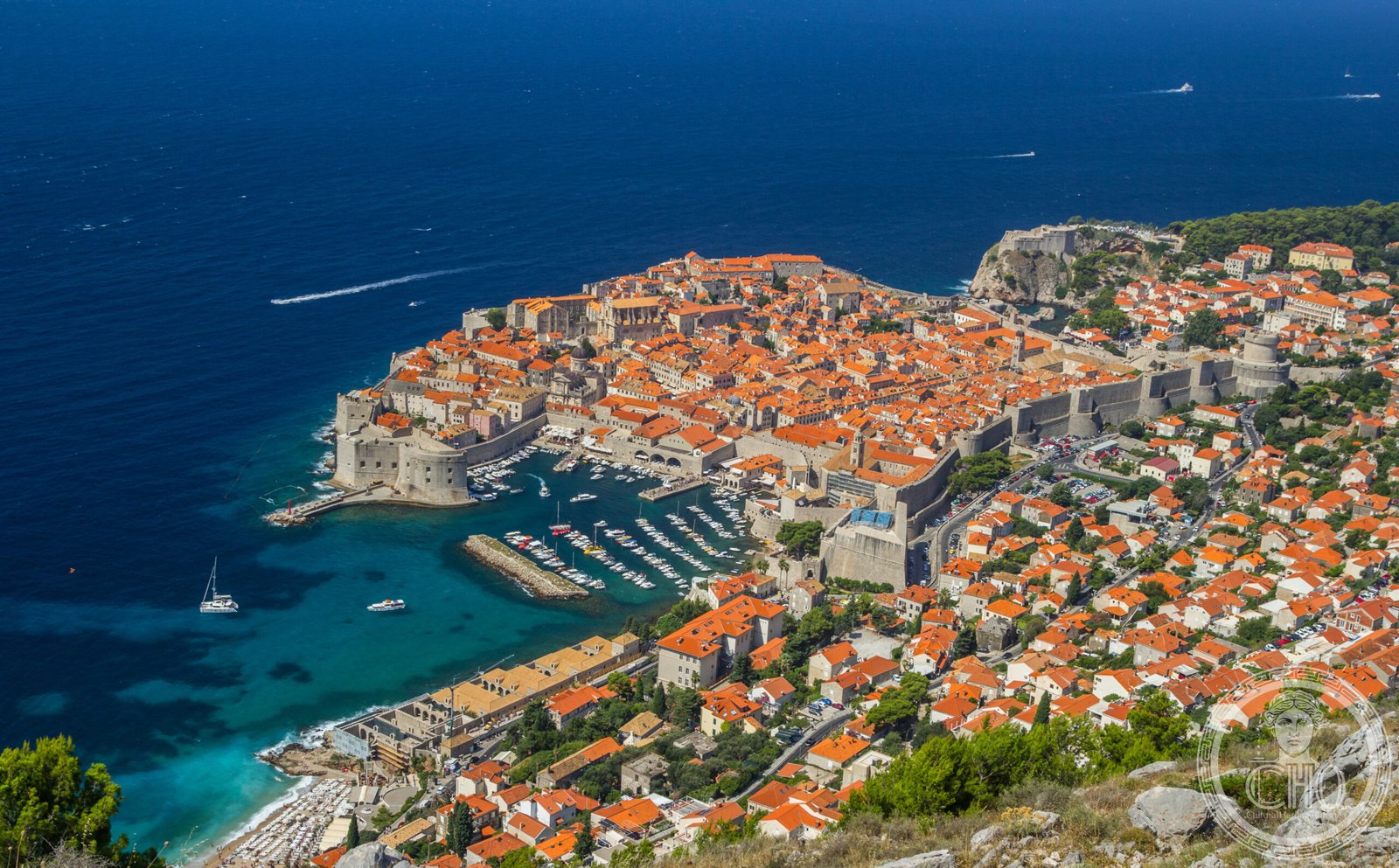
- Old City of Dubrovnik — the fortified republic on the southern Adriatic, its limestone streets and intact curtain walls among the best-preserved medieval urban ensembles in Europe.
- Plitvice Lakes National Park — a cascading system of sixteen terraced lakes and waterfalls in the Dinaric karst, and Croatia’s sole natural inscription until 2017.
The simultaneity of these three 1979 inscriptions set a tone: Croatia’s UNESCO recognition was never going to be dominated by a single type of heritage. From the very first year, an imperial palace, a fortified city, and a national park arrived together.
The most visited — and the alternatives
Dubrovnik and the Plitvice Lakes draw the largest visitor numbers of any inscribed properties in Croatia and require little introduction. Split’s Diocletian Palace, woven into the fabric of daily city life, ranks close behind. These three sites bear the weight of Croatia’s international tourism profile and, particularly in summer, the pressure that comes with it.
Beyond those icons, the list holds sites that reward closer attention. The Stari Grad Plain on the island of Hvar preserves an agricultural landscape — stone-walled plots, dry field boundaries — laid out by Greek colonists around the fourth century BC and maintained for more than 24 centuries without fundamental alteration. The Euphrasian Basilica Complex in Poreč contains sixth-century Byzantine mosaics of exceptional quality, comparable in ambition to Ravenna’s. The Cathedral of St. James in Šibenik is a Renaissance building of unusual structural logic, its interior dome spanning 32 metres and constructed entirely without mortar. The Stećci Medieval Tombstone Graveyards, inscribed in 2016, scatter monolithic carved stones across the region’s landscape — funerary art from the twelfth to fifteenth centuries that remains only partially understood.
Natural and shared sites
Croatia’s two natural World Heritage Sites stand apart in character. Plitvice Lakes National Park is a self-contained karst phenomenon in the Lika region, its travertine barriers building and shifting year by year as water deposits calcium carbonate. The Primeval Beech Forests of the Carpathians and Other Regions of Europe, added in 2017, is a transnational serial site that extends across eighteen European countries; Croatia’s component forms part of the old-growth beech continuum that represents the post-ice-age spread of Fagus sylvatica across the continent.
Shared inscriptions are a notable feature of Croatia’s recent additions. The Venetian Works of Defence (also 2017) is a serial inscription Croatia holds jointly with Italy and Montenegro, recognising the chain of fortifications the Serenissima built across its Adriatic territories between the fifteenth and seventeenth centuries. The Stećci graveyards are shared with Bosnia and Herzegovina, Montenegro, and Serbia — a rare inscription that crosses contemporary national boundaries to recognise a cultural phenomenon that predated them. Together, these transnational sites account for three of Croatia’s ten entries and reflect a maturing approach to heritage that emphasises regional continuity over national pride.
How to find them
Croatia’s World Heritage sites sit alongside thousands of other places on CHO’s interactive map, with GPS and sourced editorial history for each. See also our guides to Italy’s and France’s UNESCO sites, and our piece on cultural travel beyond mass tourism.
Frequently Asked Questions
How many UNESCO World Heritage Sites does Croatia have?
Croatia has ten UNESCO World Heritage Sites, as of the most recent update to the World Heritage List. Eight are classified as cultural and two as natural. The country’s entries range from Roman and Byzantine monuments on the Adriatic coast to primeval beech forest shared with seventeen other European nations.
What was Croatia’s first UNESCO World Heritage Site?
Croatia’s first inscriptions came in 1979, when three sites entered the World Heritage List simultaneously: the Historical Complex of Split with the Palace of Diocletian, the Old City of Dubrovnik, and Plitvice Lakes National Park. The inscriptions were made while Croatia was still part of Yugoslavia.
Does Croatia have any natural UNESCO World Heritage Sites?
Croatia has two natural World Heritage Sites. Plitvice Lakes National Park, inscribed in 1979, protects a cascading system of karst lakes in the country’s interior. The Primeval Beech Forests of the Carpathians and Other Regions of Europe, added in 2017, is a transnational serial inscription Croatia shares with seventeen other European countries.
Which of Croatia’s UNESCO sites are shared with other countries?
Three of Croatia’s ten sites are transnational inscriptions. The Primeval Beech Forests are shared with 17 European nations. The Venetian Works of Defence are shared with Italy and Montenegro. The Stećci Medieval Tombstone Graveyards are shared with Bosnia and Herzegovina, Montenegro, and Serbia.
Sources used in this article
- UNESCO — State Party Croatia — World Heritage list.
- UNESCO — Croatia: World Heritage Sites.
- CHO magazine — What is a World Heritage Site?
- CHO — Interactive map of heritage sites.