No region in India packs World Heritage density like Agra: within a single day’s travel, visitors can move between three UNESCO inscriptions inside the city and a fourth site across the Rajasthan border — from a Mughal imperial tomb to a wetland sanctuary that once sheltered the rarest crane on earth. From Cultural Heritage Online.
Taj Mahal City centre — 30 min by auto-rickshaw from Agra Cantt
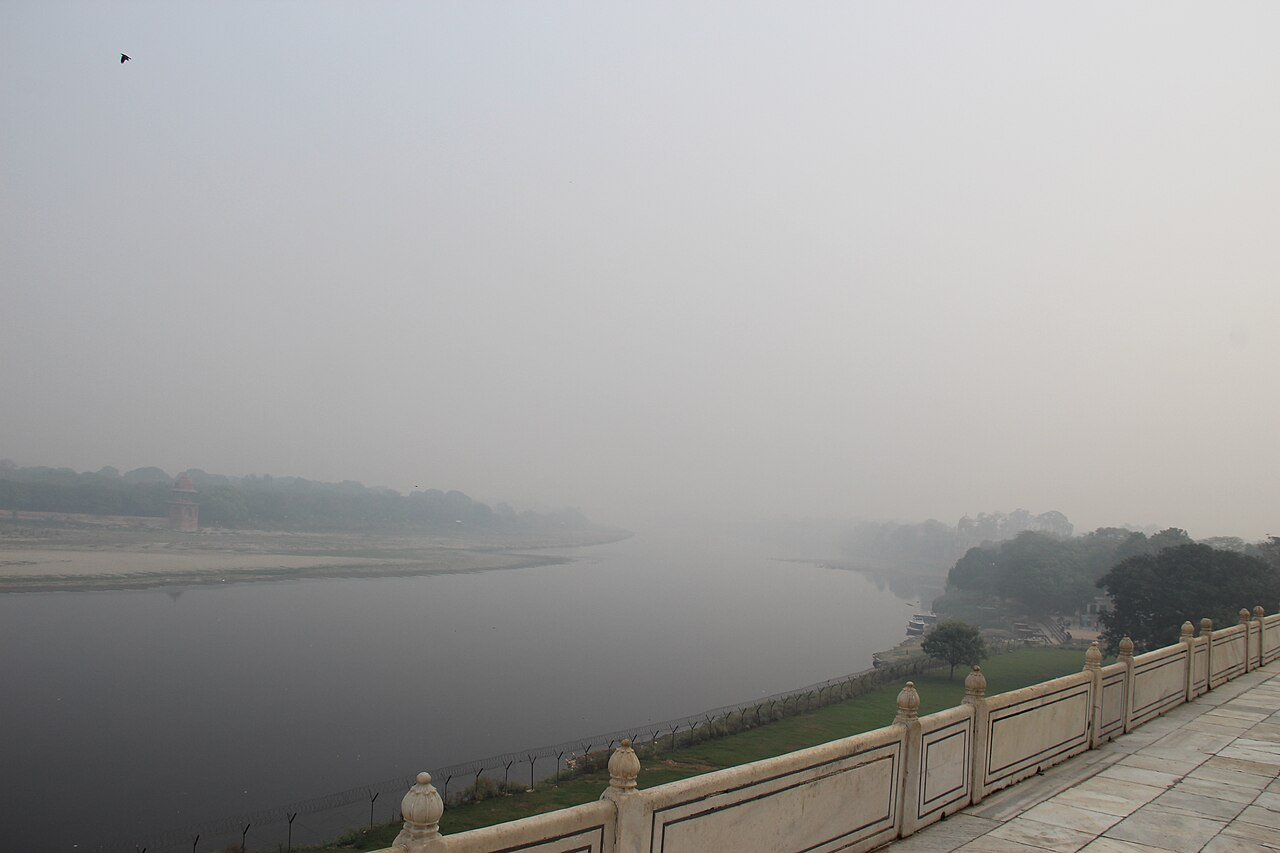
Inscribed by UNESCO in 1983, the Taj Mahal is an ivory-white marble mausoleum commissioned in 1632 by the Mughal emperor Shah Jahan (r. 1628–1658) to house the tomb of his wife Mumtaz Mahal, who died in childbirth that year. Chief architect Ustad Ahmad Lahori directed a workforce of more than 20,000 artisans and labourers over a period that stretched to 1653, when the full 17-hectare complex — mosque, guest house, and formal gardens — reached completion. The central dome rises 23 metres above the drum, and the building’s symmetry holds even from the river bank behind it, where the white marble shifts colour hour by hour: blush at dawn, bleached silver at noon, amber in the last hour of afternoon light. The crowds are real and significant; the East Gate queue at 7 a.m. on a weekend can stretch 40 minutes. Early weekday entry, timed for the first slot after opening, offers the closest thing to solitude the monument allows. Shah Jahan himself is buried here alongside Mumtaz Mahal, interred after his death in 1666.
Getting there: Auto-rickshaw or tuk-tuk from Agra Cantt station, approximately 30 minutes; negotiate the fare before departure. Allow: 3–4 hours. Best for: Visitors willing to arrive before 8 a.m. to see the marble catch the early light before the main crowds enter.
Agra Fort 10 min by auto-rickshaw from Taj Mahal east gate
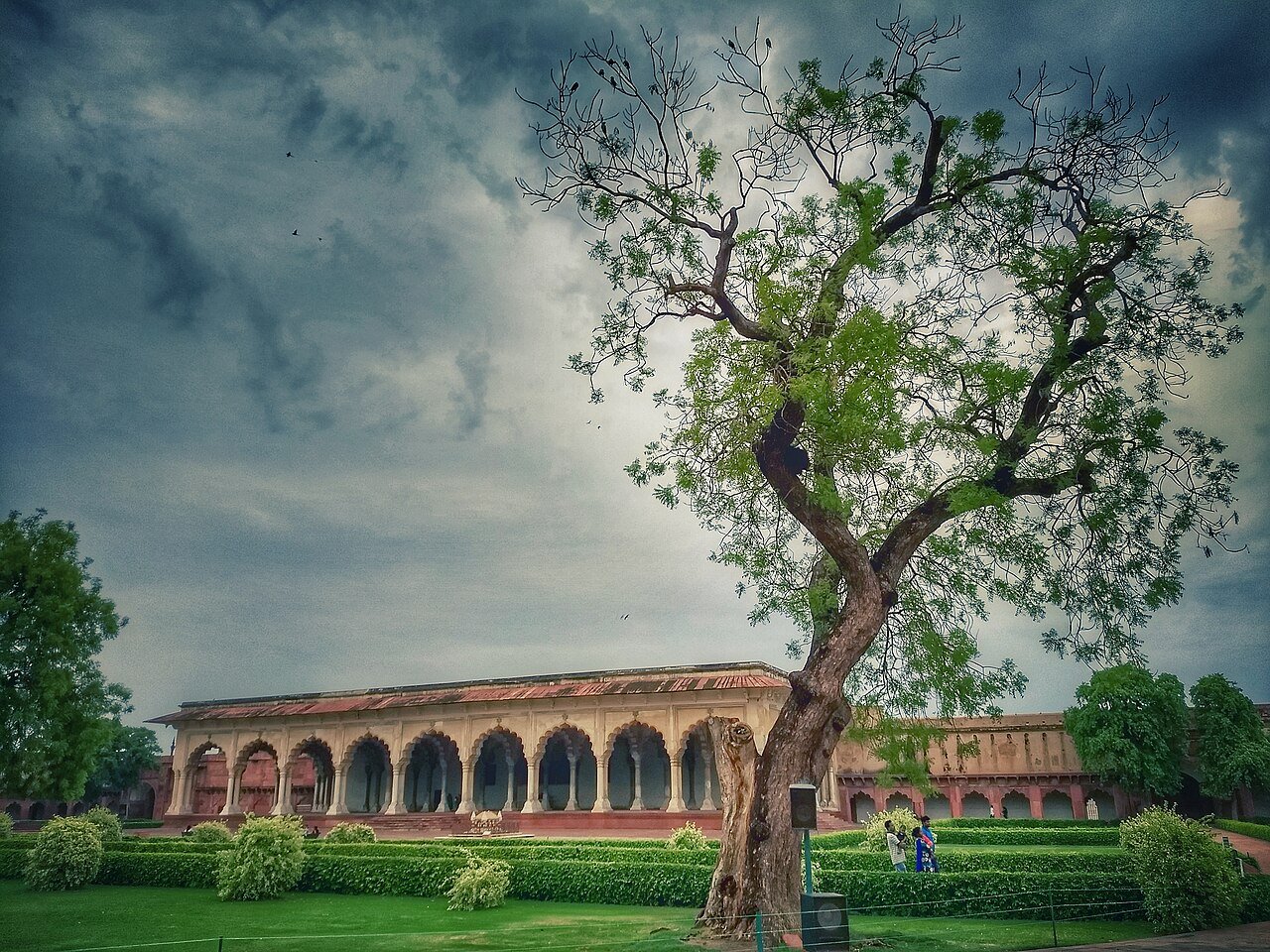
The second of Agra’s UNESCO inscriptions — also dating to 1983 — sits 2.5 kilometres northwest of the Taj Mahal and predates it by several decades. Emperor Humayun was crowned within the older fortification on this site in 1530, but the structure visitors see today is largely the product of Akbar (r. 1556–1605), who began a systematic rebuild in red Rajasthani sandstone in 1565; the main structure was complete by 1573. Later additions by Shah Jahan brought white marble pavilions into the sandstone citadel, most visibly in the Khas Mahal private apartments and the Musamman Burj octagonal tower — from which, according to the historical record, Shah Jahan spent his final years of imprisonment gazing toward the Taj Mahal across the river. The fort served as the primary Mughal imperial residence until the capital shifted to Delhi in 1638, and its walled perimeter — more city than fortress — encloses a Diwan-i-Aam (public audience hall), a Diwan-i-Khas (private hall), and several palaces. The smell of warm sandstone in the afternoon, when the ramparts hold the day’s heat, is hard to forget.
Getting there: Auto-rickshaw from the Taj Mahal east gate, approximately 10 minutes; the Archaeological Survey of India ticket office is at the Amar Singh Gate. Allow: 2 hours. Best for: Combining with a Taj Mahal morning visit — the fort is well shaded and manageable in the afternoon heat.
Fatehpur Sikri 40 km west — 1 hr by UP Roadways bus from Agra Fort bus stand
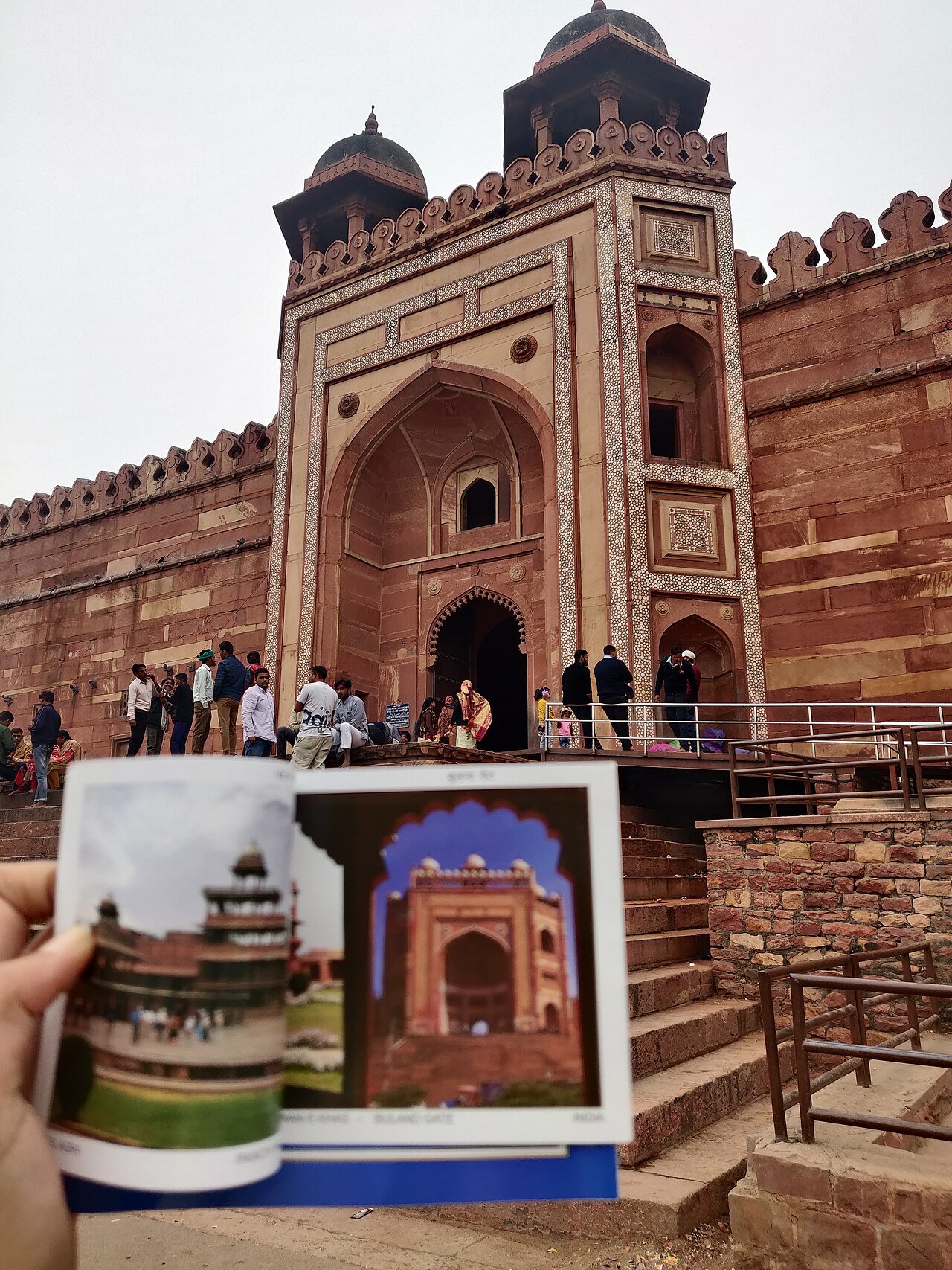
Forty kilometres west of Agra lies one of the most unusual urban experiments in Mughal history: a purpose-built imperial capital that functioned for fewer than 15 years. Emperor Akbar founded Fatehpur Sikri in 1571 following his military victory in Gujarat and the prophecies of the Sufi saint Salim Chishti; by 1585 he had departed for a Punjab campaign and the city was never re-occupied as a capital, fully abandoned by 1610. UNESCO inscribed it in 1986 under criteria ii, iii, and iv for the outstanding synthesis of Hindu, Islamic, and Timurid architectural traditions that Akbar’s designers achieved in the sandstone buildings spread along a 3-kilometre ridge. The Buland Darwaza triumphal gate soars 54 metres, still the largest gateway in Asia; behind it the Jama Masjid courtyard opens wide enough to feel like a small town square. The Panch Mahal, a five-storey open pavilion of 176 carved columns, catches the afternoon breeze in a way that makes the intended pleasure of the space still legible centuries later. UP Roadways buses run hourly from the bus stand adjacent to Agra Fort; tours also depart from the same point.
Getting there: UP Roadways bus from Agra Fort bus stand (hourly, journey approximately 1 hour); shared taxis and private cars also available. Allow: 2–3 hours on site. Best for: Visitors interested in Mughal urban planning — the ghost-city quality is unlike any other site in the cluster.
Keoladeo National Park, Bharatpur 55 km west — 1 hr by car or train to Bharatpur, then cycle rickshaw
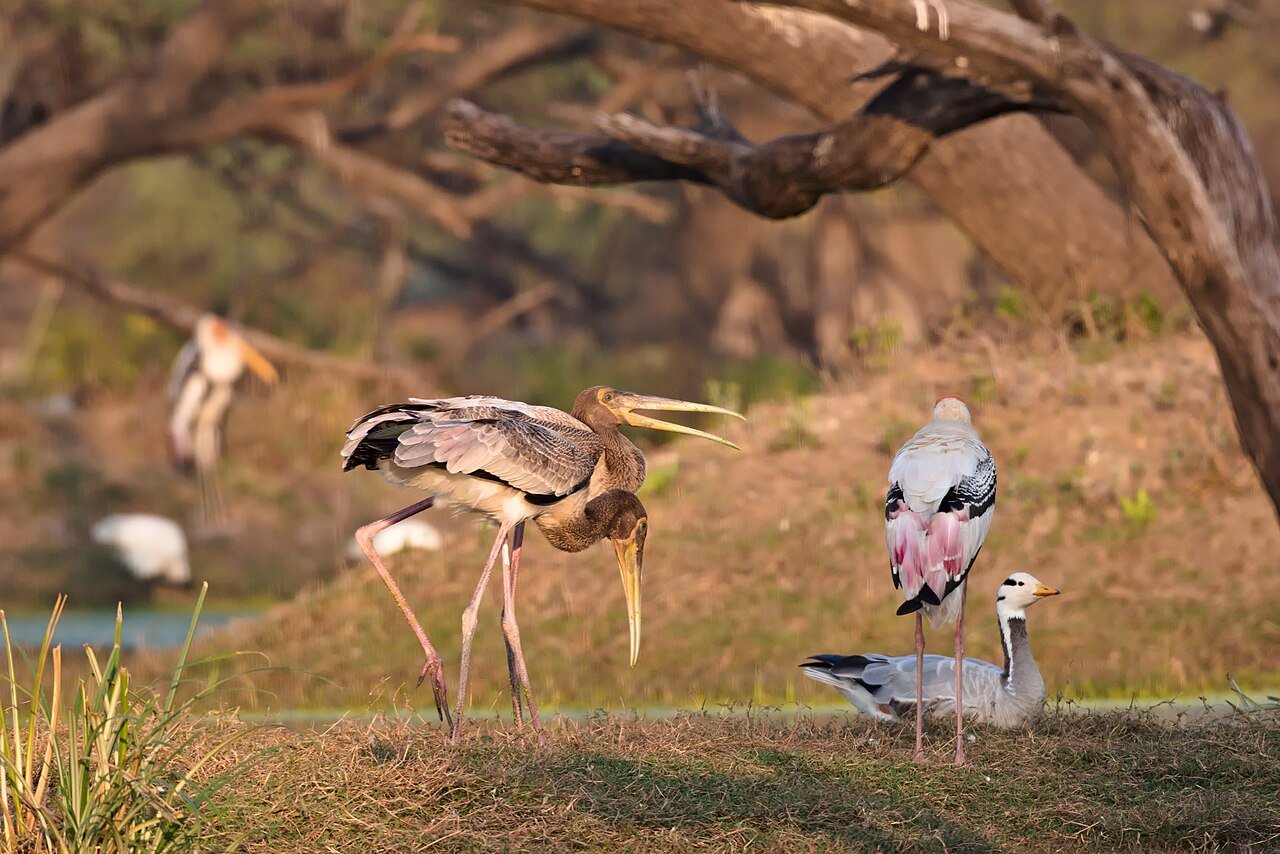
The fourth site in the Agra cluster is the only one not built by Mughal emperors. Keoladeo National Park in Bharatpur, Rajasthan — inscribed by UNESCO in 1985 — is a 2,873-hectare mosaic of wetland, grassland, and dry woodland that was formerly the private duck-shooting reserve of the Maharajas of Bharatpur before becoming a protected sanctuary in 1981. More than 370 bird species have been recorded here, including large winter colonies of painted storks, open-billed storks, bar-headed geese, and dozens of raptor species. The park achieved particular fame as the last known wintering ground of the Siberian crane in South Asia; the final confirmed birds arrived in the winter of 2001–02, and the species has not returned since. The loss is part of the site’s story, not hidden from it. Cycle rickshaws are the only permitted vehicles inside the park boundaries, which means the viewing is quiet: the sound of bicycle wheels on gravel paths and, in December and January, the constant percussion of wading birds working the shallow jheels. An overnight stay in Bharatpur allows an early-morning entry before day-trippers from Agra arrive around 10 a.m.
Getting there: Train or car from Agra to Bharatpur station (approximately 1 hour), then cycle rickshaw into the park from the main gate. Allow: 3–4 hours; an overnight stay is worth considering for serious birders. Best for: December to February, when migratory waterfowl populations peak; the park is open year-round but the monsoon months (July–September) limit visibility.
Frequently Asked Questions
How many UNESCO World Heritage Sites are near Agra?
There are four UNESCO World Heritage Sites within approximately one hour of Agra: the Taj Mahal and Agra Fort within the city itself (both inscribed in 1983), Fatehpur Sikri 40 kilometres west (inscribed 1986), and Keoladeo National Park in Bharatpur 55 kilometres west across the Rajasthan border (inscribed 1985). No other city in India has comparable UNESCO density within a single day’s travel.
What is the closest UNESCO World Heritage Site to Agra city centre?
Agra Fort is the most centrally located, sitting approximately 2.5 kilometres northwest of the Taj Mahal and 10 minutes by auto-rickshaw from the Taj’s east gate. The Taj Mahal itself is about 4 kilometres from Agra Cantt railway station and reachable in 30 minutes by auto-rickshaw. Both sites can be visited in a single day with careful timing.
What is the best season to visit Agra’s UNESCO sites, and do I need a visa?
October to March is the most comfortable season: temperatures stay between 8°C and 28°C and the air is generally clearer than the monsoon months. Most international travellers require an Indian e-Tourist Visa, available online before departure; the application typically takes 72 hours to process. The Taj Mahal and Agra Fort are closed on Fridays for visitors (the mosque remains in use); Fatehpur Sikri and Keoladeo are open seven days a week.
Are there dress code requirements, and how do Archaeological Survey of India tickets work?
There is no formal dress code at any of the four sites, but removing shoes is required inside the Taj Mahal mausoleum chamber and at the Jama Masjid in Fatehpur Sikri; disposable shoe covers are provided at the Taj Mahal entrance. Archaeological Survey of India tickets for the Taj Mahal, Agra Fort, and Fatehpur Sikri can be booked online at asi.payumoney.com or purchased at the site; foreign visitor rates are higher than domestic rates and are displayed in USD at the ticket offices. Keoladeo National Park entry is managed separately through the Rajasthan Forest Department.
Sources
- S1 — Koch, Ebba. The Complete Taj Mahal: And the Riverfront Gardens of Agra. Thames & Hudson, 2006. ISBN 978-0-500-34209-1.
- S2 — Brand, Michael, and Glenn D. Lowry, eds. Fatehpur-Sikri. Marg Publications, 1987. ISBN 978-81-85026-00-8.
Spotted an error? Write to editorial@culturalheritageonline.com and we correct it the same day.