
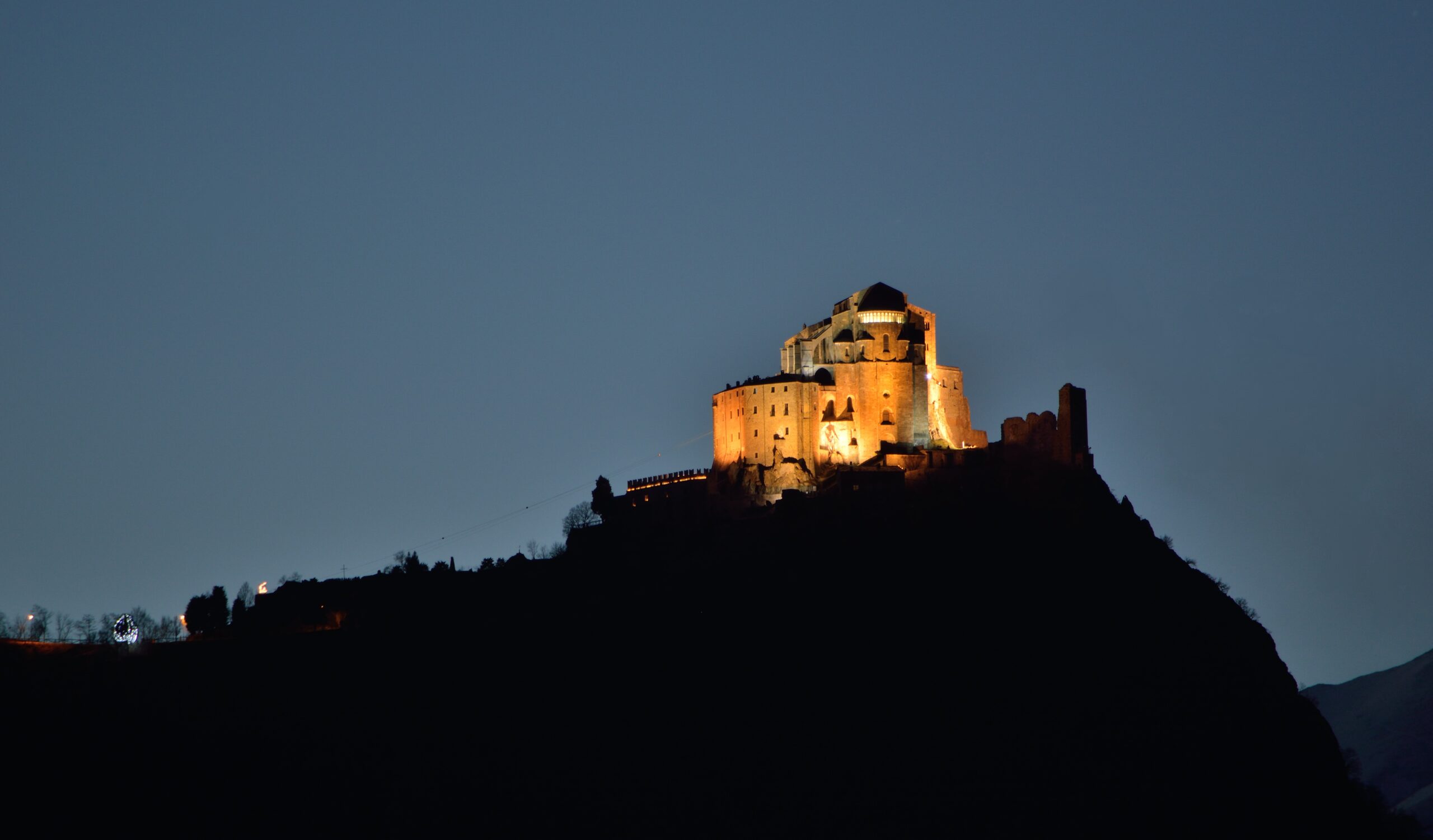
Sacra di San Michele
Perched at 962 metres on the rocky summit of Monte Pirchiriano, where the Val di Susa opens toward the Alps, the Sacra di San Michele rises as a fortress of stone and faith above the Piedmontese plain. Founded by Benedictine monks in the late tenth century, the abbey stands at the geographical midpoint of the Linea Sacra di San Michele, the thousand-mile alignment of sanctuaries that links Mont-Saint-Michel in Normandy to Monte Sant’Angelo in Apulia. Its shadowed cloisters and steep ascents inspired the medieval setting of Umberto Eco’s ‘The Name of the Rose’ (1980).
- Address
- Via alla Sacra 14, 10057 Sant'Ambrogio di Torino TO
- Period
- Founded c. 983–987; main abbey church and Scalone dei Morti 11th–12th century; Porta dello Zodiaco mid-12th century
- Architect/Author
- Benedictine community (anonymous medieval masters); Porta dello Zodiaco attributed to the sculptor Nicholaus
- Function
- Benedictine abbey along the Via Francigena pilgrimage route
- Current use
- Entrusted to the Rosminian Fathers since 1837; open to public visits; designated Symbolic Monument of the Piedmont Region by regional law in 1994
- Coordinates
- 45.0964° N, 7.3422° E
- Notes
- Inspired Umberto Eco's novel 'The Name of the Rose' (1980)
Gallery
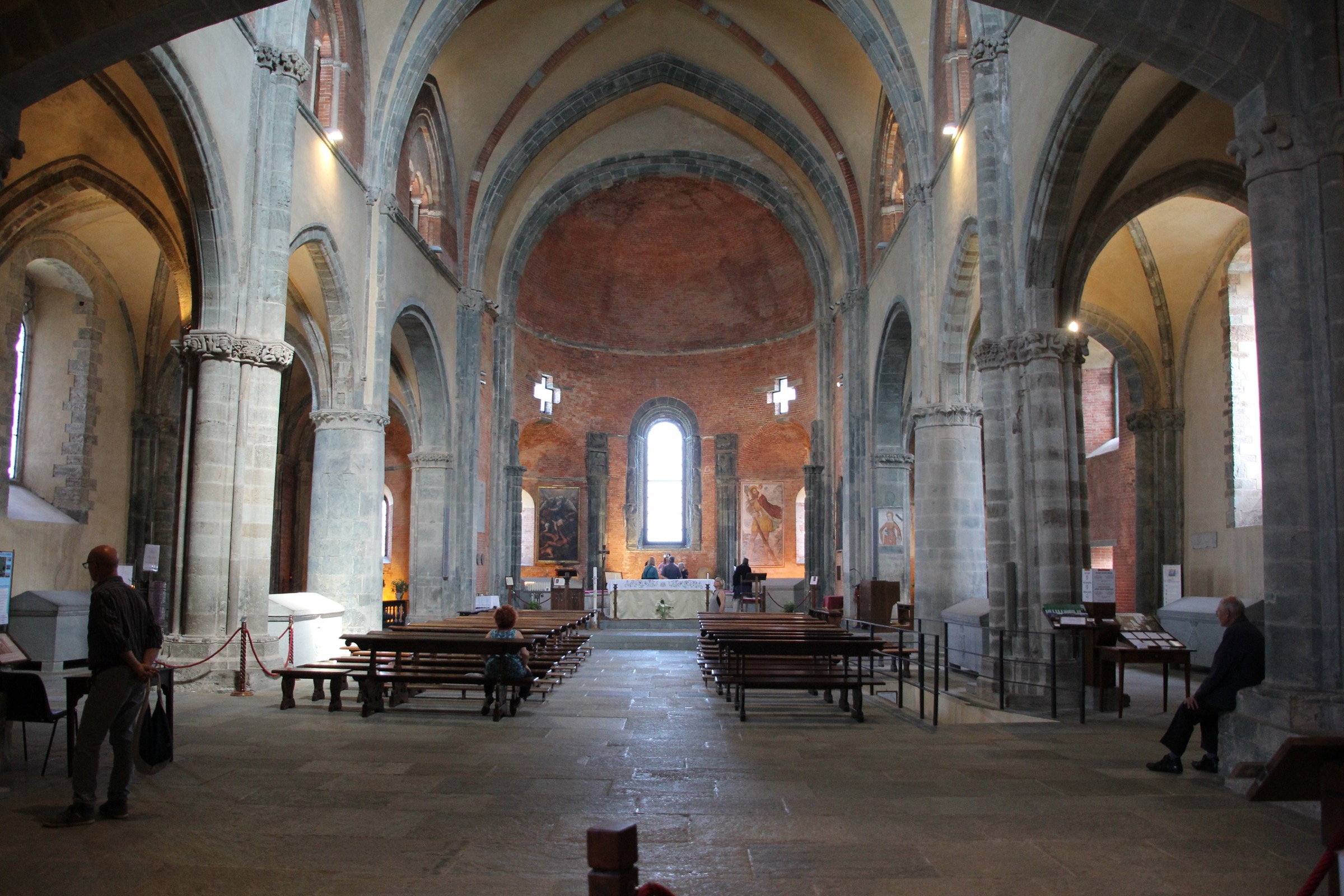
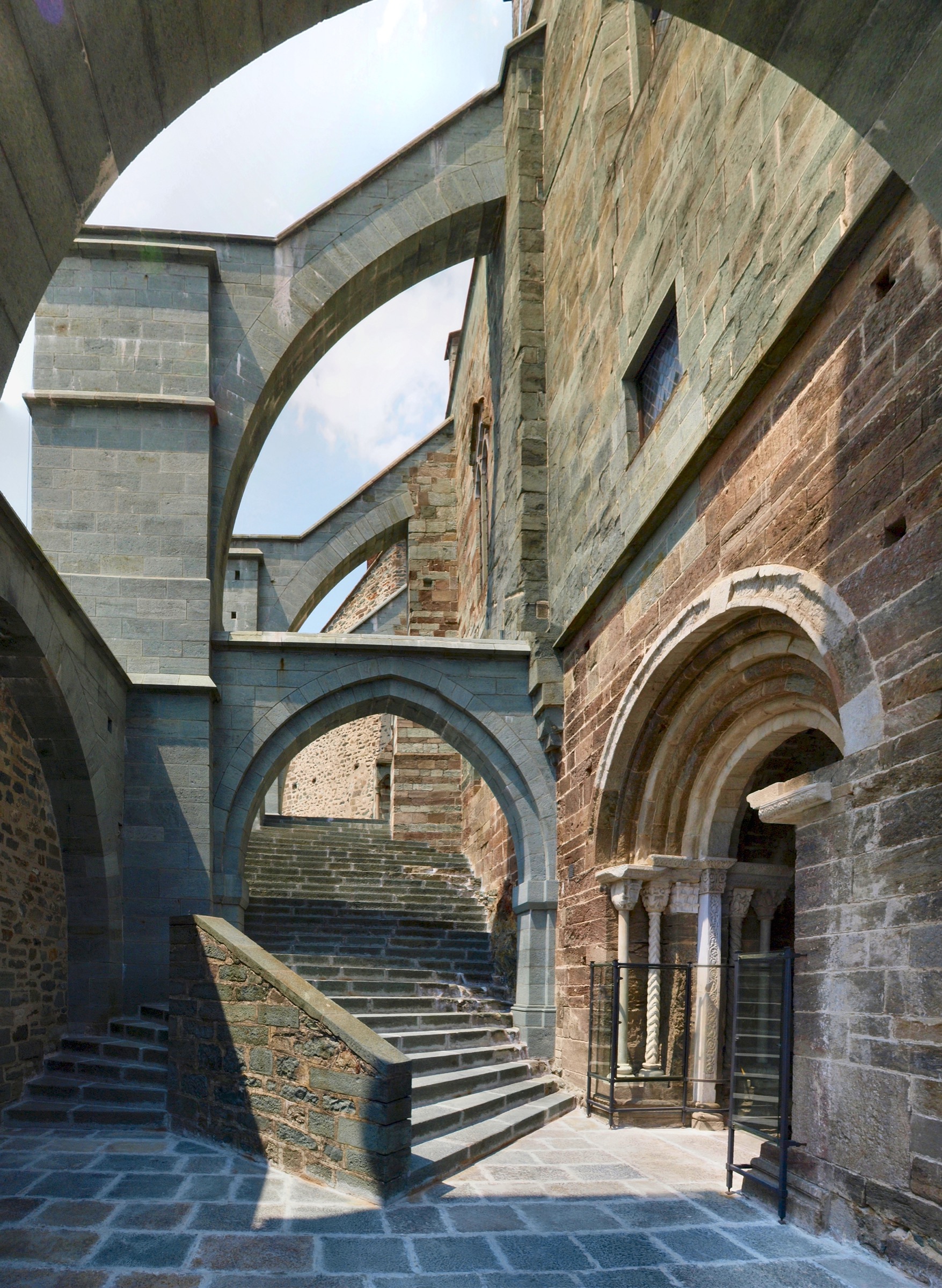
Two views of the abbey complex: the upper church carved into the summit of Monte Pirchiriano, and the Porta dello Zodiaco that opens onto the Scalone dei Morti.
Visit on the map
Via alla Sacra 14 · 45.0964° N, 7.3422° E
Download for your navigator
A single waypoint, ready for GPS apps, navigators, and contacts.
The Sacra di San Michele was founded between 983 and 987 by a small Benedictine community on the bare summit of Monte Pirchiriano, the conical peak that closes the eastern end of the Val di Susa. The site had been used as a hermitage in the preceding decades, but it was the Benedictine rule, brought in from the abbey of Breme, that gave the monastery its enduring shape. Within a century the community had grown wealthy enough to extend its holdings across France, Spain and Lombardy, and the church on the rock had become a way-station for pilgrims moving along the Via Francigena toward Rome.
Architecturally the abbey is built into the mountain itself. The Scalone dei Morti, a steep flight of stairs carved through the living rock, climbs through the foundations toward the Porta dello Zodiaco, a mid-twelfth-century sculpted portal attributed to the master Nicholaus and decorated with the signs of the zodiac and the constellations. Beyond it the abbey church rises in austere Romanesque masonry, supported by flying buttresses that anchor the structure to the cliff. The monastery sits at the geographical midpoint of the so-called Linea Sacra di San Michele, an alignment of seven sanctuaries dedicated to the Archangel that stretches roughly two thousand kilometres from Skellig Michael off the Irish coast through Mont-Saint-Michel in Normandy to Monte Sant’Angelo in the Gargano of Apulia.
Benedictine rule lapsed in the fifteenth century and the complex passed through long periods of decline. Since 1837 the abbey has been entrusted to the Rosminian Fathers, who maintain it as a living religious community and welcome visitors throughout the year. In 1994 the Piedmont regional council designated the Sacra as the Symbolic Monument of the Region, the only building so honoured. Six years earlier Umberto Eco had named the abbey among the medieval settings that shaped the imagined library of his 1980 novel ‘The Name of the Rose’, a debt that has drawn a generation of readers up the mountain road from Sant’Ambrogio.
Resources & References
Editorial picks across Wikipedia, photo archives, and the official portal.
All photographs Wikimedia Commons (CC-BY / CC-BY-SA / Public Domain) unless otherwise stated. Editorial text Cultural Heritage Online, OASIS Tech LLC USA.
Find it on the map
See this place and what’s around it →📷 Diventa un fotografo di Cultural Heritage Online
Condividi le tue foto dei luoghi: restano pubblicate con la tua firma come autore. Più vengono viste, più ti fai conoscere — e presto un concorso premierà le foto più apprezzate.
Accedi o registrati gratis per aggiungere una foto