
A village that became a neighbourhood without ever losing its own mind.
At a glance
Uphill from the Eixample, Gràcia was an independent town until it was annexed to Barcelona in 1897, and it still feels like one: a grid of small squares linked by low streets, full of independent shops, vermouth bars and a fiercely local spirit. Gaudí’s first house, Casa Vicens, stands here, and every August the neighbourhood erupts in the Festa Major, when residents decorate whole streets by hand.
Key facts
- Status: independent town until 1897
- Character: squares, independent shops, bohemian and local
- Highlights: Plaça de la Vila de Gràcia and its clock tower; Plaça del Sol
- Festival: Festa Major de Gràcia, August
History
Gràcia grew in the nineteenth century as a town of artisans and radicals outside Barcelona’s walls, with a reputation for republican politics and a bell — the campana of its tower — that rang in revolt. Absorbed into the expanding city, it kept its street pattern and its independence of temper, which is exactly why people love it.
What you see
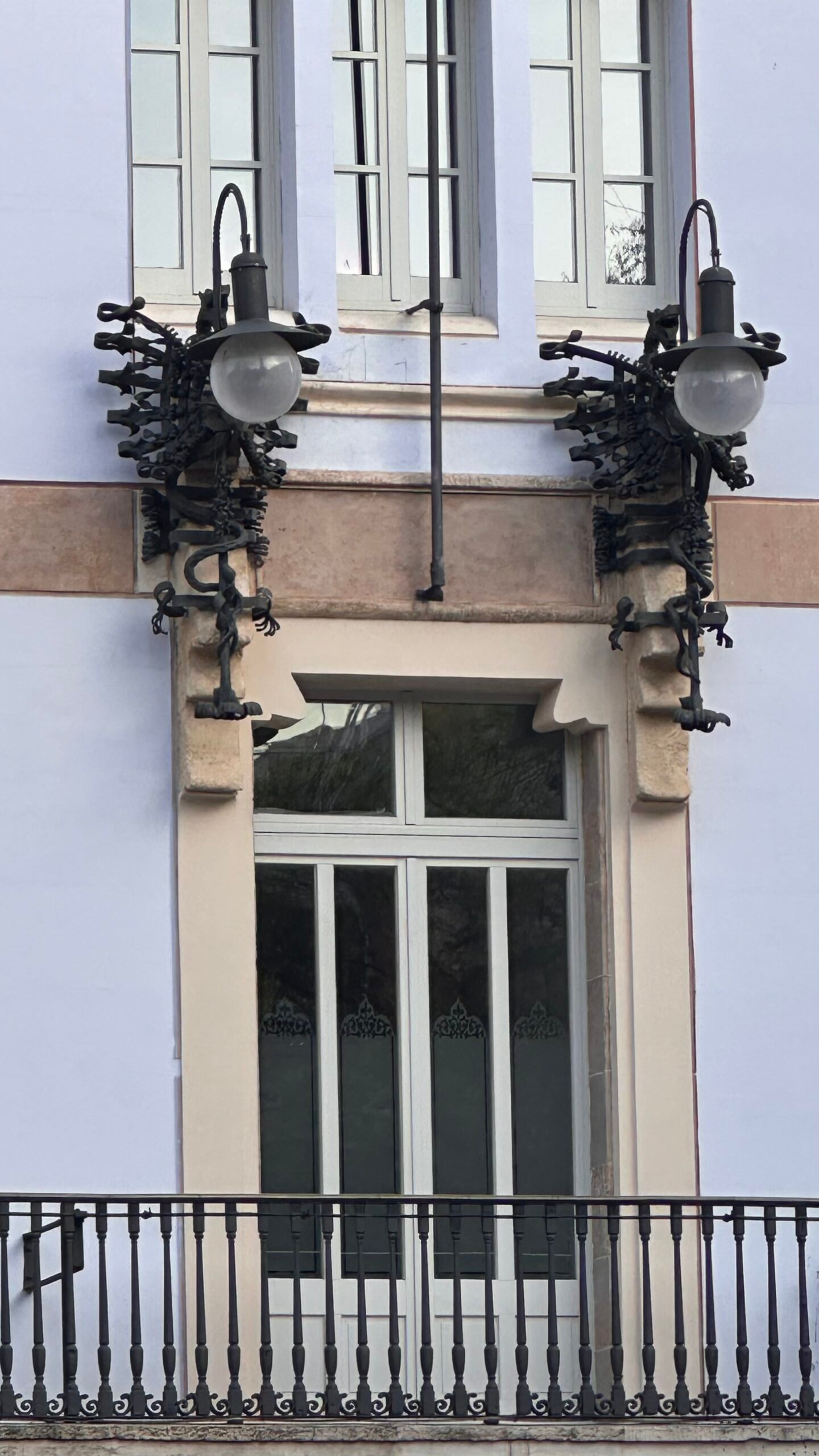
The pleasure of Gràcia is the wandering: from square to square, past Modernista shopfronts and ironwork like the one above, to a café table in the Plaça de la Vila de Gràcia under its tall clock tower. Casa Vicens, Gaudí’s brightly tiled debut, is a short walk away.
Practical information
- Access: free to wander; metro Fontana or Joanic.
- Best moment: early evening, square-hopping for vermouth.
- Time needed: 1–2 hours.
Nearby
- Part of Barcelona.
- Park Güell, uphill, and Casa Vicens by Gaudí.
Sources
- Wikipedia (English): Gràcia.
- Coordinates: 41.4019, 2.1565.
Find it on the map
See this place and what’s around it →📷 Become a Cultural Heritage Online photographer
Share your photos of places: they stay published under your name as the author. The more they're seen, the more you get noticed — and soon a contest will reward the most appreciated photos.
Log in or sign up free to add a photo