
A garden city that almost no one bought — and so became the most joyful public park in Barcelona.
At a glance
On the slope of Carmel hill, Park Güell is Gaudí at his most playful. He laid it out between 1900 and 1914 for his patron Eusebi Güell, who dreamed of an English-style garden city for Barcelona’s well-to-do. The houses never sold, but the public spaces — the mosaic dragon, the wave of bench above the city, the columned hall meant to be a market — became one of the world’s great parks. It is a UNESCO World Heritage site.
Key facts
- Built: 1900–1914, by Antoni Gaudí
- Commissioned by: Eusebi Güell, as a residential garden city
- Outcome: a commercial failure; opened as a public park in 1926
- Signature: trencadís mosaic — broken ceramic reassembled into colour
- On site: the Gaudí House Museum, where the architect lived 1906–1925
- Status: UNESCO World Heritage
History
Güell wanted a gated estate of sixty villas on the hill he had bought above the city, drawing on the English garden-city ideal — the English spelling “Park” is his. Gaudí designed the roads, services and communal architecture; the plots were put up for sale. Barcelona’s bourgeoisie, put off by the distance and the rules, did not come. Only two houses were ever built.
The project was abandoned around 1914. After Güell’s death the family offered the land to the city, and in 1926 it opened as a municipal park. What had failed as real estate succeeded completely as public space.
What you see
The set pieces cluster at the monumental entrance. A double stair climbs past the glittering trencadís salamander — “el drac”, the park’s mascot — to the Hypostyle Hall, where eighty-six columns were meant to shelter a market. Above it stretches the Nature Square, ringed by the long serpentine bench whose mosaic, much of it by Josep Maria Jujol, turns broken tile into a ribbon of colour.
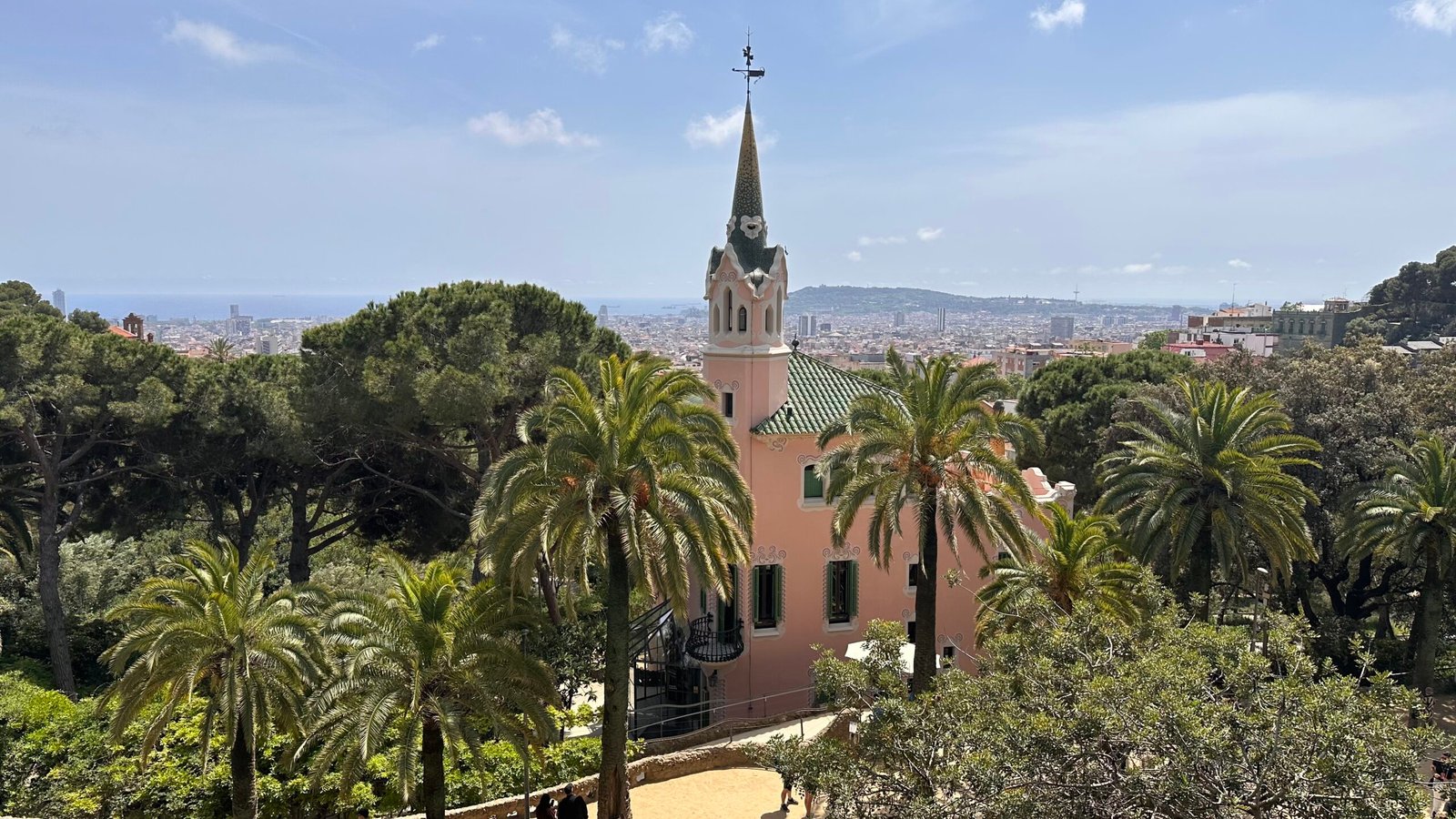
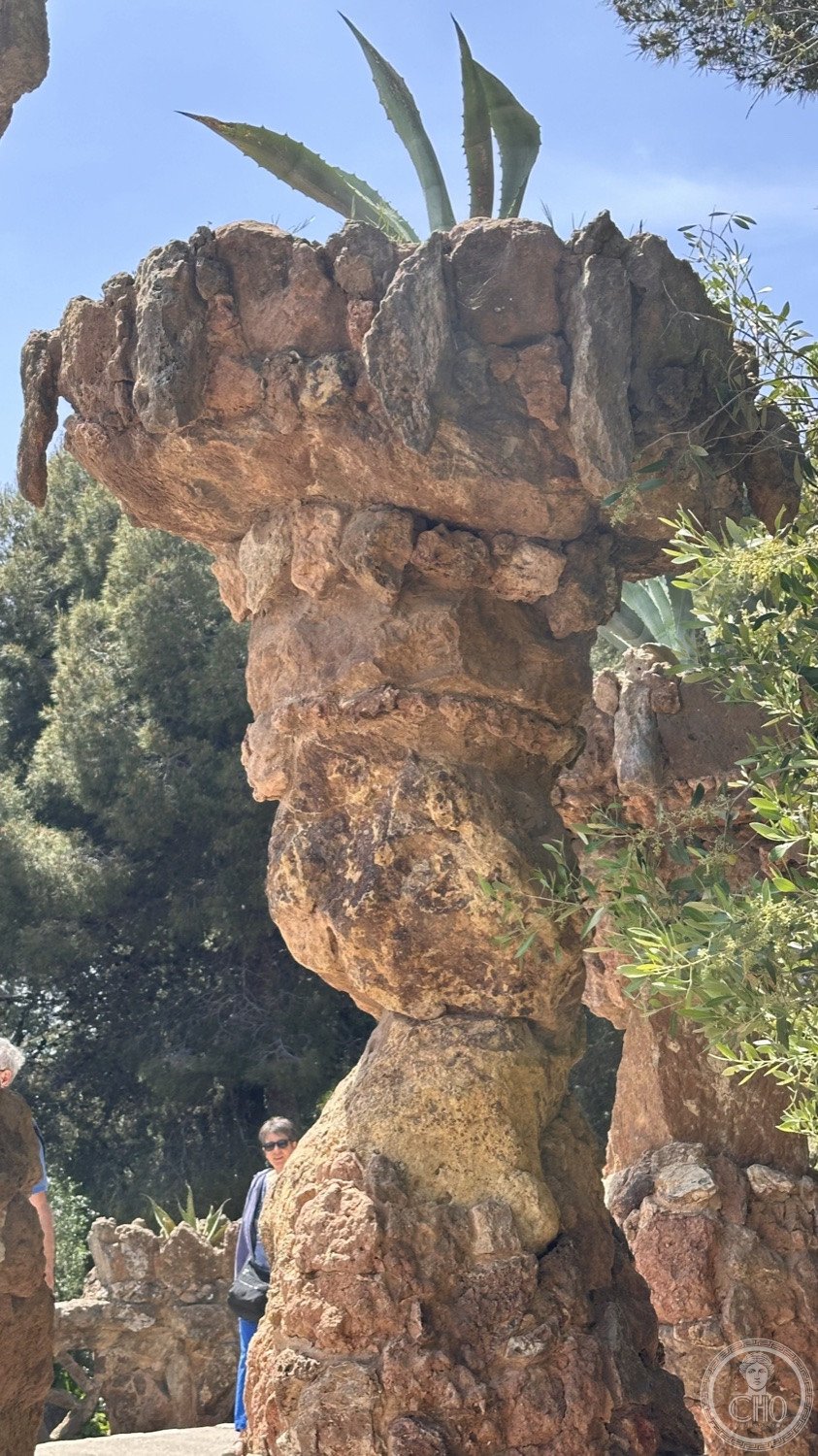
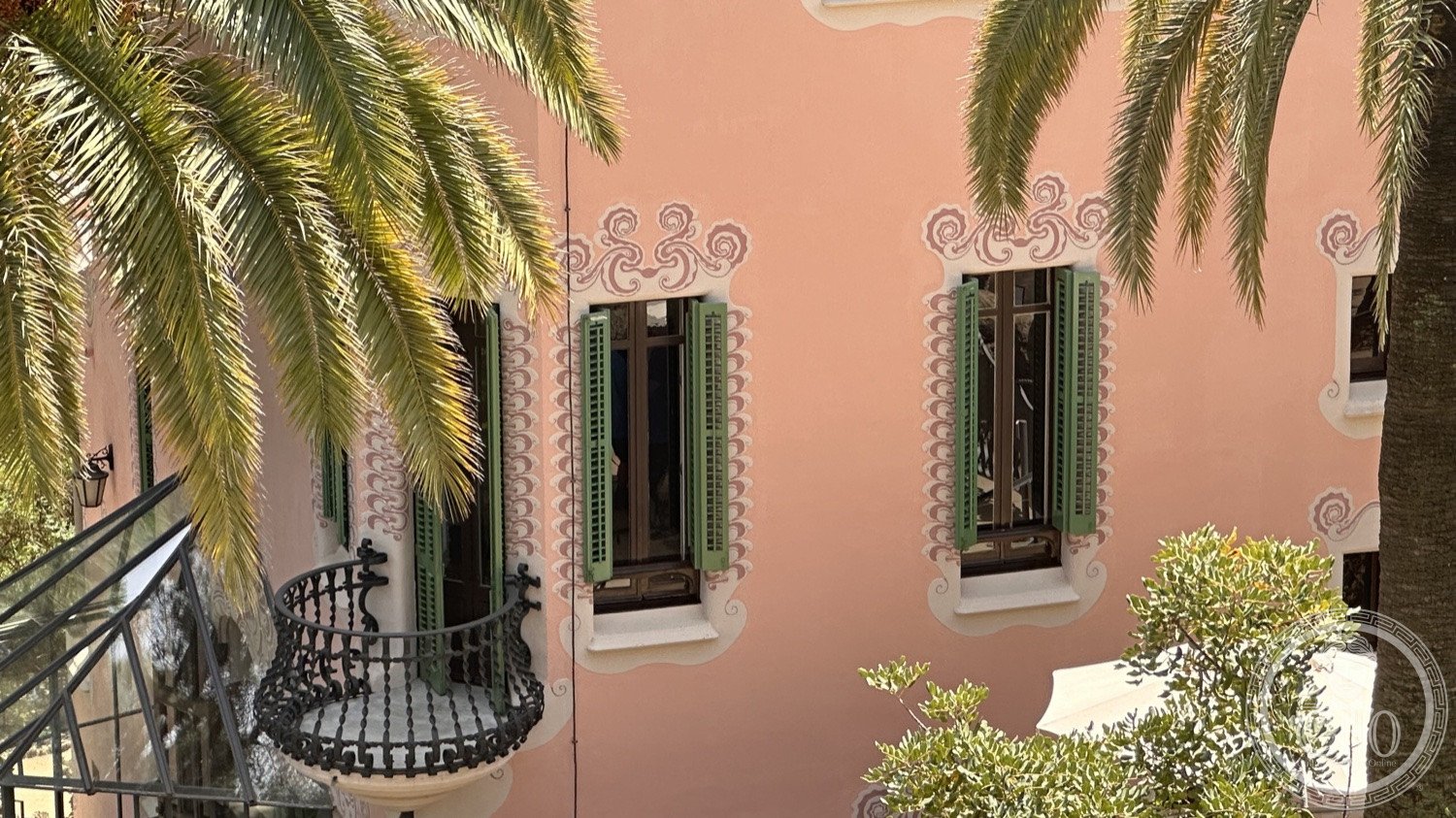
Beyond the show, Gaudí threaded viaducts and porticoes into the hillside, their stone columns leaning like tree trunks so the structure seems to grow out of the rock. Higher up stands the pink, spired house where Gaudí himself lived, now the Gaudí House Museum, looking out over the whole of Barcelona to the sea.
Practical information
- Access: the Monumental Zone is ticketed and timed — book ahead; the wider park is free.
- Best light: morning, before the crowds and the midday glare on the mosaics.
- Getting up: it is a climb — the Bus V19 or outdoor escalators save the legs.
- Time needed: 1.5–2 hours.
Getting there
The park sits above the Gràcia district on Carmel hill. The nearest metro stops are Vallcarca and Lesseps (L3), both a signposted uphill walk; the Bus V19 stops closer to the upper entrance, letting you visit downhill. It pairs naturally with a wander through Gràcia below.
Nearby
- Part of Barcelona — Capital of Catalan Modernisme.
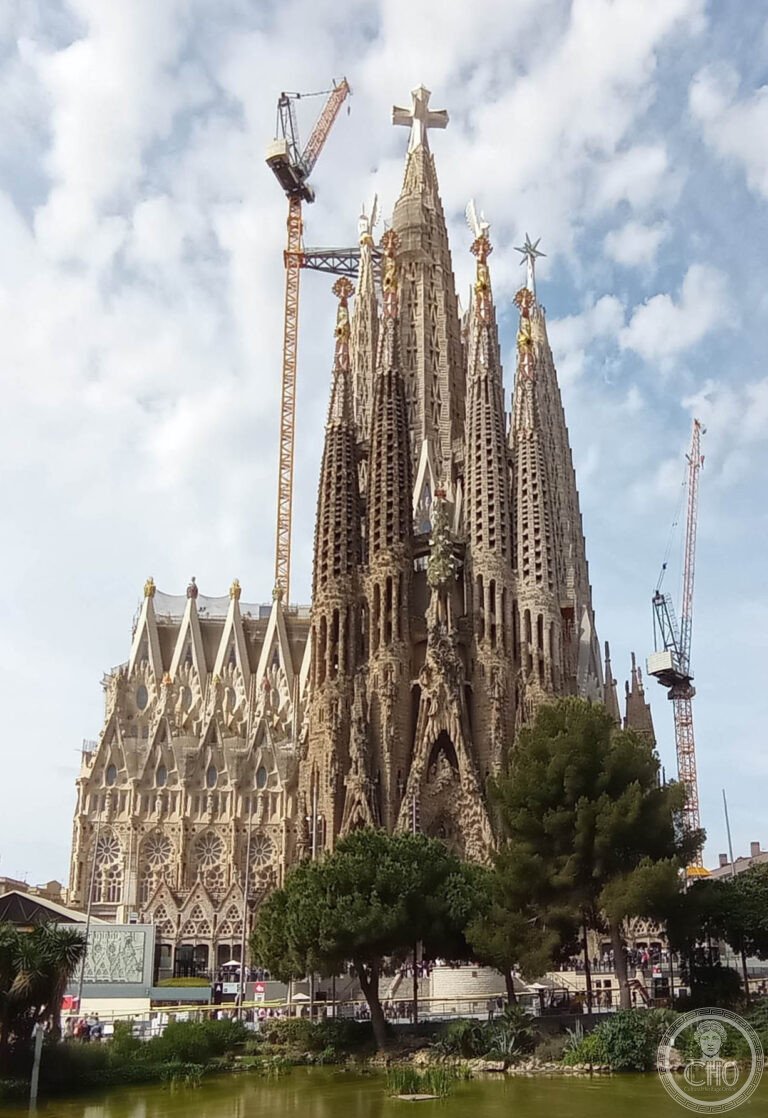
- Sagrada Família and Casa Milà, also by Gaudí.
- The Gràcia neighbourhood, with its squares and independent cafés, just downhill.
Sources
- UNESCO World Heritage List: Works of Antoni Gaudí.
- Wikipedia (English): Park Güell, Antoni Gaudí.
- Coordinates: 41.4145, 2.1527 (Carmel hill, Barcelona).
Gallery
Find it on the map
See this place and what’s around it →Record researched and written by Luigi De Marchi for Cultural Heritage Online, 2026.

Historical events at this place (1)
📷 Become a Cultural Heritage Online photographer
Share your photos of places: they stay published under your name as the author. The more they're seen, the more you get noticed — and soon a contest will reward the most appreciated photos.
Log in or sign up free to add a photoRequest to use these images
Each photograph is by the person named on it. Cultural Heritage Online is the seller: it runs the payment, handles tax and delivers the file, and the photographer receives 70% of the price net of tax. Buying gives you the right to use the image in your own project — a website, an article, a presentation — with the file and a written licence. Read the Terms of Sale.
What you receive. The file as it is held in our archive: the photographer's own original, without the Cultural Heritage Online watermark, unretouched and not enlarged. This is a working archive built over many years by many people, so the files differ — some were taken recently, others years ago with the equipment of their time. Older pictures are usually smaller: a camera from fifteen or twenty years ago simply recorded fewer pixels than a phone does today, so the resolution is lower and the print comes out smaller. We say so rather than hide it. The size, weight, format and year of each one are printed below it, and the print size is given at 300 dpi. Nothing is upscaled to make a number look better. Where the picture on this page has been cropped for the layout, the file you receive is the full frame, which may be wider or taller than what you see here.

Park Güell — A leaning stone column from Gaudí’s viaducts.
Photo: Luigi De Marchi
€3.00
843 × 1500 px · JPG · 531.5 KB
prints 7 × 13 cm at 300 dpi · taken 2026

Park Güell — A detail of the pink Gaudí House behind the palms.
Photo: Luigi De Marchi
€3.00
1500 × 843 px · JPG · 542.7 KB
prints 13 × 7 cm at 300 dpi · taken 2026

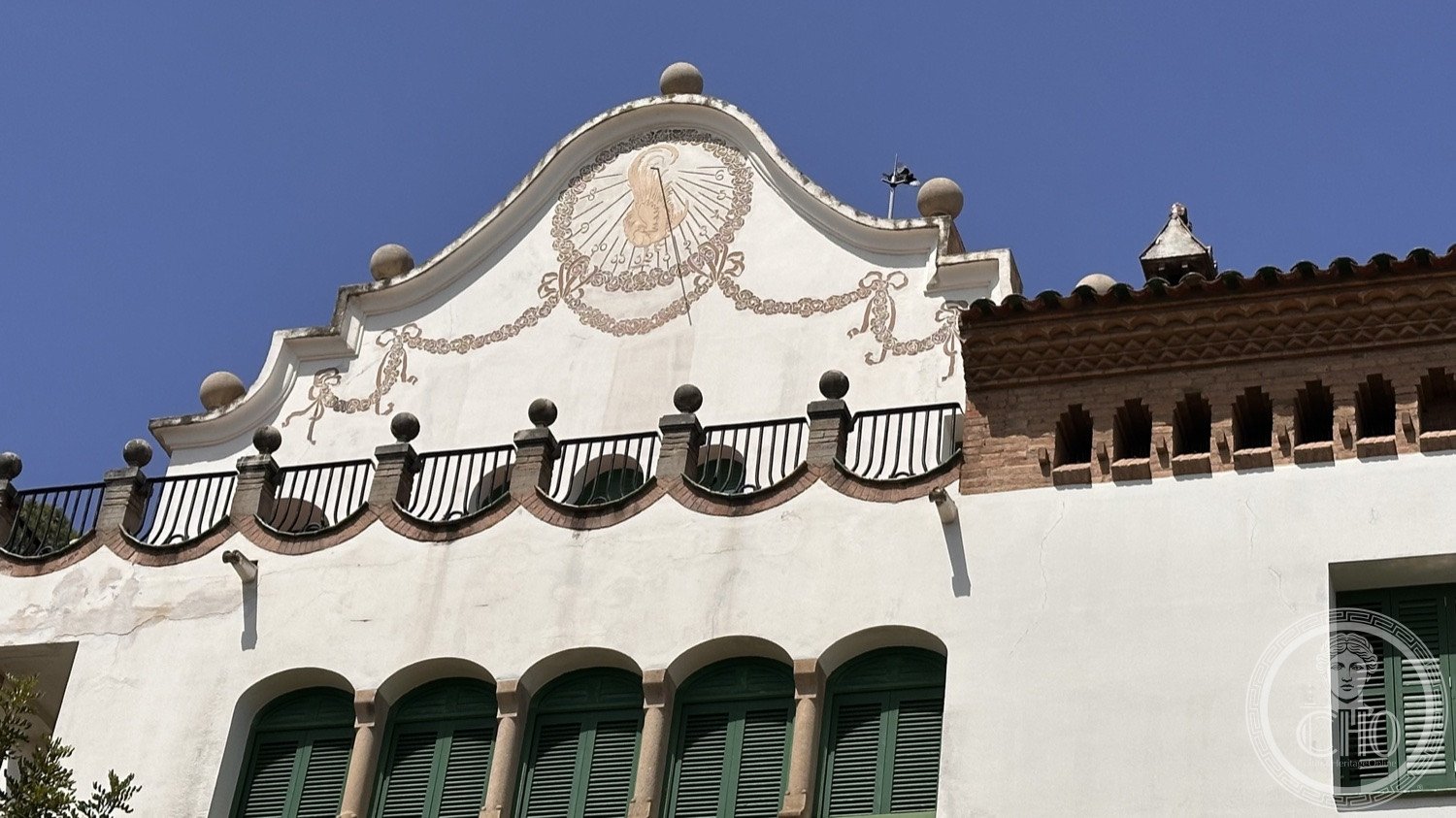
Park Güell — The curved gable of the Casa del Guarda gatehouse.
Photo: Luigi De Marchi
€3.00
1500 × 843 px · JPG · 328.9 KB
prints 13 × 7 cm at 300 dpi · taken 2026

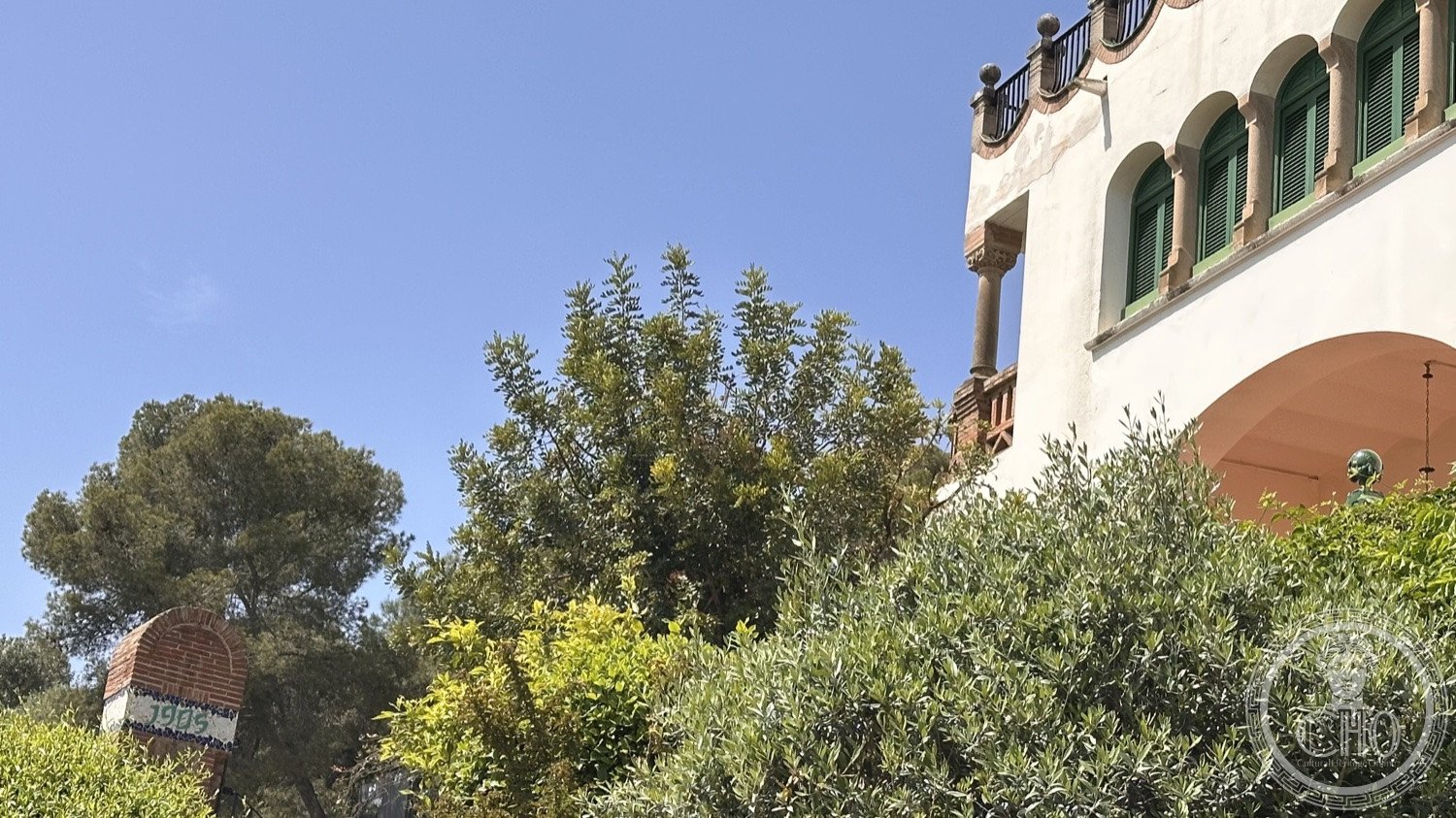
Park Güell — One of the pavilions among the trees of the park.
Photo: Luigi De Marchi
€3.00
1500 × 843 px · JPG · 537.3 KB
prints 13 × 7 cm at 300 dpi · taken 2026

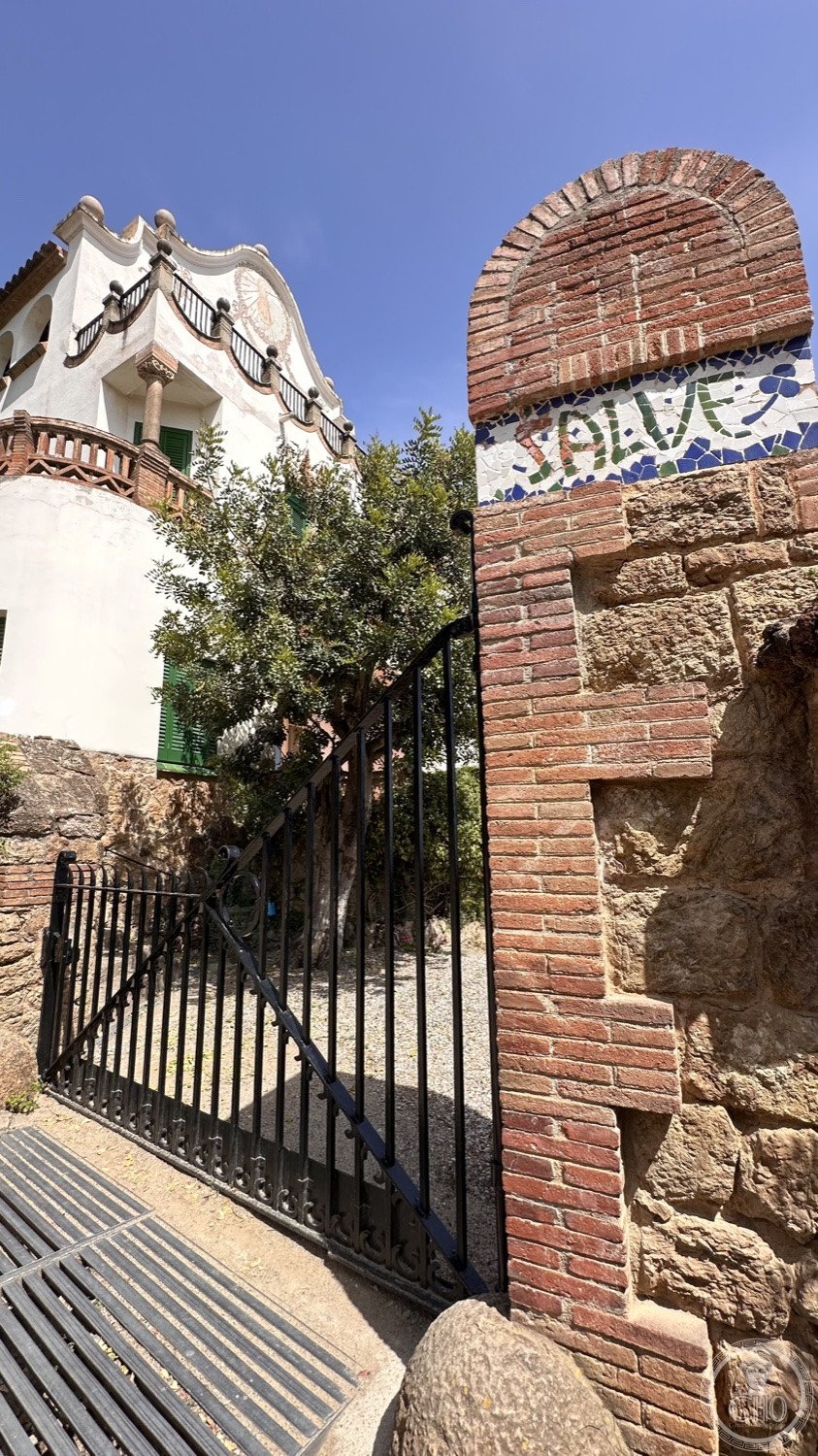
Park Güell — The park gate and the ‘Salve’ mosaic on its brick pillar.
Photo: Luigi De Marchi
€3.00
843 × 1500 px · JPG · 649.1 KB
prints 7 × 13 cm at 300 dpi · taken 2026

Park Güell, Barcelona
Photo: Luigi De Marchi
€3.00
2200 × 1237 px · JPG · 1.1 MB
prints 19 × 10 cm at 300 dpi · taken 2026