
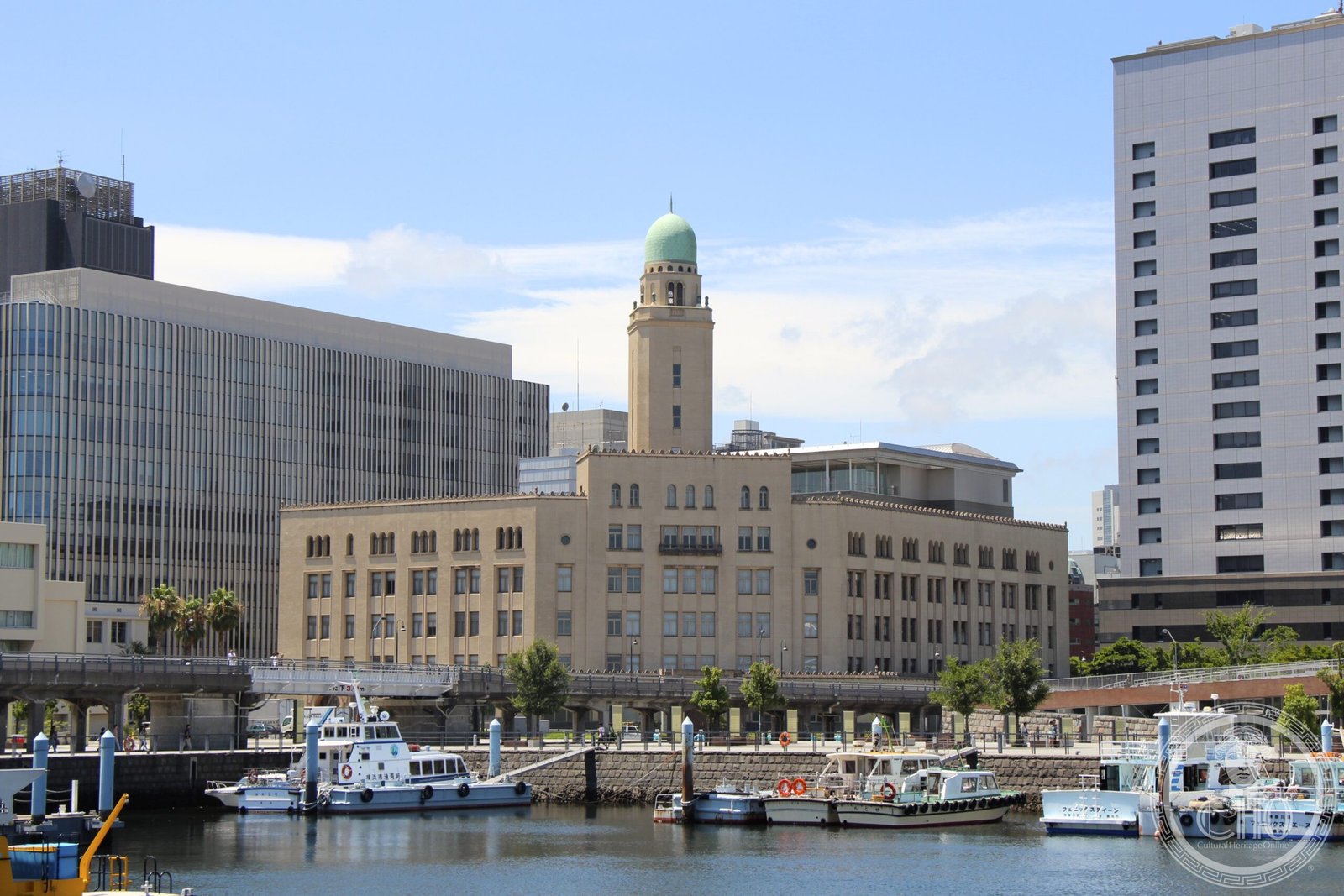
Rising at the edge of Yokohama's historic waterfront, the Yokohama Customs Building is the most architecturally distinguished of the three landmark towers that define the city's port skyline. Completed in 1934 by the Ministry of Finance architectural bureau, the building is universally known as the “Queen of the Port” — a nickname earned by the graceful Islamic-inflected dome that crowns its central tower and stands in elegant dialogue with the “King” (Kanagawa Prefectural Office) and the “Jack” (Port Opening Memorial Hall) nearby. This trio, all survivors of the catastrophic 1923 Great Kantō Earthquake, became symbols of Yokohama's resilience and its ambition to project a cosmopolitan, modern image to the world. Art Deco detailing in bronze and stone animate the facade, while the dome's unusual silhouette — influenced by Mughal and Ottoman forms fashionable in 1930s eclecticism — gives the building an exotic grandeur entirely fitting for a gateway to international trade.
At a glance
- Type
- Government / customs headquarters
- Period
- 1934
- Style
- Art Deco with Islamic-influenced dome
- Location
- Kaigandori, Naka-ku, Yokohama, Japan
- Coordinates
- 35.4494° N, 139.6422° E
- Architect(s)
- Ministry of Finance Architectural Bureau
Overview
The Yokohama Customs Building serves as the active headquarters of the Yokohama Customs authority, one of Japan's busiest ports of entry. Its ground floor houses the Yokohama Customs Museum, a small but well-curated public exhibition on the history of Japanese customs administration and the port's role in opening Japan to international commerce after the 1859 treaties. The building anchors the Kaigandori waterfront quarter alongside the Port Opening Memorial Hall and the Kanagawa Prefectural Office, forming a coherent ensemble of interwar civic architecture.
History
Yokohama was the first Japanese port opened to foreign trade in 1859, and customs administration was central to the city's identity from the outset. The present building, completed in 1934, replaced earlier customs facilities that had been destroyed or damaged in the 1923 Great Kantō Earthquake and subsequent fires. Japan's Ministry of Finance commissioned the new headquarters as part of a broader programme to rebuild Yokohama with a modern, internationally legible civic character. The local nickname “Queen” was coined in contrast with the “King” (the Prefectural Office, 1928) and the “Jack” (Port Memorial Hall, 1917), and popular legend holds that a visitor who can see all three towers at once will have a wish granted.
Architecture & Design
The building's most arresting feature is its large central dome, whose pointed profile and tiled surface draw on Ottoman and Mughal precedents — an eclectic choice that was fashionable in Japanese public architecture of the 1920s–30s, influenced by colonial-era British India aesthetic and the broader Art Deco taste for orientalist ornament. The base and wings follow a more conventional Art Deco grammar: rusticated granite plinths, bronze window surrounds, and classicising cornices. The interior retains its original stone floors and ornate plasterwork ceilings in the public hall areas. The overall composition achieves an imposing grandeur appropriate to a building that handled the paperwork of Japan's international trade.
Cultural significance
The three towers of Yokohama — Queen, King, Jack — are among the most photographed landmarks in the Kantō region and have become the city's de facto emblem, appearing on everything from tourist merchandise to official imagery. The Customs Building's survival through the 1923 earthquake, Allied bombing raids, and postwar redevelopment makes it a potent symbol of continuity for a city that has been repeatedly rebuilt. It anchors the Kaigandori heritage zone, which attracts heritage tourism as part of greater Yokohama's interwar architectural narrative.
Visiting today
The Yokohama Customs Museum on the ground floor is free to enter and open on weekdays. The building's exterior and dome can be admired at any time from the Kaigandori waterfront. The best panoramic view of all three towers together is from Ōsanbashi Pier, a short walk along the waterfront promenade.
Getting there
Take the JR Keihin-Tōhoku or Negishi Line to Kannai Station (8 min walk) or Sakuragichō Station (12 min walk). From Yokohama Station, the Minatomirai Line runs to Nihon-Ōdori Station (2 min walk to the building). The waterfront is also served by the Sea Bus ferry from Yokohama Station pier.
Sources & resources
Find it on the map
See this place and what’s around it →Record researched and written by Luigi De Marchi for Cultural Heritage Online, 2026.
📷 Become a Cultural Heritage Online photographer
Share your photos of places: they stay published under your name as the author. The more they're seen, the more you get noticed — and soon a contest will reward the most appreciated photos.
Log in or sign up free to add a photoIs this page about you?
This page is read by travellers and heritage enthusiasts who find it on Google. Tell us how you are connected to this place and we will take it from there.