
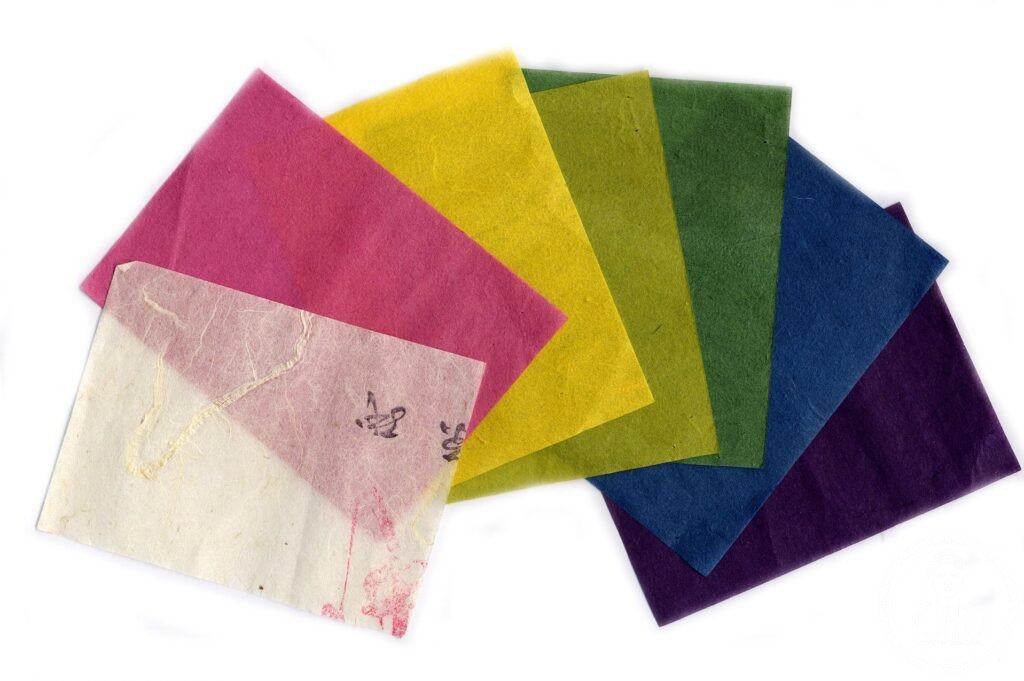
Master craftspeople create delicate, durable paper from plant fibers using techniques refined over centuries, producing a material prized worldwide for art, ritual, and conservation.
At a glance
Washi is traditional Japanese paper made by hand from the inner bark of three plants: the gampi tree, the mitsumata shrub, and the paper mulberry bush. Processed with fibers and water, it emerges tougher and more durable than Western wood-pulp paper. The craft sustains entire communities and remains essential to Japanese arts and global cultural conservation.
Origins & history
Washi papermaking evolved from Chinese papermaking techniques, adapted over centuries to Japanese materials and aesthetics. The craft historically supplied everyday goods—clothing, household items, toys—alongside ceremonial objects for Shinto priests and Buddhist statues. Its versatility and strength established it as a foundation of Japanese cultural practice.
The practice
Papermakers harvest inner bark from gampi, mitsumata, or kōzo (paper mulberry) plants, processing the fibers through soaking, beating, and suspension in water. The craftsperson dips a bamboo screen into the fiber suspension, using a rhythmic side-to-side motion to distribute fibers evenly before lifting and draining the sheet. The resulting paper is pressed, dried on wooden boards, and trimmed by hand.
The finished washi is notably thin yet resilient, with a distinctive texture and subtle translucency. Its low mineral impurity content allows it to survive over 1,000 years without degradation—a quality that has made it invaluable for artists, calligraphers, and conservators worldwide.
Cultural significance
Washi is integral to traditional Japanese arts: origami folders, calligraphers (shodō), and woodblock print makers (ukiyo-e) depend on its handling properties. Museums and libraries—including the Louvre and Vatican Museums—use washi to repair precious paintings, manuscripts, and historical documents because of its thinness, pliability, and ability to be removed cleanly with moisture. The craft anchors both artistic heritage and conservation practice.
Key facts
- Primary materials: inner bark of gampi tree, mitsumata shrub (Edgeworthia chrysantha), and paper mulberry (kōzo) bush
- Anchor community: Echizen, Japan
- Coordinates: 35.90329, 136.17094
- UNESCO Intangible Cultural Heritage inscription: 2014 (Reference 02291)
- Traditional uses: origami, calligraphy, woodblock printing, priestly vestments, Buddhist statuary, conservation
Where to experience it
Echizen, in Japan’s Fukui Prefecture, remains the heartland of washi papermaking. Visitors to the region can observe master papermakers at work and purchase sheets directly from workshops. Contemporary makers continue the hand-processing tradition while adapting to global demand for conservation-grade paper.
Sources & resources
- Washi — Wikipedia
- Washi: Craftsmanship of Traditional Japanese Hand-made Paper — UNESCO Intangible Cultural Heritage
- Cultural Heritage Online
Find it on the map
See this place and what’s around it →📷 Become a Cultural Heritage Online photographer
Share your photos of places: they stay published under your name as the author. The more they're seen, the more you get noticed — and soon a contest will reward the most appreciated photos.
Log in or sign up free to add a photo