
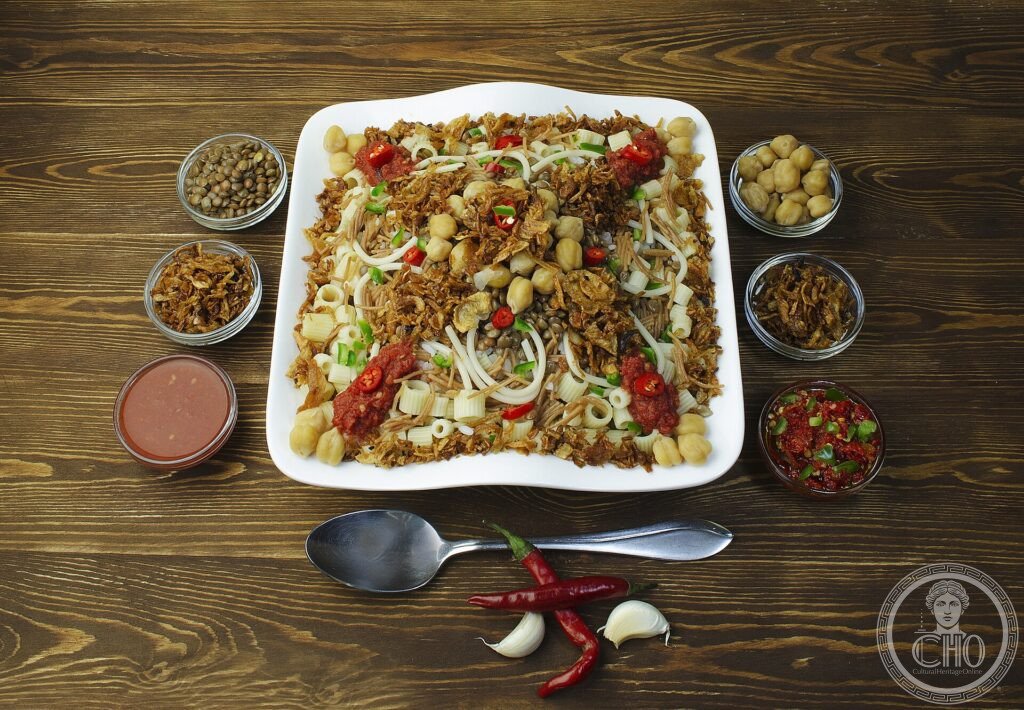
Egypt’s national dish, koshary layers pasta, fried rice, vermicelli and lentils into a street-food symphony topped with chickpeas, garlicky tomato sauce, crispy fried onions and vinegar.
At a glance
Koshary is a mixed-grain and legume dish that embodies everyday Egyptian eating culture. Street vendors and small restaurants serve it in bowls, where diners build their own flavor balance with hot sauce and extra vinegar. The dish represents a modern tradition that blends multiple culinary influences into a distinctly Egyptian comfort food.
Origins & history
Koshary emerged as a traditional Egyptian staple, reflecting the country’s position at the intersection of Mediterranean and Middle Eastern food traditions. Its exact historical development is not fully documented in available sources, yet it has become deeply embedded in Cairo’s street-food culture and Egyptian national identity.
The practice
A bowl of koshary begins with a foundation of pasta, topped with Egyptian fried rice and vermicelli, then brown lentils and chickpeas. The vendor ladles over a garlicky tomato sauce, drizzles garlic vinegar, and crowns the dish with crispy fried onions that add texture and aroma. Diners customize their bowl with additional vinegar and hot sauce to taste—a participatory element that makes each serving personal.
Cultural significance
Koshary transcends the category of mere food to represent daily Egyptian life and social practice. As the nation’s most recognizable dish, it unites Egyptians across class and background through a shared culinary experience. The act of eating koshary—whether from a street vendor’s cart or a modest restaurant—carries social meaning and connects individuals to broader Egyptian identity.
Key facts
- Primary ingredients: pasta, Egyptian fried rice, vermicelli, brown lentils, chickpeas, garlicky tomato sauce, garlic vinegar, fried onions
- Country: Egypt
- Anchor community: Cairo
- UNESCO ICH reference: 02278
- Coordinates: 30.0503, 31.23317
Where to experience it
Cairo remains the heartland of koshary culture. The dish is available throughout the city at street-food carts and casual restaurants, where vendors prepare it fresh to order. Visitors can watch the layering and seasoning process unfold, then customize their own bowl according to preference.
Sources & resources
Find it on the map
See this place and what’s around it →📷 Become a Cultural Heritage Online photographer
Share your photos of places: they stay published under your name as the author. The more they're seen, the more you get noticed — and soon a contest will reward the most appreciated photos.
Log in or sign up free to add a photo