
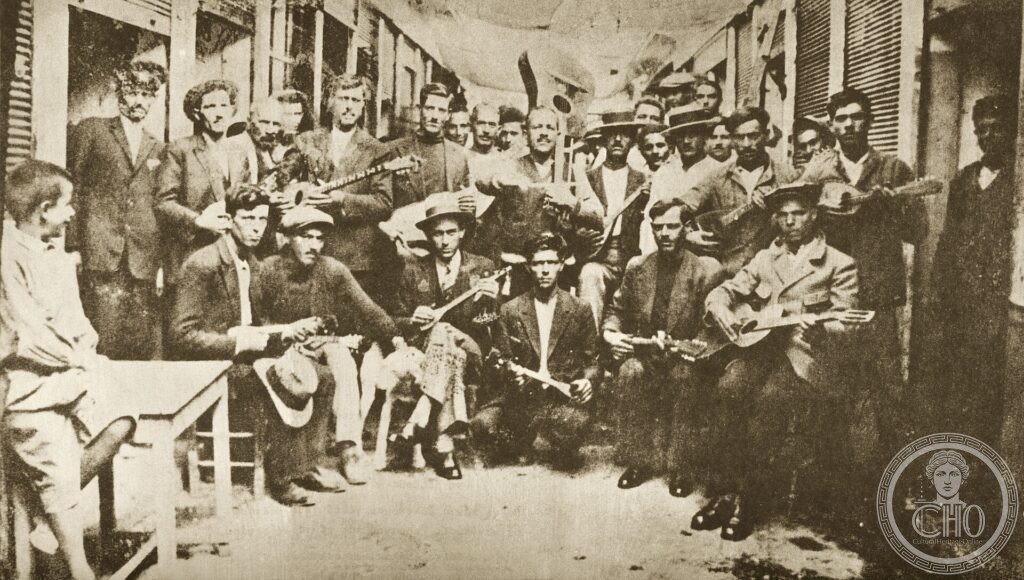
The urban song of Greece’s working poor, rebetiko emerged from disparate musical traditions in the early 20th century to become a genre of defiant beauty and social witness.
At a glance
Rebetiko is the urban popular music of Greece, born from the experiences of the poorest city dwellers from the late 19th century onward. Sung in Greek and often accompanied by the bouzouki, it merged diverse musical influences into a cohesive genre by the 1930s, documenting hardship, love, and street life with raw honesty. Nearly forgotten by mid-century, rebetiko was revived in the 1960s and 1970s, reclaiming its place in Greek cultural identity.
Origins & history
Rebetiko grew from previously distinct urban musical traditions across Greece, drawing on folk idioms, Asia Minor influences, and the rhythms of port cities. The genre crystallized through musical syncretism during the 1930s, even as it reflected the struggles of working-class communities. From the late 19th century through the 1950s, rebetiko served as the soundtrack to Greek urban life—a living chronicle of poverty, displacement, passion, and resilience. A period of relative obscurity followed, until musicians and audiences rediscovered its artistry and cultural importance beginning in the 1960s.
The practice
Rebetiko is performed by singers, often accompanied by bouzouki, a plucked string instrument central to the genre’s sound. The music emphasizes emotional directness and improvisational phrasing; melodies bend and ornament with microtonal inflections characteristic of Mediterranean vocal traditions. Lyrics address love, loss, crime, poverty, and survival with unflinching candor. Performances range from intimate café settings to concert halls, where the singer’s voice—sometimes rough, always expressive—carries the narrative weight of the song. The practice remains alive in both traditional contexts and contemporary interpretations.
Cultural significance
Rebetiko gave voice to those excluded from mainstream Greek society, transforming street experience into art. It served as a form of social witness and emotional outlet for urban workers, migrants, and the marginalized. The genre’s revival from the 1960s onward transformed it into a symbol of Greek cultural authenticity and resilience, reclaiming a suppressed heritage. Today, rebetiko remains central to Greek identity, embodying the nation’s urban history and the enduring power of song to speak truth to hardship.
Key facts
- Primary country: Greece
- Anchor community: Piraeus
- Historical period: Late 19th century to 1950s (with later revival from 1960s onward)
- UNESCO Intangible Cultural Heritage inscription: 2017
- UNESCO reference number: 01291
- Core instrument: Bouzouki
Where to experience it
Piraeus, the historic port city of Athens, remains the heartland of rebetiko tradition. You can encounter the practice in tavernas, concert venues, and cultural spaces throughout the city and greater Athens region, where both traditional singers and contemporary musicians continue the practice. The annual calendar features rebetiko festivals and performances, though specific venue schedules vary by season.
Sources & resources
- Rebetiko — Wikipedia
- Rebetiko — UNESCO Intangible Cultural Heritage
- Cultural Heritage Online
Find it on the map
See this place and what’s around it →📷 Become a Cultural Heritage Online photographer
Share your photos of places: they stay published under your name as the author. The more they're seen, the more you get noticed — and soon a contest will reward the most appreciated photos.
Log in or sign up free to add a photo