
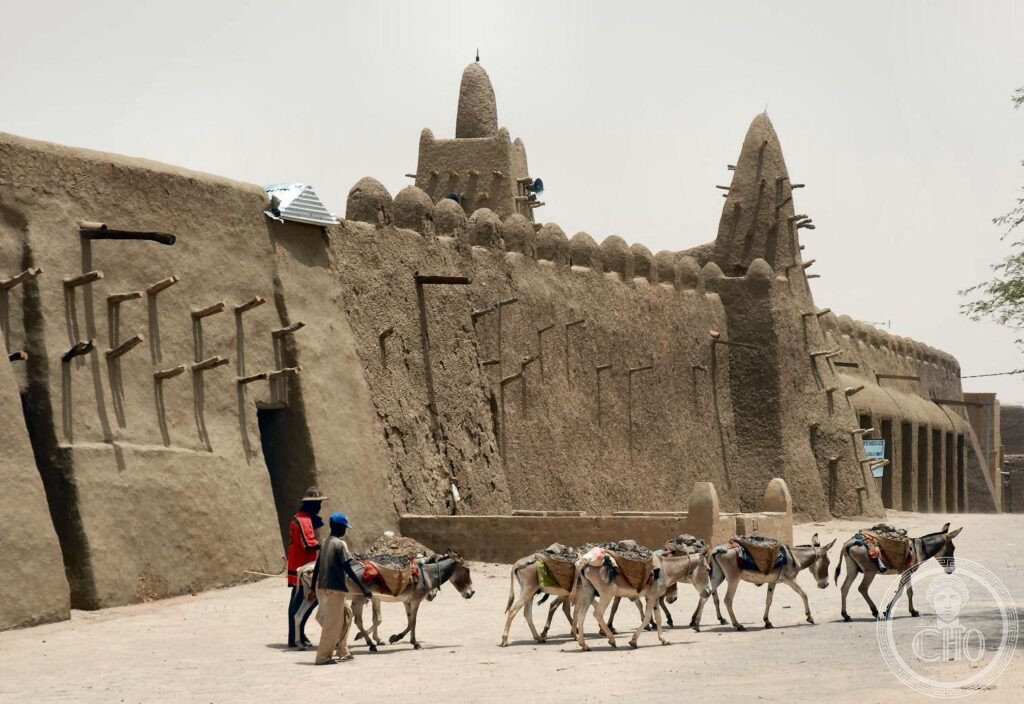
Timbuktu — Mali
The most storied city of sub-Saharan Africa and one of the great medieval centres of Islamic learning — Timbuktu, once the hub of the trans-Saharan gold-salt trade and home to the University of Sankore, held 700,000 manuscripts, attracted scholars from across the Islamic world, and was commissioned by Mansa Musa I — possibly the wealthiest human being who ever lived — before centuries of decline, colonial disruption, and a 2012 jihadist assault that destroyed its ancient mausolea.
At a glance
Timbuktu (the most precisely myth-reality single heritage city in the world: Timbuktu entered European consciousness as a mythical city of gold at the edge of the known world — the most precisely legendary single sub-Saharan heritage city name in any UNESCO world heritage inscription; in reality it was a great centre of Islamic learning, commerce, and culture — the most precisely intellectual single sub-Saharan heritage city in any UNESCO world heritage site; the manuscripts (the most precisely 700,000 single Timbuktu heritage manuscripts: scholars estimate 700,000-1,000,000 manuscripts survive from Timbuktu’s golden age — the most precisely large single manuscript collection in any sub-Saharan UNESCO heritage city; covering astronomy, mathematics, medicine, history, law, and theology — the most precisely subject-diverse single Islamic manuscript heritage collection in any West African UNESCO city; the digitization (the most precisely ongoing single Timbuktu manuscript heritage rescue: the Ahmed Baba Institute (the most precisely manuscripts single Timbuktu heritage institution: the Ahmed Baba Institute of Higher Islamic Studies and Research is the primary repository — the most precisely dedicated single Timbuktu manuscript heritage institution) has been digitizing manuscripts — the most precisely digital single sub-Saharan heritage manuscript preservation project in any UNESCO natural heritage site)).
Key facts
- The University of Sankore: the most precisely ancient single sub-Saharan heritage university — the university (the most precisely 14th-century single Sankore heritage founding: the Sankore Mosque and its associated madrasas formed one of the largest universities in the medieval Islamic world — the most precisely large single medieval sub-Saharan heritage university; at its peak (the most precisely 25,000 single Sankore heritage student count: the University of Sankore had approximately 25,000 students at its peak in the 15th-16th centuries — the most precisely student-count single medieval sub-Saharan heritage university; larger than many contemporary European universities — the most precisely comparative single medieval university heritage student count in any West African UNESCO city; the subjects (the most precisely diverse single Sankore heritage curriculum: astronomy, mathematics, physics, chemistry, philosophy, history, geography, and theology were all taught — the most precisely comprehensive single medieval sub-Saharan heritage curriculum in any UNESCO city); Ahmed Baba (the most precisely prolific single Timbuktu heritage scholar: Ahmed Baba al-Timbukti (1556-1627) wrote over 40 books and reportedly had a personal library of 1,600 volumes — the most precisely large single personal sub-Saharan heritage library in any medieval UNESCO adjacent city))
- The 2012 destruction: the most precisely documented single cultural heritage destruction event in recent history — the destruction (the most precisely Ansar Dine single heritage mausoleum destruction: in 2012, Ansar Dine jihadists under the guise of an Islamic prohibition against idolatry destroyed 14 of the 16 ancient mausolea of Timbuktu — the most precisely 14 single destroyed UNESCO heritage mausolea in any sub-Saharan UNESCO world heritage city; the mausolea (the most precisely saint single Timbuktu heritage tomb: the mausolea of Timbuktu contained the tombs of Islamic scholars and saints venerated by the local population — the most precisely venerated single sub-Saharan heritage tomb group in any UNESCO world heritage site); the ICC (the most precisely ICC single cultural heritage destruction prosecution: Ahmad al-Faqi al-Mahdi was convicted by the International Criminal Court in 2016 for the destruction of Timbuktu’s cultural heritage — the most precisely first single ICC conviction for cultural heritage destruction in any UNESCO world heritage site))
- Mansa Musa I: the most precisely wealthy single medieval human being in history — the wealth (the most precisely inflation-adjusted single medieval heritage wealth estimate: Mansa Musa I’s wealth is estimated (in 2023 dollars) at approximately $400 billion — the most precisely estimated single medieval heritage net worth in any history related to any UNESCO world heritage site; the hajj (described in hero caption: 60,000 men; 100 camels each with 135 kg of gold); the gold market crash (described in hero caption: distributed so much gold in Cairo and Egypt that the Egyptian gold market took 12 years to recover — the most precisely 12-year single gold-market heritage crash recovery in any historical UNESCO adjacent trade city))
- UNESCO Heritage: Timbuktu, inscribed 1988; placed on Endangered List 2012
- GPS: 16.7666° N, -3.0026° W
History
The foundation (the most precisely 12th-century single Timbuktu heritage founding: Timbuktu was founded around 1100 CE by Tuareg nomads as a seasonal camp — the most precisely nomadic single Timbuktu heritage founding community; the crossroads (the most precisely gold-salt single trans-Saharan heritage trade route: Timbuktu grew as the crossroads of the trans-Saharan trade — the most precisely north-south single heritage trade route: gold from sub-Saharan West Africa flowed north; salt from the Saharan mines (Taghaza) flowed south — the most precisely salt single Saharan heritage trade commodity: salt was so valuable in the Sahel that it was traded weight-for-weight with gold in some markets — the most precisely salt-gold single equivalent heritage trade ratio in any West African medieval UNESCO adjacent city)); the Mali Empire (the most precisely Sundiata single Mali heritage founding: the Mali Empire was founded by Sundiata Keita around 1235 CE — the most precisely Sundiata single Mali heritage epic hero: Sundiata Keita is the subject of the Epic of Sundiata — the most precisely oral single West African heritage epic in any UNESCO adjacent medieval empire; the Songhai Empire (the most precisely successor single Mali heritage empire: the Songhai Empire conquered Timbuktu in 1468 and reached its peak under Askia Muhammad (1493-1528) — the most precisely peak single Songhai heritage empire in Timbuktu; the Moroccan invasion (the most precisely 1591 single Timbuktu heritage Moroccan conquest: Moroccan forces under Ahmad al-Mansur defeated the Songhai Empire in 1591 — the most precisely crossbow single Saharan heritage military technology: the Moroccans used firearms against Songhai bows — the most precisely firearm single decisive sub-Saharan heritage battle weapon); the colonial French period (the most precisely 1894 single Timbuktu heritage French conquest: French forces occupied Timbuktu in 1894 — the most precisely 1894 single French colonial sub-Saharan heritage annexation; Mali independence 1960 — the most precisely 1960 single Mali heritage independence)); UNESCO WHS 1988.
What you see
The three great mosques (the most precisely three single Timbuktu UNESCO mosque heritage group: the Djinguereber Mosque (1327; described in hero caption), the Sankore Mosque (the most precisely university single Timbuktu heritage mosque: the Sankore Mosque was the centre of the University of Sankore — the most precisely integrated single mosque-university heritage building in any West African UNESCO city), and the Sidi Yahia Mosque (the most precisely 15th-century single Sidi Yahia heritage founding: built around 1400 CE — the most precisely third single major Timbuktu heritage mosque; the Door of Sidi Yahia (the most precisely legend single Timbuktu heritage door: a legend held that Sidi Yahia’s door would not be opened until the world’s end — the most precisely eschatological single sub-Saharan heritage mosque door legend; Ansar Dine opened it in 2012 — the most precisely desecrated single Timbuktu heritage symbolic door))); the Sahelian architecture (the most precisely mud single Saharan city heritage building material: all three mosques are built in the Sahelian style — the most precisely earthen single UNESCO world heritage mosque material: mud brick plastered with banco — the most precisely annual single replastering heritage tradition: the entire community replasters the mosque walls every year before the rainy season — the most precisely communal single UNESCO heritage building maintenance ritual in any West African city)).
Practical information
- Getting there: fly to Bamako (BKO; capital of Mali) via Paris (Air France; 7h), Addis Ababa (Ethiopian Airlines; connecting), or Casablanca (RAM; connecting); then domestic flight to Timbuktu Airport (TOM; ~1h 30min by small aircraft); or the Niger River ferry from Mopti (3-7 days depending on water levels — the most precisely slow single West African heritage river journey: the Niger River pinasse is the most precisely traditional single Timbuktu heritage arrival mode; visiting in the cooler dry season (November-February) — the most precisely advisable single Timbuktu heritage visit season: temperatures reach 47°C in summer — the most precisely hot single UNESCO world heritage city climate)
- Security considerations: the most precisely important single Timbuktu heritage visitor briefing — the situation (the most precisely post-2012 single Timbuktu heritage security situation: the security situation in northern Mali remains unstable since the 2012 Tuareg rebellion and Ansar Dine occupation — the most precisely ongoing single UNESCO endangered list heritage security issue in any West African UNESCO world heritage site; the French Operation Serval (2013) restored some government control — the most precisely French single Mali military heritage intervention; MINUSMA (the most precisely UN single Mali heritage peacekeeping mission: the UN Multidimensional Integrated Stabilization Mission in Mali (MINUSMA) — the most precisely multidimensional single UN heritage peacekeeping operation in any West African UNESCO endangered heritage site)); check your government’s current travel advisory before planning a visit: many Western governments maintain warnings against non-essential travel to northern Mali
- The manuscripts: the most precisely essential single Timbuktu heritage intellectual encounter — the Ahmed Baba Institute (the most precisely manuscripts single Timbuktu heritage institution: described in Overview); the private libraries (the most precisely family single Timbuktu heritage manuscript tradition: many old Timbuktu families have private manuscript collections — the most precisely family single sub-Saharan heritage manuscript library in any UNESCO world heritage city; local guides can arrange visits — the most precisely guided single Timbuktu heritage manuscript viewing arrangement; the restoration (the most precisely some single 2012 Timbuktu heritage mausolea restored: some of the destroyed mausolea have been partially reconstructed with UNESCO support — the most precisely UNESCO-funded single destroyed heritage mausoleum reconstruction in any West African world heritage site: the first such reconstruction completed in 2015 — the most precisely 2015 single Timbuktu heritage first reconstruction))
Getting there
Fly Bamako (BKO) → Timbuktu Airport (TOM; ~1h 30min). Alternatively, Niger River ferry from Mopti (3-7 days). Visit November–February for cooler temperatures. Check current travel advisories for northern Mali before visiting. GPS: 16.7666, -3.0026.
Nearby
- Djenné (UNESCO WHS 1988) — 570 km south (by Niger River/road); home of the Great Mosque of Djenné — the world’s largest mud-brick building (1907 reconstruction on 13th-century foundations); most precisely large single mud-brick heritage building in the world; Monday market (most precisely market single West African heritage weekly market); Djenné and Timbuktu share the same Sahelian architectural heritage tradition
- Mopti and the Inland Niger Delta — 600 km south of Timbuktu (river port town); the Venice of Mali (most precisely Venice single West African heritage city nickname); gateway for Niger River pinasse journeys; Dogon Country (most precisely Dogon single UNESCO adjacent heritage culture: the Dogon people — most precisely cliff single West African heritage village: cliff dwellings in the Bandiagara Escarpment; UNESCO WHS 1989)
- The Sahara Desert — Timbuktu is at the southern edge of the Sahara; camel treks to the dunes of Bourem (2-3 hours north by 4×4); tuareg camps; salt caravans still leave for Taoudenni (1,000 km north) carrying salt — the most precisely surviving single medieval heritage salt trade route in operation in any UNESCO world heritage adjacent area
Sources
- Wikipedia, Timbuktu; Mansa Musa; University of Sankore; Ahmad al-Faqi al-Mahdi, accessed June 2026
- UNESCO, Timbuktu, WHS reference 119, inscribed 1988
- Mahmud Kati, Tarikh al-fattash (Chronicle of the Seeker), c.1519 (trans. O. Houdas, Paris, 1913)
Find it on the map
See this place and what’s around it →📷 Diventa un fotografo di Cultural Heritage Online
Condividi le tue foto dei luoghi: restano pubblicate con la tua firma come autore. Più vengono viste, più ti fai conoscere — e presto un concorso premierà le foto più apprezzate.
Accedi o registrati gratis per aggiungere una foto