
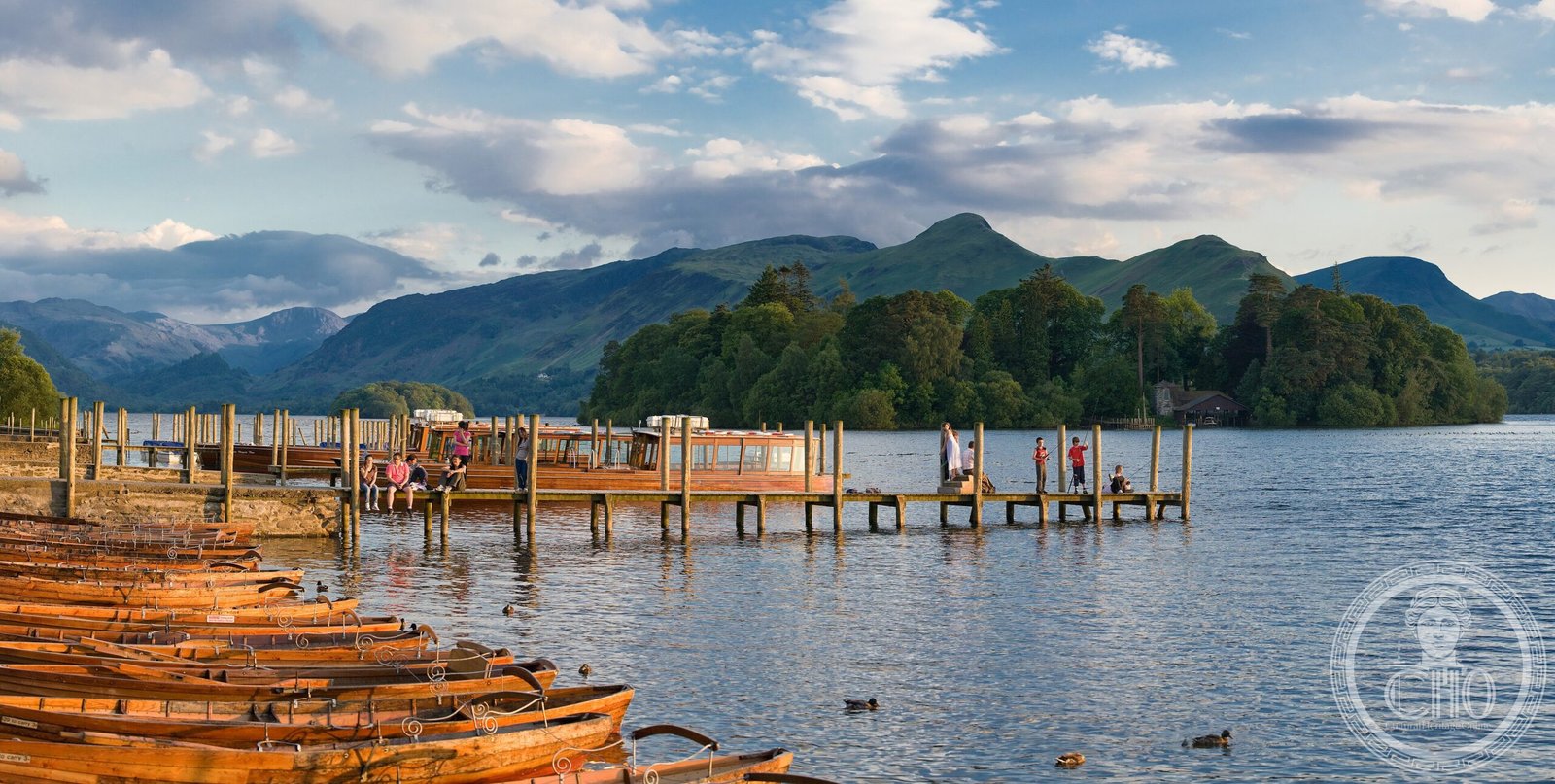
The mountainous landscape of Cumbria that inspired the British Romantic movement, changed how Western culture perceives wild nature, and gave the world the national park concept — inscribed by UNESCO in 2017 for the cultural revolution it set in motion.
At a glance
The English Lake District — approximately 2,300 km² of valleys, lakes, and fells in Cumbria in northwestern England — was inscribed as a UNESCO World Heritage Site in 2017. The inscription acknowledged something unusual: this landscape is valued not primarily as a natural wonder but as the birthplace of an idea. In the late 18th and 19th centuries, poets, painters, and philosophers came to this previously-feared mountain landscape and found a new model of beauty. William Wordsworth, born here and spending most of his life here, made it the primary subject of his poetry. His Romantic successors followed, and the result was a transformation in Western attitudes toward wild landscapes that reverberated through art, literature, tourism, and conservation policy worldwide.
Key facts
- Area: approximately 2,362 km² (Lake District National Park)
- Highest point: Scafell Pike, 978 metres — the highest mountain in England
- Major lakes: Windermere (England’s largest natural lake, 17 km long), Ullswater, Coniston Water, Derwent Water, Thirlmere
- Principal towns: Keswick, Ambleside, Windermere, Coniston
- Farming tradition: Herdwick sheep on open fells, continuous since Norse settlement (9th–10th century CE)
- National Park established: 1951 CE (one of the first in England)
- Annual visitors: approximately 14–19 million
- Key cultural figures: William Wordsworth (1770–1850), John Ruskin (1819–1900), Beatrix Potter (1866–1943), Samuel Taylor Coleridge (1772–1834)
- UNESCO inscription: 2017
History
The Lake District landscape was shaped by the last Ice Age: glaciers carved its long straight valleys and left the lakes that define the region. Norse settlers in the 9th–10th centuries CE gave the landscape its vocabulary — fell, tarn, beck, ghyll, and dale are all Norse words — and established the open fell-grazing system with Herdwick sheep that persists largely unchanged today.
Before the 18th century, the mountains were regarded with little affection. Travellers described them as horrid, waste, and desolate. The decisive change came with Thomas Gray’s journal of his 1769 tour and William Gilpin’s treatises on the Picturesque (1786, 1792), which provided a new aesthetic framework for appreciating mountain scenery.
William Wordsworth was born in Cockermouth in 1770. He and Dorothy moved to Dove Cottage in Grasmere in 1799; Samuel Taylor Coleridge arrived at Keswick in 1800. The Lake Poets drew a continuous stream of visitors through the 19th century. John Ruskin settled at Brantwood on Coniston Water in 1872. Beatrix Potter used the Lake District in the Peter Rabbit books from 1902 and bequeathed over 4,000 acres to the National Trust at her death in 1943. The Lake District National Park (1951) was part of a global conservation movement whose intellectual lineage traces directly to the Romantic engagement with this landscape.
What you see
The Lake District is a mosaic, not a monument. The central fells (Scafell, Great Gable, the Langdale Pikes) are elemental: bare rock and wind-scoured ridges. The lower valleys are intimate: stone-walled fields dropping to lake shores, whitewashed farmhouses and village churches built of local slate. The stone walls running up near-vertical fellsides are among the most characteristic features, their pattern continuous from Norse field boundaries. Herdwick sheep, grey-fleeced and black-faced, are specific to the central fells.
Wordsworth’s Dove Cottage in Grasmere and Rydal Mount in Ambleside are open to visitors, as is Ruskin’s Brantwood at Coniston. The Victorian lake steamer services on Windermere and Ullswater remain the classic way to experience the landscape from the water.
Practical information
- Lake District National Park: free to enter; car parks at major trailheads are pay-and-display
- Dove Cottage (Grasmere): Wordsworth’s home 1799–1808; open year-round with museum (ticketed)
- Rydal Mount (Ambleside): Wordsworth’s home 1813–1850; open most of the year (ticketed)
- Brantwood (Coniston): Ruskin’s home; accessible by ferry from Coniston village; open most of the year
- Windermere Lake Cruises: year-round scheduled services between Ambleside, Bowness, and Lakeside
- Ullswater Steamers: scheduled services on Ullswater, connecting with Aira Force waterfall walk
- Walking: the 214 Wainwright fells (catalogued 1955–1966) are the primary hiking framework; OS Explorer maps OL5, OL6, OL7
Getting there
By rail: West Coast Main Line to Oxenholme (connection to Windermere, 30 min) or Penrith for the eastern Lakes. Direct services from London Euston to Oxenholme take approximately 2.5 hours. By car: M6 motorway — junction 36 for the south, junction 40 for Penrith and the north. Roads within the National Park are narrow and can be congested in summer. By bus: Stagecoach Cumbria operates the primary network with seasonal Rambler services linking walking access points.
Nearby
- Hadrian’s Wall (50 km northeast): UNESCO-inscribed Roman frontier wall; sections at Birdoswald, Housesteads, and Vindolanda within day-trip distance from the eastern Lakes
- Carlisle (45 km north): border city with a Norman castle, medieval cathedral, and Tullie House museum
- Furness Abbey (30 km south): substantial ruins of a 12th-century Cistercian monastery near Barrow-in-Furness
- Levens Hall (20 km south): Elizabethan house with the oldest topiary garden in the world, laid out in 1694
Sources
- UNESCO World Heritage List: The English Lake District — whc.unesco.org
- Wikipedia: Lake District — en.wikipedia.org
- Wordsworth, William: The Prelude (1850) and Guide to the Lakes (1810)
- Bate, Jonathan: Romantic Ecology: Wordsworth and the Environmental Tradition (1991)
- Lake District National Park Authority: visitlakedistrict.com
Find it on the map
See this place and what’s around it →
📷 Become a Cultural Heritage Online photographer
Share your photos of places: they stay published under your name as the author. The more they're seen, the more you get noticed — and soon a contest will reward the most appreciated photos.
Log in or sign up free to add a photo