
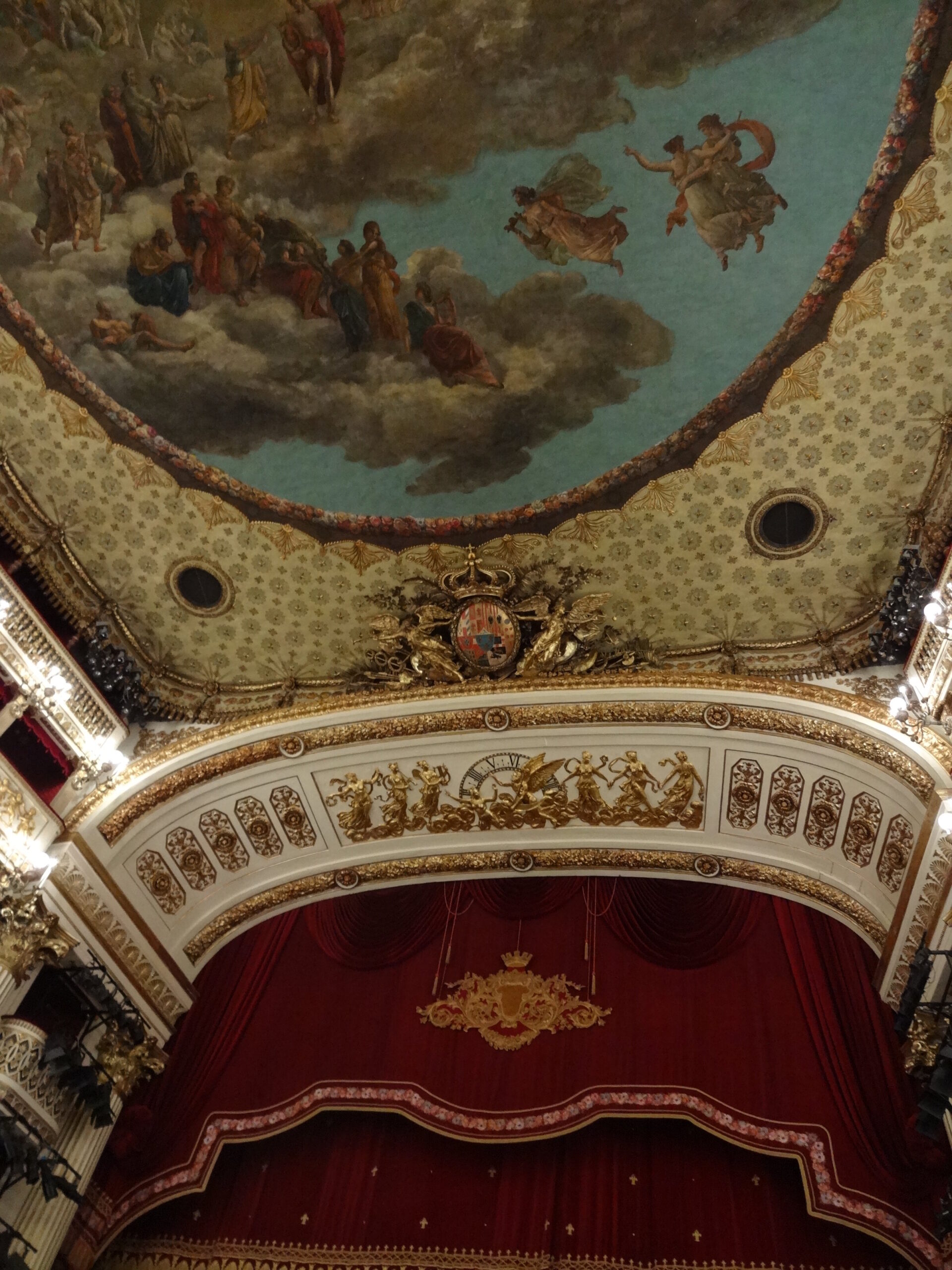
The Teatro di San Carlo is the oldest continuously active opera house in the world, inaugurated in Naples on 4 November 1737 — the name day of King Charles VII of Bourbon — forty-one years before La Scala in Milan. Commissioned by Charles VII and designed by the Sicilian architect Giovanni Antonio de Medrano with the impresario Angelo Carasale, the horseshoe-shaped auditorium held 1,379 seats arranged on six tiers of boxes around the royal box, and was rebuilt by Antonio Niccolini in just ten months after a fire on 13 February 1816.
- Address
- Via San Carlo 98/F, 80132 Napoli NA
- Period
- 1737 (inaugurated 4 November 1737); rebuilt in 1817 by Antonio Niccolini after the 1816 fire
- Architect
- Giovanni Antonio de Medrano with Angelo Carasale (1737); Antonio Niccolini (1816–1817 reconstruction)
- Patron
- Charles VII of Bourbon, King of Naples and Sicily (later Charles III of Spain)
- Function
- Royal opera house and ballet theatre
- Current use
- Active opera house — the oldest continuously operating opera house in the world (since 1737); part of the UNESCO Historic Centre of Naples World Heritage Site
- Coordinates
- 40.8378° N, 14.2497° E
- Notes
- Original capacity 1,379 seats on six tiers of boxes around the royal box; inaugurated with 'Achille in Sciro' by Domenico Sarro; rebuilt in 10 months after the fire of 13 February 1816 and reopened on 12 January 1817
Gallery
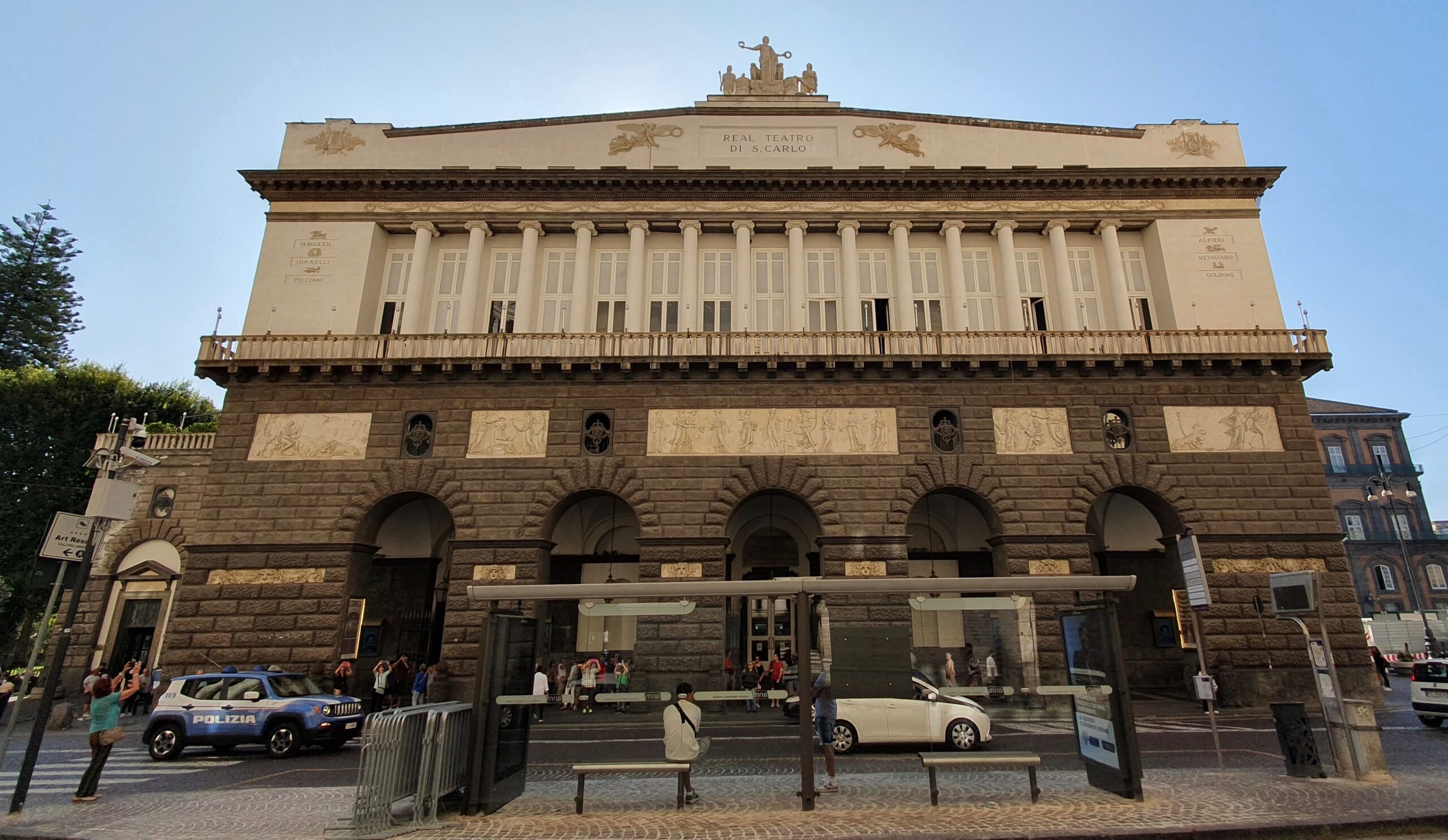
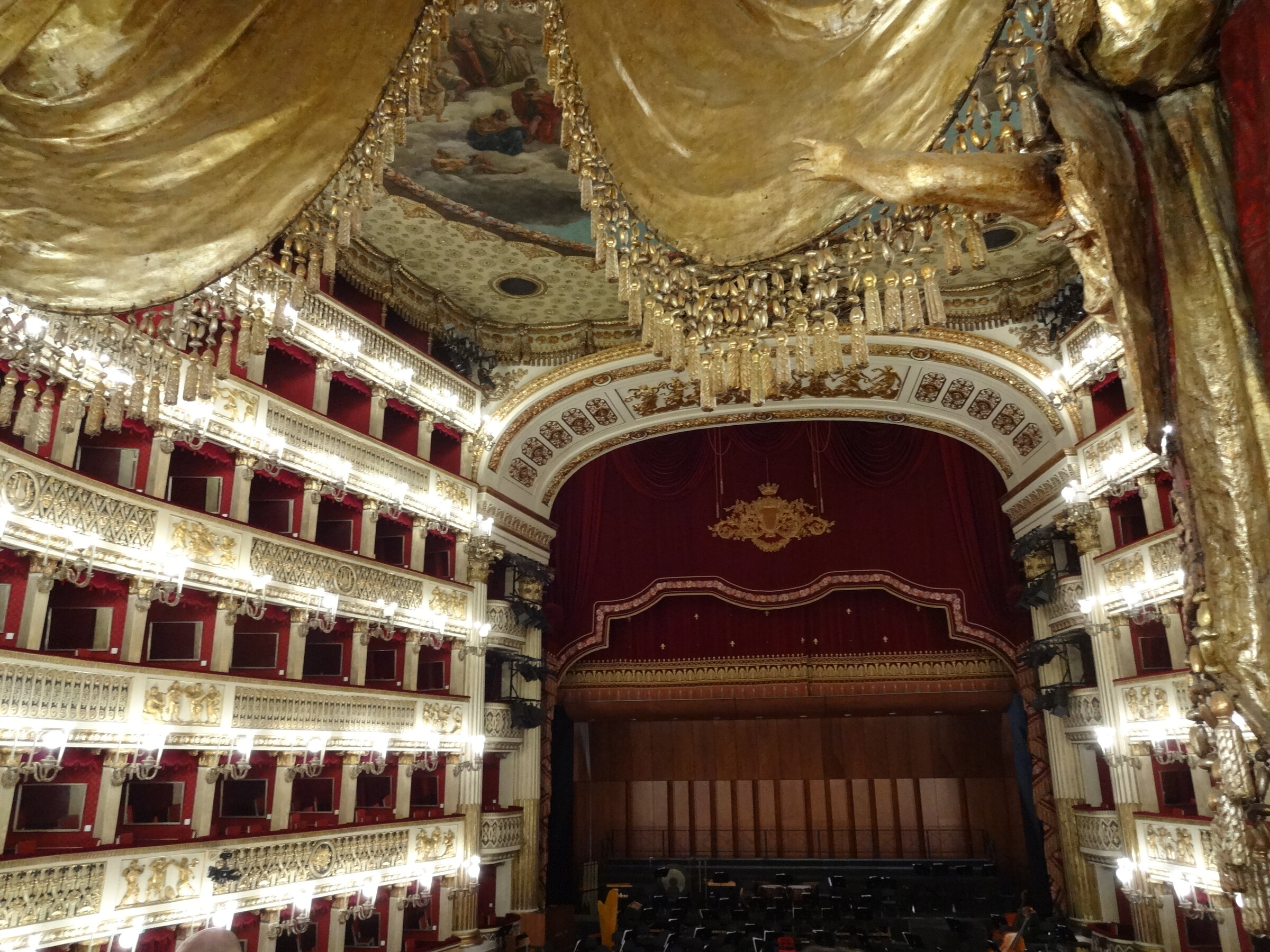
Two further views: the Niccolini facade on Via San Carlo, and the horseshoe hall seen from the royal box.
Visit on the map
Via San Carlo 98/F · 40.8378° N, 14.2497° E
Download for your navigator
A single waypoint, ready for GPS apps, navigators, and contacts.
The Teatro di San Carlo was commissioned in 1737 by Charles VII of Bourbon, the young king of Naples and Sicily who would later reign as Charles III of Spain. The court needed a royal opera house worthy of a new dynasty and a capital that was, at the time, one of the largest cities in Europe; the older Teatro San Bartolomeo had become inadequate. The Sicilian nobleman and royal architect Giovanni Antonio de Medrano was charged with the design, while the impresario Angelo Carasale managed the construction and the staging. The cantiere was driven hard — roughly eight months from groundbreaking to opening night — and the theatre was inaugurated on 4 November 1737, the king’s name day, with Achille in Sciro by Domenico Sarro on a libretto by Pietro Metastasio. The San Carlo opened forty-one years before La Scala in Milan and almost half a century before La Fenice in Venice, and its horseshoe-shaped hall — the oldest of its kind — became a model for the great Italian opera houses of the following century.
On the evening of 13 February 1816, during the preparation of a ballet rehearsal, a fire broke out and destroyed the interior of the theatre, sparing only the perimeter walls. King Ferdinand IV entrusted the reconstruction to Antonio Niccolini, who had already worked on the building, and the impresario Domenico Barbaja drove the site at extraordinary speed: the rebuilt San Carlo reopened on 12 January 1817, ten months after the fire. Niccolini gave the theatre its present face — a neoclassical facade with a five-bay portico on Via San Carlo and a loggia above — and a redesigned auditorium with six tiers of boxes arranged in a horseshoe around the royal box, a deep proscenium and gilded decoration on a red and gold palette. The painted ceiling and the bas-reliefs of the proscenium frame the stage as a continuous court setting, and the capacity settled at 1,379 seats, with standing room raising the figure considerably higher in the 19th century.
Through the 19th and 20th centuries the San Carlo hosted the premieres of operas by Rossini, Donizetti and the young Verdi, and remained the principal stage of the Neapolitan school. Twentieth-century restoration campaigns repaired bomb damage from the Second World War and renewed the gilding, the stage machinery and the boxes; further conservation work followed in the early 2000s. The theatre lies within the UNESCO World Heritage Site of the Historic Centre of Naples, adjacent to the Royal Palace and the Galleria Umberto I. Today it operates as an active opera house and ballet theatre with a year-round season of around 120 performances, combining its own productions with international guest companies, and maintains a long institutional bond with the Conservatorio di San Pietro a Majella — making the Teatro di San Carlo, almost three centuries after its opening night, the oldest continuously operating opera house in the world.
Resources & References
Editorial picks across Wikipedia, photo archives, and the official portal.
All photographs Wikimedia Commons (CC-BY / CC-BY-SA / Public Domain) unless otherwise stated. Editorial text Cultural Heritage Online, OASIS Tech LLC USA.
Plan your visit
Open to visitors year-round; check local tourism offices for seasonal hours, admission fees, and guided tour availability. GPS coordinates: 40.8376543, 14.249519.
See the place
Find it on the map
See this place and what’s around it →📷 Become a Cultural Heritage Online photographer
Share your photos of places: they stay published under your name as the author. The more they're seen, the more you get noticed — and soon a contest will reward the most appreciated photos.
Log in or sign up free to add a photoIs this page about you?
This page is read by travellers and heritage enthusiasts who find it on Google. Tell us how you are connected to this place and we will take it from there.