

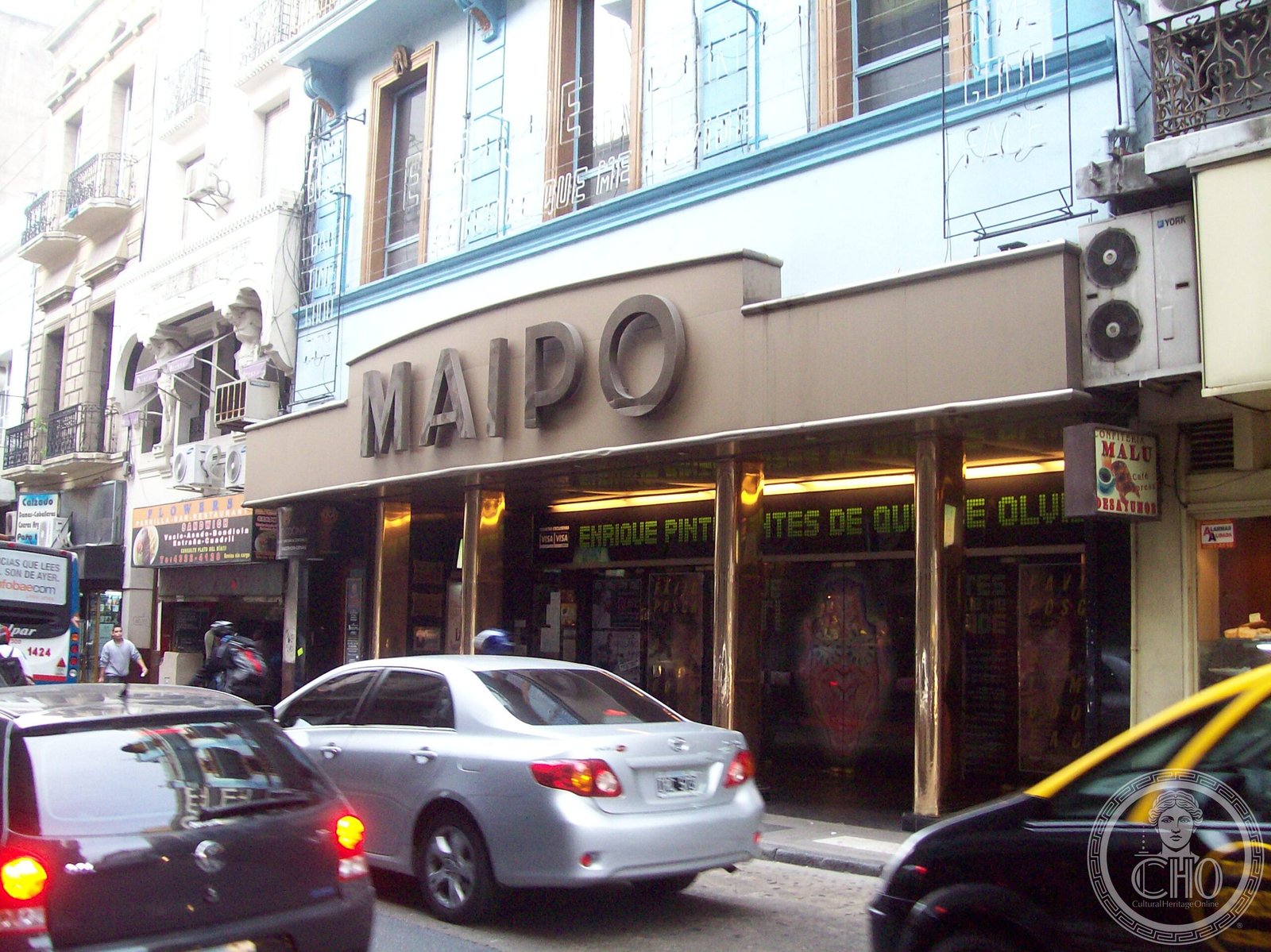
Teatro Maipo is one of downtown Buenos Aires’s oldest and most beloved theatres, a cornerstone of the city’s popular entertainment culture since its founding in 1908 by entrepreneur Charles Seguin. Known over the decades under the names Scala Theater and Esmeralda Theatre before settling on its current identity, the venue has survived multiple closures and reinventions to remain a living part of Buenos Aires’s theatrical fabric. The theatre is particularly associated with the light comedy, revue, and cabaret traditions that flourished in the Argentine capital through the twentieth century, drawing generations of performers and audiences to its stage. Located in the heart of the Microcentro, Teatro Maipo embodies the resilience and adaptive vitality of Buenos Aires’s cultural institutions, and its history has attracted enough scholarly attention to inspire a dedicated historical novel.
At a glance
- Type
- Historic theatre / Performing arts venue
- Period
- Founded 1908; most recent reopening 1994
- Style
- Art Déco
- Location
- Downtown Buenos Aires (Microcentro), Argentina
- Coordinates
- 34.6030° S, 58.3781° W
Overview
Teatro Maipo occupies a prominent place in Buenos Aires’s theatrical landscape as one of the city’s longest-running performance venues. Founded in 1908 by entrepreneur Charles Seguin, the theatre began life as the Scala Theater, later operating as the Esmeralda Theatre before adopting its current name. It has experienced several closures and revivals over the course of the twentieth century, most recently reopening in 1994. The theatre is strongly associated with the revue and comedy traditions that were central to Buenos Aires’s popular entertainment scene, and it continues to serve as an active cultural venue for the city’s residents and visitors.
History
Charles Seguin founded the theatre in 1908, originally operating it as the Scala Theater. The venue subsequently changed its name to the Esmeralda Theatre before taking the name Teatro Maipo, by which it has been known for most of its existence. Through the first half of the twentieth century the theatre built a reputation as a home for light entertainment, comedy, and the revue format that was enormously popular in Buenos Aires during this period. The theatre underwent multiple closures and reinventions across the decades, with each reopening reflecting the evolving tastes of Buenos Aires’s entertainment public. Its most recent reopening took place in 1994. The theatre’s layered history has attracted scholarly interest, most notably from historian Carlos Schwarzer, who devoted a novel to documenting its story.
Architecture & Design
Teatro Maipo’s architectural history reflects the successive transformations undergone by many of Buenos Aires’s early twentieth-century entertainment venues. The theatre’s current appearance incorporates Art Déco elements characteristic of the style’s widespread adoption across commercial and cultural buildings in Buenos Aires during the 1920s and 1930s. The interior retains the intimate atmosphere appropriate to the revue and comedy performances for which the venue became celebrated, with a stage configuration suited to variety entertainment. The building’s presence in the dense urban fabric of the Microcentro is typical of the theatres that lined Buenos Aires’s entertainment corridors in the early twentieth century, creating a district of cultural life within walking distance of major commercial streets.
Cultural significance
Teatro Maipo represents the popular theatrical tradition that ran alongside Buenos Aires’s more formally prestigious opera and drama institutions, catering to a broad public appetite for comedy, revue, and light entertainment. Performers such as the Spanish tonadillera and actress Teresita Zazá (1893–1980) appeared on its stage, reflecting the international character of Buenos Aires’s cultural scene in the early twentieth century. The theatre’s longevity—over a century of operation despite multiple closures—speaks to its deep roots in the city’s cultural life. Historian Carlos Schwarzer’s decision to make it the subject of a novel underlines its status as a building whose story is inseparable from the social history of the Argentine capital.
Visiting today
Teatro Maipo is an active performing arts venue in the heart of Buenos Aires’s Microcentro. Visitors can attend performances ranging from comedy to musical theatre, continuing the revue traditions for which the theatre has been celebrated for over a century. Tickets can be purchased at the box office or through Buenos Aires ticketing services. The theatre’s location in the city centre makes it easily accessible and a natural addition to an evening in the Microcentro. Check the theatre’s current programming for schedules and availability.
Getting there
Teatro Maipo is located in the Microcentro district of Buenos Aires, close to major Subte (metro) lines. The nearest stations are on Lines B and C, both within a short walk of the theatre. Numerous bus routes serve the surrounding streets. The theatre is also within comfortable walking distance from the Florida pedestrian shopping street, Plaza de Mayo, and the city’s main rail terminal at Retiro, making it easy to reach from most areas of central Buenos Aires.
Sources & resources
Find it on the map
See this place and what’s around it →Record researched and written by Luigi De Marchi for Cultural Heritage Online, 2026.
📷 Become a Cultural Heritage Online photographer
Share your photos of places: they stay published under your name as the author. The more they're seen, the more you get noticed — and soon a contest will reward the most appreciated photos.
Log in or sign up free to add a photoIs this page about you?
This page is read by travellers and heritage enthusiasts who find it on Google. Tell us how you are connected to this place and we will take it from there.