
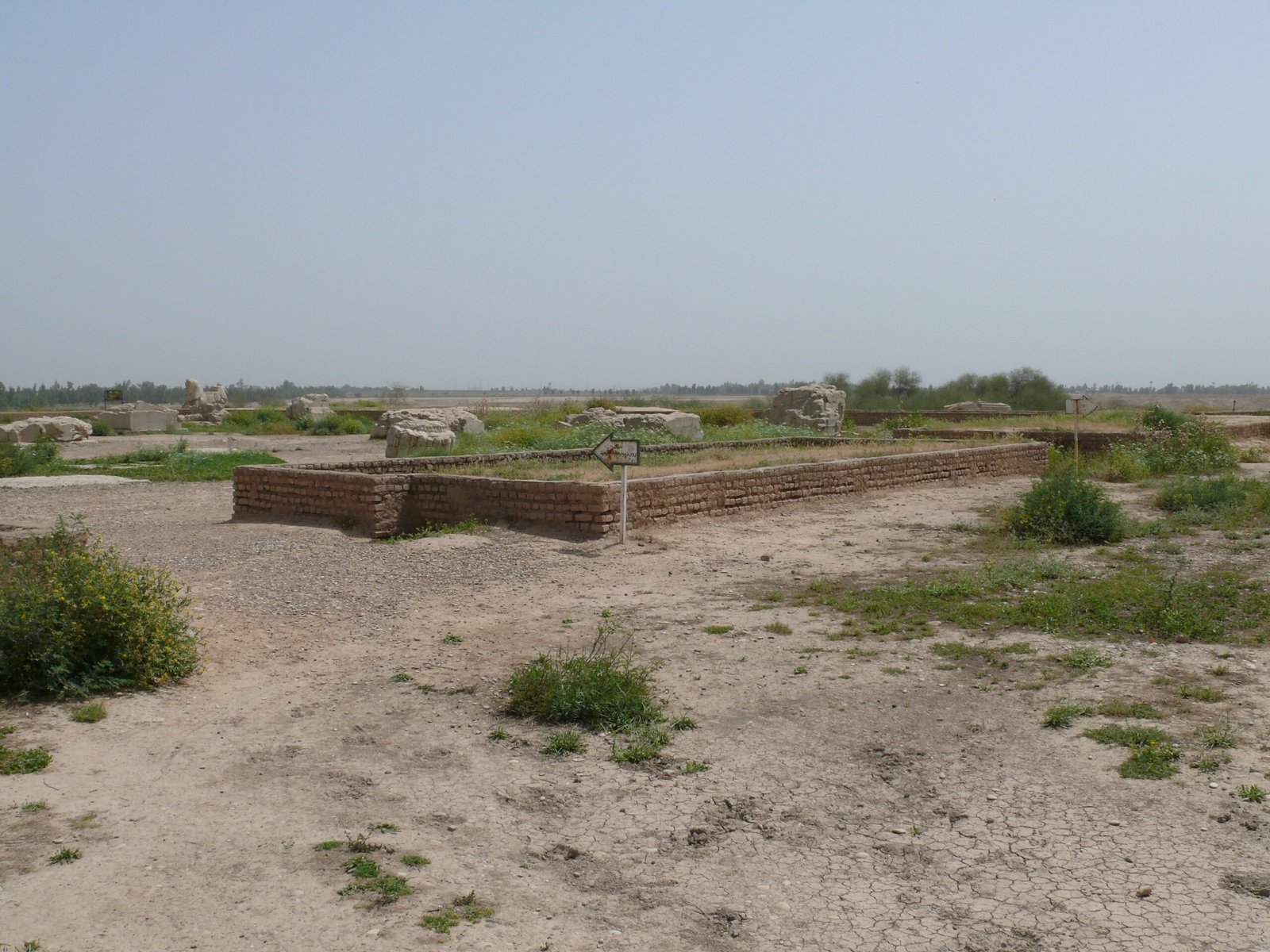
One of the world’s oldest continuously occupied cities, Susa served for nearly three millennia as the capital of the Elamite empire, the winter residence of Achaemenid Persian kings, and a crossroads where Mesopotamian, Persian, and Hellenistic cultures converged. Its UNESCO-listed ruins span more than 350 hectares in the Khuzestan plain of southwestern Iran.
At a glance
Susa (modern Shush, Khuzestan province, Iran) stands among the longest-occupied urban sites on earth, with continuous settlement stretching from at least 4200 BCE to the early Islamic period. The site was declared a UNESCO World Heritage Site in 2015. At its height under the Achaemenid dynasty — Cyrus the Great, Darius I, Xerxes, and Artaxerxes all held court here — Susa was one of the four royal capitals of the Persian Empire alongside Persepolis, Pasargadae, and Ecbatana. The ruins cover four main archaeological zones: the Apadana mound (Darius’s great columned audience hall), the Royal City, the Artisans’ Quarter, and the Acropolis mound containing the deepest Elamite strata. Much of the spectacular Achaemenid decorative art excavated here — including the iconic Frieze of Archers — is now in the Louvre in Paris.
Key facts
- UNESCO inscription: 2015 (World Heritage Site)
- Location: Shush, Khuzestan Province, Iran (32.1875°N, 48.2567°E)
- First occupation: c. 4200 BCE (Chalcolithic period)
- Civilizations on site: Elamite (2000+ years as capital), Achaemenid Persian, Seleucid Greek, Parthian, Sassanid
- Site area: 350 hectares
- Key structure: Apadana of Darius I — columned audience hall with bull-capital columns
- Famous artifact: Frieze of Archers (83 metres of glazed ceramic brick, now Louvre, Paris)
- Biblical connection: The Book of Esther is set in Susa; the palace of Ahasuerus (Xerxes) described there corresponds to the Apadana
- Excavation history: French missions from 1884 onward; Marcel Dieulafoy shipped major finds to the Louvre in 1886
- Modern name: Shush (شوش)
History
Elamite capital (c. 4200 BCE – 6th century BCE). Susa was the principal city of the Elamite civilization, one of the earliest literate cultures of the ancient world, for roughly two thousand years. Elam dominated the Susiana plain — modern Khuzestan — and competed and traded with Mesopotamian powers including Sumer, Akkad, and Babylonia. The city served as a repository of Mesopotamian cultural achievements: the famous stele inscribed with the Code of Hammurabi was found at Susa, where it had been looted from Babylon around 1150 BCE by the Elamite king Shutruk-Nahhunte. Elamite power finally collapsed under repeated Assyrian attacks; Ashurbanipal sacked Susa in 646–645 BCE, an event depicted in a famous frieze from Nineveh now in the British Museum.
Achaemenid royal residence (550–330 BCE). When Cyrus the Great unified Persia and Media to found the Achaemenid Empire in the mid-6th century BCE, Susa became the empire’s administrative winter capital. Darius I (r. 522–486 BCE) undertook the most ambitious building program: the Apadana, an audience hall of at least 36 columns each 20 metres high with distinctive double-bull capitals, and the adjacent palace complex. Darius left an extraordinary foundation inscription describing the multinational workforce and raw materials drawn from across the empire — Lebanese cedar, Sardian gold, Nubian ebony, Indian ivory — that built the palace. The Book of Esther in the Hebrew Bible is set at the court of Susa during this period. Alexander the Great seized Susa in 331 BCE and held his mass wedding ceremony there in 324 BCE, marrying his officers to Persian noblewomen in a famous gesture of cultural fusion.
Seleucid, Parthian, and Sassanid periods (330 BCE – 7th century CE). After Alexander, Susa was refounded as a Greek polis named Seleukeia on the Eulaios by the Seleucid successors, and a Greek-speaking population coexisted with the existing Persian and Elamite communities. The city passed to the Parthians in the 2nd century BCE and retained importance as a commercial and administrative centre. Under the Sassanid Empire (224–651 CE) the city, by then known as Shush, remained inhabited. The Arab conquest of the 7th century CE marked the end of ancient Susa as a major urban centre, though a smaller medieval city continued on part of the site.
What you see today
The Apadana mound is the most visually dramatic area: the brick platforms and stone column bases of Darius’s great audience hall are partially restored, and the double-bull capitals are among the most recognisable symbols of Achaemenid art. The scale is comparable to, though somewhat smaller than, the Apadana at Persepolis.
The Château de Morgan — the large fortified building visible on the central mound — is not ancient: it was built between 1897 and 1912 by the French Archaeological Mission as their excavation headquarters. It now houses the on-site museum. Its crenellated walls give Susa an oddly medieval silhouette in photographs.
The Acropolis mound contains the deepest archaeological sequence, reaching Chalcolithic levels from 4200 BCE. Excavations here produced the earliest proto-Elamite tablets and painted pottery that established Susa’s antiquity.
The Artisans’ Quarter yielded evidence of metalworking, pottery production, and trade goods. The Royal City area contained the residential and administrative palace complex of the Achaemenid period.
What is in Paris. The Frieze of Archers — 83 metres of glazed polychrome ceramic brick panels depicting the royal guard of Darius I — was removed by Dieulafoy and installed in the Louvre (Sully wing, room 12), where it remains one of the museum’s most spectacular displays. Visiting Susa without also consulting the Louvre collection gives only a partial picture of the site’s artistic achievement.
Practical information
- Location: Shush (Susa), Khuzestan Province, southwestern Iran, approximately 250 km north of Ahvaz
- Opening hours: The archaeological site and on-site museum (Château de Morgan) are generally open daily except Fridays and public holidays; confirm hours locally as they vary seasonally
- Entry: Site admission required; museum within the Château de Morgan has a separate ticket
- Climate: Khuzestan has extreme summer heat (July–August temperatures above 45°C); the best visiting months are October–March
- Nearby town: The modern city of Shush is adjacent to the ruins; the Tomb of Daniel (prophet Daniel, venerated by Muslims, Christians, and Jews) is a major pilgrimage site here
- Visa: Iran requires advance visa for most nationalities; e-visa available for many countries; US, UK, and Canadian passport holders face additional requirements
Getting there
- By air: Ahvaz Airport (AWZ) is the nearest international airport, approximately 90 km south of Shush; domestic flights connect Ahvaz with Tehran, Isfahan, and Shiraz
- By road: Shush is on the main highway connecting Ahvaz to Dezful and Khorramabad; regular bus and shared taxi services from Ahvaz (approximately 2 hours)
- By train: Train services connect Ahvaz to major Iranian cities; the nearest station to Susa is Andimeshk, approximately 40 km north, with onward road connections
- Combined itinerary: Susa pairs naturally with nearby Chogha Zanbil (the great ziggurat of the Elamites, a UNESCO WHS 30 km to the south-east) and Shushtar Historical Hydraulic System (UNESCO WHS, 90 km south-east)
Nearby heritage sites
- Chogha Zanbil (UNESCO WHS, 30 km SE) — the best-preserved ziggurat in the world, built by the Elamite king Untash-Napirisha c. 1250 BCE; the most important Elamite monument still standing
- Shushtar Historical Hydraulic System (UNESCO WHS, 90 km SE) — Achaemenid and Sassanid water engineering: dams, tunnels, and irrigation channels in active use for 2,500 years
- Haft Tappeh (Elamite site, 15 km SE) — excavated Elamite city with royal tomb complex, contemporaneous with the Middle Elamite period
- Ahvaz (90 km S) — capital of Khuzestan Province; base for logistics, accommodation, and onward transport in the region
Sources
- UNESCO World Heritage List — Susa: whc.unesco.org/en/list/1455
- Wikipedia — Susa
- Louvre Museum — Frieze of Archers: louvre.fr
- Pierre Amiet, Susa: 6000 Years of History, 1988
- Potts, D.T., The Archaeology of Elam, Cambridge University Press, 1999
Find it on the map
See this place and what’s around it →📷 Become a Cultural Heritage Online photographer
Share your photos of places: they stay published under your name as the author. The more they're seen, the more you get noticed — and soon a contest will reward the most appreciated photos.
Log in or sign up free to add a photo