
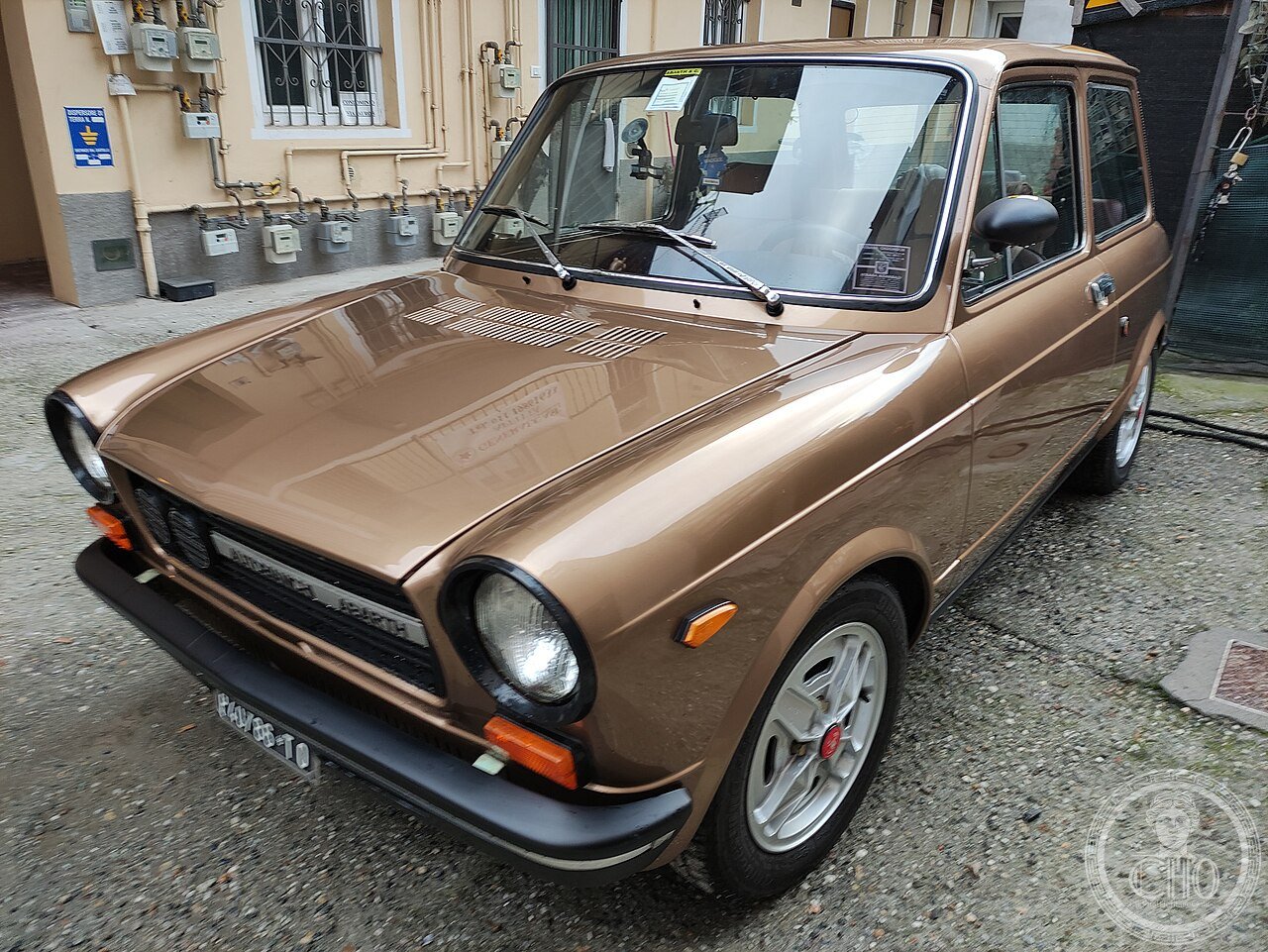
One of Europe's largest corporate automotive heritage centres occupies a 15,000 m² former workshop inside the legendary Mirafiori complex. Three hundred historic vehicles — Fiat, Lancia, Abarth, Alfa Romeo, Autobianchi — stand in a single room that smells of rubber, steel, and decades of Italian industrial ambition.
At a glance
Stellantis Heritage Hub opened to the public in 2019 at Via Plava 80, inside the vast Mirafiori manufacturing complex that Fiat built between 1936 and 1939 on the southern edge of Turin. The hub is run by the Stellantis Heritage team, whose core mission is to certify, restore, and preserve vintage vehicles across all Stellantis brands. Visitors encounter roughly 300 examples spanning more than a century of Italian automotive engineering, arranged chronologically in a hall large enough to stage a small car rally. The workshop at the rear operates continuously, and on guided tours you can watch technicians finesse carburetors and bodywork on vehicles that may soon re-enter competition or collector circulation.
History
The Mirafiori plant was inaugurated by Fiat founder Giovanni Agnelli in May 1939, three years after construction began on what was then marshland south of Turin. At peak production in the 1970s the complex employed over 60,000 workers, making it one of the largest single manufacturing sites in the world and a touchstone of postwar Italian economic identity. The Officine 81 building that now houses the Heritage Hub was originally a maintenance workshop for production equipment; its scale and ceiling height made it ideal for displaying vehicles without altering the industrial character of the space.
Fiat began conserving significant vehicles informally from the 1950s, and the practice became systematic with the creation of the Fiat Centro Storico archive in the 1970s. When Fiat merged with Chrysler and later PSA to form Stellantis in 2021, the heritage preservation mandate expanded to cover the combined portfolio of marques. The public opening in 2019 coincided with the 120th anniversary of Fiat's founding and marked the first time the collection had been accessible on a regular basis rather than by private arrangement.
The Lancia and Abarth holdings are among the most historically significant. Several Lancia rally cars from the 1970s and 1980s — including Stratos and Delta variants — are maintained in running condition, while Abarth competition cars document the marque's evolution from Carlo Abarth's early tuning workshops through successive championship campaigns. Alfa Romeo examples extend from pre-war racing machines to 1970s saloons.
What you see
The interior of Officina 81 preserves its original industrial framework: exposed steel trusses, concrete floors, and clerestory windows that fill the hall with diffuse northern light. Cars are displayed without barriers on the workshop floor, close enough that you can read the stitching on leather seats and the casting marks on engine blocks. The density of vehicles creates a particular visual effect — a century of automotive form language compressed into a single perspective that shifts as you walk the length of the hall.
The active restoration workshop occupies a separate bay visible through a glass partition. The Stellantis Heritage team uses the same period-correct tools and materials wherever possible, sourcing original parts through a global network of specialists and fabricating replacements only when originals cannot be found. Vehicles undergoing restoration at any given time may include anything from a 1920s Fiat 501 to a 1980s Lancia Delta Integrale, depending on the year's certification programme.
Cultural significance
The Stellantis Heritage Hub is one of the few corporate heritage collections in Europe where the preservation programme is integral to the brand's commercial identity: certified cars carry a Heritage Certificate that authenticates provenance and increases value on the collector market. This direct link between archive, workshop, and market gives the collection a functional relevance unusual among automotive museums. For Turin specifically, the hub reinforces the city's positioning as the capital of Italian automobile culture, a narrative it shares with the adjacent Museo Nazionale dell'Automobile (MAUTO) two kilometres to the northeast.
Key facts
- Location: Via Plava 80, 10135 Torino — Officina 81, Mirafiori complex
- Opened to public: 2019
- Floor area: 15,000 m²
- Vehicles on display: approximately 300 historic examples (Fiat, Lancia, Abarth, Alfa Romeo, Autobianchi)
- Access: guided visits only — Wednesday, Friday, Saturday; booking required
- Admission: €25 per person
- Restoration workshop: on-site, visible on tour
- Heritage certification: Stellantis Heritage issues authenticity certificates for vintage vehicles of all Stellantis brands
Practical information
- Opening days: Wednesday, Friday, Saturday (closed Sunday–Tuesday and Thursday)
- Booking: mandatory; reserve online via the Stellantis Heritage website
- Admission: €25; children under 12 free when accompanied by an adult
- Duration: allow 90–120 minutes for a full guided tour
- Language: tours available in Italian and English
- Photography: permitted for personal use; tripods by prior arrangement
- Accessibility: flat floor throughout; the hall is fully wheelchair-accessible
Getting there
The Stellantis Heritage Hub lies within the Mirafiori industrial complex on Turin's southern periphery, approximately 6 km from Porta Nuova station. By public transport, take Metro Line 1 to Bengasi terminus, then bus 14 or 63 south toward Via Plava; total journey from the city centre is around 30 minutes. By car, exit the Tangenziale Sud at Mirafiori and follow signs for the Mirafiori complex. GPS: 44.9945° N, 7.6402° E. Parking is available within the Mirafiori perimeter.
Nearby
- MAUTO — Museo Nazionale dell'Automobile: the national automobile museum, 6 km northeast, anchors the broader Turin automotive cultural circuit
- Centro Storico Fiat: the Fiat documentary archive and Liberty-era factory building on Via Gabriele Chiabrera, 5 km northeast
- Parco del Valentino: riverside park and medieval village reconstruction on the Po, 5 km north
Sources & resources
- Stellantis Heritage official website — heritage.stellantis.com
- Comune di Torino, Mirafiori historical documentation — comune.torino.it
- MAUTO — Museo Nazionale dell'Automobile di Torino — museoauto.it
Find it on the map
See this place and what’s around it →📷 Become a Cultural Heritage Online photographer
Share your photos of places: they stay published under your name as the author. The more they're seen, the more you get noticed — and soon a contest will reward the most appreciated photos.
Log in or sign up free to add a photoIs this page about you?
This page is read by travellers and heritage enthusiasts who find it on Google. Tell us how you are connected to this place and we will take it from there.