
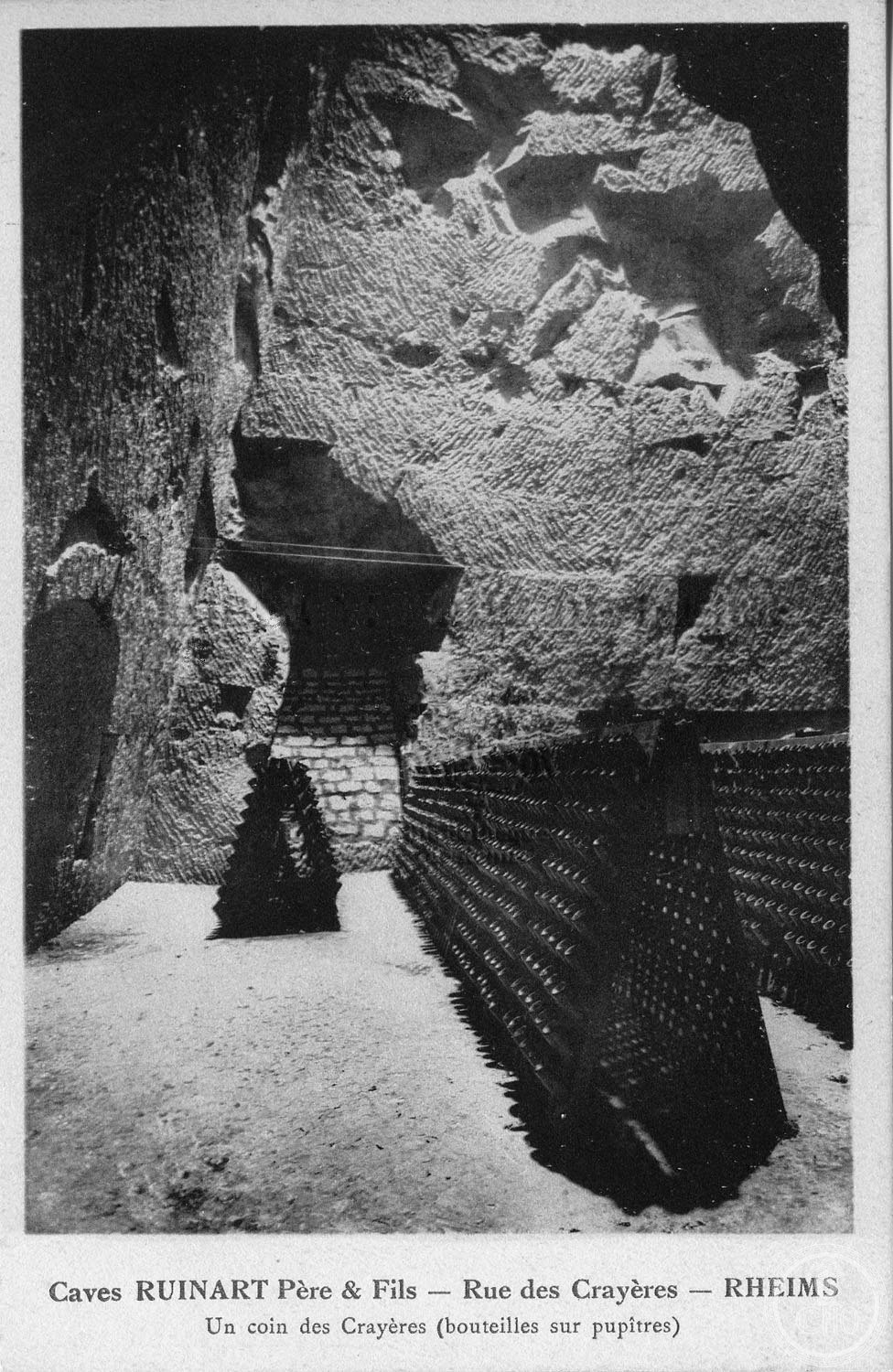
The oldest established champagne house in the world, Ruinart was founded in Reims in 1729 and built its reputation on extraordinary Gallo-Roman chalk galleries that descend 38 metres beneath the city — galleries that today carry UNESCO World Heritage status and remain the most dramatic underground wine cellars in Champagne.
At a glance
Maison Ruinart occupies a prestigious but deliberately understated position in the champagne world: it is the oldest house, yet deliberately maintains limited production and restricted visiting access to preserve an atmosphere of exclusivity. Located in Reims, the cathedral city that served as the coronation seat of French kings, Ruinart’s cellars are carved from the same soft Cretaceous chalk that underlies the entire Champagne region. The house specialises in blanc de blancs champagnes made primarily from Chardonnay grapes, and its cuvées are exported to over 100 countries. Ruinart became part of the LVMH group in 1963, remaining independently managed within the conglomerate.
History
The house was founded on 1 September 1729 when Nicolas Ruinart, a cloth merchant from Reims, registered his champagne business — making it the first to be commercially established in the region. Nicolas had learned the potential of champagne wine from his uncle, Dom Thierry Ruinart, a Benedictine monk who was himself a friend and contemporary of Dom Pérignon. The family’s merchant connections across northern Europe gave the new house immediate access to aristocratic markets in England, the Netherlands, and the German principalities. The Gallo-Roman chalk galleries, originally quarried for building stone during the Roman occupation of Gaul, were acquired by the Ruinart family in the 18th century and gradually converted into the ideal environment for ageing champagne — cool, stable, and naturally humid.
What you see
The defining experience at Ruinart is the crayères: eight kilometres of chalk tunnels on three underground levels, descending to 38 metres below the surface of Reims. These galleries — some with cathedral-like vaulted ceilings reaching 20 metres high — maintain a constant temperature of 11°C throughout the year, regardless of surface conditions. The chalk walls are encrusted with centuries of mineral deposits and the slow accumulation of humidity, giving them an otherworldly appearance. Bottles of champagne in various stages of production line the galleries, and the combination of natural light filtering through ventilation shafts and the scale of the vaulted spaces creates one of the most memorable underground environments in Europe. The surface maison buildings date from the 18th and 19th centuries.
Cultural significance
Ruinart’s crayères are among the most significant surviving examples of Gallo-Roman chalk quarrying in France, repurposed over centuries into a living industrial heritage site. Unlike the wider Avenue de Champagne in Épernay, the Ruinart cellars retain an intimate and archaeological quality — the rough-hewn walls, irregular chambers, and hand-cut passageways speak directly to their Roman origins. The house has also become a notable patron of contemporary art: its annual commission programme, launched in the 1990s, invites leading artists to engage with the themes of champagne, nature, and heritage, creating a body of work that is displayed in the galleries and at international art fairs. UNESCO inscribed the Ruinart crayères as part of the Champagne World Heritage Site in 2015.
Key facts
- Founded: 1 September 1729 — the world’s oldest established champagne house
- Founder: Nicolas Ruinart, cloth merchant and nephew of Dom Thierry Ruinart
- Cellars: 8 km of Gallo-Roman chalk galleries on three levels
- Depth: 38 metres below the surface of Reims
- Temperature: constant 11°C year-round
- UNESCO: inscribed 2015 as part of Champagne Hillsides, Houses and Cellars
- Group: part of LVMH since 1963
- Access: by appointment only — limited visiting capacity
Practical information
Maison Ruinart operates on an appointment-only basis, with visits strictly limited to preserve the integrity of the ageing environment and the exclusivity of the experience. Guided tours take visitors through the Gallo-Roman crayères, cover the history of the house and its art commission programme, and conclude with a tasting of two or three cuvées. Tours are available in French and English, and must be booked well in advance — particularly during spring and autumn. The house does not operate a walk-in visitor centre. For those unable to visit, some champagne bars in Reims stock Ruinart by the glass, allowing a tasting experience without cellar access. The maison does not publish a public price list for cellar experiences; rates are available on request.
Getting there
Reims is located approximately 145 kilometres northeast of Paris and is one of the most accessible regional cities in France. Direct TGV services from Paris Gare de l’Est reach Reims in under 45 minutes, making it comfortably accessible as a day trip from the capital. By car, the A4 motorway runs directly from Paris to Reims; the drive takes around 1 hour 30 minutes. Maison Ruinart is situated in the northern part of Reims, approximately 20 minutes on foot from the city centre and the Gothic cathedral. Taxis and ride-share services are available from the station. Reims also serves as the natural gateway to the wider Montagne de Reims wine route, where Pinot Noir and Pinot Meunier vineyards extend across a wooded plateau.
Sources & resources
- Maison Ruinart official website: ruinart.com
- UNESCO World Heritage Centre — Champagne Hillsides, Houses and Cellars: whc.unesco.org
- Office de Tourisme de Reims — champagne houses guide: reims-tourisme.com
Find it on the map
See this place and what’s around it →📷 Become a Cultural Heritage Online photographer
Share your photos of places: they stay published under your name as the author. The more they're seen, the more you get noticed — and soon a contest will reward the most appreciated photos.
Log in or sign up free to add a photoIs this page about you?
This page is read by travellers and heritage enthusiasts who find it on Google. Tell us how you are connected to this place and we will take it from there.