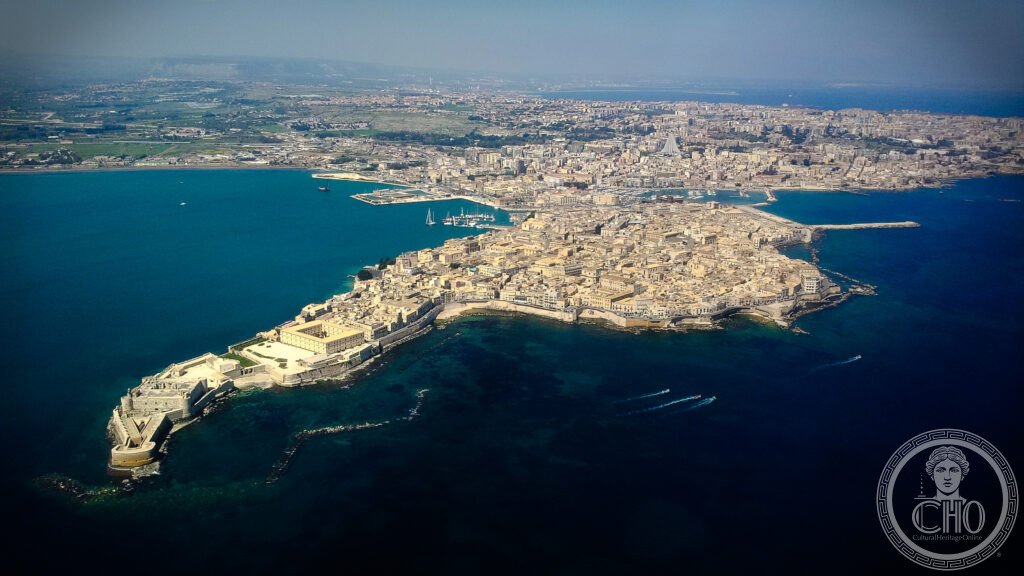
Siracusa e le Rocce Preistoriche della Pannalica
The most continuously inhabited place in Sicily and the most architecturally layered city in the Mediterranean — Siracusa (UNESCO WHS 2005 serial) contains the only cathedral in the world built directly inside a 5th-century BCE Greek Doric temple (you can see the original limestone columns inside the nave), the world’s largest system of early Christian catacombs after Rome, and the bronze-age rock-cut necropolis of Pantalica (3,000 tomb-chambers carved into the gorge walls; inhabited from 1270 BCE to the Byzantine period).
At a glance
Siracusa (the most precisely Siracusa serial Syracuse Sicilia Italy 37.0597 N 15.2935 E UNESCO WHS 2005 reference 1200 2 components: 1) Siracusa historic centre (Ortigia island; the UNESCO WHS component is specifically the island of Ortigia and the adjacent Neapolis archaeological park with the Greek theatre); 2) Necropoli Rupestre di Pantalica (the prehistoric rock-cut necropolis 35km inland from Siracusa; Bronze Age 1270–730 BCE and Byzantine reoccupation 5th–10th century CE); the UNESCO OUV for the serial nomination is the demonstration of 4,000 years of continuous settlement from Bronze Age (Pantalica) through Greek (Ortigia; 734 BCE foundation) through Roman, Byzantine, Arab, Norman, and Baroque periods on the same sites Syracuse at its peak (5th–4th century BCE): the second largest city in the Greek world after Athens; population estimated at 250,000 (larger than Athens); the empire of Dionysius I (405–367 BCE) extended from Sicily to southern Italy to Albania; the city fortifications built by Dionysius I (the Euryalus fortress; the longest Greek city wall surviving in the world at 27km) were the most sophisticated pre-Roman defensive system in Europe).
Key facts
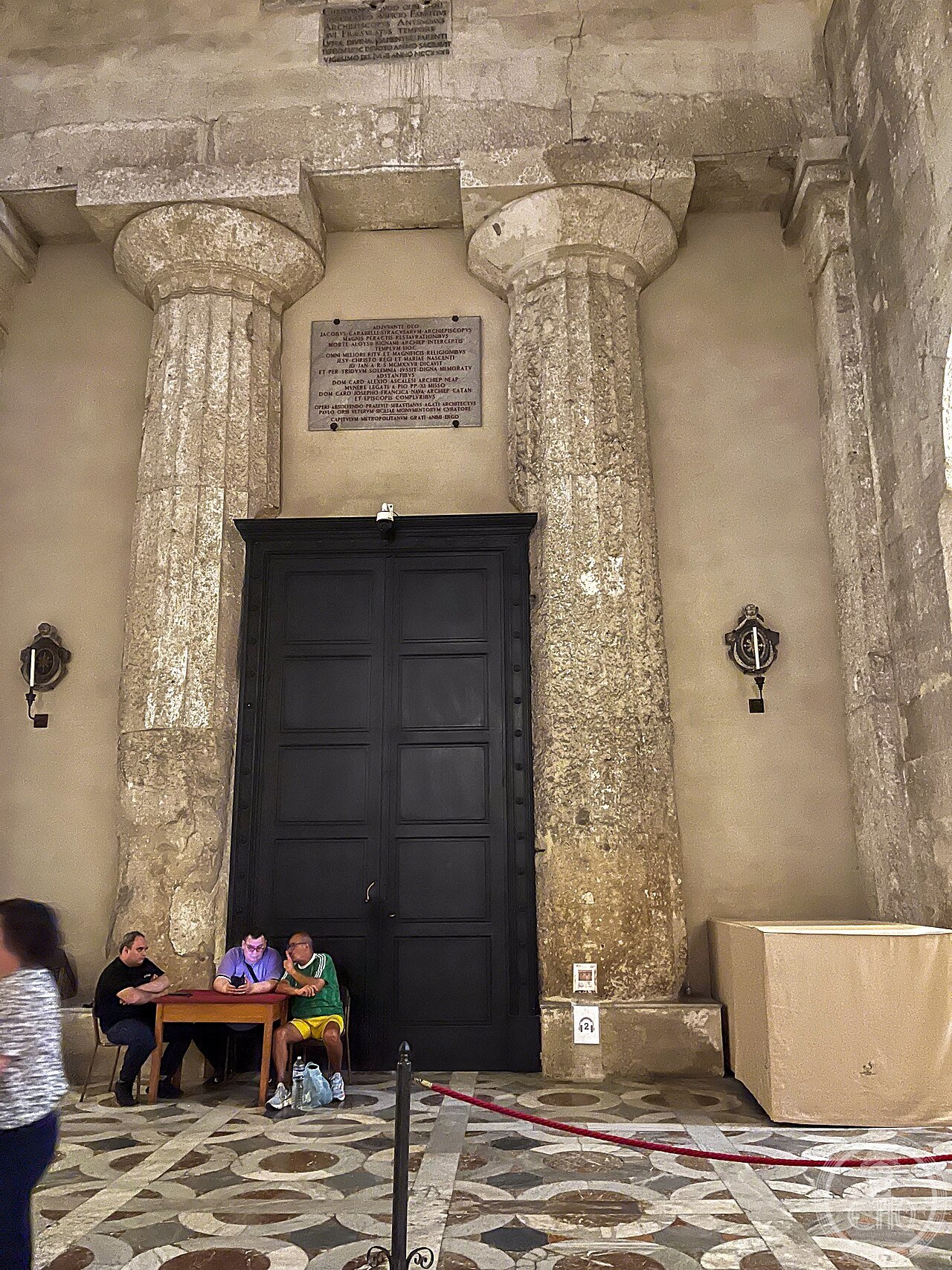
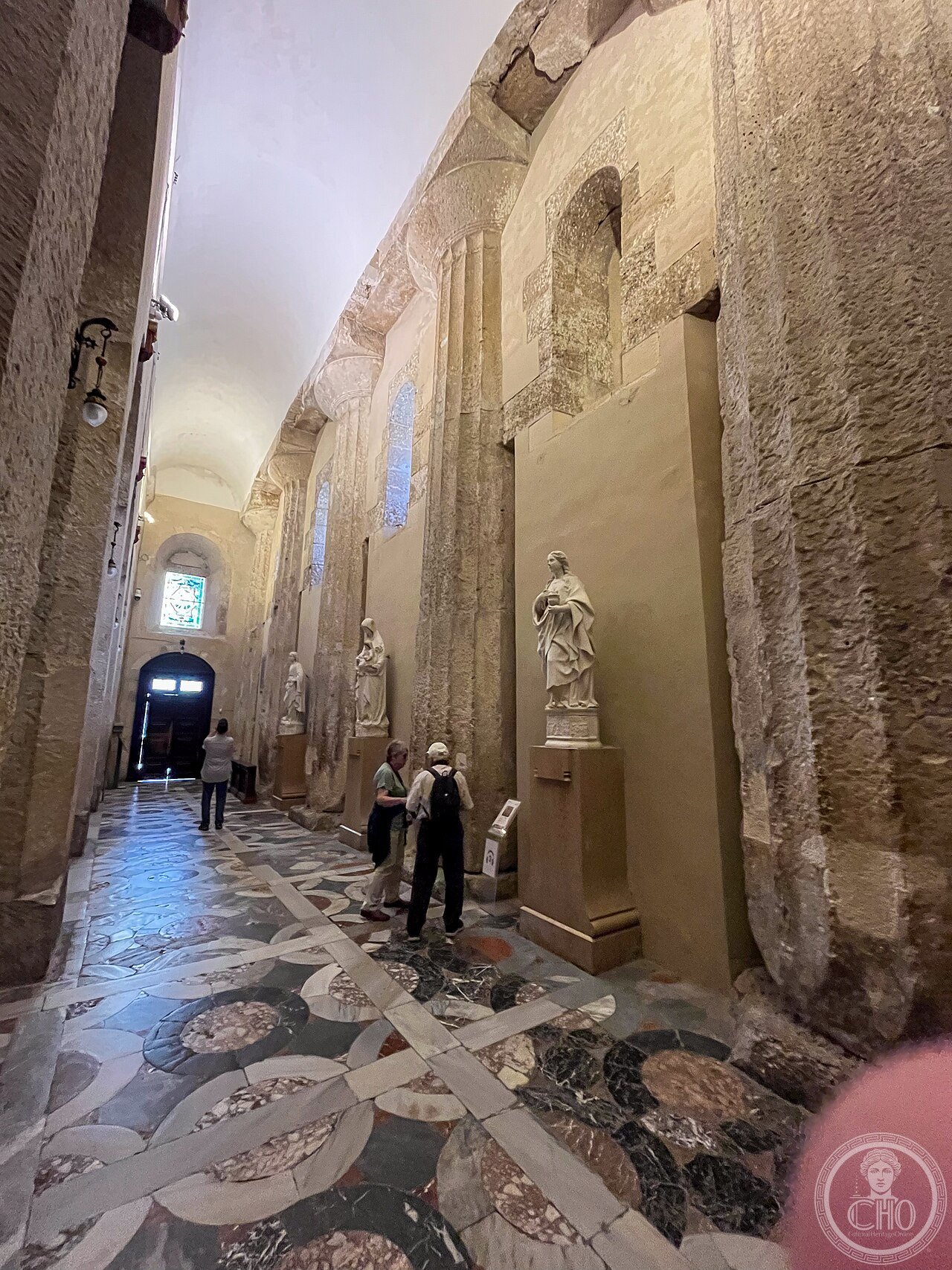
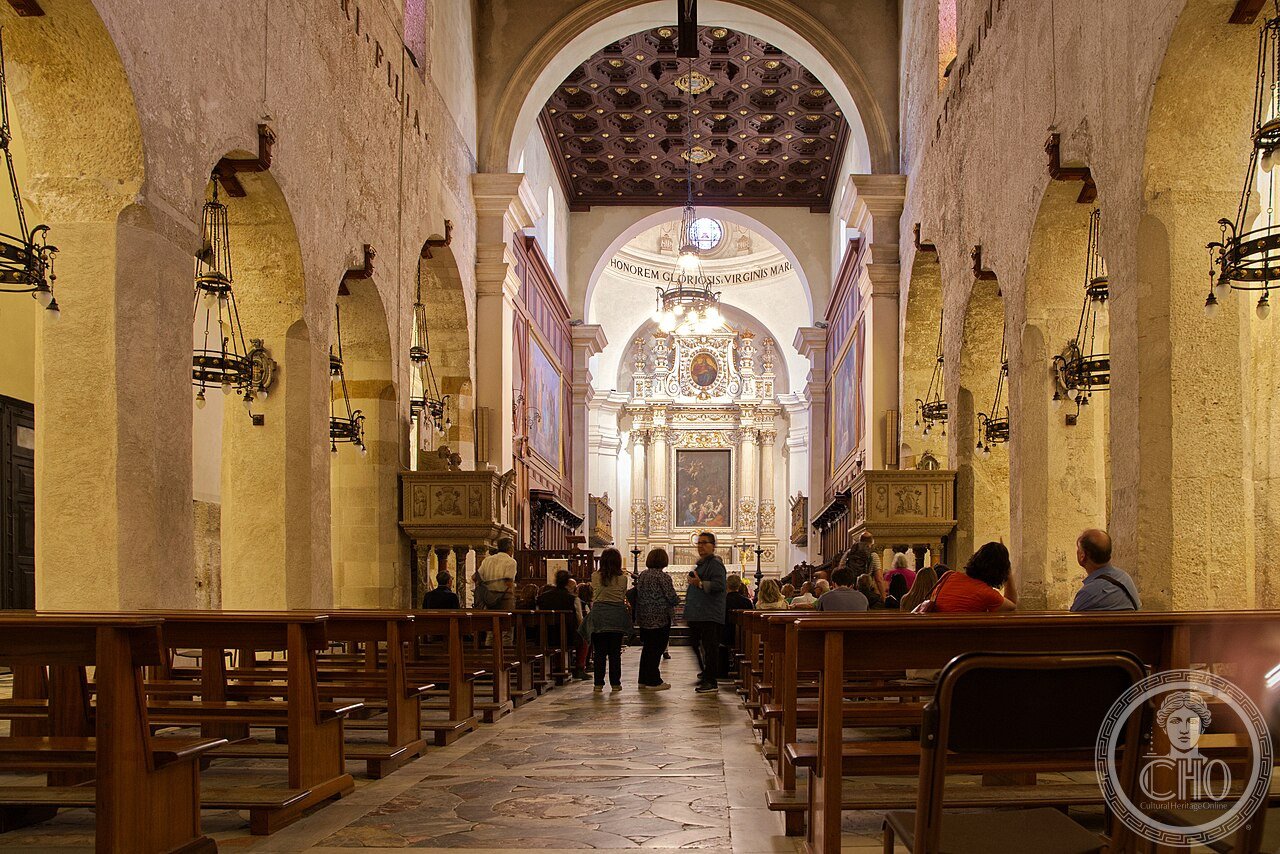
- The Cathedral of Siracusa and the Greek columns (why it is the most explicit physical evidence of pagan-to-Christian conversion in any Italian church): the Temple of Athena at Siracusa was built c.480 BCE (the specific date traditionally associated with the Battle of Himera, 480 BCE, in which the Sicilian Greeks defeated the Carthaginian invasion; the temple was built as a victory monument — the same year Hieron I of Syracuse and Gelon of Akragas defeated Carthage, the Athenians and Spartans defeated Persia at Salamis and Plataea respectively); the temple dimensions: 58m × 23m; 14 Doric columns on the long sides, 6 on the short sides; the columns are limestone from the local quarries with stucco facing (the stucco was the surface that received polychrome decoration — the columns were originally red and gold, not bare limestone as they appear today); 7th century CE: the Bishop Zosimus of Siracusa converted the temple to a Christian church; the specific conversion operation: the intercolumnar spaces (the spaces between the columns) were filled with masonry; the interior was divided into nave and aisles by piercing the existing cella walls; 5 of the original 6 walls of the cella survive embedded in the Cathedral; the most important interior view: entering the Cathedral nave you see the south wall — a row of 10 original Greek limestone Doric columns integrated into the wall; the shafts are 1.8m in diameter at the base and 8.7m tall; they are visible because the fill masonry between the columns stops at the colonnade level, leaving the columns exposed as the primary structural element of the south nave wall; this is the clearest visual statement of architectural conversion in any Christian building in Italy — the pagan religious form (the colonnade of the goddess’s temple) became the structural frame of the Christian church
- GPS Ortigia: 37.0597° N, 15.2935° E
History
From Corinthian colony to Greek empire to Arab medina to Baroque island (the most precisely Siracusa serial 8th BCE century: Syracuse founded 734 BCE by Corinthian colonists led by Archias of Corinth (the specific foundation act: Archias landed on the island of Ortigia — the island is about 1km long and 600m wide, connected to the Sicilian mainland at the north end — and established the first settlement; the island was chosen because it was defensible and had a freshwater spring (the Fountain of Arethusa; the only natural freshwater spring on the sea in the Mediterranean; the spring is still flowing today on the southwest tip of Ortigia; the myth: Arethusa was a nymph pursued by the river god Alpheus from Greece who dived into the sea and resurfaced in Sicily; the freshwater spring is the literal transformation of the nymph into a fountain) 480 BCE the Battle of Himera: the Syracusan general Gelon (c.540–478 BCE; tyrant of Syracuse) defeated the Carthaginian invasion led by Hamilcar (who allegedly burned himself alive when he saw the battle was lost); the simultaneous victories at Himera, Salamis, and Plataea are called the “Year of the Three Victories” in ancient scholarship; the Temple of Athena was built with the spoils 415 BCE the Athenian Expedition against Syracuse (the Sicilian Expedition; the largest Athenian military force ever assembled: 200 triremes, 5,000 hoplites, 30,000 sailors; the expedition was a total disaster for Athens; the Syracusan navy destroyed the Athenian fleet in the Grand Harbour of Syracuse; the Athenian survivors were imprisoned in the Latomie di Santa Venera (the stone quarries south of the Greek theatre; still visible as deep rock-cut caverns); most died of thirst and exposure; the Athenian general Nicias was executed; the defeat effectively ended Athenian imperial ambitions in the western Mediterranean; Thucydides Book VII-VIII is the primary source — the most detailed military account in ancient historiography 287 BCE Archimedes born in Syracuse (born Archimedes of Syracuse; died 212 BCE when Rome captured Syracuse; the mathematician, physicist, and engineer who invented the Archimedes screw (water lifting device still in use), the lever principle (“give me a fulcrum and I will move the earth”), the displacement principle (the Eureka moment in the bath), and the claw of Archimedes (a naval weapon that could capsize attacking Roman ships — the primary reason Syracuse resisted Roman siege for 2 years)) 212 BCE Rome captured Syracuse ending Greek-period sovereignty 535 CE Byzantine reconquest of Sicily from the Ostrogoths 7th–9th CE the Arab period: the Arab geographers described Siracusa as a prosperous city but significantly smaller than the Greek-period capital 1085 CE Norman conquest; the Normans preserved the Byzantine buildings (the Duomo of Siracusa was already a church; the Normans added the Norman facade) 1693 CE earthquake: the 11 January 1693 Val di Noto earthquake (the same event that destroyed and rebuilt the 8 Late Baroque towns) badly damaged Siracusa; the current Cathedral facade (Baroque; Andrea Palma; 1754 CE) was built after the earthquake 2005 CE UNESCO serial inscription reference 1200).
What you see
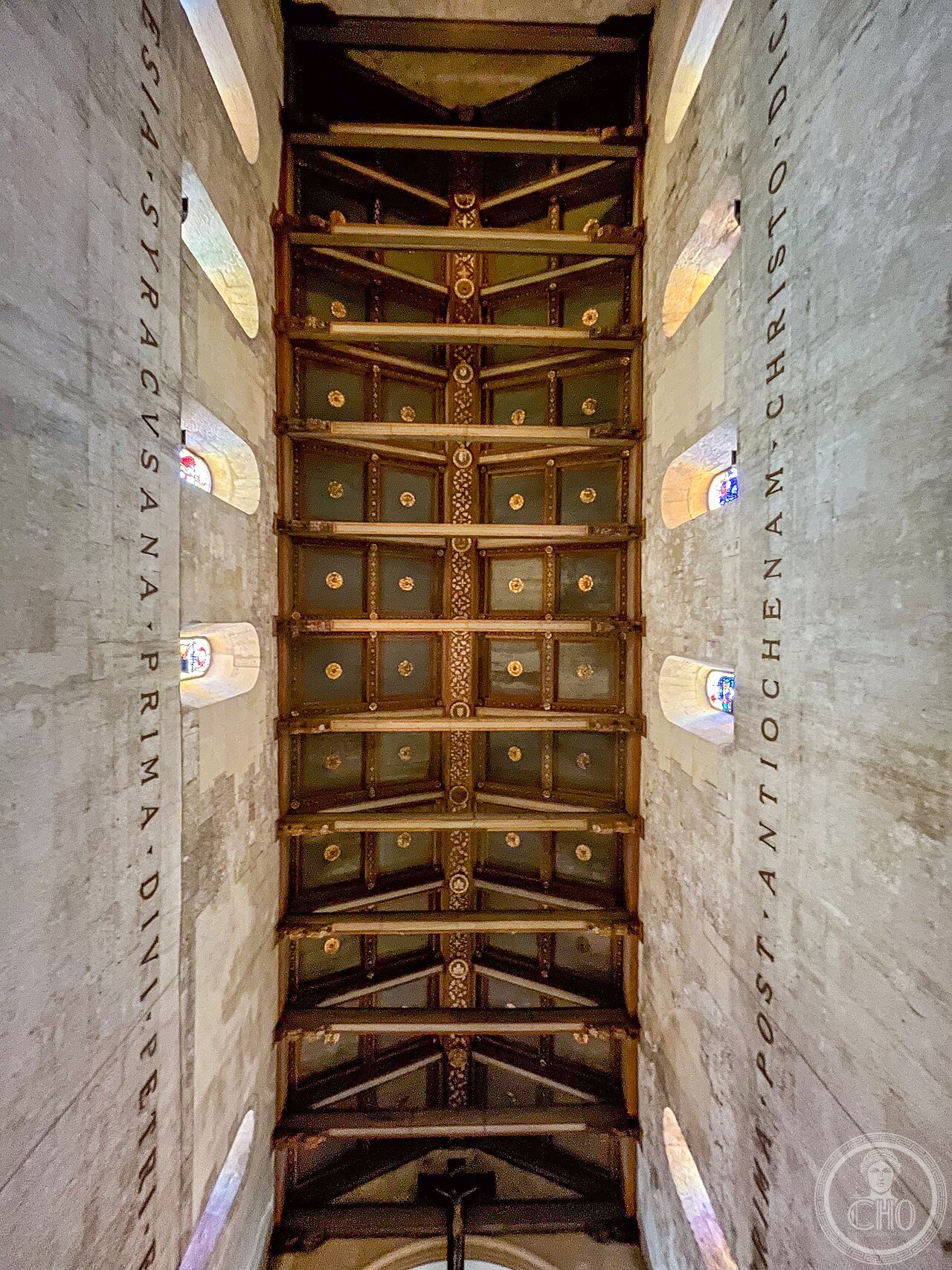
Piazza del Duomo, the Greek columns inside the Cathedral, the Fountain of Arethusa, the catacombs, and the Neapolis Greek Theatre (the most precisely Siracusa serial Ortigia walk (2–3 hours): enter Ortigia at the north end via the Ponte Umbertino (the 19th CE bridge from the mainland); immediately: the Piazza Archimede (with the 20th CE fountain of Diana; the centre of the medieval Arab street grid — the street plan of Ortigia preserved the Arab layout for 1,000 years); the Cathedral (10 min south; free entry 8 AM–7 PM; the most important interior sequence: the entrance → walk to the south nave → stop and look at the row of 10 Doric columns integrated into the south wall (the diameter of each column at the base is 1.8m; stand at the base of one and put your arms around it — not achievable; the scale reference that makes the Greek engineering visible at human scale)); the Piazza del Duomo (the long irregular medieval square; the most beautiful baroque urban space in Sicily; the Cathedral facade (1754 CE), the 17th CE Palazzo Beneventano del Bosco, and the Palazzo del Senato (1629 CE) compose three sides of the square — a rare case of baroque urban planning that preserved the medieval street pattern); the Fountain of Arethusa (5 min south of the Cathedral; the fresh water spring on the sea; surrounded by papyrus plants (Cyperus papyrus — the Egyptian writing-material plant; one of only 3 natural papyrus sites in Europe; the Siracusa papyrus was used in the Arab period for official documents; the Arab-period papyrus documents of Siracusa are the earliest surviving Arabic administrative documents in Sicily); the Greek Theatre and Latomie (Neapolis archaeological park; 2km from Ortigia; bus 2 or taxi; the Greek Theatre (470 BCE; 67m diameter — the second largest Greek theatre in Sicily after Segesta; in use 480 BCE–212 BCE; still used for performances in even years only, during May–June, as part of the classical theatre festival of INDA — Istituto Nazionale del Dramma Antico; tickets at indafondazione.org); the Ear of Dionysios (Orecchio di Dionisio; a 23m-deep artificial cave cut into the limestone cliff with perfect acoustic resonance; the name was given by Caravaggio who visited Siracusa in 1608 CE and said the shape resembled an ear); the San Giovanni catacombs (the second most extensive early Christian catacombs in Italy after Rome; 5 km of underground galleries from the 3rd–5th century CE; guided tours only at 9 AM, 10:30 AM, 12 PM; €8; the apse of the original basilica of San Giovanni (4th century CE; one of the first purpose-built churches in Sicily) is above ground); the Museo Archeologico Paolo Orsi (1 km from the Greek Theatre; the most important archaeological museum in Sicily; the Landolina Venus (c.100 BCE; a headless marble copy of the Aphrodite of Cnidus by Praxiteles; the most famous object in the museum); the Gorgon head from the Temple of Athena (the original Gorgon from the temple pediment; one of the best preserved archaic Greek temple pediment sculptures from Sicily)
Practical information
- Getting there and circuit: from Catania airport: Interbus direct to Siracusa (75 min; departs every 1–2 hours; check interbus.it); from Palermo: Flixbus or train via Catania (4h+); from Rome: flight to Catania + bus to Siracusa the most practical option; accommodation in Ortigia strongly recommended (staying on the island allows the key evening light on the Piazza del Duomo and the early morning walk before tourist groups arrive; the Piazza del Duomo at 7 AM is the most atmospheric 30 minutes in Siracusa); the Pantalica component (35 km inland; rental car essential; the Necropoli Rupestre di Pantalica is not accessible by public transport; the access is via a valley walk down the Anapo river gorge from the car park — 2.5 km walk one-way; the gorge trail passes Bronze Age tomb-chambers cut into the cliff walls at 1–15m height; some tombs accessible by scrambling; the key visit point: the Anaktoron (the “prince’s palace” building — a Bronze Age administrative building at the top of the plateau above the gorge; the oldest surviving stone administrative building in Sicily); the best time for Pantalica: spring or autumn (the summer gorge is very hot and the path is exposed; April–May or September–October ideal)); the INDA classical theatre festival (even years only: 2024, 2026, 2028; performances in ancient Greek and Latin; the unique experience of watching a Sophocles tragedy in the original theatre where it was first performed 2,500 years earlier; tickets from €25 at indafondazione.org; book in advance for June performances)
Getting there
From Catania airport: Interbus direct 75 min (interbus.it). Stay in Ortigia. Greek Theatre performances (INDA; even years May-June; indafondazione.org). San Giovanni catacombs €8 guided only (9/10:30/12). Pantalica 35 km (rental car; 2.5 km gorge walk). GPS Ortigia: 37.0597, 15.2935.
Nearby
- Val di Noto Late Baroque — 30–60 km west (UNESCO WHS 2002; the 8 Late Baroque towns rebuilt after the 1693 earthquake; Noto Cathedral (1703–1776 CE; Rosario Gagliardi; the golden Iblean limestone facade at golden hour); Ragusa Ibla and San Giorgio (the Gagliardi-designed church on the hilltop; the most atmospheric of the Val di Noto towns); Modica cold-process chocolate since 1880 CE (Bonajuto); Scicli (Commissario Montalbano filming locations))
- Taormina — 80 km north (the Greek theatre 109m diameter with Etna visible from the stage; the most photographed theatre view in Sicily; Opera Taormina summer concerts at Taormina Arte; the Villa Comunale gardens (1902 CE; the English widow Florence Trevelyan who created the garden on a cliff above the sea; the garden is the best place in Taormina to see both the theatre and Etna simultaneously))
Gallery


Sources
- Wikipedia, Syracuse, Sicily; Ortygia; Temple of Athena, Syracuse; Pantalica; Archimedes; Sicilian Expedition, accessed June 2026
- UNESCO, Syracuse and the Rocky Necropolis of Pantalica, WHS reference 1200, inscribed 2005
- Thucydides. History of the Peloponnesian War, Books VI–VII (the Sicilian Expedition)
Find it on the map
See this place and what’s around it →📷 Diventa un fotografo di Cultural Heritage Online
Condividi le tue foto dei luoghi: restano pubblicate con la tua firma come autore. Più vengono viste, più ti fai conoscere — e presto un concorso premierà le foto più apprezzate.
Accedi o registrati gratis per aggiungere una foto