
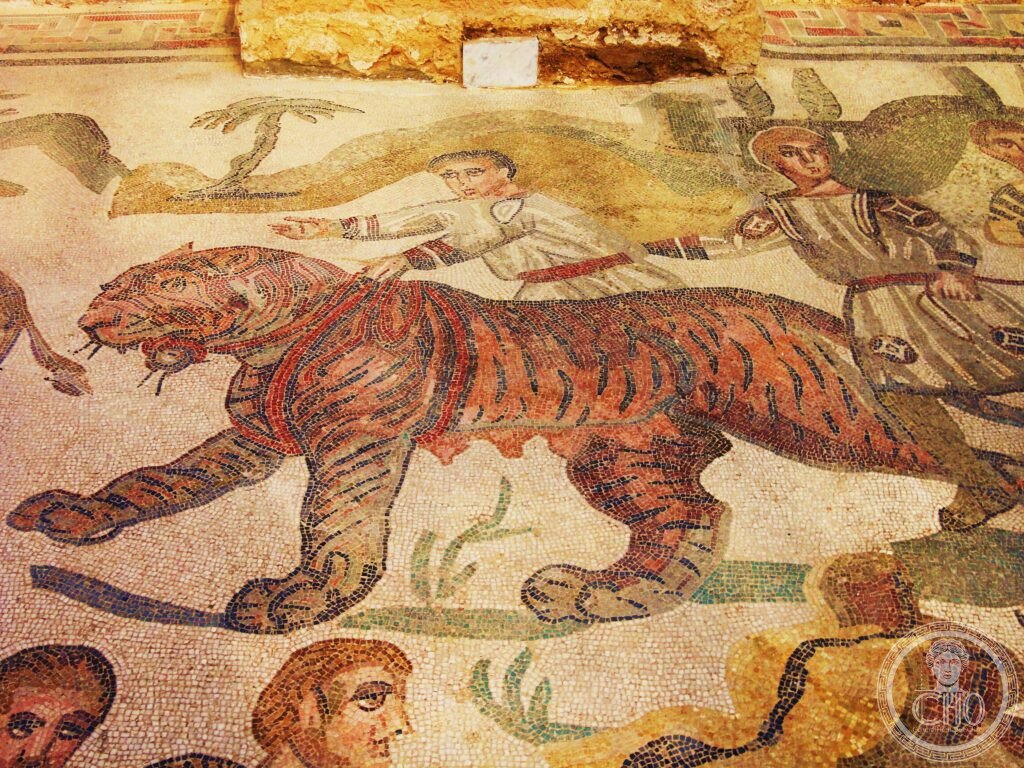
Buried under mud for eight centuries, this late Roman villa near Piazza Armerina preserves the largest and most complete Roman mosaic floor known to survive. Its corridors and reception rooms still carry scenes of African animal hunts, chariot racing and female athletes, laid by mosaicists whose style points to North African workshops rather than local ones.
At a glance
The Villa Romana del Casale stands in the interior of Sicily, near Piazza Armerina in the province of Enna. Built in the fourth century CE, it preserves roughly 3,500 square metres of figural mosaic across its surviving rooms, out of an estimated 4,500 square metres originally laid. Who commissioned it remains debated: the scale and quality of the building, and the African hunting scenes in its mosaics, have led some scholars to link it to Maximianus Herculius, co-emperor of Rome, though no inscription names an owner.
A landslide in the twelfth century buried the villa under about a metre of clay and earth, which is precisely what kept its floors intact until systematic excavation uncovered them in the mid-twentieth century.
Key facts
- Date of construction: c.310–340 CE, replacing an earlier, more modest villa on the same site.
- Surviving mosaic area: approximately 3,500 square metres, described as the largest intact Roman mosaic programme in existence.
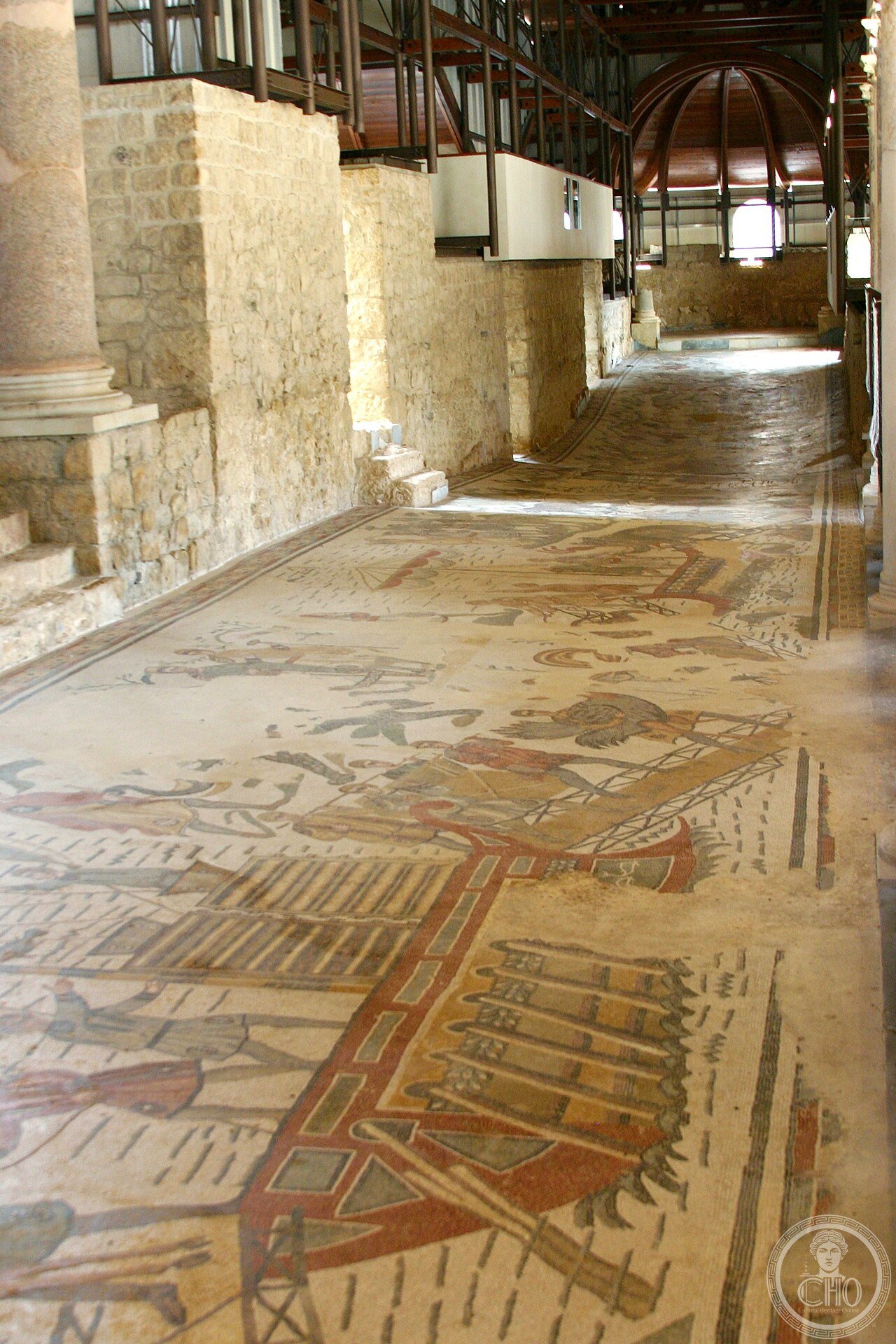
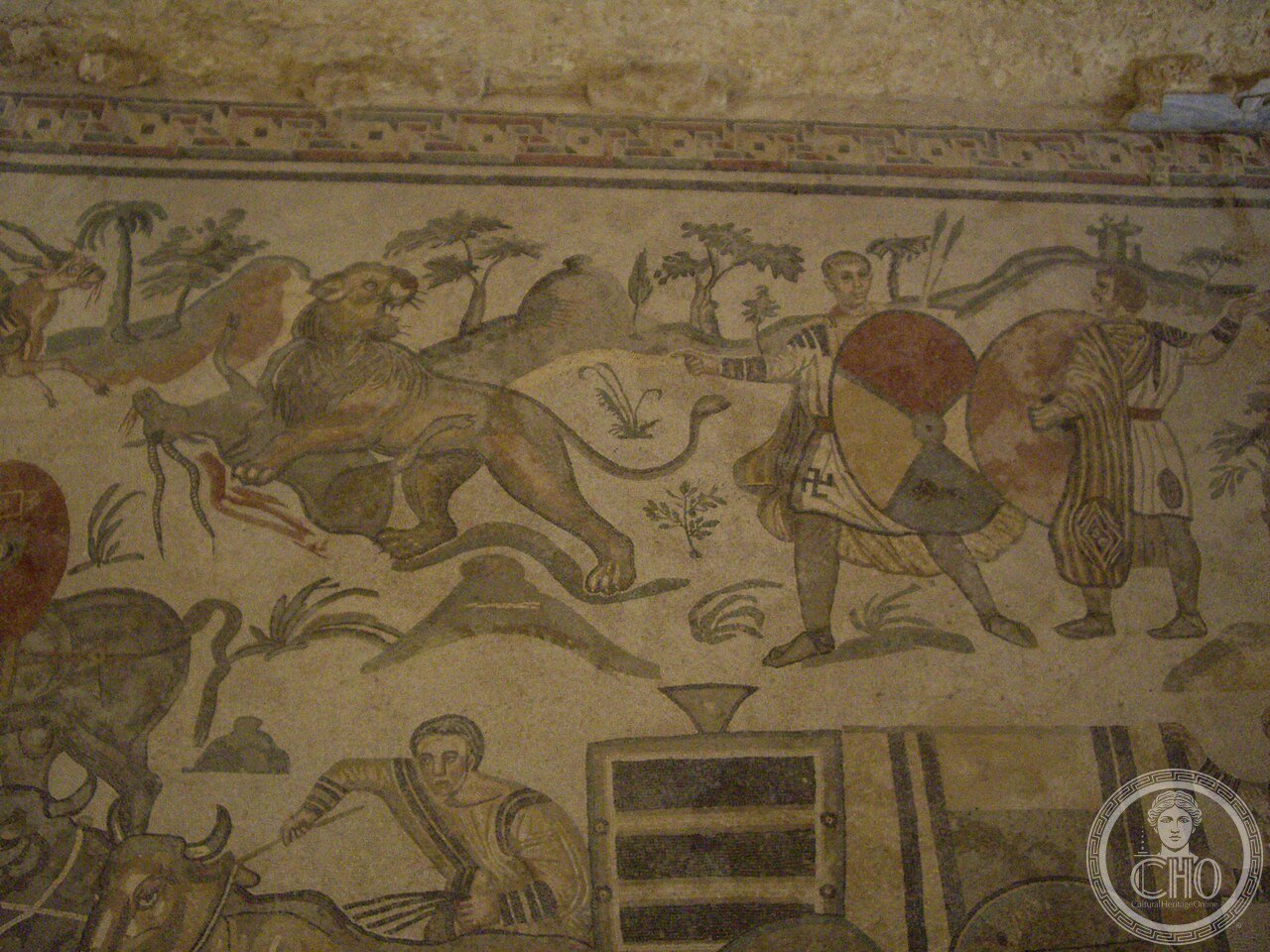
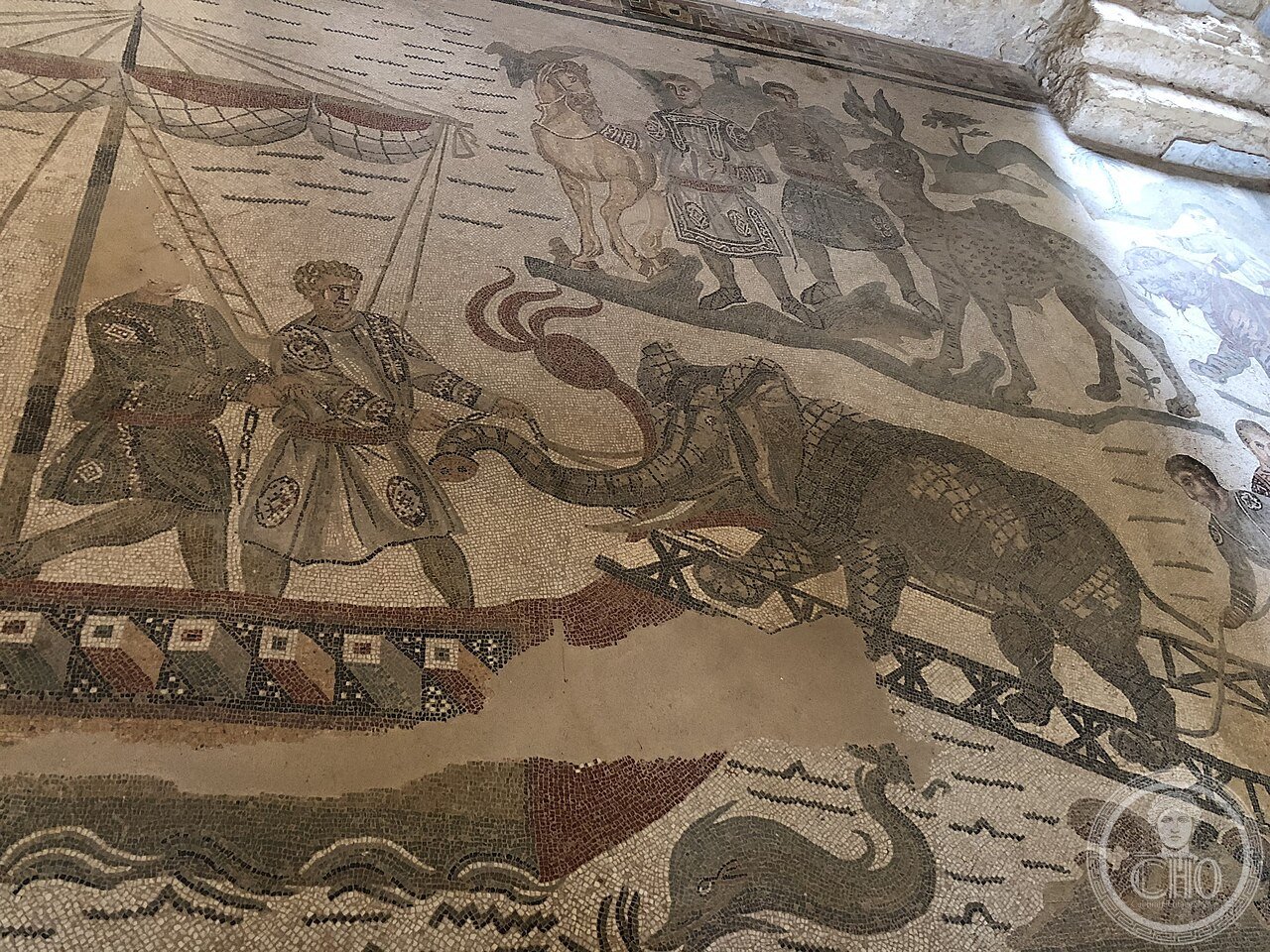
- Great Hunt corridor: a continuous 60-metre mosaic narrative showing the capture and transport of African and Middle Eastern animals for the Roman arena.
- Room of the Ten Maidens: known popularly as the Bikini Girls mosaic, showing ten women in athletic dress performing five different sporting activities, among the earliest known depictions of female athletes.
- Heritage status: inscribed on the UNESCO World Heritage List in 1997, reference 832.
History
The earliest trace of settlement on the site is a modest second-century rural villa, known only from pottery and tile fragments. This was demolished and replaced, around 310 to 340 CE, by the much larger complex visible today, whose scale, including a peristyle, private baths, a long connecting corridor and the Great Hunt gallery, points to a patron of considerable wealth.
The mosaics themselves are stylistically close to workshops from Carthage in North Africa, with the closest surviving parallels held in the Bardo National Museum in Tunis, suggesting the mosaicists were brought over from Africa rather than drawn from local Sicilian craftsmen.
As the Western Roman Empire declined, Sicily grew increasingly isolated and the villa may have fallen out of use by the fifth century. The Arab geographer Ibn Hawqal, writing around 970 CE after the Arab conquest of Sicily, mentions a large ancient building in the island’s interior that may refer to the site. An earthquake or flood in the Norman period, around 1160 CE, brought down the hillside above the villa and buried it in mud and clay, preserving the mosaics beneath. The site was first investigated by Saverio Cavallari in the 1880s, excavated more systematically by Paolo Orsi between 1929 and 1940, and finally uncovered and consolidated by Gino Vinicio Gentili between 1950 and 1960. Protective roof structures were added in the 1970s, and the villa was inscribed on the UNESCO World Heritage List in 1997.
What you see
Visitors move through the villa on raised walkways built in the 1970s to protect the floors, which places viewers somewhat above and to the side of the mosaics rather than looking directly down at them as originally intended. The route begins at the peristyle, a large central courtyard whose black-and-white geometric floor is the only purely non-figural mosaic in the villa. Off it lie the private baths, including the small circular Room of Fishing with its mosaic of putti fishing from boats among sea creatures.
The Great Hunt corridor runs sixty metres, its single continuous scene moving from African capture, with elephants, rhinoceroses and lions being netted and crated, to Middle Eastern and Indian scenes including tigers and a phoenix. A central figure in an officer’s cloak is generally read as the villa’s patron. Nearby is the Room of the Ten Maidens, its short walls carrying the ten athletes in strophium and subligaculum performing weight-lifting, discus, running, a ball game and the crowning of a winner. The largest figural mosaic, forty metres long, depicts a chariot race at the Circus Maximus with its four racing factions, starting gates, central barrier and turning posts. The formal dining room, or triclinium, closes the circuit with a floor mosaic of the Labours of Hercules and an apse showing the battle between the Olympian gods and the Giants.
Practical information
- Visiting time: a full circuit takes at least two hours, longer for photography.
- Opening times and admission: these change seasonally; check the official channels before travelling.
- Access: raised walkways protect the mosaics from foot traffic but mean floors are viewed from a height rather than at floor level.
Getting there
Piazza Armerina lies inland in the province of Enna. There is no direct train service; travellers coming from Palermo can take a coach service, such as Interbus, or hire a car, while Agrigento offers a similar road connection. Current timetables and journey details are best checked directly with the coach operator or a car hire provider before travelling.
Nearby
- Piazza Armerina — the town adjoining the villa site, in the province of Enna.
- Enna — the provincial capital, in the same interior region of Sicily.
- Palermo — reachable by coach or car, a common starting point for visits.
- Agrigento — the other main gateway city mentioned for travellers reaching the site by road.
Sources
- UNESCO World Heritage List
- Ibn Hawqal, geographical account (c.970 CE)
- Bardo National Museum, Tunis
Gallery
Find it on the map
See this place and what’s around it →📷 Become a Cultural Heritage Online photographer
Share your photos of places: they stay published under your name as the author. The more they're seen, the more you get noticed — and soon a contest will reward the most appreciated photos.
Log in or sign up free to add a photo