
Nine buildings across three Sicilian cities show what happened when Norman kings let Islamic craftsmen, Byzantine mosaicists and local masons work side by side. The result, most visible in the Cappella Palatina, is an architectural language found nowhere else in medieval Europe.
At a glance
The serial UNESCO site groups seven monuments in Palermo with one cathedral each in Cefalù and Monreale. All were built or decorated during the twelfth-century Norman Kingdom of Sicily, when Arabic, Greek, Latin and Norman French were all used at court and Muslim, Christian and Jewish subjects lived under the same administration.
The inscription, granted in 2015, recognises the buildings as a single testimony to this cultural exchange rather than as separate monuments.
Key facts
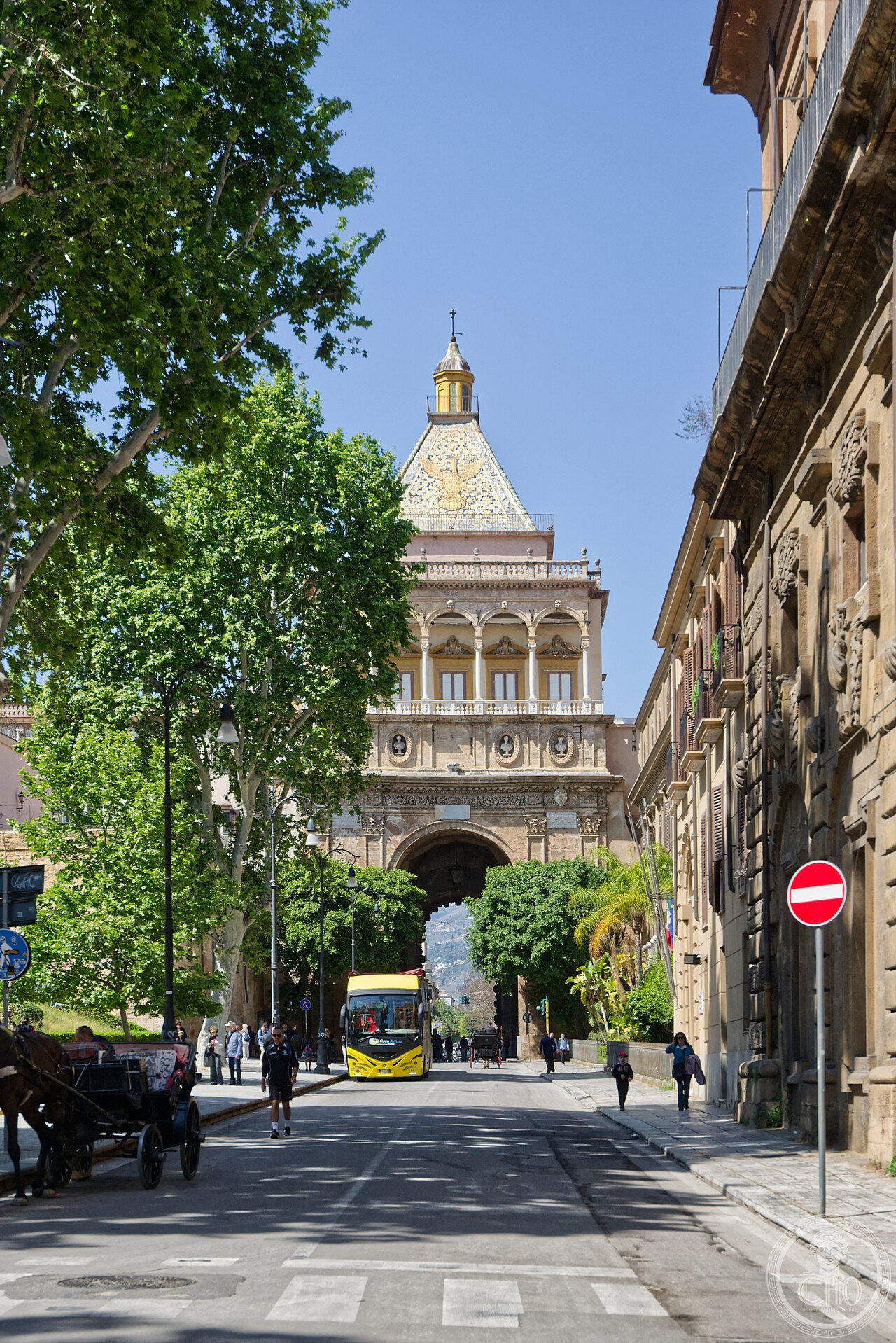
- Sites included: nine monuments in three cities — seven in Palermo (Palazzo dei Normanni with the Cappella Palatina, La Zisa, La Cuba, Palermo Cathedral, San Giovanni degli Eremiti, San Cataldo and La Martorana), plus Cefalù Cathedral and Monreale Cathedral
- Period: built or decorated under the Norman Hauteville dynasty, roughly 1072 to 1194
- UNESCO status: inscribed in 2015 under criteria (i), (ii) and (vi), as a serial World Heritage Site
- Cappella Palatina: consecrated in 1143, roughly 33 by 13 metres, with an interior height of about 17 metres
- Languages of the Norman court: Arabic, Greek, Latin and Norman French were all used administratively
History
Before the Normans arrived, Palermo had been the capital of the Aghlabid Emirate since 827, a major centre of trade and learning known in Arabic as Balarm, with several hundred mosques recorded in the city. Palermo Cathedral now stands on the site of the city’s principal Friday mosque, and the domes of San Giovanni degli Eremiti are thought to preserve elements of an earlier Arab-period building.
Robert Guiscard’s Norman forces took Palermo in 1072, and his nephew Roger I began consolidating Norman rule without expelling the Arab population or dismantling its institutions: Arabic remained an official language, and Arab administrators and craftsmen continued to serve the new rulers. Roger II, crowned the first king of Sicily in 1130, commissioned the Cappella Palatina, began La Zisa, and built San Giovanni degli Eremiti and La Martorana. The geographer Muhammad al-Idrisi worked at his court and dedicated his world map to him. William I completed La Zisa, and William II built Monreale Cathedral between 1174 and 1182, while Cefalù Cathedral was finished in 1267.
After the Hohenstaufen succession in 1194, the cultural mixing continued under Frederick II, whose Palermo court hosted Fibonacci and the Sicilian School of poetry, later cited by Dante as the origin of Italian literary language. The Sicilian Vespers uprising of 1282 effectively ended this period of intense cultural production. The nine monuments were inscribed together on the UNESCO World Heritage List in 2015.
What you see
The exterior of Palermo Cathedral shows blind arcades with interlaced pointed arches and diamond-patterned stonework, some registers still carrying Kufic inscriptions taken from earlier Islamic buildings and set into the Christian façade.
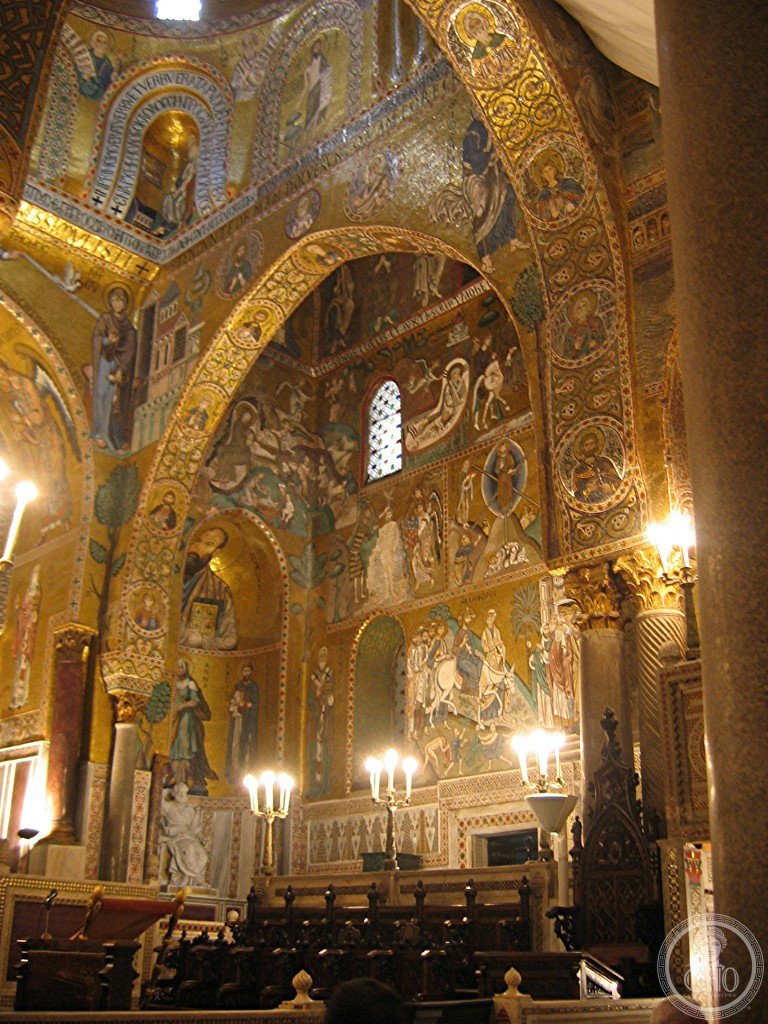
Inside the Palazzo dei Normanni, the Cappella Palatina brings together three traditions in one room: a wooden muqarnas ceiling composed of thousands of small painted cells showing court scenes, music and hunting in an Egyptian pictorial style, Byzantine gold mosaics of Christ Pantocrator and the apostles on the upper walls and apse, and a marble cosmati floor in the same technique used at the Lateran Basilica in Rome, all held within a Norman Romanesque stone structure.
At La Zisa, the ground-floor Sala della Fontana has a muqarnas hood over a fountain designed to cool the room, with an Arabic inscription naming its builders; other galleries display Islamic-period bronze basins, ivories and silks from Norman Sicily. San Giovanni degli Eremiti is recognisable from a distance by its small red-tiled domes, set among palm trees, and stands on the site of an earlier Arab-period building.
Practical information
- Access: the royal apartments within the Palazzo dei Normanni are used by the Sicilian regional government and are not always open to visitors; check the official visitor information before travelling
- Timing: allow time to look at the Cappella Palatina ceiling, walls and floor in sequence, and consider bringing binoculars for the ceiling detail
- Tickets and hours: these vary by monument and season, so consult the official channels for each site rather than relying on printed figures
Getting there
The Palermo monuments are spread across the historic centre, with the Palazzo dei Normanni on Piazza del Parlamento, La Zisa on Piazza Guglielmo II and San Giovanni degli Eremiti on Via dei Benedettini. Cefalù Cathedral and Monreale Cathedral lie outside Palermo, in their own towns, and are best reached as separate excursions.
Nearby
- La Martorana and San Cataldo — both in central Palermo, part of the same serial UNESCO site
- La Cuba — another Norman pleasure palace in Palermo, included in the same inscription
- Cefalù Cathedral — coastal town of Cefalù, built under William II
- Monreale Cathedral — hill town above Palermo, also built under William II between 1174 and 1182
Sources
- UNESCO World Heritage List
Gallery
Find it on the map
See this place and what’s around it →📷 Become a Cultural Heritage Online photographer
Share your photos of places: they stay published under your name as the author. The more they're seen, the more you get noticed — and soon a contest will reward the most appreciated photos.
Log in or sign up free to add a photoIs this page about you?
This page is read by travellers and heritage enthusiasts who find it on Google. Tell us how you are connected to this place and we will take it from there.