
Sighișoara

Sighișoara Transylvania Romania medieval Saxon citadel Clock Tower Vlad Impaler birthplace UNESCO
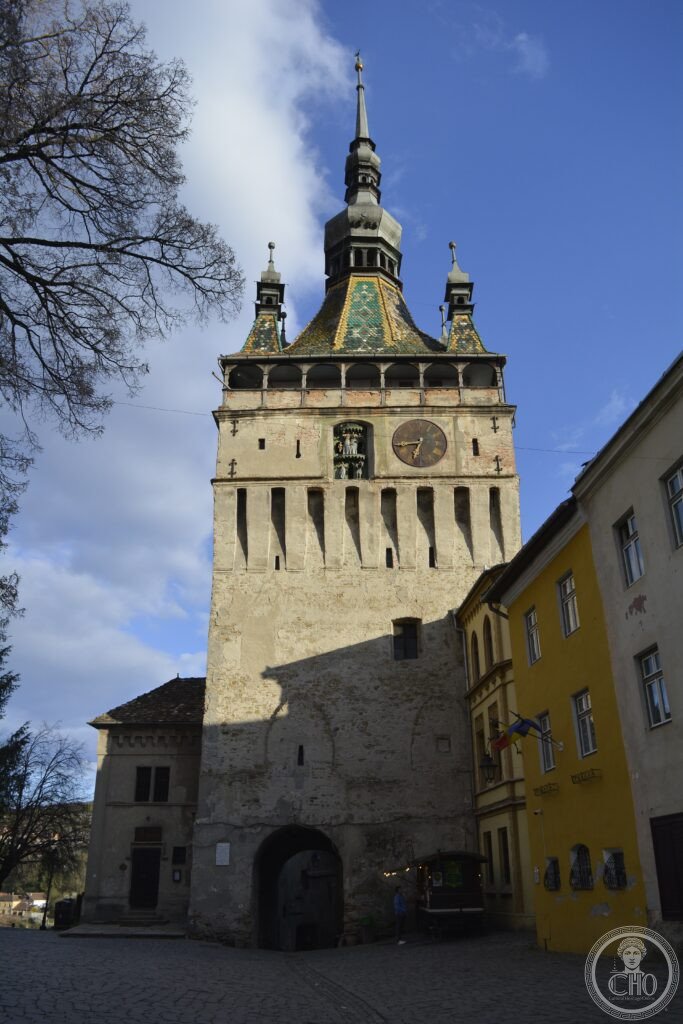
The medieval citadel of Sighișoara (Schäßburg in German; Segesvár in Hungarian; founded by Transylvanian Saxons invited by Hungarian King Géza II ca. 1150 CE; the Clock Tower (Turnul cu Ceas; built 14th century CE, clock mechanism added 1648 CE) and the colour-washed burghers’ houses of the upper citadel; 9 of the original 14 guild towers survive; the citadel is the most intact medieval Saxon fortified town in Transylvania), Sighișoara, Mureș County, Transylvania, Romania. UNESCO World Heritage Site 1999. Photo via Wikimedia Commons.
Mureș County, Transylvania, Romania · Founded ca. 1150 CE by Transylvanian Saxons; 9 surviving guild towers; birthplace of Vlad III “the Impaler” ca. 1431 CE; UNESCO WHS 1999

Sighișoara

The most intact medieval fortified Saxon town in Transylvania and the birthplace of Vlad the Impaler — Sighișoara (Mureș County; UNESCO WHS 1999) is a hilltop citadel of 9 surviving guild towers, 14th-century burgher houses in ochre and terracotta, and a Scholar’s Stair of 175 covered wooden steps, all built by Transylvanian Saxons who arrived in the 12th century CE and maintained their distinct culture until the 20th.

At a glance

Sighișoara (the most precisely Sighisoara single Schäßburg German Segesvár Hungarian Mureș County Transylvania central Romania 300 km Bucharest 90 km Cluj-Napoca Transylvanian plateau elevation 429m hilltop citadel medieval fortified town Transylvanian Saxons founded ca. 1150 CE Hungarian King Géza II invited Saxon settlers colonists Transylvania 12th century CE defensive frontier zone Olt River trade route upper citadel Cetate hilltop 9 towers of 14 original guild towers survives Saxon guilds each responsible one tower defense Butchers Tower Shoemakers Tower Ropers Tower Furriers Tower Tinners Tower Tanners Tower Coopers Tower Clock Tower Turnul cu Ceas symbol Sighisoara 14th century CE Clock Tower mechanism added 1648 CE lower town below hill less preserved UNESCO heritage inscribed 1999 reference 902 population 26000 UNESCO heritage in any UNESCO world heritage site).

Key facts

  • Vlad III “the Impaler” and his birthplace in Sighișoara (the real person behind Dracula and what he actually did): Vlad III Dracula (ca. 1428–1431 to 1476/77 CE; Prince of Wallachia; the son of Vlad II Dracul, a member of the Order of the Dragon — “Dracul” meaning dragon; “Dracula” = “son of the dragon”) was born in a house on the upper citadel of Sighișoara (the yellow building on the main citadel square, now a restaurant); he was Prince of Wallachia three separate times (1448; 1456–1462; 1476–1477) and is known in Romanian history as a defender of Wallachia against Ottoman expansion; his use of impalement as a primary execution method (confirmed by contemporary Ottoman, German, and Romanian sources) gave him his sobriquet; he is not a villain in Romanian historiography — he is a national hero who successfully resisted Mehmed II’s forces in 1462 CE using terror tactics (the “Forest of the Impaled” — reported by Ottoman chroniclers as 20,000 impaled prisoners displayed before the advancing Ottoman army — caused Mehmed’s forces to retreat); Bram Stoker’s “Dracula” (1897 CE) borrowed only the name and Transylvanian setting — the fictional vampire character has no other historical connection to Vlad III
  • GPS: 46.2197° N, 24.7975° E

History

From Saxon frontier town to Transylvanian stronghold to Romanian heritage to UNESCO recognition (the most precisely Sighisoara single ca. 1150 CE Hungarian King Géza II invited Transylvanian Saxons Siebenbürger Sachsen from Rhineland Flanders Moselle region colonists frontier defensive zone Transylvania border Magyar Kingdom Szepes German settlers arrived 12th century CE 1191 CE first documented settlement Sighișoara area 1280 CE first city charter Sighișoara granted city rights free royal town status 1337 CE Charter of 1337 documenting citadel guilds and towers defensive system completed 14th century CE 14 guild towers each guild responsible tower defense upkeep 14th 15th century CE peak building period Clock Tower 14th century CE original structure upper citadel expanded ca. 1431 CE Vlad II Dracul member Order Dragon lived Sighișoara son born Vlad III Dracula house upper citadel yellow house square now restaurant ca. 1431 1456 1462 CE Vlad III three reigns Wallachia Prince resistance Ottoman expansion 1462 CE Forest of the Impaled Ottoman chroniclers 20000 prisoners displayed caused Mehmed II retreat significant Ottoman check 15th 16th century CE Ottoman threat receding Saxon prosperity peak 1572 CE Protestant Reformation adopted Sighișoara Evangelical Lutheran community until 1944 CE 1688 CE Habsburg Austria took Transylvania from Ottomans Austrian period 1688 1918 CE Transylvania under Habsburg 1918 CE Romanian unification Greater Romania Treaty Trianon 1920 1944 CE WWII German SS recruited Transylvanian Saxons Volksdeutsche many families fled 1944 1945 CE deportations to Soviet labor camps Transylvanian Saxon community collapse 1989 CE Romanian Revolution Nicolae Ceaușescu regime collapse mass emigration Transylvanian Saxons Germany 90% Saxons left Transylvania 1990 1992 CE 3500 Saxons remained from 700000 peak 1999 CE UNESCO heritage: the Transylvanian Saxons and their 850-year community (the group that built Sighișoara and nearly vanished in 20 years): the Transylvanian Saxons (Siebenbürger Sachsen) arrived in Transylvania ca. 1150–1200 CE at the invitation of Hungarian King Géza II (who needed settlers for the frontier zone against Cuman and later Mongol incursions); they were not predominantly from Saxony but from the Rhineland, Moselle, and Flanders regions; over 800 years they built 7 fortified cities (Sighișoara, Sibiu, Brașov, Bistrița, Mediaș, Cluj-Napoca, Sebeș), 150 fortified churches, and maintained a distinctive German dialect (Transylvanian Saxon dialect), culture, and Lutheran faith; their peak population ca. 1930 CE was approximately 750,000; by 2011 CE, only 12,000 remained in Romania — the collapse occurring almost entirely in the decade after 1989 CE when emigration to West Germany became possible under Romanian-German agreements) — the most precisely Sighisoara single ca. 1150 CE Géza II Saxon colonists Rhineland Flanders Moselle 1337 CE charter 14 guild towers each guild responsible defense 14th century CE Clock Tower ca. 1431 CE Vlad II Dracul Order Dragon son born Vlad III Dracula 1462 CE Forest Impaled 20000 Ottoman retreat Mehmed II check 1572 CE Lutheran 1688 CE Habsburg 1918 CE Romania 1990s 90% Saxons emigrated Germany 750000 peak 12000 remain 1999 CE UNESCO heritage in any UNESCO world heritage site).

What you see

The upper citadel, the Clock Tower, the Scholars’ Stair, and the Church on the Hill (the most precisely Sighisoara single upper citadel Cetate 15 hectares 938m perimeter wall 9 of 14 towers standing Butchers Tower Shoemakers Tower Ropers Tower Coopers Tower Tinners Tower Furriers Tower Tanners Tower Clock Tower Turnul cu Ceas main entrance symbol city 14th century CE five-story tower clock mechanism 1648 CE Thomas Burg clockmaker clock face coloured rotating figures Day of the Week figures seven figures emerge hourly Historical Museum Clock Tower interior 7 floors exhibits Piața Cetății main citadel square burgher houses 14th 16th century CE colour-washed facades ochre yellow orange terracotta blue various Saxon merchant house styles Vlad III birthplace house yellow building 9 Piața Cetății ground floor restaurant yellow house ca 1431 CE Vlad born here Scara Acoperită Scholars Stair 175 covered wooden steps 1642 CE covered timber roof stair connects upper citadel lower town students walked stairs to school Church on the Hill Biserica din Deal Dominican church 14th 15th century CE Gothic hall church 1429 CE Scholars Stair top end church tower viewpoint panorama Mureș Valley Lower Transylvanian plain Mureș River visible 60 km clear day Tanner Tower panoramic view restored UNESCO heritage: the guild tower system and the medieval Saxon defensive network (how 14 craft guilds maintained a city’s walls for 400 years): the defensive system of Sighișoara (and of all the Transylvanian Saxon fortified cities) was organized around guild responsibility: each of the 14 towers was assigned to a specific craft guild, which was responsible for its maintenance, arming, and defense in case of attack; the Butchers’ Guild held the Butchers’ Tower; the Shoemakers held the Shoemakers’ Tower; and so on; this civic defense model (where a private economic body was assigned public military responsibility) is virtually unique in European urban history and survived intact in Sighișoara until the late 18th century CE — far longer than similar systems in Western European cities; the result is a military architecture that reflects the economics and status of each guild (the most prestigious guilds held the most prominent towers)) — the most precisely Sighisoara single Cetate upper citadel 938m wall 9 of 14 towers Clock Tower 14th CE 1648 mechanism Thomas Burg Piata Cetatii main square Vlad birthplace yellow house 9 now restaurant Scholars Stair 1642 CE 175 steps covered timber Church Hill Dominican Gothic 1429 CE tower viewpoint Mureș River 60 km panorama guild tower system 14 guilds each tower responsibility maintenance defense arming civic defense private economic body public military unique European history UNESCO heritage in any UNESCO world heritage site).

Practical information

  • Getting there: from Bucharest: train (4h30m; €15–25; Bucharest Nord to Sighișoara direct; several daily); from Cluj-Napoca: train (2h; €8; frequent regional trains); from Brașov: train (2h30m; €10); car from Bucharest (300 km; 4h on A1/A3 motorways then regional roads); Clock Tower and Museum (€5; open Tue–Sun 9 AM–6:30 PM; the museum inside the tower is worth 30 min — exhibits on Saxon history and the view from the top); Church on the Hill (€2; open May–September 10 AM–6 PM; the Scholars’ Stair (free to walk; always accessible during daytime); Medieval Torture Museum in the upper citadel (skip — low quality, tourist trap); best time (May–June and September–October: mild weather, smaller crowds; the Medieval Art Festival (late July/early August: medieval re-enactment, period music, artisans in costume — the largest medieval festival in Romania; free outdoor events in the citadel square); avoid August: peak tourist season, the citadel’s small square becomes uncomfortably crowded)

Getting there

From Bucharest: train 4h30m (€15–25). From Cluj-Napoca: train 2h (€8). From Brașov: train 2h30m. Clock Tower Museum €5. Scholars’ Stair free. Church on the Hill €2. Best: May–June, September. Medieval Art Festival late July–August. GPS: 46.2197, 24.7975.

Nearby

  • Biertan — 25 km south (UNESCO WHS 1993; one of the finest Transylvanian Saxon fortified churches; a triple-wall fortified church complex on a hilltop; the church (15th–16th century CE) contains a Romanesque portal, a polyptych altarpiece (24 panels, 1483 CE), and the famous “marital prison” — a room where estranged couples were sent to reconcile before divorce was granted; the Saxon village of Biertan is almost unchanged since the 16th century CE)
  • Sibiu (Hermannstadt) — 80 km south-west (the most sophisticated of the Transylvanian Saxon cities; the large main square (Piața Mare) flanked by Baroque palaces; the Brukenthal National Museum (1817 CE; Baroque palace; the finest art collection in Romania — Flemish, Dutch, and German masters, including a Rubens altarpiece and Van Eyck panels); the Council Tower (Turnul Sfatului; 14th century CE; best city viewpoint); the Iron Bridge (Podul de Fier; 1859 CE; earliest pedestrian suspension bridge in Romania; rumour says young couples get engaged on it but the bridge itself has no eyes))

Sources

  • Wikipedia, Sighișoara; Vlad the Impaler; Transylvanian Saxons; Sighișoara Clock Tower, accessed June 2026
  • UNESCO, Historic Centre of Sighișoara, WHS reference 902, inscribed 1999

Hero image: Sighișoara citadel, Transylvania, Romania, Wikimedia Commons. Editorial text © Cultural Heritage Online, 2026.

📷 Diventa un fotografo di Cultural Heritage Online

Condividi le tue foto dei luoghi: restano pubblicate con la tua firma come autore. Più vengono viste, più ti fai conoscere — e presto un concorso premierà le foto più apprezzate.

Accedi o registrati gratis per aggiungere una foto
📋 Copy & share on social
Scroll to Top