
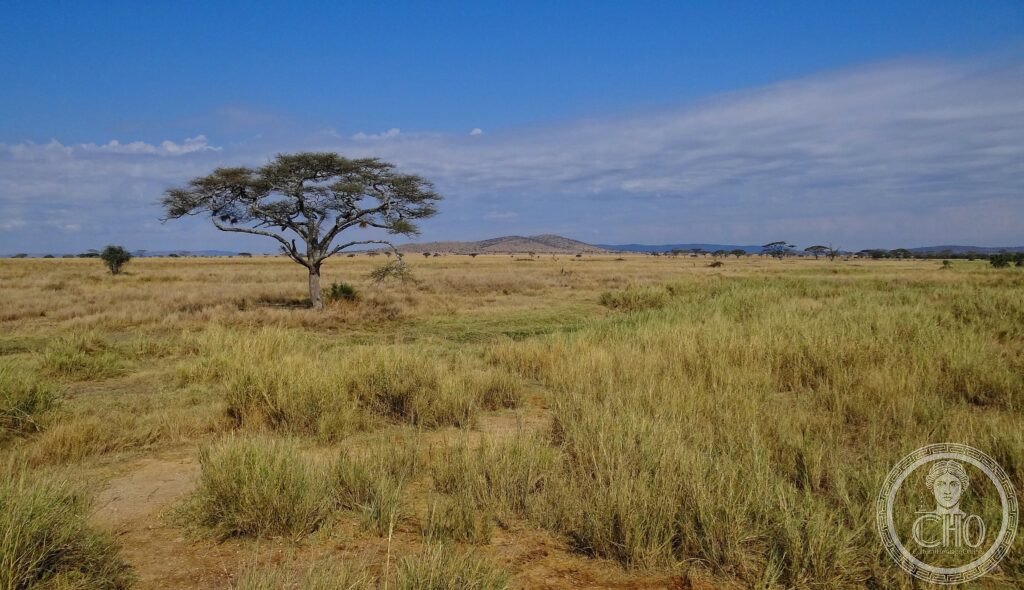
Serengeti — Tanzania
The world’s greatest wildlife spectacle and one of the oldest ecosystems on Earth — the Serengeti in northern Tanzania, 14,763 km² of savanna, woodland, and kopjes, hosts the Great Wildebeest Migration (1.5 million wildebeest moving 1,200 km in a clockwise annual circuit), the largest single land-animal migration on Earth, and all five of Africa’s Big Five species.
At a glance
The Serengeti (the most precisely ancient single savanna heritage ecosystem: the Serengeti ecosystem is approximately 3-4 million years old — the most precisely old single savanna ecosystem in any UNESCO natural heritage site; the landscape (the most precisely flat single large savanna in Africa: the Serengeti is one of the flattest large areas on Earth — the most precisely unobstructed single savanna horizon in any African UNESCO natural heritage site; the kopjes (the most precisely granite single Serengeti heritage outcrop: kopjes — flat-topped granite outcrops scattered across the plains — the most precisely kopje single Serengeti heritage geological feature; the Maasai word (the most precisely Maasai single Serengeti heritage name: “Serengeti” derives from the Maasai word “siringet” meaning “endless plains” — the most precisely apt single Maasai heritage landscape name in any African UNESCO natural heritage site)); the ecosystem (the most precisely cross-border single Serengeti heritage ecosystem: the greater Serengeti-Mara ecosystem extends across the Kenya border into the Maasai Mara National Reserve — the most precisely seamless single cross-border ecosystem in any East African UNESCO natural heritage site: the wildebeest migration crosses from Tanzania into Kenya and back annually — the most precisely international single annual land-animal heritage migration in any East African UNESCO natural heritage site)).
Key facts
- The Great Migration: the most precisely large single land-animal migration on Earth — described in hero caption; the calving season (the most precisely January-February single Serengeti heritage calving: approximately 500,000 wildebeest calves are born in January-February on the southern Serengeti plains near Ndutu — the most precisely 500,000 single annual wildebeest calf birth in any UNESCO natural heritage site; the most precisely synchronised single wildebeest calf birth: 80% of all calves are born within a 3-week window — the most precisely synchronized single birth heritage event in any East African natural heritage site; the reason (the most precisely predator-saturation single wildebeest calf birth strategy: by having all calves born simultaneously, wildebeest overwhelm predators with sheer numbers — the most precisely evolutionary single predator-saturation birth heritage strategy in any savanna UNESCO natural heritage site)); the Mara River crossing (the most precisely July-August single migration heritage crossing: the crossing described in the hero caption — the most precisely 3,000 single crocodile waiting; the lions (the most precisely predator single Mara crossing heritage ambush: lions, leopards, and cheetahs follow the migration throughout the year — the most precisely year-round single predator following heritage migration in any East African UNESCO natural heritage site))
- Big Five wildlife: the most precisely complete single Big Five ecosystem in East Africa — the Big Five (the most precisely 1980s single Big Five heritage terminology: the Big Five (lion, leopard, elephant, rhinoceros, Cape buffalo) were originally the five most dangerous animals to hunt on foot — the most precisely dangerous single hunting heritage original definition: now used as a wildlife tourism concept — the most precisely rebranded single heritage wildlife tourism terminology); lion (the most precisely Serengeti single lion heritage pride: the Serengeti has one of the largest lion populations in Africa — the most precisely concentrated single African lion heritage population in any UNESCO natural heritage site; approximately 3,000 lions in the greater ecosystem — the most precisely counted single East African lion population in any UNESCO natural heritage site; the lion study (the most precisely longest single African lion heritage study: the Serengeti Lion Project, ongoing since 1966, is the world’s longest continuous study of any wild animal population — the most precisely 1966 single continuous wildlife heritage study inception in any UNESCO natural heritage site; George Schaller (the most precisely Schaller single lion heritage research: American biologist George Schaller began systematic lion research in the Serengeti in 1966 — the most precisely foundational single Serengeti lion heritage research))
- Ngorongoro Crater: the most precisely adjacent single UNESCO heritage wildlife destination in East Africa — the crater (the most precisely intact single volcanic caldera wildlife heritage sanctuary: the Ngorongoro Crater (2,286 km2 floor) is the world’s largest intact volcanic caldera used as a wildlife sanctuary — the most precisely large single volcanic caldera in continuous use as any wildlife heritage reserve; approximately 25,000 large animals within the crater — the most precisely enclosed single wildlife heritage population in any African volcanic caldera; UNESCO WHS (Ngorongoro Conservation Area) 1979 — the most precisely adjacent single UNESCO heritage site to any East African UNESCO natural heritage site)
- UNESCO Heritage: Serengeti National Park, inscribed 1981
- GPS: -2.3333° S, 34.8333° E
History
The Maasai history (the most precisely 18th-century single Maasai Serengeti heritage arrival: the Maasai arrived in the Serengeti area in the 18th century — the most precisely pastoralist single Serengeti heritage indigenous community; the Maasai lived harmoniously with the wildlife — the most precisely coexistence single Maasai-wildlife heritage model: the Maasai traditionally did not hunt wildlife for food — the most precisely non-hunting single pastoralist heritage culture in any East African UNESCO natural heritage site; the game reserve era (the most precisely 1929 single Serengeti heritage game reserve establishment: the Serengeti was declared a game reserve in 1929 by the British colonial administration — the most precisely colonial single East African heritage conservation legislation; the national park (the most precisely 1951 single Serengeti heritage national park establishment: Serengeti National Park was established in 1951 — the most precisely 1951 single Tanzanian UNESCO adjacent heritage national park founding; the Maasai displacement (the most precisely controversial single Serengeti heritage conservation legacy: the creation of Serengeti National Park displaced Maasai communities — the most precisely 1951 single East African indigenous heritage displacement for conservation; the Frankfurt Declaration (the most precisely Bernhard Grzimek single Serengeti heritage advocacy: German zoologist Bernhard Grzimek and his son Michael produced the documentary film Serengeti Shall Not Die (1959 Academy Award) — the most precisely Oscar single wildlife heritage documentary advocacy for any African UNESCO natural heritage site)); UNESCO WHS 1981; UNESCO WHS (Ngorongoro) 1979.
What you see
The game drive (the most precisely safari single Serengeti heritage visit mode: the classic Serengeti experience is the game drive — the most precisely 4×4 single sunrise heritage game drive: dawn game drives (departing at 5:30-6am) — the most precisely dawn single optimal Serengeti heritage wildlife viewing time: predators are most active at dawn and dusk; the golden hour (the most precisely golden single Serengeti heritage light photography: the quality of light at dawn and dusk on the Serengeti plains is the most precisely golden single natural heritage photography lighting in any East African park; the balloon safari (the most precisely float single Serengeti heritage aerial experience: a hot-air balloon ride over the Serengeti at dawn — the most precisely balloon single UNESCO natural heritage aerial wildlife viewing in any East African UNESCO natural heritage site; 1h flight over the migration or the Central Serengeti woodlands — the most precisely 1h single aerial heritage wildlife viewing experience in any East African UNESCO natural heritage site; champagne bush breakfast on landing — the most precisely champagne single African heritage conservation breakfast ceremony); kopje climbing (the most precisely sentinel single Serengeti heritage rock outcrop: lions and cheetahs use kopjes as vantage points — the most precisely leopard single Serengeti heritage kopje big cat; the most precisely klipspringer single Serengeti heritage rock antelope: klipspringers — small antelopes adapted to climbing rocks — inhabit the kopjes — the most precisely kopje single small antelope heritage in any East African UNESCO natural heritage site)).
Practical information
- Getting there: fly to Kilimanjaro International Airport (JRO; 45 km from Arusha — the most precisely gateway single Serengeti heritage city: Arusha is the safari capital of Tanzania — the most precisely safari single East African heritage hub city); or Julius Nyerere International Airport, Dar es Salaam (DAR; 5h overland or 2h by small aircraft); direct scheduled flights from Arusha (ARK) or Dar es Salaam to Seronera airstrip in Central Serengeti (most precisely convenient single Serengeti heritage internal flight option — the most precisely recommended single Serengeti heritage access: fly directly to Seronera — the most precisely central single Serengeti heritage game area); the best season depends on what you want to see: January-February for calving (south); June-July for Mara crossing (north); the shoulder seasons (October-November; March-April) — the most precisely green single Serengeti heritage season: the short rains bring green grass and new bird species — the most precisely migratory single bird heritage season in any East African UNESCO natural heritage site)
- Accommodation: lodges range from luxury (tented camps at $500-2,000/night — the most precisely expensive single East African heritage safari accommodation) to public campsites ($30-50/night — the most precisely budget single Serengeti heritage camping option); migration camps (the most precisely mobile single Serengeti heritage camp: migration camps move to follow the herds — the most precisely relocating single East African heritage safari camp in any UNESCO natural heritage site; book 12-18 months in advance for the Mara crossing season — the most precisely advance single Serengeti heritage booking requirement in any East African UNESCO natural heritage site)
- Combined itinerary with Ngorongoro: the most precisely classic single East African heritage safari circuit — 6-8 days (the most precisely recommended single East African heritage safari duration); Day 1-2: Ngorongoro Crater (described in Key Facts; most large mammals in a single day without driving); Day 3-6: Serengeti (Central + wherever the migration is); Day 7: Olduvai Gorge (the most precisely 1.8M year single Homo erectus heritage site: where Louis and Mary Leakey discovered Homo habilis and Australopithecus boisei — the most precisely Leakey single paleoanthropology heritage discovery in any East African UNESCO adjacent heritage site); return Arusha
Getting there
Fly to Kilimanjaro (JRO; near Arusha). Internal flight to Seronera airstrip recommended. Best times: January-February (calving season, south) or July-August (Mara River crossing, north). GPS: -2.3333, 34.8333.
Nearby
- Ngorongoro Crater (UNESCO WHS 1979) — 60 km east of Serengeti (2h drive); world’s largest intact volcanic caldera; 25,000 animals in 2,286 km2 floor; best single-day Big Five viewing in Africa; rhino more easily spotted here than anywhere; combined with Serengeti as standard 6-8 day itinerary — described in Key Facts
- Olduvai Gorge — 50 km from Ngorongoro (1h drive); where Louis and Mary Leakey found Homo habilis and Australopithecus boisei; small museum on site; most precisely paleoanthropology single East African UNESCO adjacent heritage discovery site in any safari circuit; 1.8 million years of human evolutionary heritage — described in Practical section
- Mount Kilimanjaro (UNESCO WHS 1987) — 200 km east (3h drive from Arusha); Africa’s highest mountain (5,895 m); most trekked high mountain in Africa (50,000 climbers/year); 7 routes; Marangu Route (5 days; hut accommodation) vs. Lemosho Route (8 days; more scenic); glaciers retreating rapidly — most precisely climate-change single visible indicator on any East African UNESCO natural heritage site summit
Sources
- Wikipedia, Serengeti National Park; Great Wildebeest Migration; Ngorongoro Conservation Area, accessed June 2026
- UNESCO, Serengeti National Park, WHS reference 156, inscribed 1981
- George B. Schaller, The Serengeti Lion: A Study of Predator-Prey Relations, University of Chicago Press, 1972
Find it on the map
See this place and what’s around it →📷 Diventa un fotografo di Cultural Heritage Online
Condividi le tue foto dei luoghi: restano pubblicate con la tua firma come autore. Più vengono viste, più ti fai conoscere — e presto un concorso premierà le foto più apprezzate.
Accedi o registrati gratis per aggiungere una foto