
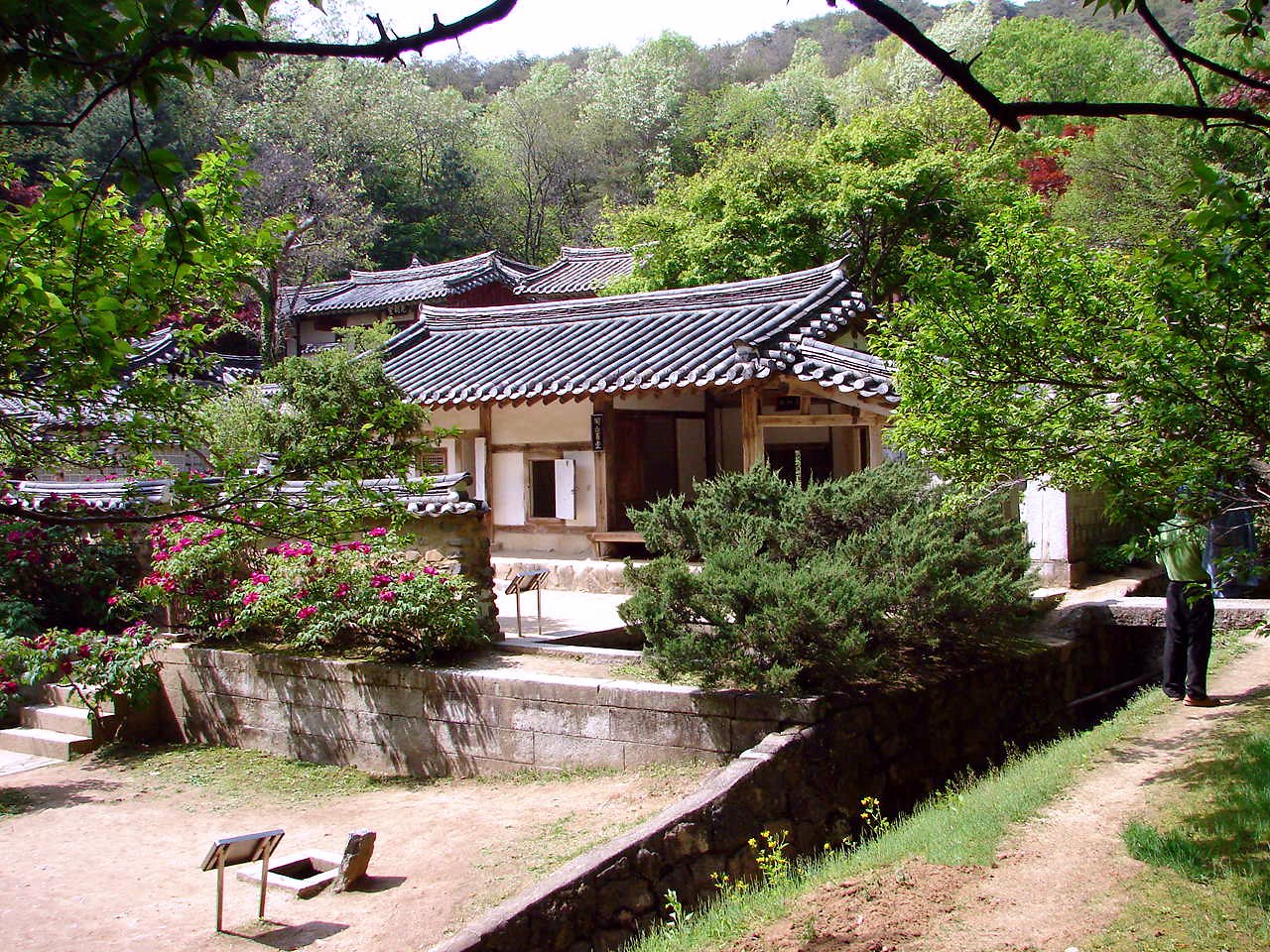
A serial UNESCO World Heritage Site of nine private Neo-Confucian academies built between the 16th and 17th centuries in the Korean landscape — places of scholarship, ritual, and philosophical formation that shaped Korean culture for three centuries, each sited in deliberate harmony with mountains, rivers, and forests.
At a glance
The seowon were private academies established by Korea’s Joseon Dynasty (1392–1897) elite to promote Neo-Confucian learning and to venerate specific scholar-statesmen as ancestral patrons. They served simultaneously as schools, ritual shrines, and communal cultural institutions. Their architecture — lecture halls, ritual shrines, dormitories, and library towers — follows a consistent spatial logic, always oriented toward the natural landscape according to pungsu (Korean geomantic) principles. Nine academies across Korea were jointly inscribed on the UNESCO World Heritage List in 2019, selected as the most outstanding examples of this tradition.
Key facts
- UNESCO inscription: 2019 — Seowon, Korean Neo-Confucian Academies (serial site)
- Number of inscribed academies: 9
- Period: 16th–17th century CE (Joseon Dynasty)
- First seowon: Sosu Seowon (1543) — first to receive royal recognition
- Most celebrated: Dosan Seowon (founded 1561 by Yi Hwang / Toegye, Korea’s most influential Neo-Confucian philosopher)
- Function: private schools honouring a patron scholar-deity + ritual shrine + dormitory + library
- Site selection principle: pungsu (geomancy) — deliberate placement relative to mountains and water
- Legacy: shaped the educational, ethical, and aesthetic culture of the Joseon elite for over 300 years
History and cultural context
Neo-Confucianism arrived in Korea from China in the 14th century and became the official ideology of the Joseon Dynasty founded in 1392. By the 16th century, Korean scholars had developed their own sophisticated Neo-Confucian philosophy, and private academies — seowon — emerged as the primary institutions for transmitting this tradition outside of official government schools. The academies were founded by prominent regional scholars, typically dedicated to the memory of a past master whose teachings the founder wished to preserve and propagate.
Yi Hwang (pen name Toegye, 1501–1570), the most revered Korean Confucian philosopher, founded Dosan Seowon in Andong. His philosophical synthesis — centred on the concept of “li” (principle) and its relationship to human moral cultivation — became the dominant current in Korean Neo-Confucianism and remains a living intellectual tradition. His face appears on the South Korean 1,000-won banknote. Byeongsan Seowon (1613), also in Andong, honours the diplomat-scholar Yu Seong-ryong, who guided Korea through the devastating Japanese invasions of the 1590s.
The seowon system was eventually curtailed: in 1871, the reformist regent흥선대원군 (Heungseon Daewongun) ordered the forced closure of most seowon, preserving only 47 of the then-existing 650, to curtail the political power of the regional aristocracy (yangban). The nine UNESCO-inscribed academies were among those spared.
Architecture and landscape
Each seowon occupies a carefully chosen natural setting: typically positioned at the foot of a mountain, facing a river or valley, sheltered by trees. The architectural ensemble follows a standard programme arranged along a north-south axis: the main entrance gate at the south, dormitories and lecture hall in the centre, and the ritual shrine at the highest, most northern point. This hierarchy — learning below, veneration above — expresses the Confucian value of ritual propriety.
The buildings use traditional Korean timber-frame construction (hanok style) with tiled roofs, raised wooden floors, and paper-screened sliding doors. The simplicity and restraint of the architecture contrast with the elaborate ritual vessels, wooden tablets inscribed with the patron scholar’s name, and seasonal ceremonies held at the shrine. Many seowon maintain libraries with rare woodblock-printed editions of Confucian classics. The natural landscape — rocky streams, ancient pine trees, pavilions above the water — is considered inseparable from the intellectual and spiritual experience of the academy.
Practical information
- Most visited: Dosan Seowon (Andong, North Gyeongsang Province) and Byeongsan Seowon (also Andong); Sosu Seowon (Yeongju, North Gyeongsang Province)
- Opening hours: most academies open daily, 09:00–18:00 (summer) / 09:00–17:00 (winter); some close Mondays
- Admission: small fee at most sites
- Best season: spring (cherry blossom) and autumn (foliage) for landscape setting
- Ceremonies: seasonal Confucian rites (spring and autumn) are still performed at several academies; enquire locally for dates
Getting there
Andong city — home to Dosan and Byeongsan Seowon — is the main gateway. From Seoul, take the KTX (high-speed train) or express bus to Andong (approximately 2 hours by bus, 2.5 hours by train). From Andong, local buses and taxis reach Dosan Seowon (approximately 25 km north). Sosu Seowon is near Yeongju city, accessible by train from Seoul via the Jungang Line (approximately 3 hours).
Nearby
- Hahoe Folk Village — UNESCO-inscribed Joseon-era clan village preserved in its original layout, 30 km from Andong city; famous for its Hahoe mask dance drama
- Andong Mask Dance Festival — major annual festival held in late September / early October, celebrating Korea’s traditional mask drama tradition
- Byeongsan Seowon — 17th-century academy on a dramatic bend of the Nakdong river, 12 km from central Andong; considered architecturally the most beautiful of all Korean seowon
- Bongjeongsa Temple — ancient Buddhist temple in the mountains north of Andong, housing Korea’s oldest surviving wooden structure (Goryeo period)
Sources
- UNESCO World Heritage List — Seowon, Korean Neo-Confucian Academies (2019): whc.unesco.org/en/list/1498
- Korea Heritage Service (Seowon overview): english.cha.go.kr
- Wikipedia — Seowon: en.wikipedia.org
Find it on the map
See this place and what’s around it →📷 Become a Cultural Heritage Online photographer
Share your photos of places: they stay published under your name as the author. The more they're seen, the more you get noticed — and soon a contest will reward the most appreciated photos.
Log in or sign up free to add a photo