
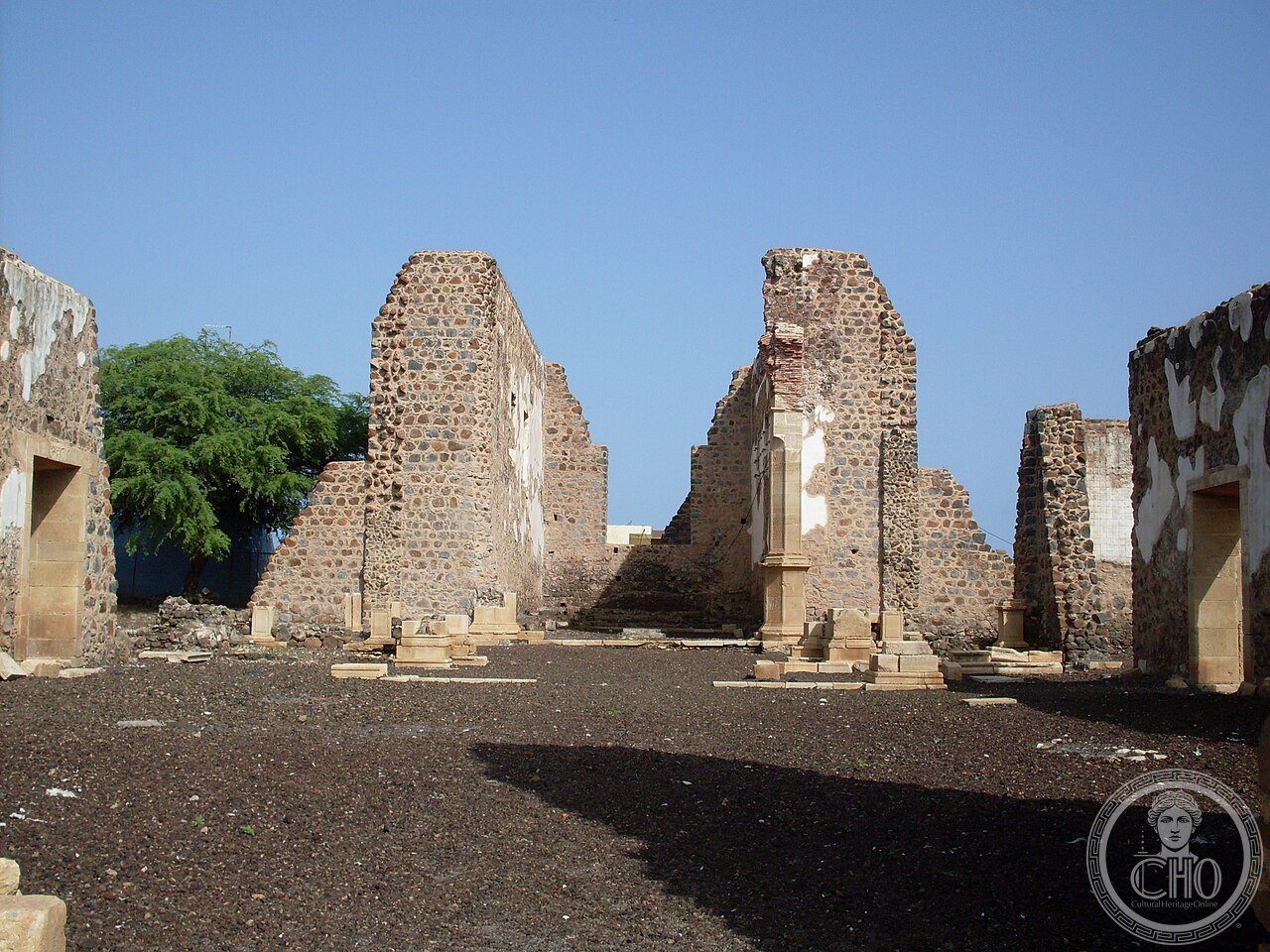
At Cidade Velha, on the island of Santiago, in Cape Verde, the diocese of Santiago de Cabo Verde was established on 31 January 1533 by Pope Clement VII with the bull «Pro Excellenti». It was a suffragan of the archdiocese of Funchal, in Madeira, and its first seat was an existing and more modest parish church. Work on the present cathedral, dedicated to Nossa Senhora da Conceição, began in 1556 under Bishop Francisco de la Cruz, but it went slowly for more than a century: the sources disagree on the completion, placing it variously between 1693 and 1705. It must be told apart, precisely, from another church, older and physically different, brought to light by an archaeological dig of the University of Cambridge in 2015. That structure, with building phases datable to around 1470 and an enlargement towards 1500, is the one archaeologists call «the oldest known European church in the tropics» and «the oldest formal European colonial building found in sub-Saharan Africa». Tourist sources often attach that distinction by mistake to the ruins of the Sé Cathedral described here, which are correctly defined as the first cathedral built by Europeans on the West African coast. About 60 metres long and built in part with stone imported from Portugal, it was the largest religious building ever raised in the country and along the whole African coast. Cidade Velha, then Ribeira Grande, was founded in 1462 by the Genoese navigator Antonio da Noli under Portuguese sponsorship, and was the first European colonial settlement in the tropics. After Portugal obtained in 1466 exclusive rights over the slave trade along the coast of Senegambia and Guinea, it became for about a century the most important port of the Atlantic trade. By 1580 the island of Santiago held some 14,000 enslaved people against 2,000 free ones, a sharp reversal of the 30 enslaved and 160 free recorded in 1510. Near the older church, the Cambridge dig uncovered a cemetery with more than a thousand burials from before 1525, about half of them identified as of African origin: direct evidence of the bond between the religious institutions of the city and the enslaved population. In November 1585 the English fleet of Francis Drake attacked and sacked the city, taking the bronze bells of the cathedral, then probably still under construction, before setting it on fire. It was the French corsair Jacques Cassard, however, in 1712, who directly and seriously damaged the completed cathedral, looting its furnishings. The steady decline of Ribeira Grande, already marked by its exposure to corsair attacks, led to the capital being moved to Praia; the sources do not agree on the exact date of that move. The ruins, managed today as an open-air archaeological site and not rebuilt, were consolidated in 2004 and documented digitally with LiDAR in March 2015 by CyArk, in collaboration with the African World Heritage Fund. The cathedral is one of the monuments of the UNESCO World Heritage Site «Cidade Velha, Historic Centre of Ribeira Grande», inscribed in 2009 — the first and only UNESCO site in Cape Verde — along with the pillory (Pelourinho), the fort of São Filipe and the church of the Rosário.
About the Sé Cathedral ruins
In Cidade Velha, on Santiago Island, Cape Verde, the Diocese of Santiago de Cabo Verde was established on 31 January 1533 by Pope Clement VII with the bull “Pro Excellenti,” as a suffragan of the Archdiocese of Funchal in Madeira, initially seated at an existing, smaller parish church. Construction of the present cathedral, dedicated to Nossa Senhora da Conceição, began in 1556 under Bishop Francisco de la Cruz, but work proceeded slowly over more than a century, with sources disagreeing on the completion date, variously placed between 1693 and 1705. It must be distinguished carefully from a different, older church unearthed by a 2015 University of Cambridge archaeological excavation: that structure, with building phases dated to around 1470 and an expansion around 1500, is the one archaeologists describe as “the earliest known European Christian church in the tropics” — a superlative often mistakenly attributed to these cathedral ruins, which are more accurately described as the first cathedral built by Europeans on the West African coast.
Key facts
- 1533: the Diocese of Santiago de Cabo Verde established by Pope Clement VII.
- 1556-1693/1705: the cathedral built, roughly 60 metres long, the largest religious building on the African coast at the time.
- 1585: Francis Drake’s fleet sacks the town and removes the cathedral’s bronze bells.
- 1712: French privateer Jacques Cassard’s raid badly damages the completed cathedral.
- 2004: the ruins conserved and stabilized.
- 2009: included in the UNESCO World Heritage Site “Cidade Velha, Historic Centre of Ribeira Grande,” Cape Verde’s only such listing.
History
Built in a town that was the first European colonial settlement in the tropics and, for roughly a century, the most important harbor of the transatlantic slave trade, the Sé Cathedral’s ruins stand today as a direct physical link to that history — its construction funded by, and its congregation drawn from, a town whose wealth derived substantially from human trafficking. Sacked twice, by Francis Drake’s fleet in 1585 and by a French privateer in 1712, the cathedral’s decline mirrors the broader collapse of Ribeira Grande’s fortunes, which eventually ceded its status as Cape Verde’s capital to Praia.
What you see
Standing rubble-stone walls with arched openings and a carved stone doorway are what remain of a building once roughly 60 metres long, built in part with stone imported from Portugal. Left as an unreconstructed ruin and stabilized rather than rebuilt in 2004, the site was digitally documented with LiDAR scanning in 2015, preserving its current state for future study.
Practical information
- Opening hours: the ruins are generally accessible during daylight hours as an open-air archaeological site; check current access before visiting.
- Address: Cidade Velha, Santiago Island, Cape Verde.
Getting there
The ruins stand on a hill above the center of Cidade Velha, a short drive from Praia, Cape Verde’s capital. GPS (town center): 14°54′58″N, 23°36′22″W.
Nearby
- Pelourinho (pillory) — the historic town pillory within the same UNESCO site.
- Fort São Filipe — the fortress built after earlier pirate raids, overlooking Cidade Velha.
Sources
- Wikipedia — “Cidade Velha” and “Roman Catholic Diocese of Santiago de Cabo Verde” (en.wikipedia.org).
- University of Cambridge — “Earliest church in the tropics unearthed in former heart of Atlantic slave trade” (cam.ac.uk).
- UNESCO World Heritage Centre — “Cidade Velha, Historic Centre of Ribeira Grande” (whc.unesco.org).
Find it on the map
See this place and what’s around it →📷 Become a Cultural Heritage Online photographer
Share your photos of places: they stay published under your name as the author. The more they're seen, the more you get noticed — and soon a contest will reward the most appreciated photos.
Log in or sign up free to add a photo