
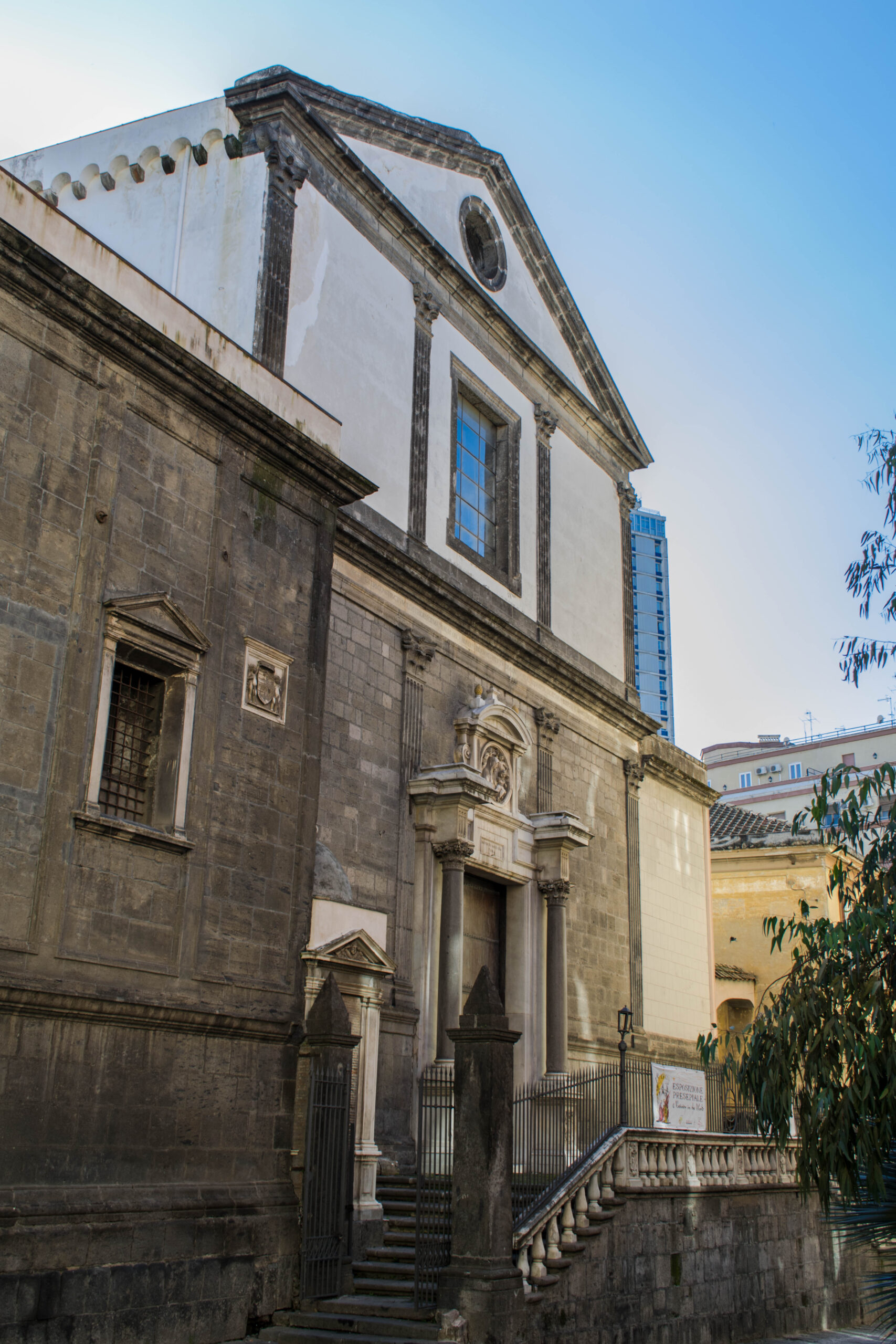
Santa Maria la Nova is a Franciscan monastic complex in the historic centre of Naples, founded in 1279 after Charles I of Anjou demolished the order’s earlier seat to build Castel Nuovo. Rebuilt in late-Renaissance form between 1596 and 1599 around two cloisters and fourteen lateral chapels, the basilica is best known for its gilt coffered nave ceiling of 46 painted panels (1598–1603) by Francesco Curia, Girolamo Imparato, Fabrizio Santafede and other late-Mannerist Neapolitan masters. The complex also draws international curiosity for a contested 2014 hypothesis identifying one of its noble tombs as that of Vlad III Țepeș, the historical Dracula.
- Address
- Largo Santa Maria La Nova 44, 80134 Napoli NA
- Period
- Granted to the Franciscans in 1279 by Charles I of Anjou; rebuilt 1596–1599 after the 1587 explosion at Castel Sant'Elmo
- Architects
- Giovanni Cola di Franco (late-16th rebuild); façade attributed to Agnolo Franco
- Patron
- Charles I of Anjou, King of Naples; subsequent patronage by Neapolitan noble families
- Function
- Conventual basilica of the Friars Minor, Provincia di Napoli
- Current use
- Ex-conventual complex with active basilica; visits managed by the Oltre il Chiostro association; the former monastery hosts the Museo ARCA of contemporary religious art
- Coordinates
- 40.8412° N, 14.2528° E
- Notes
- Coffered nave ceiling of 46 oil-on-panel paintings (1598–1603); fourteen lateral chapels (seven per side); an alleged tomb of Vlad III Țepeș 'Dracula' was proposed in 2014 by researchers Raffaello Glinni and Marcello Nardini — the identification is contested and remains unverified by mainstream scholarship
Gallery
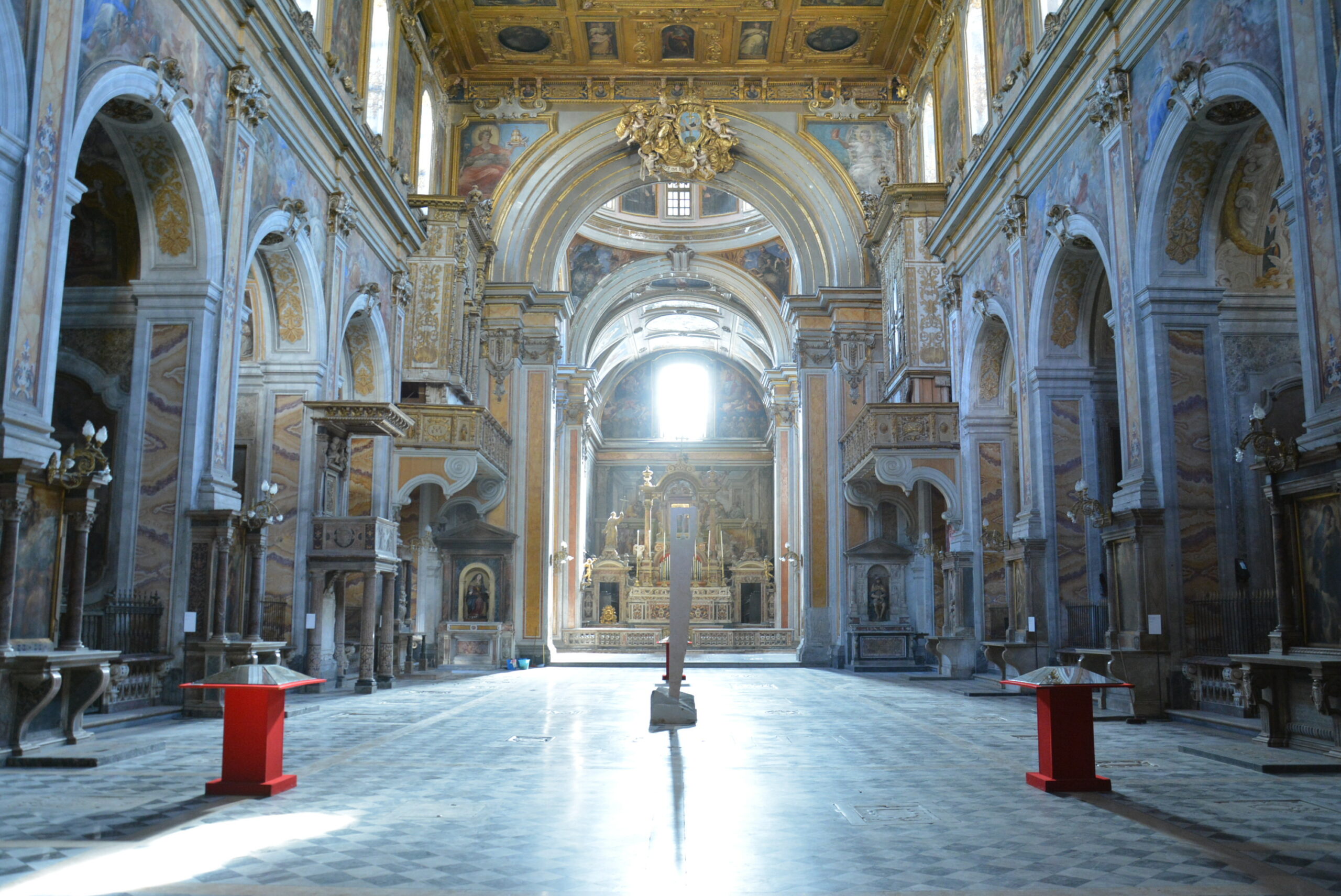
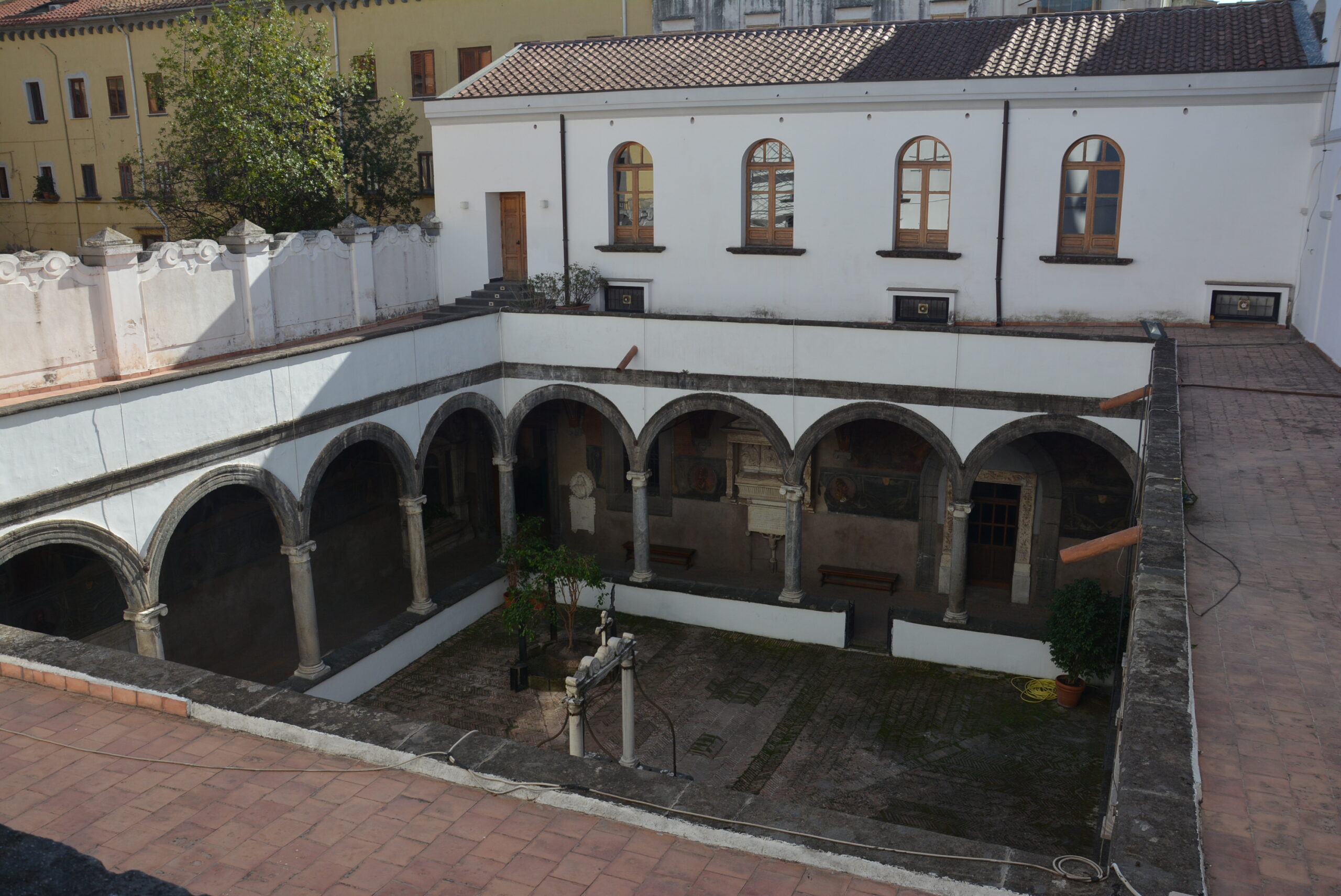
Two further views: the single nave with its side chapels of Neapolitan noble families, and the chiostro piccolo of the conventual complex.
Visit on the map
Largo Santa Maria La Nova 44 · 40.8412° N, 14.2528° E
Download for your navigator
A single waypoint, ready for GPS apps, navigators, and contacts.
The origin of Santa Maria la Nova is a story of urban displacement. In 1268 Charles I of Anjou, newly installed king of Naples, ordered the demolition of the small Franciscan church of Santa Maria ad Palatium to clear the ground for his new royal fortress, Castel Nuovo. To compensate the friars he granted them, on 10 May 1279, a different site within the city walls on which they erected a Gothic church — la Nova, the new one — to replace the lost foundation. The medieval building served the Friars Minor for three centuries before earthquakes and, decisively, the gunpowder explosion of 13 December 1587 at the fortress of Castel Sant’Elmo wrecked the structure, prompting a full reconstruction.
The basilica visitors see today belongs to that late-Renaissance rebuild, carried out between 1596 and 1599 under the direction of Giovanni Cola di Franco. The flat-fronted facade, attributed to Agnolo Franco, carries a 1599 dedicatory inscription to the Assumption of Mary under Philip II and Philip III of Spain. Inside, a single broad nave is lined by fourteen lateral chapels, seven on each side, that became burial sites for Neapolitan noble houses and for figures of the Spanish viceregal court. Above the nave runs the work that defines the church: a wooden coffered ceiling of 46 gilt-framed panels painted in oil between 1598 and 1603, with three large central scenes by Francesco Curia, Girolamo Imparato and Fabrizio Santafede, surrounded by smaller compartments by Belisario Corenzio, Luigi Rodriguez, Giovanni Bernardino Azzolino and other masters of the Neapolitan late-Mannerist school.
The conventual complex extends beyond the basilica through two cloisters and the spaces of the former monastery, today used for cultural programming rather than monastic life. The ex-convent houses the Museo ARCA of contemporary religious art, while guided access to the cloisters, the chapels and the funerary monuments is coordinated by the Oltre il Chiostro association. Among those monuments, one in particular has drawn international attention since 2014, when the Italian researchers Raffaello Glinni and Marcello Nardini proposed that a sculpted tomb in the complex commemorates Vlad III Țepeș, the Wallachian prince who inspired the figure of Dracula. The identification rests on iconographic reading rather than documentary proof and is not accepted by mainstream historians of the Balkans, but it continues to bring a curious flow of visitors to a basilica that, on its own architectural and artistic merits, ranks among the most coherent late-Renaissance interiors of central Naples.
Resources & References
Editorial picks across Wikipedia, photo archives, and the official portal.
All photographs Wikimedia Commons (CC-BY / CC-BY-SA / Public Domain) unless otherwise stated. Editorial text Cultural Heritage Online, OASIS Tech LLC USA.
Find it on the map
See this place and what’s around it →📷 Become a Cultural Heritage Online photographer
Share your photos of places: they stay published under your name as the author. The more they're seen, the more you get noticed — and soon a contest will reward the most appreciated photos.
Log in or sign up free to add a photoIs this page about you?
This page is read by travellers and heritage enthusiasts who find it on Google. Tell us how you are connected to this place and we will take it from there.