
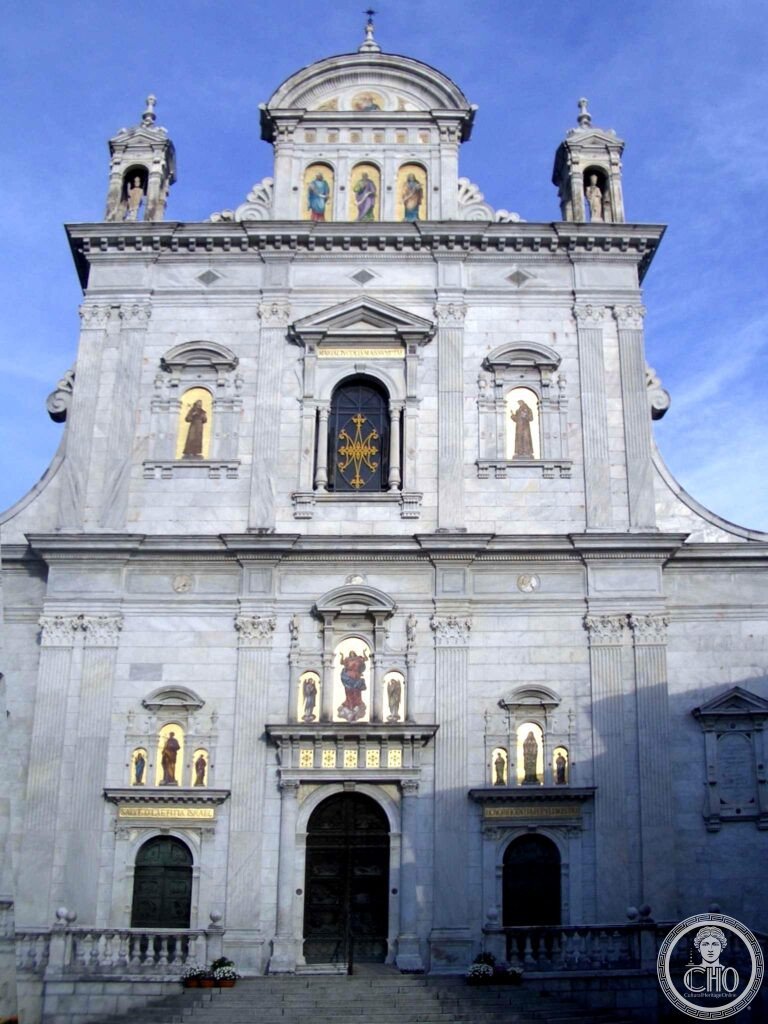
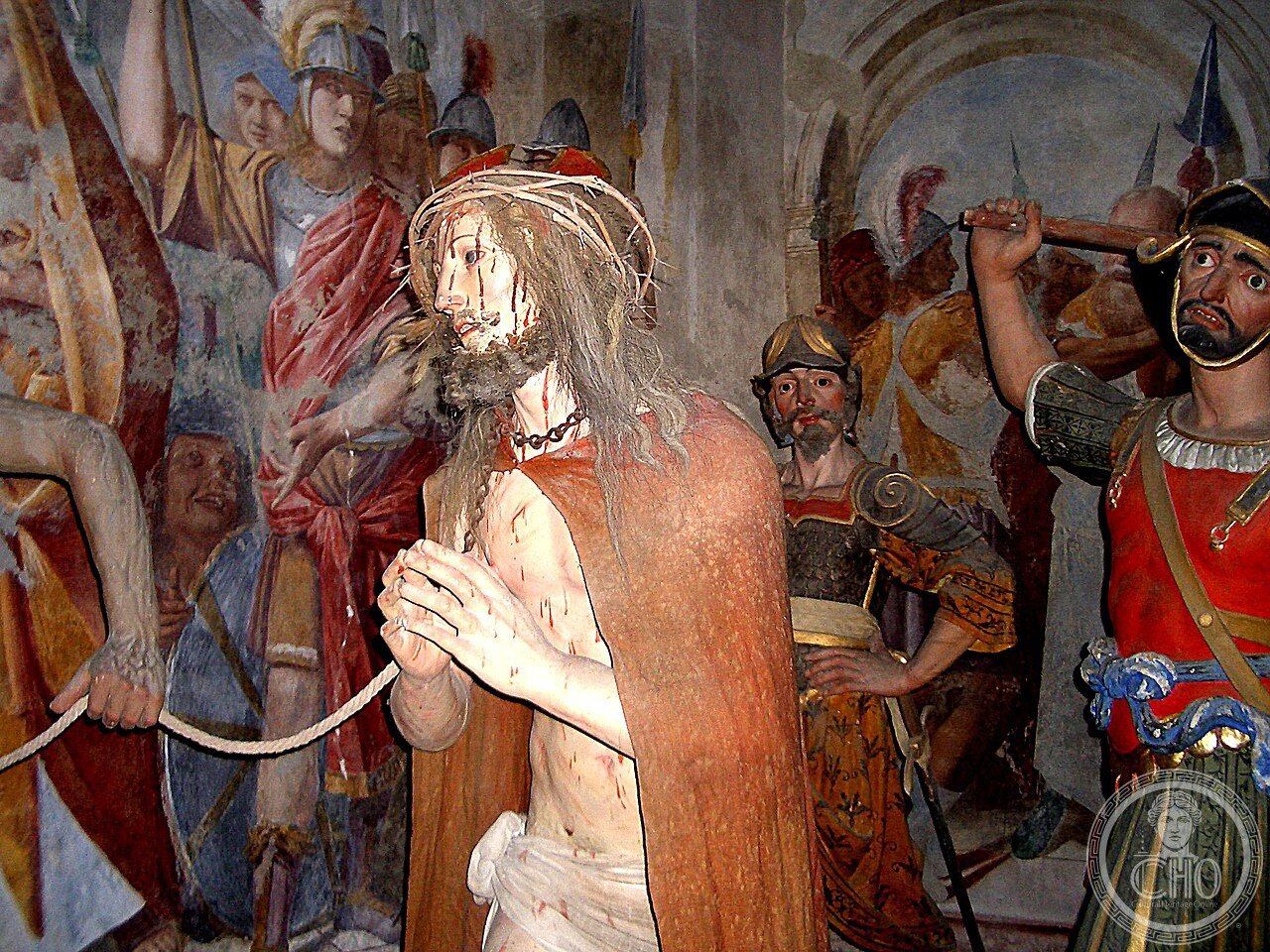
On a rocky outcrop above Varallo, forty-three chapels hold life-size terracotta figures and painted backdrops depicting the life of Christ, built from 1491 as a substitute Jerusalem for pilgrims who could no longer reach the Holy Land. Gaudenzio Ferrari’s Crucifixion chapel remains one of the most striking theatrical spaces of Italian religious art.
At a glance
The Sacro Monte di Varallo is the earliest and largest of the nine Sacri Monti of Piedmont and Lombardy, a group of chapel complexes built on hills and mountains from 1491 onward to let Italian pilgrims make a symbolic journey to the holy places of Jerusalem without leaving Italy. Together the nine sites are inscribed on the UNESCO World Heritage List, listed in 2003 under reference 1068.
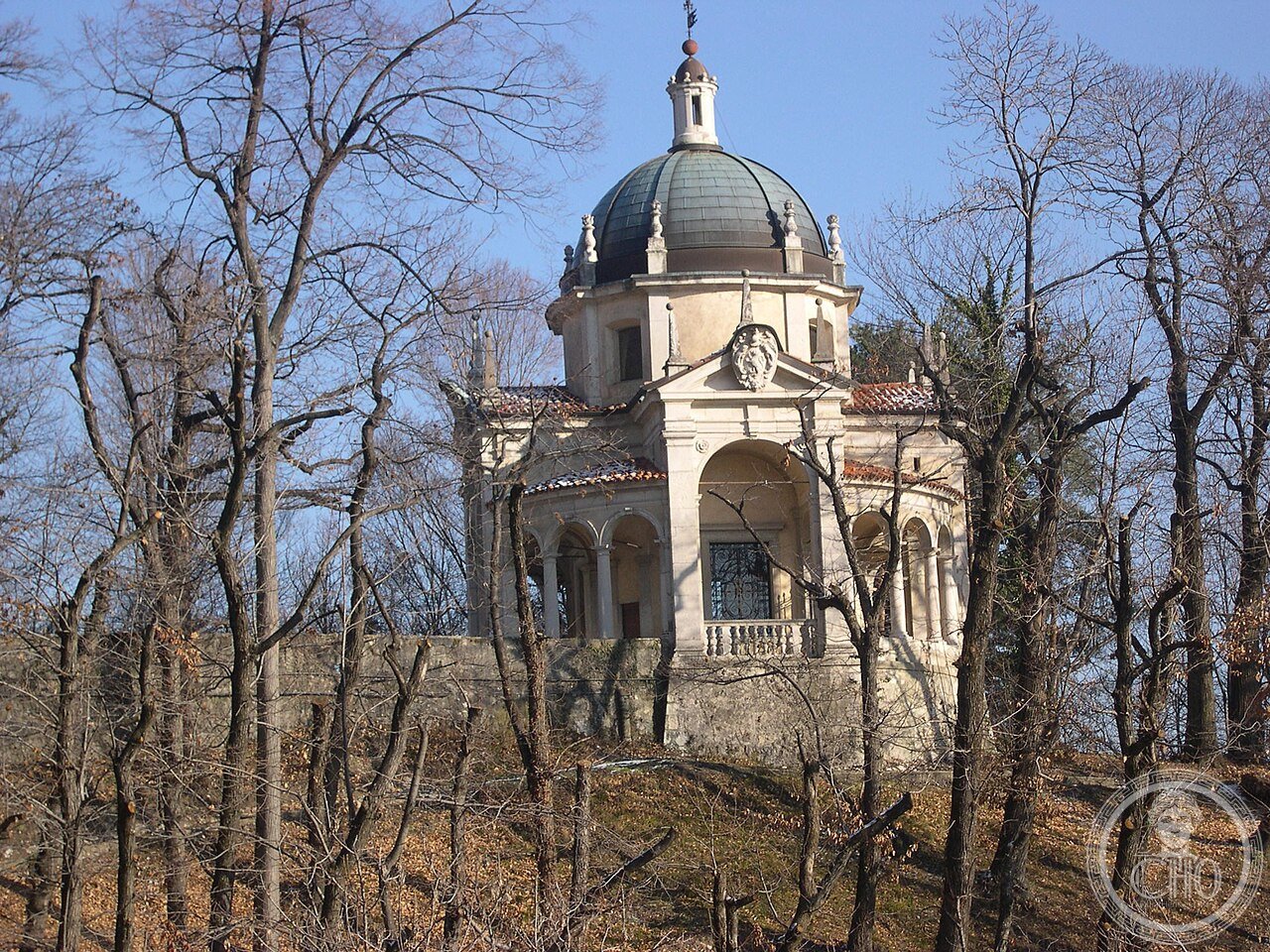
Varallo’s complex has forty-three chapels arranged along a path rising from the Santuario dell’Assunzione to the summit of the mount, each containing a scene from the life of Christ or the Virgin, rendered in painted terracotta figures at life size and set against frescoed backgrounds. The idea was conceived by the Franciscan friar Bernardino Caimi, who had served as Guardian of the Holy Land before returning to Italy, in the years following the fall of Constantinople in 1453, when pilgrimage to Jerusalem had become far harder to undertake.
Key facts
- Chapels: 43, each an independent building containing a scene from the life of Christ or the Virgin
- Figures: around 800 life-size polychrome terracotta statues across the complex
- Frescoes: roughly 4,000 square metres of painted surface
- Founder: Bernardino Caimi, Franciscan friar, who began the site in 1491
- Key artist: Gaudenzio Ferrari, active at Varallo from around 1505 to 1545, responsible for the Nativity and Crucifixion chapels
- Status: part of the Sacri Monti of Piedmont and Lombardy, UNESCO World Heritage Site since 2003
History
Bernardino Caimi, a Franciscan friar from Milan, had served as Guardian of the Holy Land, the custodian of Franciscan properties in Jerusalem, Bethlehem and Nazareth, from 1478 to 1490. On returning to Italy he conceived the idea of recreating the holy places of Palestine on the rocky plateau above Varallo, known locally as the Rupe, a natural outcrop of serpentinite rock. In 1491 he obtained a papal bull from Innocent VIII authorising the project and granting indulgences to pilgrims who visited it; early funding included a donation from Gian Galeazzo Sforza, Duke of Milan.
The fifteenth-century phase of the site, built between 1491 and 1530, comprised fifteen chapels designed by Caimi himself, simple single-space buildings holding terracotta figures and painted backgrounds centred on the mysteries of the Rosary and the Via Crucis. The complex was later enlarged under the direction of Pellegrino Tibaldi, architect and painter working for Cardinal Carlo Borromeo, whose Counter-Reformation redesign between 1565 and 1585 widened the sacred way, reworked the entrance portal and main basilica, and set a standard minimum size for the chapels so that they could hold fuller narrative scenes.
The Sacro Monte di Varallo and eight related complexes across Piedmont and Lombardy were inscribed on the UNESCO World Heritage List in 2003, under reference 1068.
What you see
The visit begins at the Basilica dell’Assunzione at the top of the site, whose vault carries frescoes by Tanzio da Varallo. From there the forty-three chapels follow in numbered sequence, each self-contained and set along the Via Sacra, with an official circuit map available at the entrance.
The earliest chapel, number one, is a small aedicule of the Christ Child built by Caimi in 1491. Among the later works, the Nativity chapel by Gaudenzio Ferrari holds three life-size terracotta figures of Mary, Joseph and the Child against a painted backdrop, and is considered an early example of a terracotta nativity scene in Italy. The largest and most celebrated chapel is the Crucifixion, a circular space some ten metres across with a dome rising to fourteen metres, where forty-five life-size terracotta figures, including soldiers, mourners, a Roman centurion and the two thieves, surround the three crosses of Calvary. The painted background continues around the full circle of the wall, blurring the line between the three-dimensional figures and the two-dimensional landscape behind them, an effect regarded as an early forerunner of the panorama and the modern diorama. A further chapel, the Adoration of the Magi, was completed slightly later in the same period.
Practical information
- Access: a cable car runs from Varallo town centre to the Sacro Monte, or the site can be reached on foot along the paved Via Sacra; check current times and fares with the operator before travelling
- Guide: a free circuit brochure is available at the entrance and covers the chapels in numbered order
- Combining with Lake Orta: the Sacro Monte di Orta San Giulio, with twenty chapels devoted to the life of Saint Francis, lies a short journey from Varallo and is often visited on the same day
Getting there
Varallo is reached by train from Milan via Novara, and from Turin via Novara with a onward bus connection; the route from Novara follows the Valsesia valley alongside the Sesia torrent. Current timetables should be checked directly with Trenitalia or local bus operators.
Nearby
- Sacro Monte di Orta San Giulio — around 25 km from Varallo, twenty chapels dedicated to the life of Saint Francis of Assisi, with views over the Isola di San Giulio
- Sacro Monte di Oropa — the largest of the nine complexes by area, centred on the chapel of the Black Madonna
- Sacro Monte di Ghiffa — a smaller complex of three chapels dedicated to the Trinity
Sources
- UNESCO
Gallery
Find it on the map
See this place and what’s around it →📷 Become a Cultural Heritage Online photographer
Share your photos of places: they stay published under your name as the author. The more they're seen, the more you get noticed — and soon a contest will reward the most appreciated photos.
Log in or sign up free to add a photoIs this page about you?
This page is read by travellers and heritage enthusiasts who find it on Google. Tell us how you are connected to this place and we will take it from there.