

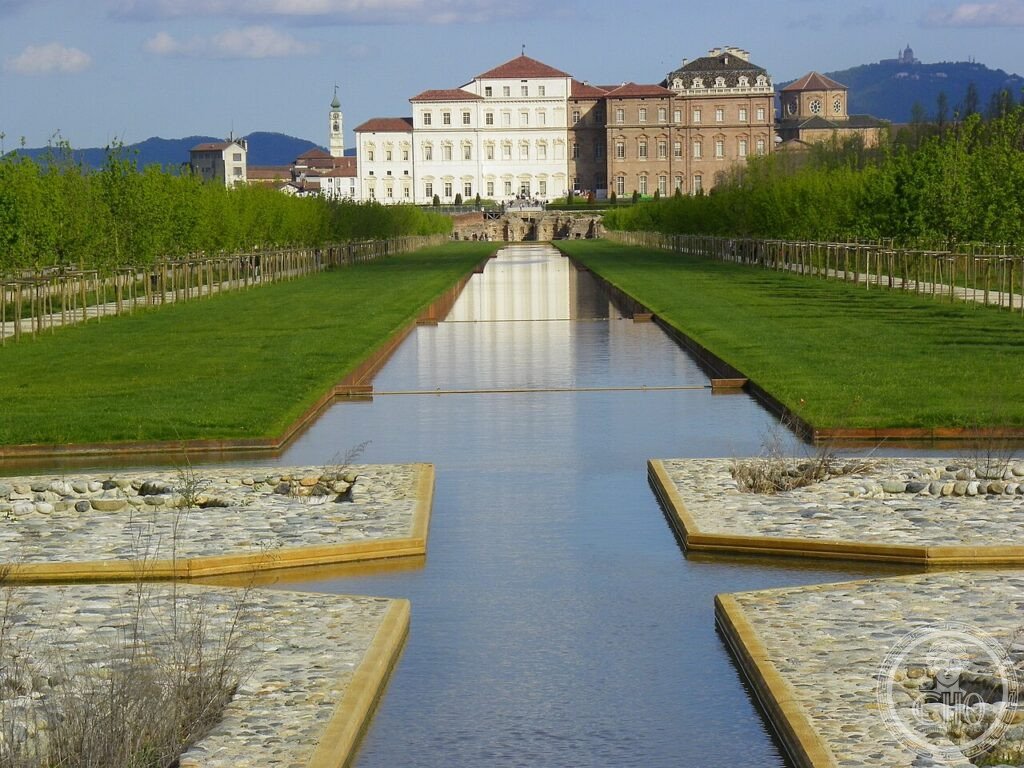
Fourteen royal palaces and hunting lodges built by the House of Savoy across Piedmont between the 16th and 18th centuries, unified by the genius of Guarino Guarini and Filippo Juvarra: the most ambitious royal building programme in Italian history.
At a glance
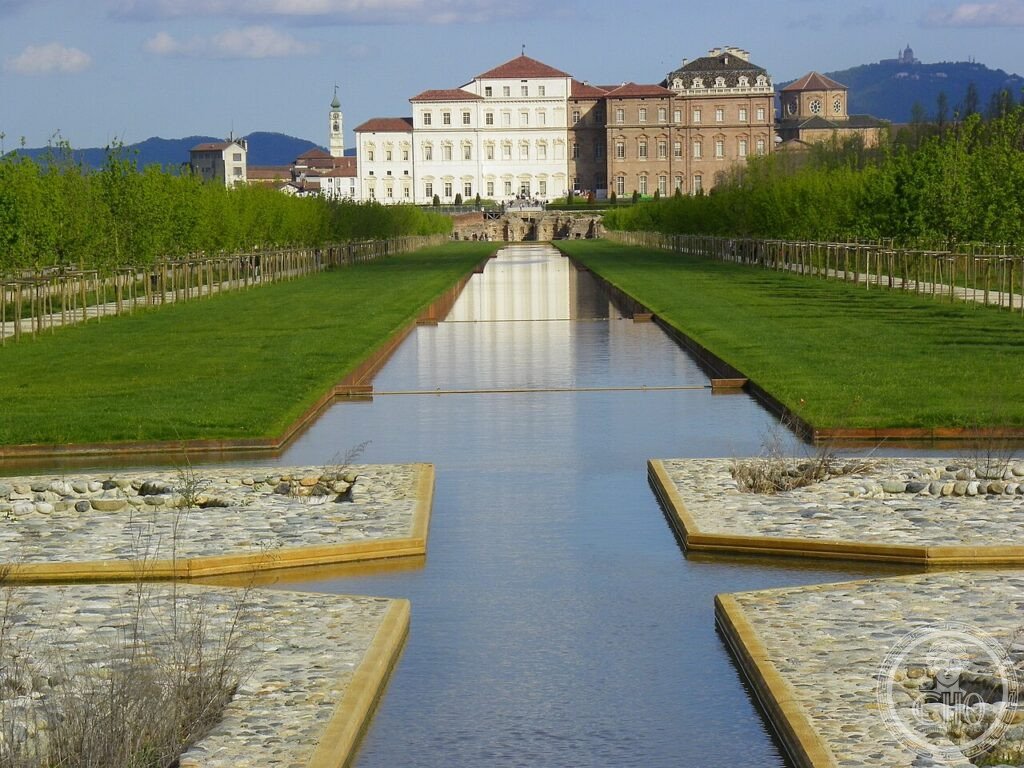
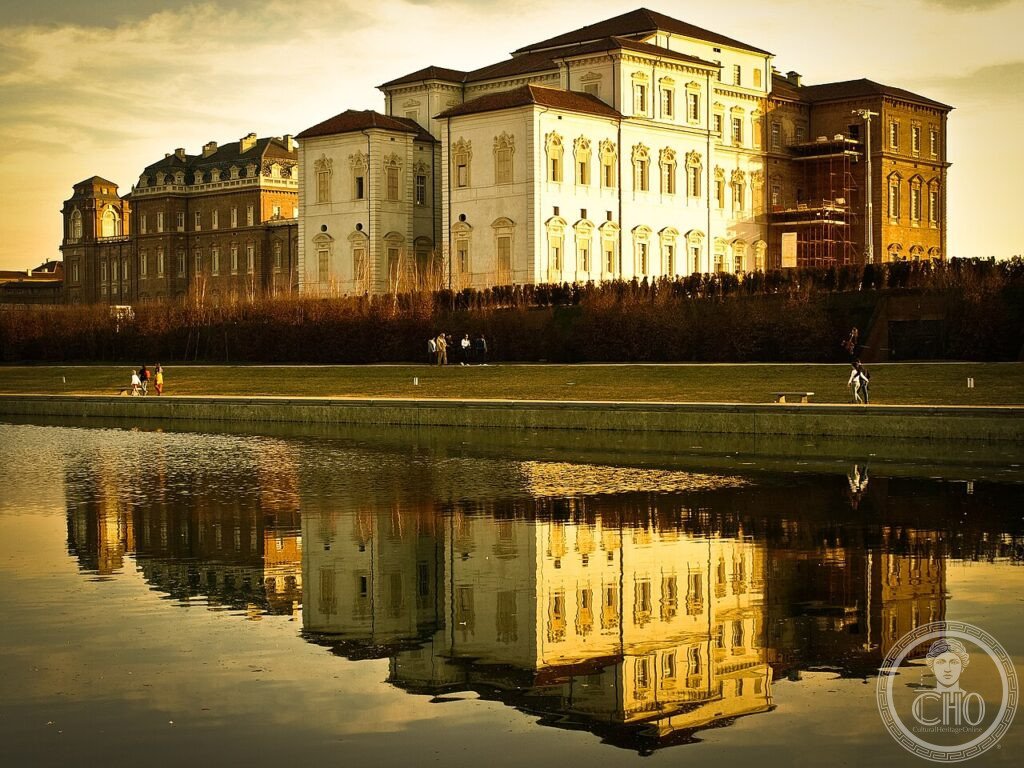
The Savoyard royal residences inscribed by UNESCO in 1997 form a circuit of fourteen palaces, hunting lodges, and fortified castles arranged around Turin in a radius of 30 km. The ensemble illustrates the political and dynastic ambitions of the House of Savoy, which used architecture systematically to project power and cultural sophistication from a mountain duchy into a European monarchy. The two defining works are both by Filippo Juvarra: the Reggia di Venaria Reale (1675–1728, extended and completed by Juvarra from 1716), the largest royal palace complex in Italy at 80,000 square metres, and the Palazzina di Caccia di Stupinigi (1729–1733), a hunting lodge whose radial plan is unique in 18th-century architecture.
Key facts
- Reggia di Venaria Reale: 1675+, Amedeo di Castellamonte; rebuilt 1716–1728 Filippo Juvarra; 80,000 m²; Galleria di Diana 72 m long
- Palazzina di Caccia di Stupinigi: 1729–1733, Filippo Juvarra; radial-plan hunting lodge; 31,050 m²; Great Hall dome
- Palazzo Reale di Torino: 1646+, Carlo di Castellamonte; court of the Dukes of Savoy; Royal Armoury and Chinese Cabinet
- Castello di Rivoli: 1580s; second renovation by Juvarra 1718 (unfinished); now Museo d'Arte Contemporanea (MACA)
- Guarino Guarini: Cappella della Sindone, Turin, 1667–1690; Palazzo Carignano, Turin, 1679–1685
- UNESCO inscription: 1997, criteria i, ii, iv, v
- Coordinates (Venaria): 45.1280° N, 7.6290° E — Google Maps
History
The House of Savoy began consolidating its Piedmontese territories in the 10th century and moved its capital from Chambery to Turin in 1563, when Emmanuel Philibert reorganised the duchy after the Peace of Cateau-Cambresis. The decision to build a systematic circuit of royal residences around the new capital began under Charles Emmanuel II, who commissioned the first Venaria Reale in 1659 from Amedeo di Castellamonte. The programme responded to Versailles: the Savoy court at Turin was competing with the French monarchy for cultural prestige and using architecture as the primary medium.
Guarino Guarini arrived in Turin in 1666 and immediately transformed the city's architectural vocabulary. His Cappella della Sindone (1667–1690), built to house the Holy Shroud of Turin, uses a Gothic-derived system of interlocking stone ribs rising in diminishing hexagonal tiers to a lantern — a structural approach that influenced Bernhard Fischer von Erlach in Vienna and, through him, the entire Central European Baroque. His Palazzo Carignano (1679–1685) introduced the undulating brick façade to Italian architecture and shaped the subsequent career of Juvarra.
Filippo Juvarra (1678–1736) received the commission for Venaria's expansion in 1716 from Vittorio Amedeo II. His contribution — the Galleria di Diana, the Church of Sant'Uberto, the Scuderie Juvarriane, and the Grand Parterre garden — transformed what had been an adequate hunting palace into a building capable of matching Versailles in scale and exceeding it in spatial invention. Stupinigi (1729) deployed a radial X-plan with a domed Great Hall at the crossing, surrounded by lower wings that could be extended as the court grew; it was a diagram of royal power in plan form, the hunting lodge as theatre of state.
What you see
At Venaria, the restored Galleria di Diana (72 metres long, 12 metres wide) unfolds as a sequence of alternating wider and narrower bays whose vaulting shifts rhythm like a musical phrase. Juvarra controlled the light sources with such precision that at noon in summer the gallery fills with reflected light from the garden parterre outside, while the frescoes in the barrel vault above (Corrado Giaquinto, c. 1740) float in the upper dimness — a calculated separation of architecture and painting that makes each more effective than it would be in full illumination. The Church of Sant'Uberto (1716–1728) is the most spatially complex interior at the site: a central oval intersected by a shorter transverse axis, with a dome that reads simultaneously as a crossing and as a final destination.
Stupinigi reads differently from outside and inside. The approach along the straight road from Moncalieri reveals the entire complex simultaneously — central domed pavilion, four symmetrically radiating wings, formal garden closing the rear — in a composition that only makes sense when seen in plan: a stag in flight, horns pointing outward at the wing ends. Inside the Great Hall, Juvarra's dome distributes its load through four paired piers whose compressed spacing in plan appears generous in section, filling the octagonal crossing with a sense of contained energy that stops visitors in the middle of the room.
Practical information
- Venaria Reale: Open Tuesday–Sunday; museumflorence.com/en (or lavenaria.it); combined ticket for palace + gardens
- Stupinigi: Open Tuesday–Sunday; fondazionemaurizianodiatorino.it; Decorative Arts Museum inside
- Palazzo Reale Torino: Piazzetta Reale 1, Turin; open Tuesday–Sunday; Musei Reali di Torino pass covers multiple sites
- Getting around: Venaria is 12 km from Turin (bus 72 or car); Stupinigi is 10 km southwest (bus 41 or car); a car is recommended to visit multiple residences in a day
- Time needed: Venaria alone = 3–4 hours; Stupinigi = 2 hours; allow a full day for both
Getting there
Turin Porta Nuova railway station is the main hub. Venaria Reale: take bus 72 from Porta Susa (40 min), or drive via SS24. Stupinigi: take bus 41 from Porta Nuova (30 min), or drive via Corso Unione Sovietica. For a circuit of multiple residences, rent a car in Turin; all sites are within 30 km. Turin Airport (Caselle TRN) is 15 km north; taxis and airport buses connect to the city centre.
Nearby
- Palazzo Carignano: Turin city centre — Guarini's undulating brick façade (1679); Museo del Risorgimento Italiano inside
- Cappella della Sindone: Turin, Piazza San Giovanni — Guarini's hexagonal-rib dome (1667–1690); Holy Shroud kept inside
- Castello di Rivoli, MACA: 14 km west — Juvarra's unfinished baroque castle converted to contemporary art museum
- Sacra di San Michele: 37 km west — 10th-century Benedictine abbey on a rock spur overlooking the Susa Valley
Gallery
Sources
- UNESCO World Heritage List — Residences of the Royal House of Savoy, rif. 823, inscribed 1997
- La Venaria Reale — lavenaria.it
- Fondazione Mauriziana — fondazionemaurizianodiatorino.it
- Tomaso Montanari, Baroque, Yale University Press, 2023
- Wikimedia Commons — CC BY-SA images of Venaria Reale and Stupinigi
Find it on the map
See this place and what’s around it →📷 Become a Cultural Heritage Online photographer
Share your photos of places: they stay published under your name as the author. The more they're seen, the more you get noticed — and soon a contest will reward the most appreciated photos.
Log in or sign up free to add a photoIs this page about you?
This page is read by travellers and heritage enthusiasts who find it on Google. Tell us how you are connected to this place and we will take it from there.