

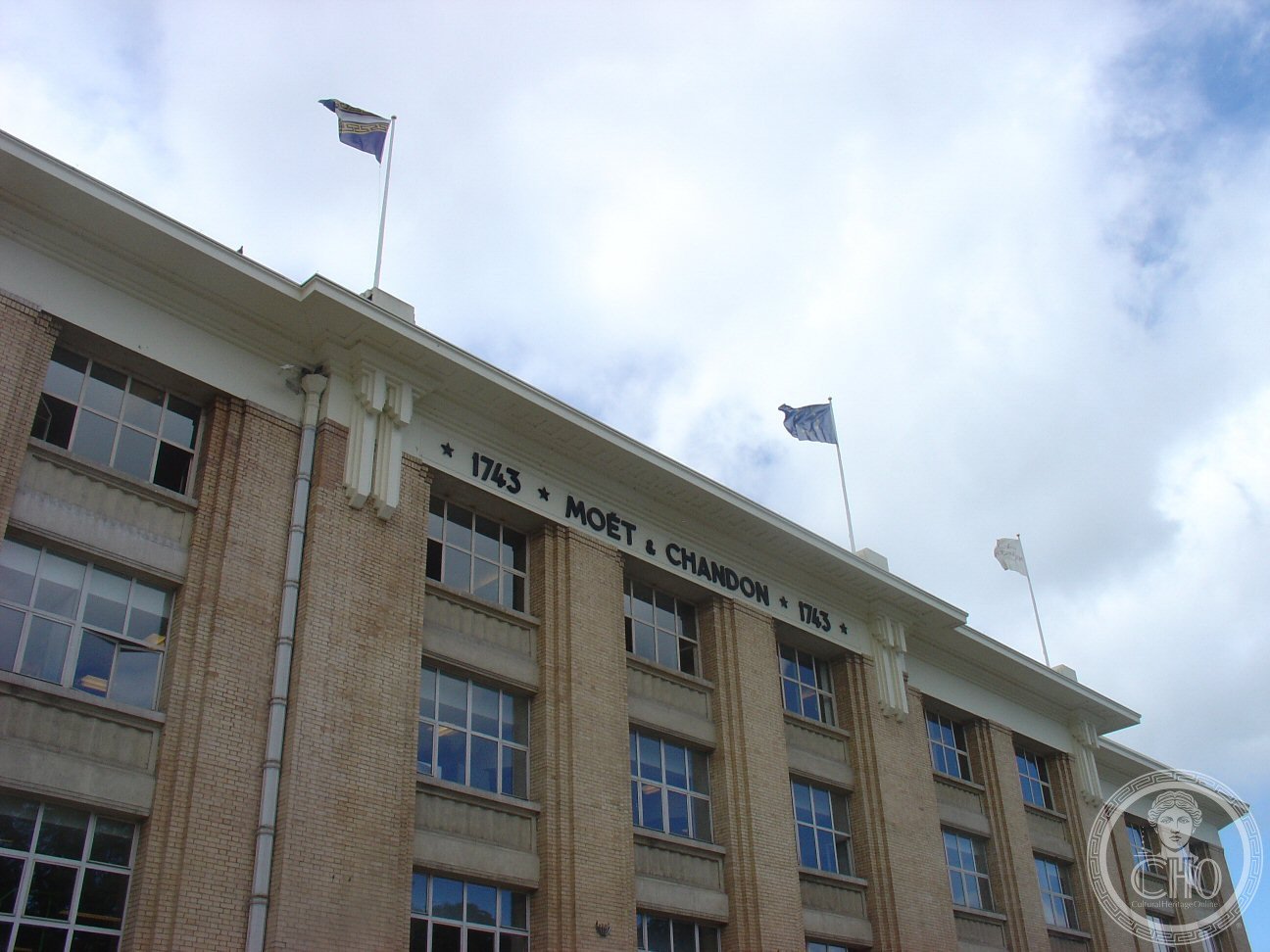
Founded by Claude Moët in 1743 on the legendary Avenue de Champagne, Moët & Chandon is one of the world’s most celebrated champagne houses — a place where 28 kilometres of chalk cellars hold 100 million bottles aging beneath the streets of Épernay.
At a glance
Maison Moët & Chandon occupies a prime position on the Avenue de Champagne in Épernay, in the heart of the Champagne wine region of northeastern France. The house produces some of the world’s most recognisable champagne, including the iconic Dom Pérignon prestige cuvée. Today it is the flagship brand of LVMH Moët Hennessy Louis Vuitton, the French luxury conglomerate, and receives approximately 300,000 visitors per year, making it one of the most visited wine estates in France. The Avenue de Champagne itself was inscribed on the UNESCO World Heritage List in 2015 as part of the “Champagne Hillsides, Houses and Cellars” site.
History
Claude Moët established the house in 1743 to supply champagne to the French court and aristocracy. His grandson Jean-Rémy Moët cemented the maison’s fame through a personal friendship with Napoleon Bonaparte, who visited the cellars on multiple occasions during his campaigns — a relationship that proved to be one of history’s most consequential marketing partnerships. Napoleon is said to have declared that champagne was necessary in victory and indispensable in defeat. In 1832 the house merged with the Chandon family and became Moët & Chandon. The creation of Dom Pérignon in 1936 — a prestige cuvée named after the 17th-century Benedictine monk credited with refining champagne production — elevated the brand to international luxury status. The house joined the LVMH group in 1971.
What you see
The maison’s surface buildings on the Avenue de Champagne include a stately 18th-century mansion, an orangerie, and formal gardens that open onto the boulevard. A bronze statue of Dom Pérignon stands at the entrance, a constant backdrop for visitor photographs. Below ground, the crayères — chalk cellars dug into the soft Cretaceous limestone hillside — extend 28 kilometres on multiple levels, with passages maintained at a constant cool temperature ideal for champagne maturation. The galleries are lined with hundreds of thousands of bottles in various stages of riddling and aging, creating one of the most dramatic underground wine landscapes in the world.
Cultural significance
Moët & Chandon is inseparable from the global cultural identity of champagne as a symbol of celebration and luxury. The house supplied champagne to figures ranging from Napoleon and Queen Victoria to Marlene Dietrich and Winston Churchill, and today its bottles appear at Grand Prix podiums, state banquets, and film premieres worldwide. The crayères beneath Épernay, shared with other grandes maisons, represent a collective heritage of Gallo-Roman quarrying adapted over centuries into the technical infrastructure of the champagne trade — a fact recognised by UNESCO when the entire system of hillside vineyards and chalk cellars was listed as a World Heritage Site in 2015.
Key facts
- Founded: 1743 by Claude Moët in Épernay
- Cellars: 28 km of chalk galleries (crayères) beneath the town
- Stock: approximately 100 million bottles aging at any one time
- UNESCO: Avenue de Champagne listed 2015 as World Heritage Site
- Famous guest: Napoleon Bonaparte visited the cellars multiple times
- Prestige cuvée: Dom Pérignon, launched 1936, named for the Benedictine monk
- Group: part of LVMH since 1971
- Visitors: ~300,000 per year
Practical information
Maison Moët & Chandon offers guided cellar tours year-round, covering the crayères, the historic mansion rooms, and a tasting session. Tours last approximately one hour and are available in multiple languages including English, French, German, and Spanish. Advance booking is strongly recommended, especially in summer and during the harvest season (September–October). The maison also offers premium experiences including private tastings and exclusive access to deeper sections of the cellars. A boutique on-site sells champagne, accessories, and branded memorabilia. Children under 10 are admitted free of charge; those under 18 do not participate in the tasting component.
Getting there
Épernay is located approximately 130 kilometres east of Paris. By train, direct TGV and intercity services run from Paris Gare de l’Est to Épernay in about 1 hour 20 minutes. By car, take the A4 motorway eastbound from Paris and exit at Épernay; the drive takes around 90 minutes. The Avenue de Champagne, where the maison stands, is a 10-minute walk from Épernay train station. Reims, 30 kilometres to the north, is an alternative base with its own champagne houses and direct TGV connection to Paris (45 minutes). Épernay is also accessible via the Champagne wine route, ideal for touring multiple maisons by car or bicycle.
Sources & resources
- Moët & Chandon official website: moet.com
- UNESCO World Heritage Centre — Champagne Hillsides, Houses and Cellars: whc.unesco.org
- Comité Champagne (CIVC) — history of champagne: champagne.fr
Find it on the map
See this place and what’s around it →📷 Become a Cultural Heritage Online photographer
Share your photos of places: they stay published under your name as the author. The more they're seen, the more you get noticed — and soon a contest will reward the most appreciated photos.
Log in or sign up free to add a photoIs this page about you?
This page is read by travellers and heritage enthusiasts who find it on Google. Tell us how you are connected to this place and we will take it from there.