
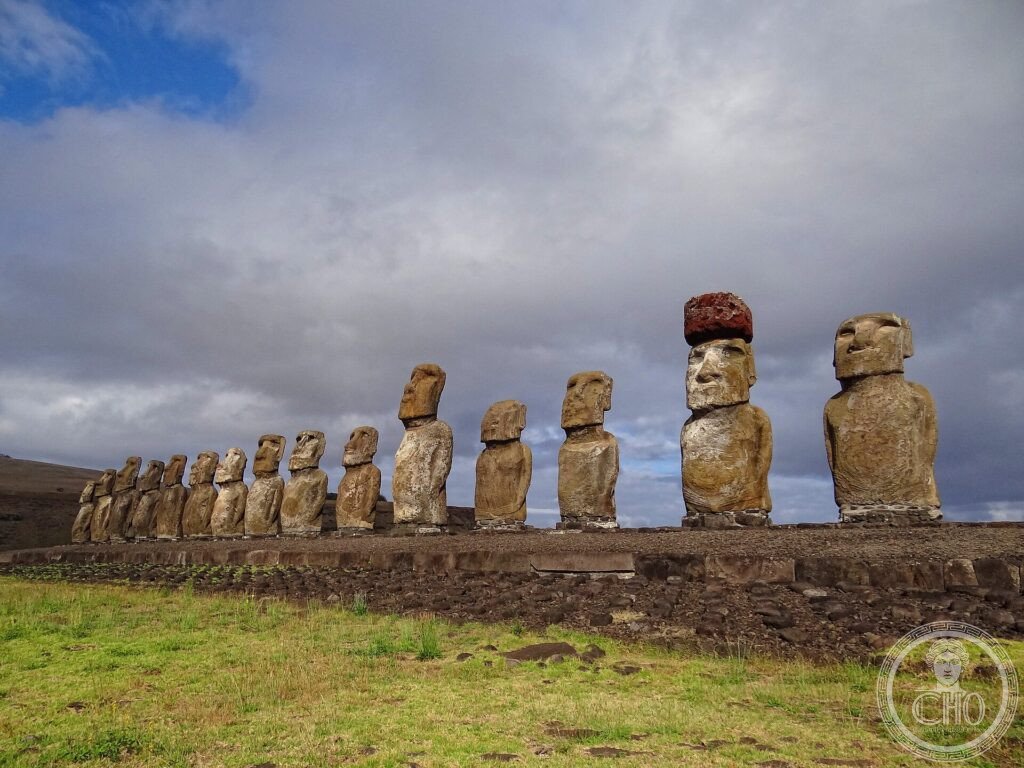
On the most remote inhabited island on the planet, a Polynesian people carved hundreds of stone giants, the moai, from volcanic rock and raised them to watch over their communities. Rapa Nui is one of the world’s most extraordinary artistic and human phenomena, a carved mystery that still challenges us.
At a glance
Rapa Nui, or Easter Island, is one of the most remote inhabited islands on Earth, a speck of volcanic land in the South Pacific. Settled by Polynesians around the 13th century, its people developed a unique culture whose supreme expression is the moai: monumental stone figures, hundreds of them, carved from the rock of a volcanic crater and raised on stone platforms (ahu) to watch over the living. This extraordinary artistic and human achievement, a national park, was inscribed by UNESCO in 1995.
Key facts
- UNESCO: World Heritage since 1995 (Rapa Nui National Park)
- The moai: nearly 900 monumental stone figures across the island
- Carved at Rano Raraku: the volcanic quarry where they were made
- Ahu Tongariki: a platform of fifteen restored moai
- Remote: over 3,500 km from the South American coast
- Polynesian: settled around the 13th century by seafarers
History
Polynesian voyagers reached this isolated island around the 13th century and built a society organised into clans. From the rock of the Rano Raraku crater they carved the moai, ancestral figures, and transported them — by means still debated — across the island to platforms by the coast, where they stood with their backs to the sea, facing the villages they protected.
In time, perhaps through environmental strain and conflict, the statues were toppled, and contact with the outside world from the 18th century brought disease and slave raids that nearly destroyed the population. The Rapanui survived; many moai have since been re-erected, and the island, now part of Chile, guards a culture and a mystery unlike any other.
What you see
At Ahu Tongariki, fifteen moai stand in a row against the ocean, the largest re-erected platform on the island. At Rano Raraku, the quarry, dozens of unfinished giants lie or stand half-buried on the crater slopes, frozen in the act of creation. Other ahu, the ceremonial village of Orongo and rock art complete the picture.
The treeless, wind-swept landscape of grass and volcanic cones gives the statues their haunting setting.
Practical information
- Park: a national park; an entry ticket is required for the sites
- Access: by air from Santiago (about 5 hours) to Hanga Roa
- Time needed: several days to see the island
- Respect: the ahu and moai are sacred; do not climb or touch
Getting there
Rapa Nui (Easter Island) is a Chilean territory in the South Pacific, reached by flights from Santiago de Chile to Hanga Roa, the island’s only town. GPS (Ahu Tongariki): 27.1256° S, 109.2769° W.
Nearby
- Rano Raraku — the quarry where the moai were carved
- Orongo — the ceremonial village of the birdman cult
- Anakena — the island’s palm-fringed beach with moai
Sources
- UNESCO World Heritage Centre — “Rapa Nui National Park” (ref. 715)
- CONAF — Chilean national parks authority
- Encyclopaedia Britannica — Easter Island; moai
Find it on the map
See this place and what’s around it →📷 Become a Cultural Heritage Online photographer
Share your photos of places: they stay published under your name as the author. The more they're seen, the more you get noticed — and soon a contest will reward the most appreciated photos.
Log in or sign up free to add a photo