
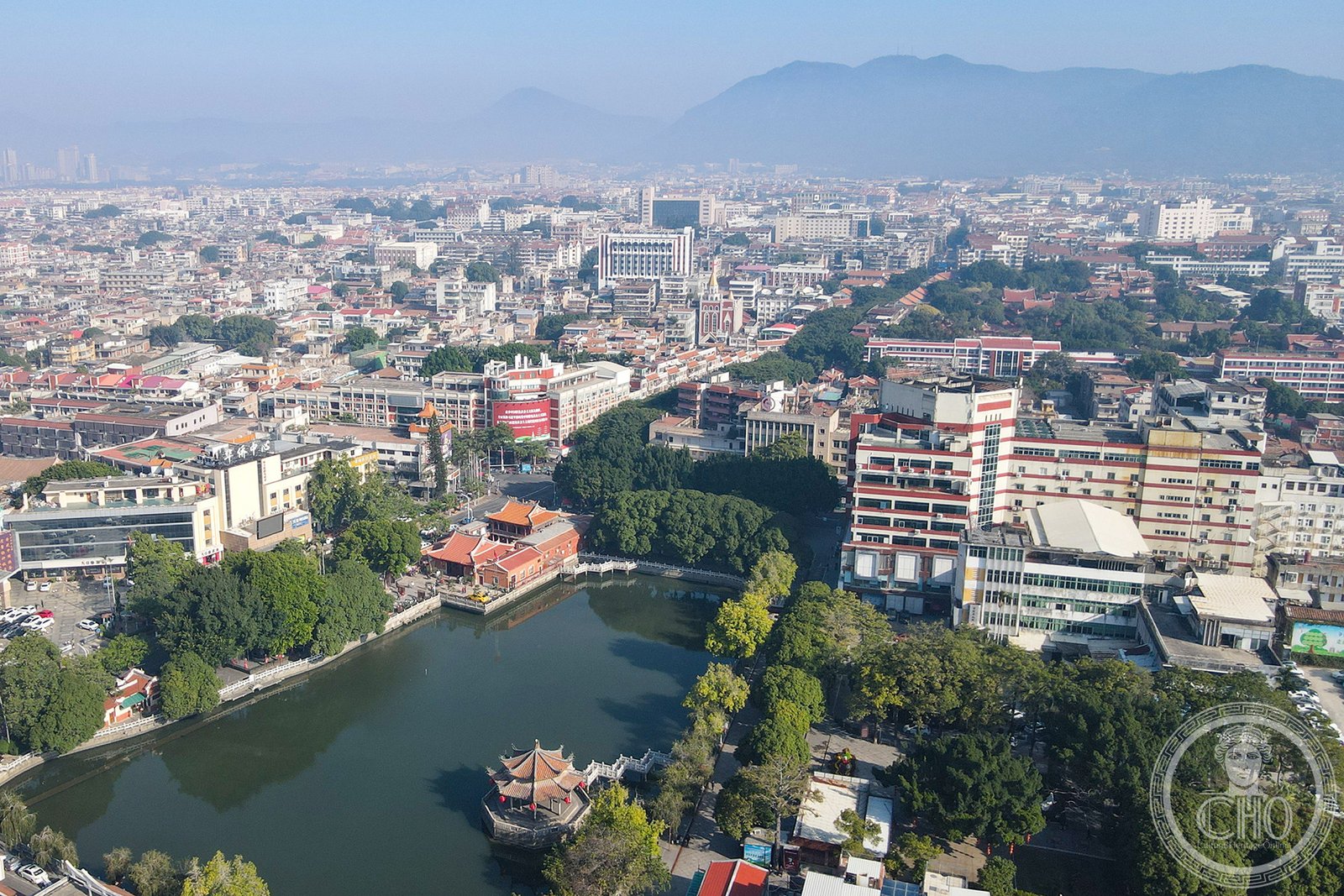
For three centuries, Quanzhou was the greatest commercial port on earth — a city where Buddhist monks, Muslim merchants, Manichaean priests, and Hindu traders built their shrines side by side, and where silk, porcelain, and spices passed between China and the entire known world.
At a glance
Located on China’s southeast coast in Fujian Province, Quanzhou reached its zenith during the Song (960–1279 CE) and Yuan (1279–1368 CE) dynasties, when it surpassed even Guangzhou as China’s principal international port. Marco Polo visited in 1292 CE and described it as “one of the two greatest harbors in the world,” calling it Zaytun. The UNESCO World Heritage inscription (2021) covers 22 component sites representing the extraordinary multicultural commercial civilization that flourished here for more than 600 years.
Key facts
- UNESCO inscription: 2021, as “Quanzhou: Emporium of the World in Song-Yuan China”
- Peak period: 10th–14th century CE (Song and Yuan dynasties)
- Component sites: 22 UNESCO-listed heritage elements within the city
- Marco Polo visit: 1292 CE — called it “Zaytun, one of the two greatest harbors in the world”
- Population at peak: Estimated 500,000 — among the largest cities in the medieval world
- Exports: Silk, Dehua porcelain, lacquerware, copper coins, iron tools
History
Quanzhou’s rise to global commercial dominance was rooted in geography and imperial policy. Positioned at the mouth of the Jin River estuary, the city first appeared as a significant port under the Tang dynasty (618–907 CE). The establishment of the Kaiyuan Temple in 686 CE marks the beginning of the city’s monumental heritage.
Under the Song dynasty, Quanzhou became the official seat of the Superintendent of Maritime Trade, and Chinese ceramics, silk, and lacquerware were exported to Southeast Asia, the Indian Ocean basin, the Persian Gulf, and the East African coast. Immigrant merchant communities — Arabs, Persians, Indians, Jews, and Southeast Asians — settled in the city and built houses of worship that still survive.
The Yuan dynasty brought even greater cosmopolitanism. Islamic geographer al-Idrisi had already called it “the greatest harbor in China” in the 12th century; by the 13th century, Quanzhou’s docks handled a greater volume of cargo than any other port on earth. Decline came with the early Ming dynasty’s maritime restrictions (haijin policy), and trade shifted elsewhere.
What you see
The Kaiyuan Temple (686 CE) is the largest Buddhist complex in Fujian, crowned by two Song-era stone pagodas — the Zhenguo and Renshou pagodas — each approximately 40 metres high and decorated with 80 carved relief figures. The Qingjing Mosque (built 1009 CE) is the oldest surviving mosque in China, constructed in the Fatimid-Egyptian architectural tradition with pointed arches and arabesque stonework; its Arabic inscriptions remain legible after a thousand years.
The Cao-an Manichean Temple is unique worldwide — the only surviving Manichean place of worship on earth, containing a stone statue of Mani carved in 1339 CE, disguised as a Buddhist figure during historical persecutions. The Luoyang Bridge (built 1053–1059 CE), at 1,200 metres, was the longest sea-crossing bridge in China when built, with massive stone piers engineered to withstand tidal currents.
A city of many faiths
What distinguishes Quanzhou is the physical survival of its multireligious landscape. Within a few kilometres of each other stand: a Tang Buddhist temple, a Song Islamic mosque, the world’s only Manichean temple, Hindu temple remains with Tamil inscriptions, a Nestorian Christian stele, and a Zoroastrian stone relief. Each community built its institutions using local Fujian craftsmen, producing a unique hybrid architecture that blends foreign forms with Chinese building techniques.
The mechanics of world trade
The Quanzhou Superintendent of Maritime Trade maintained detailed records of ships, cargoes, and taxes. Chinese exports included silk, Dehua porcelain, lacquerware, copper coins, and iron tools. Imports included frankincense from Arabia, pepper and spices from Southeast Asia, cotton textiles from India, ivory from East Africa, and precious stones from Sri Lanka. The city also pioneered paper bills of exchange (jiaozi) to facilitate international commerce — an innovation centuries ahead of Europe.
Practical information
- Location: Quanzhou City, Fujian Province, southeastern China
- Kaiyuan Temple hours: Daily 07:30–18:00; admission approx. CNY 10
- Qingjing Mosque: Open to visitors outside prayer times; free entry
- Luoyang Bridge: Open site, free access; 10 km north of city centre
- Best season: October–April (subtropical; avoid July–September typhoon season)
Getting there
Quanzhou Jinjiang International Airport connects to major Chinese cities and several Southeast Asian destinations. High-speed rail (G-train) links Quanzhou to Xiamen (40 minutes), Fuzhou (30 minutes), and Shanghai (3.5 hours). A dedicated Quanzhou Maritime Silk Road Heritage bus route connects the principal UNESCO monuments. From Hong Kong, high-speed rail via Shenzhen reaches Quanzhou in approximately 3.5 hours.
Nearby
- Xiamen — 110 km south; Gulangyu island and Fujian Tulou earthen communal buildings, both UNESCO WHS
- Fuzhou — 175 km north; Fujian provincial capital with Three Lanes and Seven Alleys historic district
- Dehua — 80 km northwest; source of the famous white Dehua porcelain exported from Quanzhou
- Wuyishan — 300 km north; UNESCO Natural and Cultural World Heritage Site, origin of oolong tea
Sources
- UNESCO World Heritage Committee, Outstanding Universal Value: Quanzhou: Emporium of the World in Song-Yuan China, 2021
- Marco Polo, The Travels (c. 1300 CE), description of Zaytun
- Angela Schottenhammer (ed.), The Emporium of the World: Maritime Quanzhou, 1000–1400, Brill, 2001
- Wikipedia, “Quanzhou” (consulted 2026)
Find it on the map
See this place and what’s around it →📷 Become a Cultural Heritage Online photographer
Share your photos of places: they stay published under your name as the author. The more they're seen, the more you get noticed — and soon a contest will reward the most appreciated photos.
Log in or sign up free to add a photo